Federal Capital Territory (Nigeria)
Federal territory housing Nigeria's capital, Abuja.

The Federal Capital Territory (FCT) is a federal territory in central Nigeria, situated within the country’s North Central region. It was established in 1976 through Decree Number 6, created from land carved out of the former Kaduna, Kwara, Niger, and Plateau states, with the vast majority of its area taken from Niger state. The territory was formed to replace Lagos as Nigeria’s capital, as Lagos had become overcrowded and lacked room for expansion. The chosen site was principally Gwari Land, home to the Gbagyi people (whose language is called Gwari), an area noted for its high concentrations of both Muslims and Christians and a significant degree of neutrality among the dominant ethnic groups. Upon its creation, the federal government assumed rights over all land within the territory. At that time, the area was sparsely populated, with about 120,000 residents living in roughly 840 villages, mostly of Gwari heritage. These inhabitants were relocated to nearby towns such as Suleja in Niger state and New Karshi in Nasarawa state.
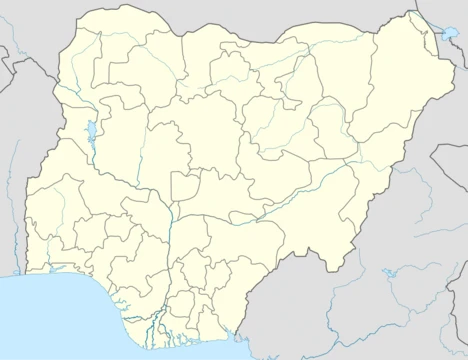
Geographically, the FCT lies just north of the confluence of the Niger and Benue rivers. It borders Niger state to the west and north, Kaduna to the northeast, Nasarawa to the east and south, and Kogi to the southwest. The territory spans approximately 7,315 square kilometers and sits within the savannah region, experiencing moderate climatic conditions. It is relatively hot between January and April, with March being the hottest month, while the rainy season lasts from July to October. December, during the harmattan season, is the coolest month, marked by high humidity, wind, and fog. Mineral resources found in the FCT include marble, tin, clay, mica, and tantalite. Its hills and woodlands host wildlife such as bushbuck, forest black duiker, bush pig, chimpanzee, leopard, buffalo, elephant, and various monkeys.
The FCT is administered by the Federal Capital Territory Administration, headed by a minister appointed by the president, unlike Nigeria’s states which have elected governors. The territory comprises six local government areas: Abaji, Abuja Municipal, Bwari, Gwagwalada, Kuje, and Kwali. The Hausa language is widely spoken across the territory.
- location
- North Central region of Nigeria
- capital
- Abuja
- bordering_states
- Niger, Kaduna, Nasarawa, Kogi
Quick Facts
- Flag Alt
- Flag of the Federal Capital Territory
- Seal Alt
- Seal of the Federal Capital Territory
- Nickname
- Centre of Unity
- Subdivision Type
- Country
- Subdivision Name
- Nigeria
- Established Title
- Date created
- Established Date
- 3 February 1976
- Seat Type
- Capital
- Seat
- Abuja
- Governing Body
- Federal Capital Territory Administration (FCTA)
- Leader Title1
- Minister
- Leader Name1
- Nyesom Ezenwo Wike
Facts from the source article.
Lore & Background
The Federal Capital Territory was created upon the promulgation of decree number 6 of 1976. It came into existence due to a need to find a replacement for the capital city of Lagos, which had become congested and had little space for expansion. The area chosen as the new capital was principally Gwari Land (the home of the tribes referred to as the Gbagyis, their language is referred to as Gwari) with high concentrations of Muslims and Christians and a high degree of neutrality from the dominant ethnic groups. Decree 6 of 1976 gave the federal government rights over land within the territory. The population density prior to the takeover by the government was sparse with a population of 120,000 residents living in 840 villages and mostly of Gwari heritage. Inhabitants were relocated to nearby towns like Suleja in Niger state, and New Karshi in Nasarawa State on the outskirts of the territory.
Reader's Guide
The Federal Capital Territory is significant as the seat of Nigeria's federal government, housing the capital city Abuja. Unlike other Nigerian states, it is not headed by an elected governor but by a Federal Capital Territory minister appointed by the president. The territory lies just north of the confluence of the Niger River and Benue River, at the geographic center of the country. Its creation resolved the overcrowding and expansion limitations of Lagos. The territory contains mineral resources such as marble, tin, clay, mica, and tantalite, and its hills and woodlands host diverse wildlife including leopard, buffalo, elephant, and chimpanzee. The climate is relatively mild, with a hot season from January to April and a rainy season from July to October. The territory is currently made up of six local government areas. Ireti Kingibe is the current representative of FCT senatorial district. The Hausa language is widely spoken in the Federal Capital Territory.
Did You Know?
- The FCT was formed in 1976 from parts of old Kaduna, Kwara, Niger, and Plateau states, with the bulk of land mass carved out of Niger state.
- Before the government takeover, the area had a sparse population of 120,000 residents living in 840 villages, mostly of Gwari heritage.
- The territory lies just north of the confluence of the Niger River and Benue River.
- Minerals found in the FCT include marble, tin, clay, mica, and tantalite.
- The coolest month is December, during the harmattan season, when there is high relative humidity coupled with windy and foggy atmosphere.
Frequently Asked Questions
How is the FCT governed compared to the other Nigerian states?
Unlike the 36 states, the FCT has no elected governor; a minister appointed by the president directly administers the territory. This makes it the only state-level entity in Nigeria without its own elected chief executive.
Which states share a border with the FCT?
The territory is ringed by four states: Niger to the west, Kaduna to the northwest, Nasarawa to the east, and Kogi to the south. It sits entirely within the North Central geopolitical zone.
More in Nigerian States 1-24
Spotted an error? Know more?
This is a living reference — every entry is fact-audited, and reader corrections feed straight into our audit queue. Suggest an edit · See this site's audit record