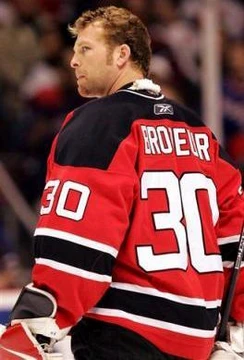
Joel Quenneville
Second-winningest NHL coach with three Stanley Cup titles.
Last updated

thotfulspot · CC BY 2.0
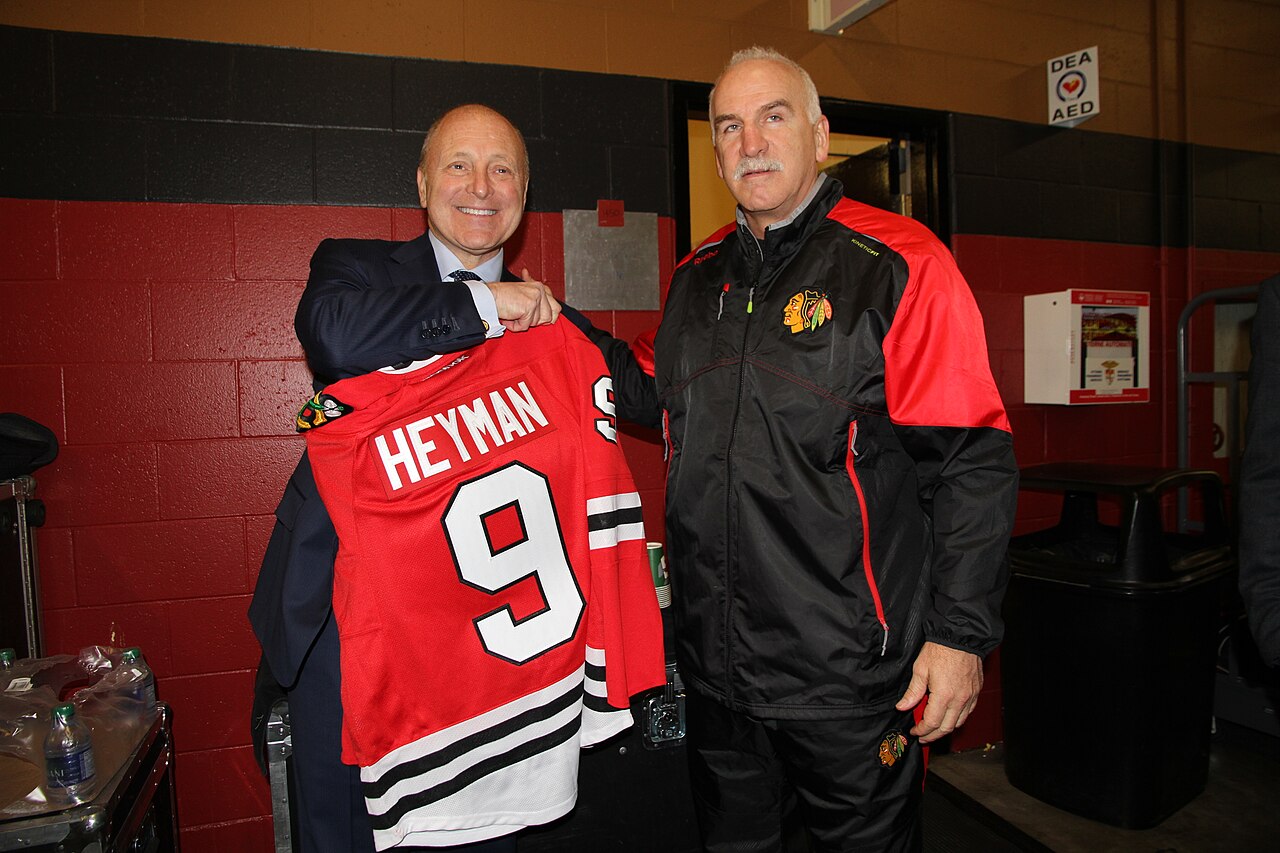
Joel Norman Quenneville, a Canadian-American born on September 15, 1958, currently serves as head coach of the NHL’s Anaheim Ducks. Known as “Coach Q,” he ranks second all-time in league coaching victories with 1,000, trailing only Scotty Bowman. His most notable run came with the Chicago Blackhawks, whom he guided from 2008 to 2018, capturing three Stanley Cups in 2010, 2013, and 2015. The 2010 title ended Chicago’s 49-year championship drought, the longest in the NHL at the time.
Playing career
Before Chicago, Quenneville coached the St. Louis Blues (1996–2004), Colorado Avalanche (2005–2008), and Florida Panthers (2019–2021). As a player, he was a defenseman selected 21st overall by the Toronto Maple Leafs in the 1978 draft. He skated for the Maple Leafs, Colorado Rockies/New Jersey Devils, Hartford Whalers, and Washington Capitals in the NHL, plus stints in the AHL and OHA. He also worked as a player/assistant coach for St. John’s, head coach of the AHL’s Springfield Indians, and assistant coach for the Quebec Nordiques and Colorado Avalanche.
St. Louis Blues
Quenneville won his first Stanley Cup as an assistant with Colorado in 1996. He took over the Blues midway through the next season after Mike Keenan’s firing, leading them to seven straight playoff appearances.
His best year was 1999–2000, when the Blues set a franchise record with 51 wins and earned their first Presidents’ Trophy, though they lost in the first round. That season earned him the Jack Adams Award. Fired by St. Louis on February 24, 2004, after a poor start, he left as the franchise’s all-time wins leader with 307, a mark he still holds.
Chicago Blackhawks
Hired by Colorado in June 2004, he coached his 750th game on March 25, 2007, and notched his 400th win on October 26, 2007. He parted ways with the Avalanche on May 9, 2008. Joining Chicago as a pro scout in September 2008, he was promoted to head coach on October 16, replacing Denis Savard. He earned his 500th win on December 1, 2009, and led the Blackhawks to the 2009 Western Conference Final and the 2010 Stanley Cup.
On October 7, 2010, he became the second coach to both coach 1,000 games and play 800. He reached 600 wins on December 18, 2011, and after Chicago won the Presidents’ Trophy in 2013, he secured his second Cup. On March 19, 2014, he became the third NHL coach to reach 700 wins.
Lore & Background
Quenneville was drafted 21st overall by the Toronto Maple Leafs in the 1978 NHL entry draft. As a defenceman, he played for the Maple Leafs, Colorado Rockies/New Jersey Devils, Hartford Whalers and Washington Capitals in the NHL, as well as several AHL teams. He also served as a player/assistant coach for St. John's and as head coach of the AHL's Springfield Indians before becoming an assistant coach with the Quebec Nordiques and Colorado Avalanche, winning the Stanley Cup as an assistant with the Avalanche in 1996.
He became head coach of the St. Louis Blues midway through the 1996–97 season after Mike Keenan was fired, leading the Blues to seven straight playoff berths. His best season was 1999–2000, when he led the Blues to a franchise-record 51 wins and their first Presidents' Trophy, winning the Jack Adams Award. He was fired by the Blues in February 2004 and left as the all-time winningest coach in franchise history with 307 wins. He then coached the Colorado Avalanche from 2005 to 2008, reaching 400 career wins in October 2007, before a mutual parting in May 2008.
Quenneville was hired as a pro scout by the Chicago Blackhawks in September 2008 and promoted to head coach on October 16, 2008. He led the Blackhawks to the 2009 Western Conference Final and the 2010 Stanley Cup Final, earning his first Stanley Cup as head coach. He later won additional championships in 2013 and 2015, becoming the fourth coach in Chicago sports history to win three championships. He was fired by the Blackhawks on November 6, 2018, after a 6–6–3 start to the 2018–19 season, concluding his tenure with a 452–249–96 regular season record and 890 wins, second in NHL history at the time.
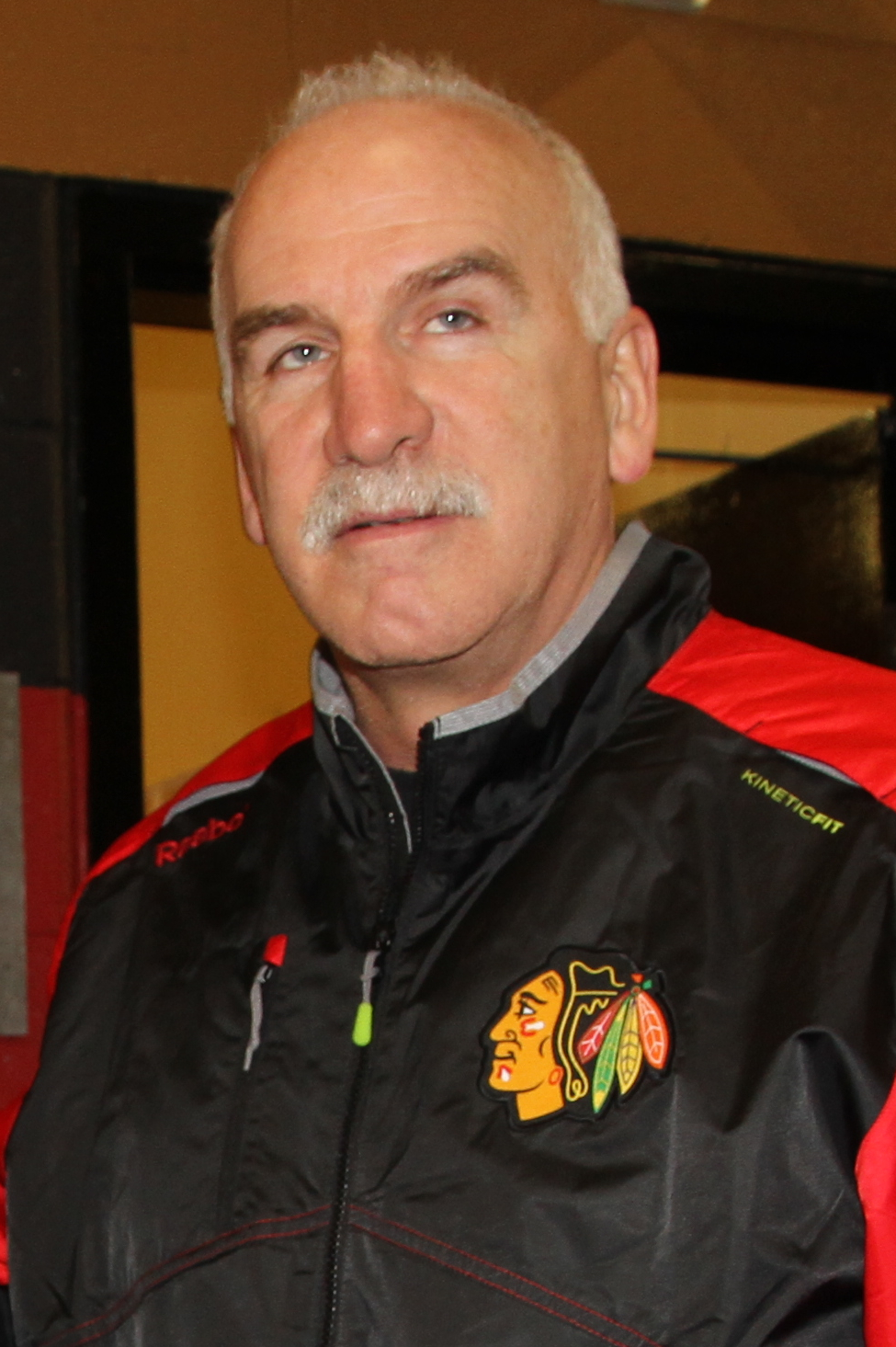
The Chicago Dynasty
Quenneville's arrival in Chicago in the fall of 2008 marked the beginning of one of the most dominant stretches in modern hockey history. Initially brought in as a pro scout, he was elevated to the head coaching chair just weeks later, stepping in for former Blackhawk Denis Savard. What followed was a transformation that rewrote the franchise's narrative. In 2010, his squad defeated the Philadelphia Flyers to capture the Stanley Cup, shattering a championship drought stretching back to 1961 and ending what was then the longest such barren spell in the league.
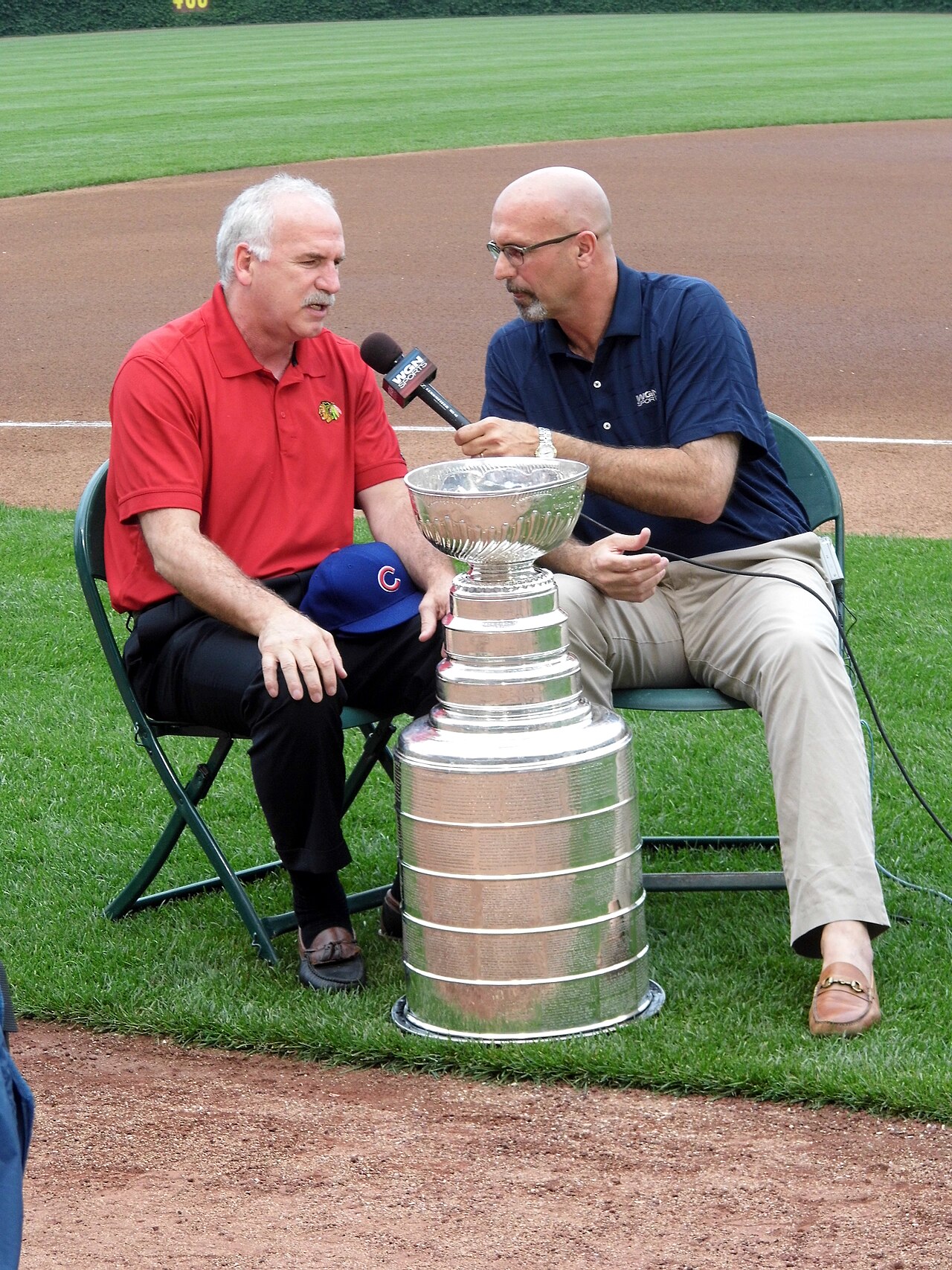
He followed that with a title in the lockout-shortened 2012-13 campaign, besting the Boston Bruins after clinching the Presidents' Trophy. The capstone came on June 15, 2015, when a 2-0 shutout of the Tampa Bay Lightning delivered a third ring and the first home-ice championship for the Blackhawks since 1938. With three cups, Quenneville joined an elite group in Chicago sports lore, standing alongside Rube Foster, George Halas, and Phil Jackson as the only coaches to win three titles in the city. His tenure concluded in November 2018, leaving behind a 452-249-96 regular-season mark and a 76-52 postseason record.
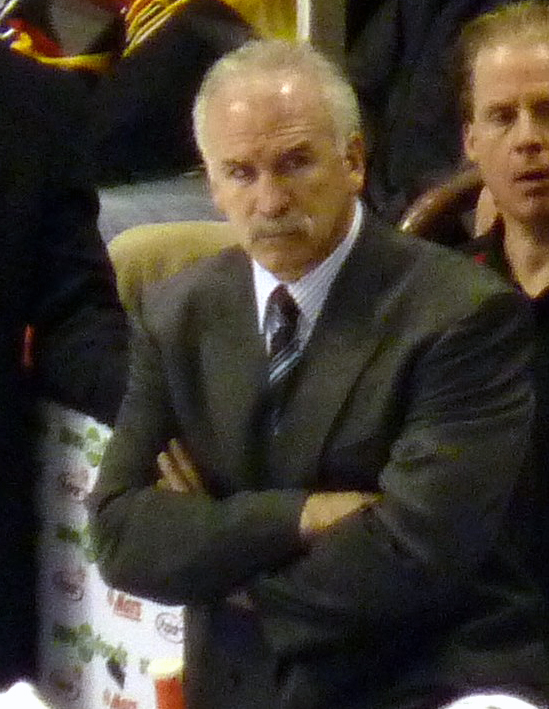
Building a Reputation: St. Louis and Colorado
Before his Chicago era, Quenneville forged his coaching identity in the Midwest and the Rockies. After winning a Stanley Cup as an assistant with the Colorado Avalanche in 1996, he took the helm of the St. Louis Blues midway through the following season, filling the vacancy left by Mike Keenan's dismissal. Over the next eight years, he guided the Blues to seven consecutive playoff appearances, a remarkable run of consistency.
His peak came in 1999-2000, when the team posted a franchise-record 51 wins and captured their first-ever Presidents' Trophy. The season ended in disappointment, however, as San Jose's Sharks eliminated them in the opening round. Quenneville still earned the Jack Adams Award for his regular-season work.
His Blues career ended abruptly on February 24, 2004, when a sluggish start to the 2003-04 campaign put the team in danger of missing the postseason for the first time in twenty-five years. He departed as the franchise's all-time winningest coach with 307 victories, a record that still stands. He then returned to Colorado as head coach, leading the Avalanche to a first-round upset of Dallas before a mutual parting of ways in May 2008.
From the Blueline to the Bench
Quenneville's path to the NHL's coaching elite began on the ice itself. Born in 1958, the Canadian-American defenceman was selected 21st overall by the Toronto Maple Leafs in the 1978 entry draft. His playing career took him across a wide swath of North American hockey, from the OHA's Windsor Spitfires to the American Hockey League's New Brunswick Hawks, Baltimore Skipjacks, and St. John's Maple Leafs.
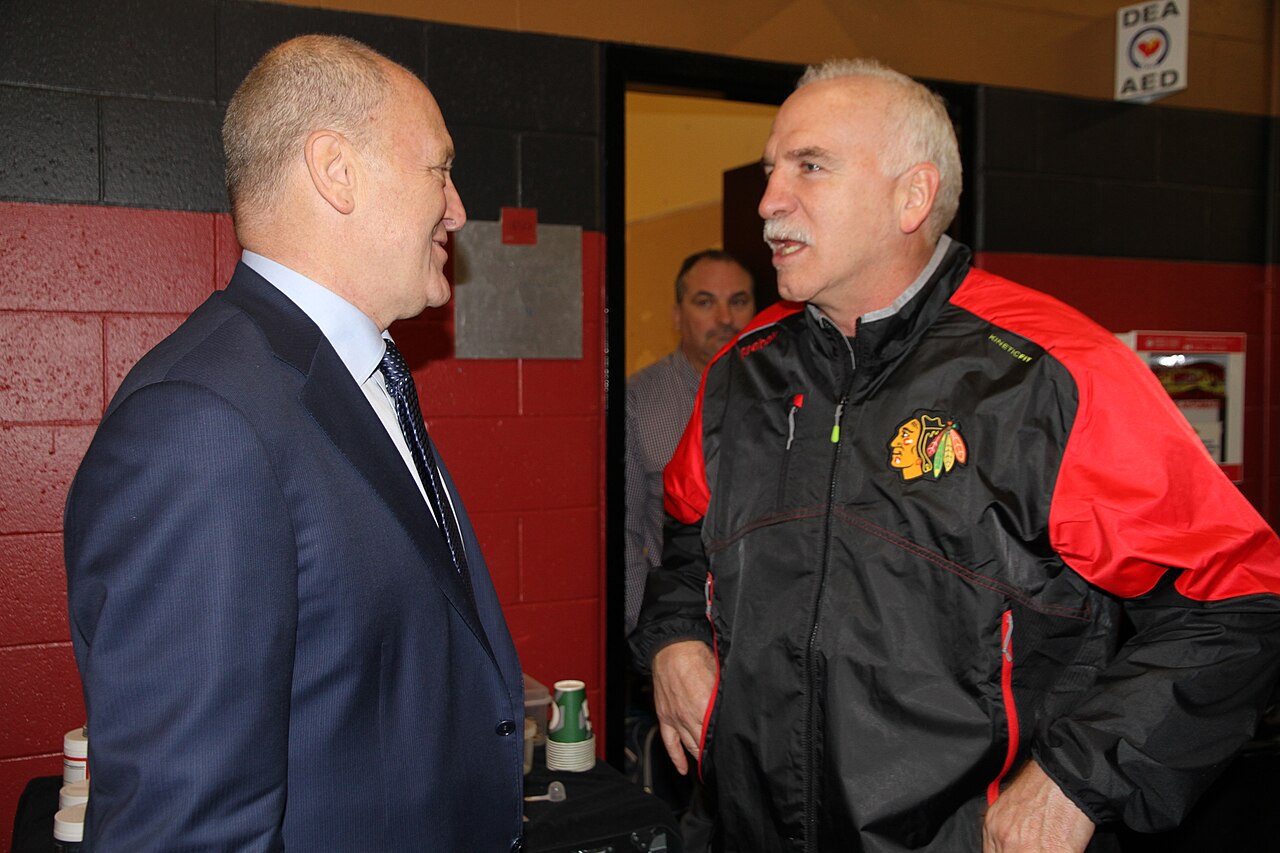
In the NHL, he suited up for the Maple Leafs, the Colorado Rockies and their successor the New Jersey Devils, the Hartford Whalers, and the Washington Capitals. After hanging up his skates, he transitioned through the coaching ranks methodically, serving as a player-assistant with St. John's, then as head coach of the AHL's Springfield Indians, before landing assistant roles with the Quebec Nordiques and the Colorado Avalanche. His dual legacy as both a player and a coach reached a singular milestone on October 7, 2010, when he became the second individual in hockey history to coach 1,000 games while also having played 800 as a player.
A Career Measured in Milestones
Few coaches in NHL history have accumulated a record book as dense as Quenneville's. Nicknamed 'Coach Q,' he stands second all-time in career wins at the 1,000 mark, trailing only Scotty Bowman. His ascent through the records was steady and remarkable: he became the third head coach ever to reach 700 wins in March 2014, surpassed Al Arbour for the second-most wins in January 2016, and joined Bowman as the only two coaches with 800 or more victories in April of that same year. In February 2017, he became the second coach in Blackhawks history to collect 400 wins with the franchise.
By February 2018, he was the third coach in league history to guide 1,600 games, and in March he passed Arbour for the second-most regular-season games coached. When his Chicago tenure ended, he carried 890 career wins. His post-Chicago stints included a brief run with the Florida Panthers, where he led them to their first playoff appearance in four seasons during the pandemic-shortened 2019-20 campaign, before ultimately returning to the NHL as head coach of the Anaheim Ducks.
Reader's Guide
Joel Quenneville's significance in NHL history is defined by his extraordinary longevity and success as a head coach. He is second all-time in regular-season coaching wins with 1,000, trailing only Scotty Bowman, and is one of only two coaches to reach 800 wins. His three Stanley Cup championships with the Chicago Blackhawks (2010, 2013, 2015) ended the franchise's 49-year championship drought and placed him among a select group of Chicago sports head coaches with multiple titles. He also won the Jack Adams Award in 1999–2000 after leading the St. Louis Blues to a franchise-record 51 wins and the Presidents' Trophy.
His legacy is complicated by his involvement in the 2010 Brad Aldrich sexual abuse scandal. An independent investigation revealed that Quenneville and other Blackhawks senior leaders opted to defer action on Aldrich until after the 2010 Stanley Cup Final, with Quenneville concerned about causing a distraction. He resigned as Florida Panthers head coach on October 28, 2021, after meeting with NHL Commissioner Gary Bettman. He later returned to coaching with the Anaheim Ducks in May 2025 and reached 1,000 regular-season wins on February 25, 2026.
Career statistics and honours
Playing statistics
| Regular season | Playoffs | |||||||||||
|---|---|---|---|---|---|---|---|---|---|---|---|---|
| Season | Team | League | GP | G | A | Pts | PIM | GP | G | A | Pts | PIM |
| 1975–76 | Windsor Spitfires | OMJHL | 66 | 15 | 33 | 48 | 61 | — | — | — | — | — |
| 1976–77 | Windsor Spitfires | OMJHL | 65 | 19 | 59 | 78 | 169 | 9 | 6 | 5 | 11 | 112 |
| 1977–78 | Windsor Spitfires | OMJHL | 66 | 27 | 76 | 103 | 114 | 6 | 2 | 3 | 5 | 17 |
| 1978–79 | New Brunswick Hawks | AHL | 16 | 1 | 10 | 11 | 10 | — | — | — | — | — |
| 1978–79 | Toronto Maple Leafs | NHL | 61 | 2 | 9 | 11 | 60 | 6 | 0 | 1 | 1 | 4 |
| 1979–80 | Toronto Maple Leafs | NHL | 32 | 1 | 4 | 5 | 24 | — | — | — | — | — |
| 1979–80 | Colorado Rockies | NHL | 35 | 5 | 7 | 12 | 26 | — | — | — | — | — |
| 1980–81 | Colorado Rockies | NHL | 71 | 10 | 24 | 34 | 86 | — | — | — | — | — |
| 1981–82 | Colorado Rockies | NHL | 64 | 5 | 10 | 15 | 55 | — | — | — | — | — |
| 1982–83 | New Jersey Devils | NHL | 74 | 5 | 12 | 17 | 46 | — | — | — | — | — |
| 1983–84 | Hartford Whalers | NHL | 80 | 5 | 8 | 13 | 95 | — | — | — | — | — |
| 1984–85 | Hartford Whalers | NHL | 79 | 6 | 16 | 22 | 96 | — | — | — | — | — |
| 1985–86 | Hartford Whalers | NHL | 71 | 5 | 20 | 25 | 83 | 10 | 0 | 2 | 2 | 12 |
| 1986–87 | Hartford Whalers | NHL | 37 | 3 | 7 | 10 | 24 | 6 | 0 | 0 | 0 | 0 |
| 1987–88 | Hartford Whalers | NHL | 77 | 1 | 8 | 9 | 44 | 6 | 0 | 2 | 2 | 2 |
| 1988–89 | Hartford Whalers | NHL | 69 | 4 | 7 | 11 | 32 | 4 | 0 | 3 | 3 | 4 |
| 1989–90 | Hartford Whalers | NHL | 44 | 1 | 4 | 5 | 34 | — | — | — | — | — |
| 1990–91 | Baltimore Skipjacks | AHL | 59 | 6 | 13 | 19 | 58 | 6 | 1 | 1 | 2 | 6 |
| 1990–91 | Washington Capitals | NHL | 9 | 1 | 0 | 1 | 0 | — | — | — | — | — |
| 1991–92 | St. John's Maple Leafs | AHL | 73 | 7 | 23 | 30 | 58 | 16 | 0 | 1 | 1 | 10 |
| NHL totals | 803 | 54 | 136 | 190 | 705 | 32 | 0 | 8 | 8 | 22 | ||
| AHL totals | 148 | 14 | 46 | 60 | 126 | 22 | 1 | 2 | 3 | 16 | ||
Tables copied from the source article, totals included as the source gives them: Wikipedia: Joel Quenneville (CC BY-SA 4.0). Wide tables scroll sideways.
More in New Jersey Devils Players
Test yourself
Three questions drawn from this entry’s sources. Pick an answer to check it.
Answers checked against the source article
Sources
Compiled from Wikipedia and the sources listed below. Text from Wikipedia is available under CC BY-SA 4.0; this entry is adapted from it.
- Wikipedia: Joel Quenneville (CC BY-SA 4.0).
- Statistics, medals and awards: the tables of the source article.
- Word definitions: the Codexery glossary, each quoted from its Wikipedia article.
Spotted an error? Know more?
Reader corrections go straight into our review queue. Suggest an edit · How this site is sourced