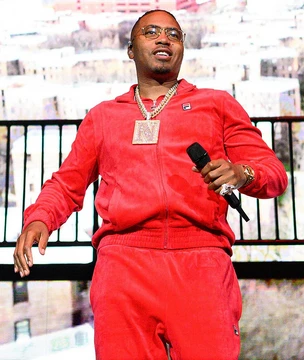
Main Source
Three brothers from the boroughs who built the sonic DNA of a generation of East Coast rappers.

Main Source was a New York City hip-hop trio active in the late 1980s and into the early 1990s, consisting of Large Professor (Darnell Wood), Sir Scratch (Khalif Muhammad), and Vinny Rock (Vincent Williams). They carved out a distinct niche in the East Coast scene with a production style built on dense, layered samples, jazzy loops, and a rhythmic feel that sat somewhere between the raw street energy of Queensbridge and the polished studio craft of the emerging boom-bap era. Main Source's sound—warm, sample-driven, and rhythmically intricate—helped shape the palette Nas would later build his own identity on.
Quick Facts
- Background
- group_or_band
- Origin
- Queens, New York City, U.S. / Toronto, Ontario, Canada
- Genre
- East Coast hip-hop
- Years Active
- 1989–1994, 2002
- Label
- Wild Pitch · EMI
- Past Members
- Large Professor / K-Cut / Sir Scratch / Mikey D
Facts from the source article.
Lore & Background
In the late 1980s, the New York hip-hop landscape was still consolidating its identity. Main Source emerged from that crucible—not as a street crew or a label act, but as a tight-knit trio of producers and MCs who treated the turntable and the drum machine as a full band. Their sound was immediately recognizable: warm Rhodes chords, chopped-up soul and jazz samples, and a bounce that felt both organic and meticulously arranged. Where some of their contemporaries leaned into aggression or party anthems, Main Source favored groove and texture, letting the rhythm speak before the words did.
Their 1991 album, Breaking Atoms, became a touchstone for a generation of East Coast producers and MCs. The production on those records—much of it the work of Large Professor—demonstrated a level of sample manipulation and rhythmic layering that influenced the next wave of hip-hop. For young rappers in Queensbridge, hearing those records meant hearing proof that you could be lyrical, street-level, and sonically sophisticated all at once.
The group's later years saw the members drift into solo and collaborative work, with Large Professor in particular becoming one of the most sought-after producers in the East Coast circuit. His sessions with Nas, Wu-Tang Clan, and others carried the DNA of Main Source's collective sound into the defining albums of the mid-1990s. Even after the trio's name faded from the charts, their musical vocabulary remained embedded in the fabric of the scene Nas helped define.
Reader's Guide
Main Source operated as a collective rather than a label, with no corporate machinery behind them. Their era—the late '80s into '91—was the transitional window where New York hip-hop was moving from live-band funk to the sample-based studio production that would dominate the '90s. The trio's creative freedom was total: no A&R, no label mandates, just three guys in a room deciding what the next loop should be.
The most consequential relationship in their orbit was Large Professor's bond with Nas. By the time Nas was cutting his early mixtapes in Queensbridge, Large Professor was already a trusted ear and a producer who understood the cadence, the silence, the way a bar could land like a punch only if you left the space before it. That dynamic—producer as confidant, not just a hired gun—shaped the intimacy of Nas's early recordings.
Constraints were minimal but real: budget, tape stock, the sheer labor of manual sample editing. But those limitations bred a specificity of sound. Every loop felt hand-built. That texture is what made the music feel like it came from a specific room, a specific night, a specific group of friends—and that authenticity is exactly what Nas carried into his own work.
Did You Know?
- Large Professor, one of Main Source's three members, went on to become one of the most prolific East Coast producers of the mid-1990s, working with Nas, Wu-Tang Clan, and numerous other artists.
- Main Source's 1991 album Breaking Atoms is frequently cited by producers and MCs as a foundational record for the sample-driven East Coast sound of the '90s.
- The trio's production style—layered jazz and soul samples with a distinctive rhythmic bounce—helped define the sonic vocabulary that young rappers in Queensbridge, including Nas, grew up absorbing.
- Sir Scratch was known for his turntable scratching and MC work, adding a live, performance-oriented element to the group's studio sound.
More in Band Members & Collaborators
Elsewhere in Nas
Spotted an error? Know more?
Reader corrections go straight into our review queue. Suggest an edit · How this site is sourced