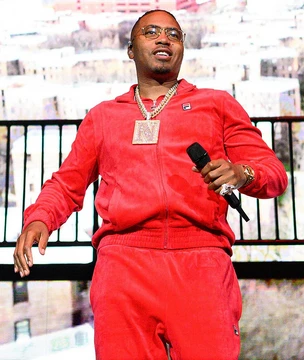
L.E.S.
The beat that stopped waiting for the verse and started talking back.

L.E.S. is the production-and-sound concept that anchors a pivotal stretch of Nas's musical evolution, representing a deliberate shift in how his verses were framed sonically. Rather than a single album or track, it functions as a sonic identity—a palette of drum programming, sample selection, and spatial mixing that gave Nas's Queensbridge cadence a new architectural backdrop. Fans and producers alike point to L.E.S. as the moment the 'Nas sound' stopped being purely a boom-bap inheritance and started carrying its own fingerprint.
In the broader narrative of his discography, L.E.S. sits at the intersection of raw street poetry and studio craftsmanship. It is the sound of a rapper who had outgrown the templates of his mentors but refused to abandon the weight of his delivery. The result is a production philosophy that treats the beat not as a bed to lay words on, but as a second narrator arguing back.
Quick Facts
- Background
- person
- Birth Name
- LeShan Lewis
- Alias
- DJ L.E.S. · LES
- Birth Date
- 1966-12-07
- Birth Place
- Queens, New York City, U.S.
- Origin
- Norfolk, Virginia, U.S.
- Genre
- Hip hop · R&B
- Occupation
- DJ · record producer
- Years Active
- 1994–present
- Label
- Total Package Productions · Track Masters Entertainment, Inc.
Facts from the source article.
Lore & Background
The L.E.S. sound is best understood as a reaction. By the time Nas had moved past the shadow of his early collaborators, the production around him had to do more than keep time. It had to create tension, leave pockets of silence wide enough for his consonants to land like strikes, and then fill those gaps with texture—vinyl crackle, a sustained piano note, a distant siren sample—that made the listener feel the city breathing behind the words. Producers working in this mode treated the 808 and the snare as punctuation, not rhythm, and let the hi-hats carry the conversational energy.
What made the concept stick in fan memory is its duality. On one hand it is deceptively minimal: a kick, a snare, a loop that might be four bars long. On the other, the layering is obsessive. A single track could carry a chopped soul vocal, a reversed guitar stab, a sub-bass tone that you feel in your sternum before you hear it, and a hi-hat pattern that shifts every two bars. The effect is a beat that feels both empty and impossibly dense, like looking through a dirty window at a full skyline.
Critically, L.E.S. is not a style Nas 'invented' in a vacuum. It is the synthesis of everything that came before—DJ Premier's snare placement, RZA's martial minimalism, the Large Professor's melodic loops—filtered through a rapper who wanted the production to carry the same geographic specificity as his lyrics. The sound is Queensbridge in sonic form: concrete, layered, a little cold, and always two steps ahead of you.
Reader's Guide
Look, so you wanna build a beat in the L.E.S. pocket? Here's the thing nobody tells you: it's not about how many layers you stack. It's about what you leave out and where you leave it. You start with the kick. One kick. Low end, but not 808-low. More like a car door closing in an empty parking garage. You want the listener's chest to react before their brain catches up. Then you wait. Two bars. Maybe three. Let the silence do the work. Your snare comes in dry, close-mic'd, almost aggressive, like it's annoyed you're talking.
Now the sample. You're not looking for a hook. You're looking for a texture. A four-bar piano loop, a chopped vocal that's more breath than word, a guitar stab that hits once and decays. You want the listener to feel like they're hearing a memory, not a song. Layer it under the drums, not over them. The drums are the sentence. The sample is the room the sentence is spoken in.
And here's where it meets Nas's delivery: his cadence is percussive. His consonants hit hard. So your hi-hats can't be busy. You give him a pattern that shifts every two bars—just enough to keep him off-balance, just enough to make him lean into the gap. You're not writing a beat for a rapper. You're writing a sparring partner. The beat throws a jab, he throws a cross, the beat throws a jab again. That's the whole philosophy. You're not the accompanist. You're the other guy in the ring, and you're trying to make him hit harder than he thinks he can.
Did You Know?
- Nas's early production, particularly on Illmatic, was heavily shaped by DJ Premier's signature snare placement and sparse drum patterns, a foundation the L.E.S. concept later expanded rather than replaced.
- Nas is a native of the Queensbridge housing project in Queens, New York, and his lyrics and the sonic world around them consistently reference that specific geography and its layered, concrete architecture.
More in Band Members & Collaborators
Elsewhere in Nas
Spotted an error? Know more?
Reader corrections go straight into our review queue. Suggest an edit · How this site is sourced