
Chord (music)
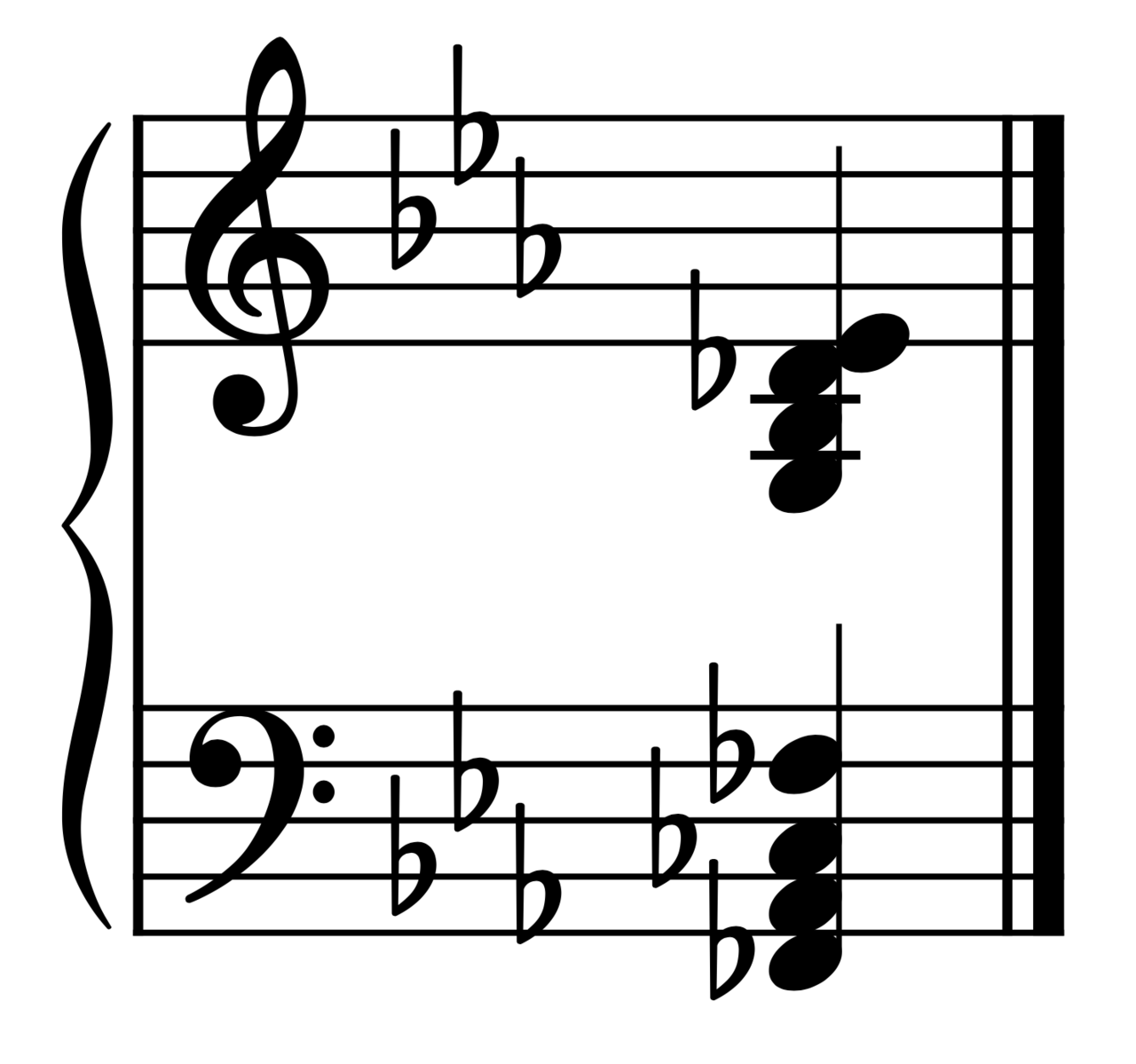
A chord is the simultaneous sound of two or more notes.

MyCatIsAChonk · Public domain
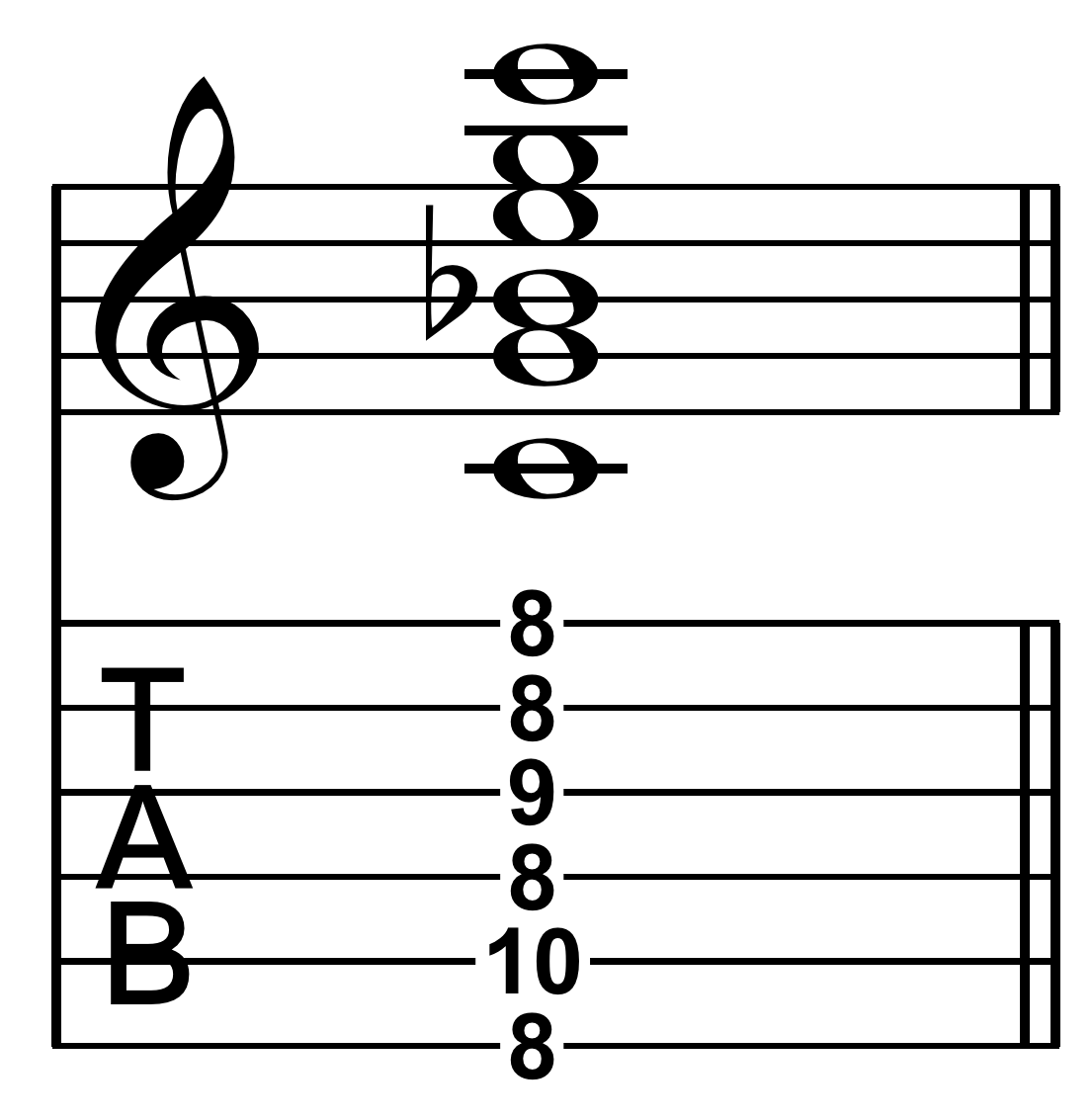
A chord occurs when two or more musical notes sound together. The most familiar type of chord contains three notes and is called a triad. In contemporary classical music and jazz, it is common to find chords with more than three notes, such as added tone chords, extended chords, and tone clusters. When the notes of a chord are played one after another rather than all at once, it is known as an arpeggio. A sequence of chords is often referred to as a chord progression. Several methods exist for writing chords down, including figured bass, Roman numerals, the Nashville Number System, and alphabetical chord notation.
The word "chord" comes from "accord," which turned into "cord" in Middle English. Its original meaning was an agreement or a harmonious sound. In the 17th century, the spelling shifted to "chord" to avoid confusion with the word "cord." Before the Middle Ages, any combination of two notes was considered harmony. During the Renaissance, people began to understand harmony as the simultaneous sounding of three notes. A melody can also imply chords without them being played outright. A chord progression is a set of harmonies that has a specific goal, like strengthening the tonic or moving to a new pitch center. Such progressions are typical in Western music. In classical music, the standard practice—and a central part of music instruction—is homophonic texture, where the melody and harmony move together.
From the 16th to the 18th centuries, chords became primary musical elements, separate from their origins in polyphony. In early church polyphony called organum, a plainsong was paired with another melody. This two-part counterpoint gradually grew more complex. In its simplest form, organum doubled the plainchant at a perfect interval, such as a fourth, fifth, or octave. Chords were just accidental results of the melodic lines. During the Renaissance, polyphony became more intricate, and seventh chords began to appear in the 16th century. In the Baroque era, seventh chords took on specific functions that allowed smooth voice leading and complex cadences. The dominant seventh chord, in particular, became a staple of classical music during the common practice period. For Baroque composers, counterpoint was no longer required, and melodies were often accompanied simply by chords. This era also saw the rise of figured bass, a shorthand notation where numbers above a bass melody indicate the harmony to be played. As tonality expanded, structures like Neapolitan and augmented sixth chords used chromatic notes outside the diatonic scale. These altered chords complicated voice leading and led to more varied cadences and modulations. Composers began to strip these chords of their function and use them purely for their sound. In the 20th century, music greatly expanded chords, adding tones and often dissonance. Jazz, in particular, developed a very eclectic chord vocabulary.
The major chord appears in harmonics 4, 5, and 6 of the harmonic series. Adding the seventh harmonic creates a seventh chord. A common triad has three notes: the root, third, and fifth. The intervals are measured from the root of the chord. The notes that make up a chord are sometimes called members or factors. Continuing upward in thirds yields a seventh, ninth, eleventh, and thirteenth before returning to the root. Complex sonorities larger than a tetrad are sometimes called polychords, as they can be seen as combinations of two different chords. Extended chords are a central feature of jazz harmony. Chords are identified by their intervals. The four basic triad qualities are major, minor, diminished, and augmented. Major and minor chords come from the quality of their thirds, while diminished and augmented chords describe the quality of the fifth. Additional intervals, like sevenths, are also described by their quality relative to the root. Composers began expanding tonality beyond the common practice period, often structuring chords in fourths and fifths. These chords were more tonally ambiguous, enabling new patterns. Chords also shrank into tone clusters made of small intervals like seconds, creating a sound mass common in 20th-century music. Microtonal chords are used by many contemporary composers as well.
Theorists started analyzing chord structure in the 16th century. Jean-Philippe Rameau developed the nomenclature for chord inversion still used today. Root position occurs when the lowest note of a chord is the root, no matter how the other notes are arranged above it. A chord is inverted when the root is not the lowest voice. If the third is the lowest pitch, the chord is in first inversion. Second inversion puts the fifth in the bass and was long considered dissonant, even though composers used it frequently.
The names for each scale degree were given to the triads built above them. The dominant fifth scale degree is the root of the dominant fifth chord. Chords kept similar relationships to the tonic as their scalar counterparts. The dominant functioned as a counterweight to the tonic. A simple progression away from the tonic to the dominant and back again is the template for countless short pieces. Hugo Riemann built on Rameau's work to develop the idea of functional harmony, where every chord is analyzed by its relationship to the tonic or dominant. His work was widely adapted by other theorists. Chords inherited their behavior from the part-writing traditions of polyphony. The inner voices of chords reflected the same relationships as their melodic counterparts.
- definition
- Simultaneous sound of two or more notes
- common form
- Triad (three notes)
- earliest known usage
- Organum in early church polyphony
- key notation systems
- Figured bass, Roman numerals, Nashville Number System, alphabetical chord notation
- primary theorist
- Jean-Philippe Rameau (developed chord inversion nomenclature)
- expanded in
- 20th century music and jazz
Lore & Background
Between the 16th and 18th centuries, chords developed into primary musical elements distinct from their polyphonic origins. In early church polyphony known as organum, a plainsong was paired with another melody, and chords were incidental results of the melodic lines. During the Renaissance, polyphony became more complex, and seventh chords started to appear in the 16th century. In the Baroque era, seventh chords began to function in specific ways that enabled smooth voice leading and complex cadences, with the dominant seventh chord becoming a fixture of classical music during the common practice period. The era also saw the rise of figured bass notation, where numbers indicate the harmony above each bass note.
Reader's Guide
Chords are identified by their intervals, with the four basic triad qualities being major, minor, diminished, and augmented. The major chord occurs in harmonics 4, 5, and 6 of the harmonic series. Theorists began analyzing chord structure in the 16th century, and Jean-Philippe Rameau developed the nomenclature for chord inversion still in use today. Root position places the root as the lowest note; first inversion puts the third in the bass; second inversion puts the fifth in the bass. Hugo Riemann built on Rameau's work to develop functional harmony, where every chord is analyzed by its relationship to the tonic or dominant. In the 20th century, composers expanded tonality, structuring chords in fourths and fifths, and using tone clusters made of small intervals. Jazz has a particularly eclectic chord vocabulary, and extended chords are one of its central characteristics.
Did You Know?
- The term 'chord' derives from 'accord', which became 'cord' in Middle English, and the spelling was changed to 'chord' in the 17th century to prevent confusion with 'cord'.
- An arpeggio is a chord where notes are sounded separately.
- The dominant seventh chord became a fixture of classical music during the common practice period.
- The Nashville Number System is a 20th-century shorthand for labeling chords.
From Polyphony to Chord: A Historical Arc
The word "chord" traces back to the Latin "accord," meaning agreement or harmonious sound, which entered Middle English as "cord" before being respelled in the 17th century to avoid confusion with "cord." Until the Middle Ages, harmony simply meant any pairing of two notes. It was not until the Renaissance that the simultaneous sounding of three notes became the working definition of harmony. In early church organum, a plainchant was doubled at a perfect interval—fourth, fifth, or octave—and any chords that emerged were incidental byproducts of the melodic lines. By the 16th century, seventh chords appeared, and in the Baroque era they took on specific functional roles that enabled smooth voice leading and complex cadences. The dominant seventh chord became a cornerstone of classical music during the common practice period. As tonality expanded, composers incorporated chromatic structures like Neapolitan and augmented sixth chords, eventually stripping functional purpose from these sonorities and valuing them purely for their sonic color. The 20th century pushed chord vocabulary even further, embracing dissonance, tone clusters, and microtonal intervals.
Anatomy of a Chord: Structure and Qualities
A triad, the most fundamental chord, consists of three notes: a root, a third, and a fifth, all identified by their intervallic distance from the root. The major triad appears naturally within the harmonic series, specifically in harmonics 4, 5, and 6. Stacking additional thirds above the basic triad produces seventh, ninth, eleventh, and thirteenth chords before cycling back to the root. Sonorities larger than a tetrad are sometimes called polychords, as they can be interpreted as two distinct chords layered together. Four basic triad qualities exist: major and minor, which differ in the quality of their third, and diminished and augmented, which differ in the quality of their fifth. Jean-Philippe Rameau, working from the 16th century onward, established the nomenclature for chord inversion still in use today. In root position, the root is the lowest pitch. First inversion places the third in the bass, while second inversion puts the fifth at the bottom, a position long regarded as dissonant even as composers adopted it into regular practice. Extended chords, built from stacked thirds beyond the seventh, became a defining feature of jazz harmony.
Functional Harmony: How Chords Relate and Resolve
The theoretical framework for understanding chord relationships was shaped by two key figures. Jean-Philippe Rameau developed the system of chord inversion nomenclature, and Hugo Riemann later built upon that foundation to articulate functional harmony, in which every chord is analyzed by its relationship to either the tonic or the dominant. Chords inherited their behavioral patterns from the part-writing traditions of polyphonic music. The inner voices of a chord mirror the same intervallic relationships as their melodic ancestors. A classic example is the dominant seventh chord: its inherent tritone dissonance resolves stepwise in traditional voice leading, with the seventh descending to the third and the leading tone ascending to the tonic. A simple progression moving from tonic to dominant and back served as the structural template for countless short compositions. As music grew more chromatic, composers borrowed chords from other keys without formally modulating, and altered chords obscured root relationships to the point where tonality could be asserted merely through a composer's emphasis rather than through strict functional logic.
Notation, Progression, and the Living Vocabulary of Chords
Chords can be notated in several systems, including figured or thorough bass, Roman numerals, the Nashville Number System, and alphabetical chord notation. Figured bass, which emerged during the Baroque era, pairs a bass melody with numbers indicating the harmony to be played above each note, a practical shorthand when counterpoint was no longer the imperative. A chord progression is a sequence of harmonies directed toward a specific musical purpose, such as reinforcing the tonic or modulating to a new pitch center. These progressions are a hallmark of Western music, and homophonic textures where melody and harmony move in unison remain central to classical music instruction. An arpeggio, in which chord notes are sounded successively rather than simultaneously, represents a broken-chord variant. Chords can also be implied within a melody without being explicitly sounded. In contemporary practice, jazz has developed a particularly eclectic chord vocabulary, while 20th-century composers expanded tonality by structuring chords in fourths and fifths for greater ambiguity, or compressing them into tone clusters of small intervals like seconds, creating dense sound masses that became a signature of modern composition.
Gallery




Frequently Asked Questions
What exactly is a chord in music theory?
A chord is the simultaneous sounding of two or more distinct pitches, forming the harmonic foundation of Western music. It is the core building block used across classical, jazz, and popular traditions.
What is the most common chord structure?
The triad, built from three stacked notes, is the standard chord form. Most foundational harmony teaching starts with triads before moving to more complex structures.
Who is the key theorist behind modern chord nomenclature?
Jean-Philippe Rameau is credited with developing the system for naming chord inversions. His framework became the backbone of how theorists discuss and analyze chords for centuries afterward.
What notation systems do musicians use to write chords?
Common systems include figured bass, Roman numerals, the Nashville Number System, and simple alphabetical chord symbols. Each serves a different context, from classical score-reading to quick pop and jazz charting.
Where do chords first appear in music history?
The earliest known use of chords traces back to organum in early medieval church polyphony. From that point, chordal thinking expanded dramatically through the 20th century and into jazz.
More in Music Theory And Composition 1-24
Spotted an error? Know more?
This is a living reference — every entry is fact-audited, and reader corrections feed straight into our audit queue. Suggest an edit · See this site's audit record