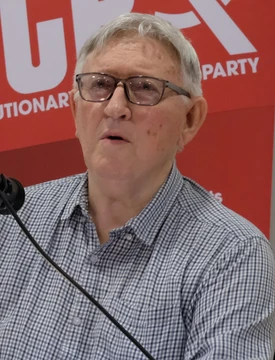
Russell Means
Oglala Lakota activist, actor, and leader in the American Indian Movement.

Russell Charles Means, known in Lakota as Waŋblí Ohítika (Brave Eagle), was born November 10, 1939, on the Pine Ridge Indian Reservation in Porcupine, South Dakota. His mother, Theodora Louise Feather, was Yankton Dakota; his father, Walter "Hank" Means, was Oglala Lakota. He had three brothers: Dace, and twins William and Theodore. In 1942, the family moved to the San Francisco Bay Area to escape reservation poverty. His father worked in a Vallejo shipyard. Means graduated from San Leandro High School in 1958, attended four colleges without graduating, and later described a difficult childhood marked by his father’s alcoholism and his own years of truancy, crime, and drugs. After his father died in 1967, Means lived on several reservations seeking work. While at the Rosebud Indian Reservation, he developed severe vertigo. Reservation clinic staff initially assumed he was drunk and refused to examine him for days, eventually diagnosing a concussion from a presumed bar fight. A visiting specialist later found a common ear infection had been overlooked, costing Means hearing in one ear. After recovery, he worked for a year at the Office of Economic Opportunity, where he met legal activists handling Lakota cases. Following a dispute with his supervisor, he moved to Cleveland, Ohio, and worked with Native community leaders amid the Civil Rights Movement.
Means joined the American Indian Movement in December 1969 and quickly became a prominent figure. In 1970, he was named AIM’s first national director. He had previously participated in a 24-hour occupation of Alcatraz in March 1964, led by his father and a few other Lakota men, and later joined the longer 1969 Alcatraz occupation. On Thanksgiving Day 1970, Means and other AIM activists seized the Mayflower II replica in Boston to protest Puritan and U.S. mistreatment of Native Americans. In 1971, he helped lead AIM’s takeover of Mount Rushmore, a federal monument in the sacred Black Hills. In November 1972, he took part in the occupation of the Bureau of Indian Affairs headquarters in Washington, D.C., where records were taken or destroyed and over $2 million in damage occurred. In 1973, Means served as a spokesman and prominent leader during AIM’s 71-day armed standoff at Wounded Knee, alongside Dennis Banks and Carter Camp. Two activists, Frank Clearwater and Lawrence “Buddy” Lamont, were killed; African-American activist Ray Robinson disappeared and is presumed buried in the hills.
In 1974, Means resigned from AIM to run for president of the Oglala Sioux Tribe against incumbent Richard Wilson. The official count gave Wilson a victory by over 200 votes. Residents reported intimidation by Wilson’s private militia, and a government investigation confirmed election problems, but a federal court upheld the results. In the late 1970s, Means shifted to international indigenous rights work, collaborating with Jimmie Durham at the International Indian Treaty Council to engage the United Nations in 1977. On the Pine Ridge Reservation, he helped establish KILI radio station and the Porcupine Health Clinic. He traveled to Germany, behind the Iron Curtain to meet East German AIM supporters, and to Switzerland for a Geneva human rights conference. By the mid-1970s, Means and Dennis Banks were the most recognized Native Americans since Lakota leaders of earlier eras.
Means began acting in 1992, appearing in television series and films including *The Last of the Mohicans*, *Pocahontas*, and *Curb Your Enthusiasm*. He released a music CD and published his autobiography, *Where White Men Fear to Tread*, in 1995. He remained active in state and national politics, as well as at Pine Ridge. Means died on October 22, 2012.
- died
- October 22, 2012
- field
- Activism, politics, acting, music, writing
- nationality
- Oglala Lakota, American
Lore & Background
Russell Means was an Oglala Lakota activist, actor, and writer, born in Porcupine, South Dakota, on the Pine Ridge Indian Reservation. His mother gave him the Lakota name Waŋblí Ohítika, meaning “Brave Eagle.” He grew up in the San Francisco Bay Area after his family moved there in 1942 to escape reservation poverty, and he graduated from San Leandro High School in 1958. Means attended four colleges without graduating and later described a difficult youth marked by truancy, crime, and drugs, which he attributed partly to his father’s alcoholism. After his father’s death in 1967, Means lived on several reservations seeking work. While at the Rosebud Indian Reservation, he suffered severe vertigo; reservation clinic staff initially dismissed him as intoxicated, but a visiting specialist later found a common ear infection that had been overlooked, resulting in permanent hearing loss in one ear. Means then worked for a year in the Office of Economic Opportunity before moving to Cleveland, Ohio, where he collaborated with Native American community leaders during the civil rights era. He joined the American Indian Movement in 1968 and became its first national director in 1970. Means participated in the 1969 Alcatraz occupation, the 1970 seizure of the Mayflower II in Boston, and the 1971 takeover of Mount Rushmore. He was a prominent spokesman during the 1973 occupation of Wounded Knee, a 71-day armed standoff with federal authorities. In 1974, he ran for president of the Oglala Sioux Tribe but lost to incumbent Richard Wilson in a disputed election. Means later worked internationally with the International Indian Treaty Council and traveled to Germany, East Germany, and Switzerland for human rights conferences. He began an acting career in 1992, appearing in films such as *The Last of the Mohicans* and *Pocahontas*, and released his own music CD. His autobiography, *Where White Men Fear to Tread*, was published in 1995.
Reader's Guide
Russell Means remains a significant and controversial figure in Native American activism. His work extended beyond the United States to Central and South America and the United Nations, advocating for indigenous rights on a global stage. His political career included a contested run for tribal presidency and later involvement in libertarian politics. Means' autobiography, Where White Men Fear to Tread, provides his personal account of his life and activism. His impact is measured both by his role in elevating Native American issues in public discourse and by the enduring controversies within the movement he helped lead.
Did You Know?
- Means was given the Lakota name Waŋblí Ohítika, meaning 'Brave Eagle,' by his mother.
Frequently Asked Questions
What acting roles is Russell Means known for?
He appeared in the film The Last of the Mohicans and voiced a character in the animated feature Pocahontas. These roles extended his public visibility well beyond the political and activist spheres.
How did Russell Means's life end?
He died on October 22, 2012, at the age of 72. His legacy persisted through the indigenous-rights advocacy and cultural work he championed over several decades.
Why is Russell Means important to modern political activism?
He linked the struggle for Native American rights to broader indigenous movements in Central and South America and pushed for recognition at the United Nations. His combination of direct action, public speaking, and artistic expression made him one of the most influential Native American political figures of the late twentieth century.
More in Modern Political Activists And Theorists 1-24
Spotted an error? Know more?
This is a living reference — every entry is fact-audited, and reader corrections feed straight into our audit queue. Suggest an edit · See this site's audit record