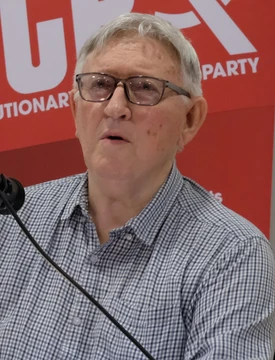
Rigoberta Menchú
K'iche' Guatemalan activist and Nobel Peace Prize laureate.

Rigoberta Menchú Tum, a K'iche' Maya from Guatemala, was born on January 9, 1959. She is a human rights activist, feminist, and winner of the Nobel Peace Prize. Her life's work has focused on raising awareness about the rights of Guatemala's Indigenous peoples during and after the country's civil war, which lasted from 1960 to 1996, and on advancing Indigenous rights around the world.
She was awarded the Nobel Peace Prize in 1992, became a UNESCO Goodwill Ambassador in 1996, and received the Prince of Asturias Award in 1998. Menchú is the subject of the 1983 testimonial book *I, Rigoberta Menchú* and wrote her own autobiography, *Crossing Borders*, in 1998. She established Guatemala's first Indigenous political party, Winaq, and ran for president under its banner in the 2007 and 2011 elections.
Menchú was born into a poor Indigenous family of K'iche' Maya descent in Laj Chimel, a rural area in the department of El Quiché. Her family, like many others, struggled to survive on the small plots of land left after the Spanish conquest. Her mother became a midwife at sixteen, using traditional medicinal plants, and worked until she was murdered at age 43. Her father was a prominent activist for Indigenous farmers' rights. Both parents attended Catholic church, but her mother also kept her Maya spirituality. Menchú absorbed Catholic teachings from her father and her mother's Maya influence, which taught her to live in harmony with nature and preserve her culture. She sees herself as a blend of both parents.
In 1979 and 1980, her brother Patrocinio and mother Juana Tum Kótoja were kidnapped, tortured, and killed by the Guatemalan Army. Her father, Vicente Menchú Perez, died in the 1980 Burning of the Spanish Embassy, an incident that began when urban guerrillas took hostages and government forces attacked. In 2015, former police commander Pedro García Arredondo was convicted of attempted murder and crimes against humanity for his role in that attack; he had also been convicted in 2012 for ordering the enforced disappearance of a student during the civil war. In 1984, her other brother, Victor, was shot dead after surrendering to the army, being threatened, and trying to flee.
Menchú married Ángel Canil, a Guatemalan, in a Mayan ceremony in 1995. They had a Catholic wedding in January 1998, at which time they also buried their son Tz'unun, who had died shortly after a premature birth in December. They later adopted a son named Mash Nahual Ja'. She appeared in the 1983 documentary *When the Mountains Tremble*. She lives with her family in San Pedro Jocopilas, Quiché Department, in the heart of K'iche' territory. In 2025, she became a Mexican citizen.
The Guatemalan Civil War, lasting from 1962 to 1996, was rooted in social, economic, and political inequality. It followed the CIA-backed removal of President Jacobo Arbenz in 1954, the Cuban revolution of 1959, and Che Guevara's call for more conflicts like Vietnam. The U.S. often supported authoritarian rule in the name of national security. An estimated 250,000 people were killed, including 50,000 disappeared, and hundreds of thousands were displaced, mostly by the armed forces or the Civil Defense Patrols. Arming civilians, especially Indigenous people, was unusual and illegal under the constitution. Massacres of Indigenous people began in May 1978 and peaked in 1982. By 1981, the CIA reported indiscriminate killings of civilians in rural areas, with soldiers ordered to fire at anything moving. In 1982, the CIA noted villages burned to the ground and commanders told to give no quarter to combatants or non-combatants. These inequalities hit marginalized groups hardest, especially Indigenous communities. The state used forceful, human rights–violating measures, leading to genocide, disappearances, and displacement. 83% of victims were later identified as Mayan, showing that most violations targeted Indigenous people. These events deeply affected Menchú and her family, driving her activism.
From a young age, Menchú worked alongside her father for the Committee for Peasant Unity, advocating for Indigenous farmers' rights. She faced discrimination for wanting to join male family members in the struggle, but her mother inspired her to keep making space for herself. She believes Indigenous oppression in Guatemala stems from exploitation and colonial land ownership, and her early activism focused on defending her people from that exploitation. After leaving school, she campaigned against human rights abuses.
- born
- 9 January 1959
- nationality
- Guatemalan (also became Mexican citizen in 2025)
- known_for
- Nobel Peace Prize (1992), UNESCO Goodwill Ambassador (1996), Prince of Asturias
Verified Timeline
Quick Facts
- Birth Name
- Rigoberta Menchú Tum
- Birth Date
- 1959-01-09
- Birth Place
- Laj Chimel, Quiché, Guatemala
- Citizenship
- Guatemala / Mexico
- Occupation
- Activist, politician
- Political Party
- Winaq (founder)
- Spouse
- Ángel Cortez · 1995
- Children
- 2 (1 deceased)
- Mother
- Juana Tum Kótoja-Mia
- Father
- Vicente Menchú Pérez-Mia
- Awards
- Nobel Peace Prize in 1992 / Prince of Asturias Awards in 1998 / Order of the Aztec Eagle in 2010
Facts from the source article.
Lore & Background
Rigoberta Menchú was born to a poor Indigenous family of K'iche' Maya descent in Laj Chimel, a rural area in the north-central Guatemalan department of El Quiché. Her father was a prominent activist for the rights of Indigenous farmers. Her mother began her career as a midwife at age sixteen and continued to practice using traditional medicinal plants until she was murdered at age 43. Both parents regularly attended Catholic church, but her mother remained connected to her Maya spirituality. Menchú considers herself to be the perfect mix of both her parents. In 1979–80, her brother Patrocinio and mother Juana Tum Kótoja were kidnapped, brutally tortured and murdered by the Guatemalan Army. Her father Vicente Menchú Perez died in the 1980 Burning of the Spanish Embassy. In 1984, her other brother Victor was shot to death after he surrendered to the Guatemalan Army, was threatened by soldiers, and tried to escape. From a young age, Menchú was active alongside her father, advocating for the rights of Indigenous farmers through the Committee for Peasant Unity. She often faced discrimination for wanting to join her male family members in the fight for justice, but was inspired by her mother to continue making space for herself. In 1981, she was exiled and escaped to Mexico, where she co-founded the United Republic of Guatemalan Opposition. In 1982, she narrated her testimonial biography 'Me llamo Rigoberta Menchú y así me nació la conciencia' to Venezuelan author and anthropologist Elizabeth Burgos. She is also the author of the autobiographical work 'Crossing Borders' (1998). In 1995, Menchú married Ángel Canil in a Mayan ceremony. They had a Catholic wedding in January 1998; at that time they also buried their son Tz'unun ('hummingbird' in K'iche' Maya), who had died after being born prematurely in December. They adopted a son, Mash Nahual Ja' ('Spirit of Water'). She lives with her family in the municipality of San Pedro Jocopilas, Quiché Department. In 2025, Menchú became a Mexican citizen.
Reader's Guide
Rigoberta Menchú's significance lies in her role as a global voice for Indigenous rights, particularly during and after the Guatemalan Civil War. The war lasted from 1962 to 1996 and was provoked by social, economic, and political inequality. An estimated 250,000 people were assassinated, including 50,000 desaparecidos, and hundreds of thousands of displaced individuals. 83% of victims were later identified as Mayan. Menchú's activism brought international attention to these human rights violations. She received the Nobel Peace Prize in 1992, was named a UNESCO Goodwill Ambassador in 1996, and received the Prince of Asturias Award in 1998. She founded the country's first indigenous political party, Winaq, and ran as its candidate for president of Guatemala in the 2007 and 2011 presidential elections, receiving three percent of the vote each time. After the war, she campaigned to have Guatemalan political and military establishment members tried in Spanish courts. In 1999, she filed a complaint before a court in Spain. On 23 December 2006, Spain called for the extradition from Guatemala of seven former members of Guatemala's government on charges of genocide and torture. Her testimonial biography 'I, Rigoberta Menchú' (1983) remains a key document of Indigenous suffering and resistance. Menchú also featured prominently in the 1983 documentary 'When the Mountains Tremble'.
Did You Know?
- Menchú's mother began her career as a midwife at age sixteen and practiced using traditional medicinal plants until she was murdered at age 43.
- In 1995, Menchú married Ángel Canil in a Mayan ceremony; they later had a Catholic wedding in January 1998, at which time they buried their son Tz'unun, who had died after being born prematurely.
- Menchú's adopted son is named Mash Nahual Ja', which means 'Spirit of Water' in K'iche' Maya.
- In the 2007 and 2011 presidential elections, Menchú received three percent of the vote in the first round each time.
- On 23 December 2006, Spain called for the extradition of seven former members of Guatemala's government, including Efraín Ríos Montt and Óscar Mejía, on charges of genocide and torture.
Frequently Asked Questions
Who is Rigoberta Menchú?
Rigoberta Menchú Tum (born 9 January 1959) is a K'iche' Guatemalan human rights activist, feminist, and Nobel Peace Prize laureate. She is widely recognized for championing the rights of Indigenous peoples in Guatemala and around the world.
What is Rigoberta Menchú's role in politics and activism?
She has spent her career highlighting the struggles of Guatemala's Indigenous communities, especially during and after the 1960–1996 civil war, and has worked to advance Indigenous rights on the international stage. She also founded the indigenous political party Winaq to give native Guatemalans a direct political voice.
What major awards and honors has Rigoberta Menchú received?
She was awarded the Nobel Peace Prize in 1992, appointed a UNESCO Goodwill Ambassador in 1996, and received the Prince of Asturias Award in 1998. These recognitions reflect her sustained advocacy for Indigenous peoples' dignity and rights.
Why is Rigoberta Menchú important to modern political activism?
She became one of the most prominent global voices for Indigenous rights, drawing worldwide attention to the violence and marginalization endured by Guatemala's native populations during its civil war. Her work helped reshape how international human-rights discourse incorporates Indigenous perspectives.
What is Rigoberta Menchú's nationality and current status?
She is Guatemalan by birth and also holds Mexican citizenship, which she acquired in 2025. She remains active in human-rights and Indigenous-advocacy work.
More in Modern Political Activists And Theorists 1-24
Related in Modern Political Activists And Theorists
Links follow this subject's own source article.
Spotted an error? Know more?
This is a living reference — every entry is fact-audited, and reader corrections feed straight into our audit queue. Suggest an edit · See this site's audit record