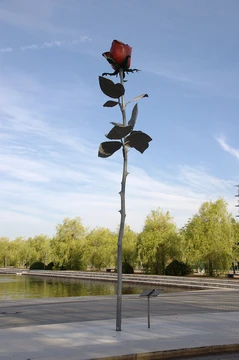
Donald Judd
American artist and leading theoretician of minimalism.

Nan Palmero · CC BY 2.0
Donald Clarence Judd (June 3, 1928 – February 12, 1994) was an American artist tied to minimalism. He is widely seen as that movement’s top international figure and its key theorist, thanks to pieces like his 1964 essay "Specific Objects." In his art, Judd aimed for the constructed object and the space around it to be clear and independent, resulting in a strictly even-handed presentation with no compositional pecking order.
Judd was born in Excelsior Springs, Missouri. After serving as an Army engineer from 1946 to 1947, he studied at the College of William and Mary in 1948, then moved to Columbia University’s School of General Studies, where he got a bachelor’s in philosophy and worked toward a master’s in art history under Rudolf Wittkower and Meyer Schapiro, while also taking classes at the Art Students League of New York. From 1959 to 1965, he reviewed art for major American magazines. In 1968, he bought a five-story cast-iron building at 101 Spring Street for under $70,000 (about $648,000 in 2025). Designed by Nicholas Whyte and built in 1870, Judd used it as his New York home and studio, renovating it floor by floor over 25 years and occasionally installing works he bought or commissioned from other artists.
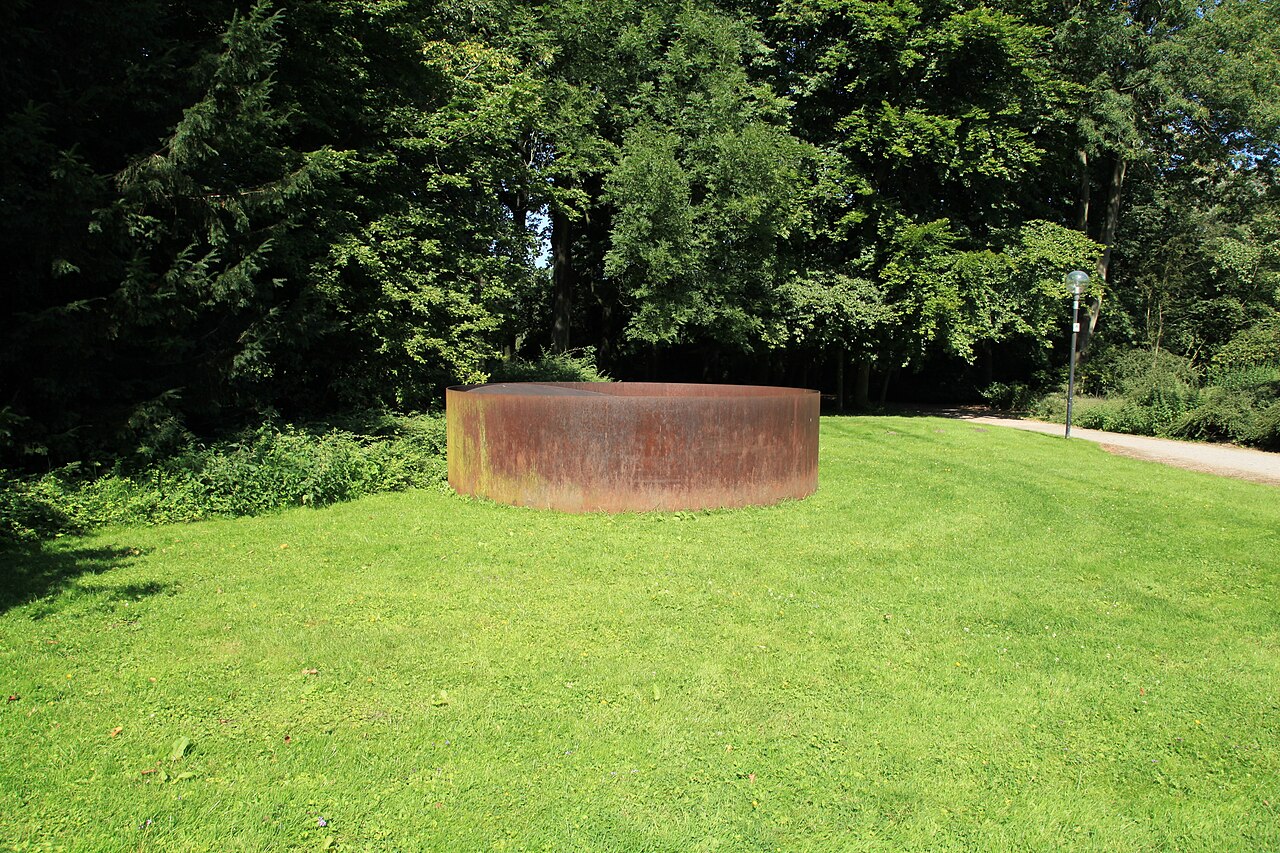
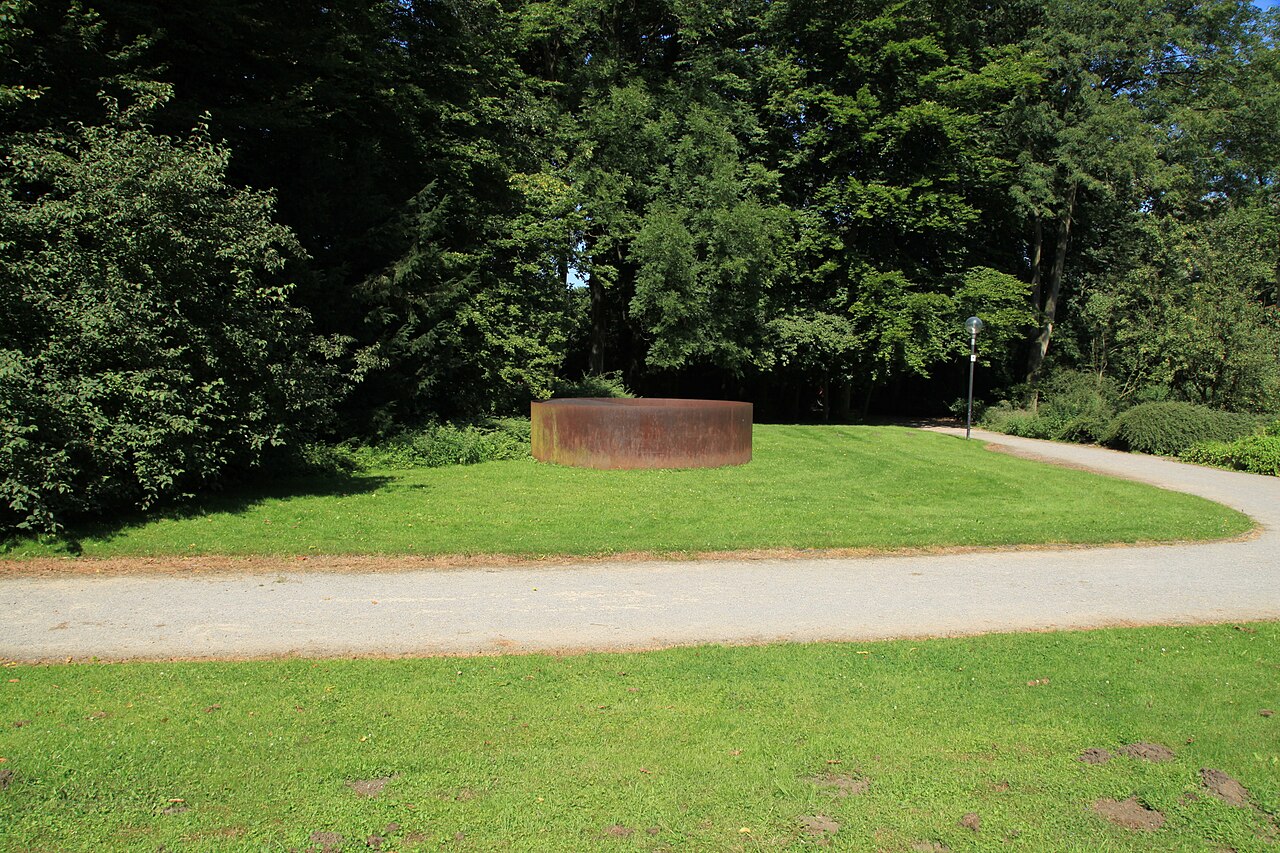
Judd started out as a painter in the late 1940s. His first solo show, featuring expressionist paintings, opened in 1957 at New York’s Panoras Gallery. From the mid-1950s to 1961, he explored woodcuts, shifting from figurative to increasingly abstract imagery—first carving organic, rounded shapes, then moving to precise straight lines and angles. His style soon left behind illusionistic media in favor of constructions where materiality was central. He didn’t have another solo show until 1963 at the Green Gallery, with works he finally considered worth exhibiting. By 1963, he had settled on a core set of forms—'stacks,' 'boxes,' and 'progressions'—that occupied him for the next three decades. Most of his output consisted of freestanding "specific objects" (the title of his key 1965 essay in *Arts Yearbook 8*), using simple, often repeated forms to explore space and its use. Common materials included metals, industrial plywood, concrete, and color-impregnated Plexiglas. He made his first floor box structure in 1964, and his first floor box with Plexiglas a year later. Also in 1964, he began wall-mounted sculptures and developed the curved progression format from a floor piece that set a hollow pipe into a solid wooden block. Early works he made himself (with help from his father, Roy Judd), but in 1964 he started hiring professional artisans and manufacturers like Bernstein Brothers to fabricate pieces from his drawings. In 1965, he created his first stack—identical iron units arranged from floor to ceiling.
As he left painting for sculpture in the early 1960s, he wrote "Specific Objects" in 1964. The essay identified a new territory for American art, rejecting inherited European values like illusion and represented space in favor of real space. He pointed to evidence in the work of New York artists such as H.C. Westermann, Lucas Samaras, John Chamberlain, Jasper Johns, Dan Flavin, George Earl Ortman, and Lee Bontecou. Judd’s fabricated pieces occupied a space that wasn’t easily called painting or sculpture—he refused to call them sculpture, noting they were made by small fabricators using industrial processes, not sculpted. That their categorical identity was uncertain, and that they avoided worn-out conventions, was part of their value. He showed two pieces in the 1966 exhibition "Primary Structures" at the Jewish Museum in New York, where during a panel he challenged Mark di Suvero’s claim that real artists make their own art, arguing that methods don’t matter as long as the results are art. In 1968, the Whitney Museum of American Art held a retrospective of his work that included none of his early paintings. That same year, he received a Guggenheim Fellowship for Fine Arts. Also in 1968, his purchase of the New York building let him start placing his work more permanently than in gallery or museum shows. This led him to push for permanent installations for his and others’ work, believing temporary exhibitions, designed by curators for the public, put the art in the background and degraded it through incompetence or incomprehension. This concern grew as his distaste for the art world increased.
In the early 1970s, Judd began annual trips to Baja California with his family. The clean, empty desert affected him deeply, and this strong attachment shaped his later work.
- born
- June 3, 1928
- died
- February 12, 1994
- field
- Artist, art critic
- nationality
- American
- known_for
- Minimalist sculpture, 'Specific Objects' essay
Verified Timeline
Lore & Background
Judd was born in Excelsior Springs, Missouri. From 1946 to 1947, he served in the Army as an engineer. In 1948, he enrolled in the College of William and Mary, later transferring to Columbia University School of General Studies, where he earned a bachelor's degree in philosophy and worked toward a master's in art history under Rudolf Wittkower and Meyer Schapiro while attending classes at the Art Students League of New York. From 1959 to 1965, he wrote art criticism for major American art magazines. In 1968, he bought a five-story cast-iron building at 101 Spring Street for less than $70,000 (equivalent to $648,000 in 2025). Designed by Nicholas Whyte and built in 1870, Judd used it as his New York residence and studio, and over the next 25 years renovated it floor by floor, occasionally installing works he purchased or commissioned from other artists. Judd began as a painter in the late 1940s. His first solo exhibition, of expressionist paintings, opened in 1957 at the Panoras Gallery in New York. By 1963, he had established an essential vocabulary of forms—'stacks', 'boxes', and 'progressions'—which preoccupied him for the next thirty years. In 1964, he began delegating fabrication to professional artisans and manufacturers such as the Bernstein Brothers, based on his drawings. His first floor box structure was made in 1964, and his first stack—an arrangement of identical iron units stretching from floor to ceiling—was created in 1965. Judd refused to call his works sculpture, pointing out that they were not sculpted but made by small fabricators using industrial processes.
Reader's Guide
Donald Judd's significance lies in his role as both a practitioner and theoretician of minimalism. His essay "Specific Objects" (1964) articulated a new territory for American art, rejecting inherited European values of illusion and represented space in favor of real space. Judd's work emphasized materiality and simple, repeated forms, using humble materials such as metals, industrial plywood, concrete, and color-impregnated Plexiglas. He challenged traditional notions of artistic creation: at the 1966 "Primary Structures" exhibition at the Jewish Museum, he publicly challenged Mark di Suvero's assertion that real artists make their own art, replying that methods should not matter as long as the results create art. His later move to Marfa, Texas, where he acquired over 32,000 acres of ranch land collectively known as Ayala de Chinati, allowed him to create permanent installations that made the spaces themselves part of the works. Judd's legacy includes his insistence on permanent installations, as he believed temporary exhibitions designed by curators for the public placed the art itself in the background, ultimately degrading it due to incompetency or incomprehension.
Did You Know?
- Judd served in the Army as an engineer from 1946 to 1947.
- He bought his five-story cast-iron building at 101 Spring Street for less than $70,000 in 1968, equivalent to $648,000 in 2025.
- Judd's first solo exhibition, of expressionist paintings, opened in 1957 at the Panoras Gallery in New York.
- He publicly challenged Mark di Suvero at the 1966 'Primary Structures' exhibition, arguing that methods should not matter as long as the results create art.
- In Marfa, Texas, Judd acquired over 32,000 acres (130 km²) of ranch land, collectively known as Ayala de Chinati.
Philosophy & Theoretical Framework
Judd's intellectual contribution to art proved as consequential as his physical output. His 1964 essay "Specific Objects" (published in Arts Yearbook 8, 1965) charted a new territory for American art while simultaneously rejecting inherited European values centered on illusion and represented space. In its place he championed real, physical space, pointing to a constellation of New York practitioners—Jasper Johns, Dan Flavin, John Chamberlain, Lee Bontecou, H.C. Westermann, Lucas Samaras, and George Earl Ortman—as evidence of this shift. Crucially, Judd refused to classify his own works as sculpture, noting they were fabricated by small industrial workshops rather than sculpted by an artist's hand. He also voiced his unorthodox perception of minimalism in Arts Yearbook 8, saying, "The new three dimensional work doesn't constitute a movement, school, or style. The common aspects are too general and too little common to define a movement. The differences are greater than the similarities." At the 1966 "Primary Structures" exhibition at the Jewish Museum, he publicly challenged Mark di Suvero's assertion that genuine artists must make their own work, insisting that methods were irrelevant so long as the result constituted art.
From Canvas to Object: The Evolution of Form
Judd's artistic trajectory moved decisively away from illusion and toward material presence. Beginning as a painter in the late 1940s, he showed expressionist canvases at the Panoras Gallery in 1957, then turned to woodcuts in the mid-1950s, progressing from organic, rounded carvings to the disciplined geometry of straight lines and angles. By 1963 he had crystallized a core vocabulary—stacks, boxes, and progressions—that would occupy him for the next three decades. His first floor box structure appeared in 1964, followed by a Plexiglas version the next year, and his first stack, a column of identical iron units reaching from floor to ceiling, was completed in 1965. A pivotal shift occurred that same year when Judd began delegating fabrication to professional manufacturers such as the Bernstein Brothers, working from his own drawings rather than executing pieces himself. Materials became deliberately humble: metals, industrial plywood, concrete, color-impregnated Plexiglas. This embrace of industrial process was not a compromise but a philosophical statement about how objects came into being and what their categorical identity meant.
The Spring Street Building & the Case for Permanence
In 1968, Judd purchased a five-story cast-iron building at 101 Spring Street in New York for under $70,000, roughly equivalent to $648,000 in 2025 dollars. The structure, designed by Nicholas Whyte and built in 1870, became both his residence and studio. Over the following twenty-five years he renovated it floor by floor, installing works he had purchased or commissioned from other artists alongside his own. The building represented something far more significant than a domestic address: it was the first realization of his deepening conviction that art deserved permanent, dedicated spaces rather than the temporary, curator-designed exhibitions of galleries and museums. He believed that when shows were arranged for public consumption by curators, the art itself was pushed into the background, degraded by what he saw as institutional incompetency or incomprehension. Spring Street thus became both a personal sanctuary and a quiet manifesto against the conventions of the art world, a position that would intensify throughout the remainder of his career.
The Desert, the Land, and Expanding Scale
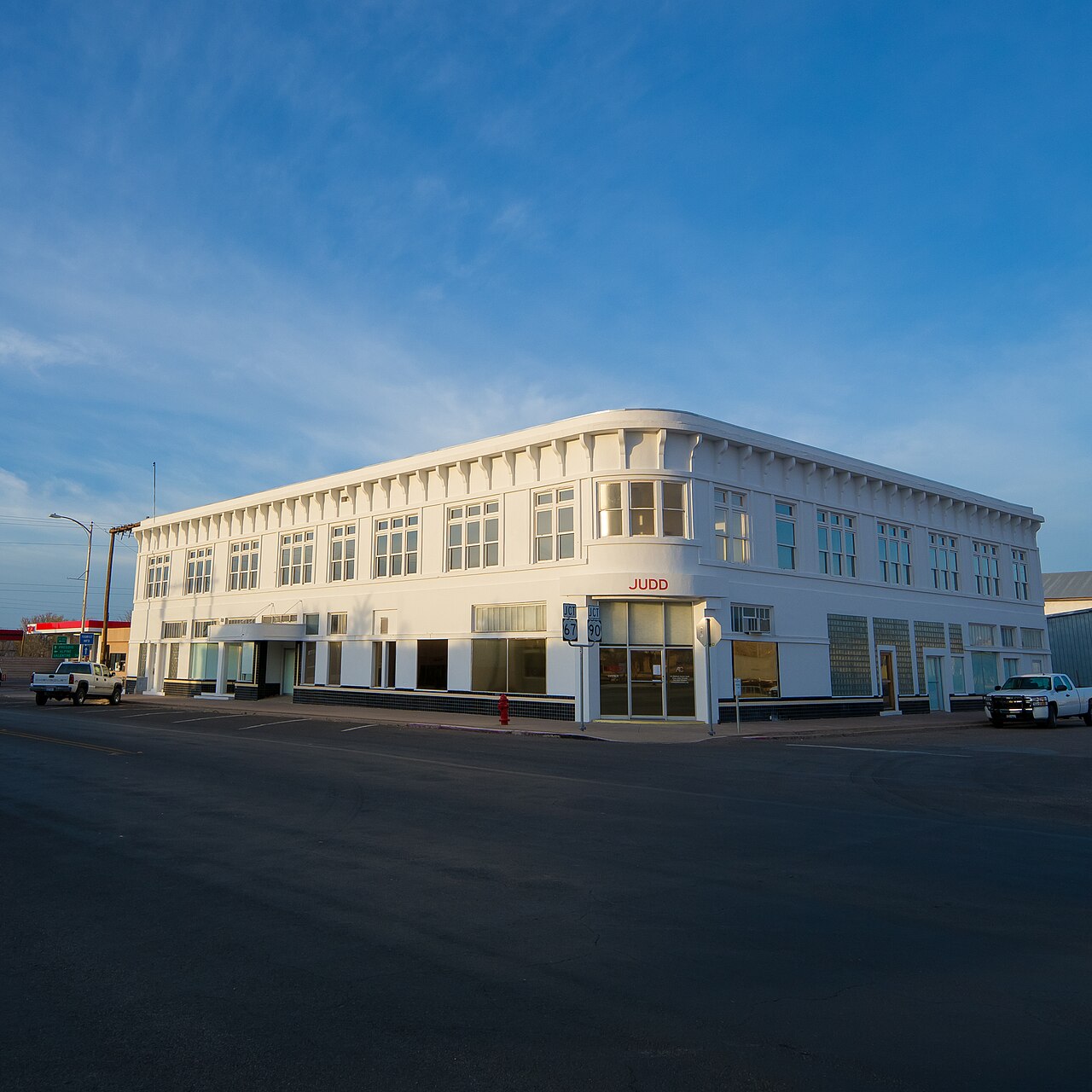
Beginning in the early 1970s, Judd made annual trips to Baja California with his family, and the clean, empty desert affected him deeply. That strong attachment to the land would remain with him for the rest of his life. In 1971 he rented a house in Marfa, Texas, where he would eventually purchase numerous buildings and acquire over 32,000 acres (130 km²) of ranch land, collectively known as Ayala de Chinati. This deep connection to place coincided with a dramatic expansion in his practice. During the 1970s his work grew in both scale and complexity, and he began creating room-sized installations in which the architectural space itself became an integral component of the piece. Viewing his work in these contexts was no longer a detached, gallery-bound experience but a visceral, physical encounter in which viewers moved through the objects and felt their weight and repetition in their bodies. The desert's emptiness and the built environment of Marfa gave Judd a setting where his democratic, hierarchy-free presentation of form could be experienced at its fullest, unmediated by the institutional frameworks he had long resisted.
Gallery

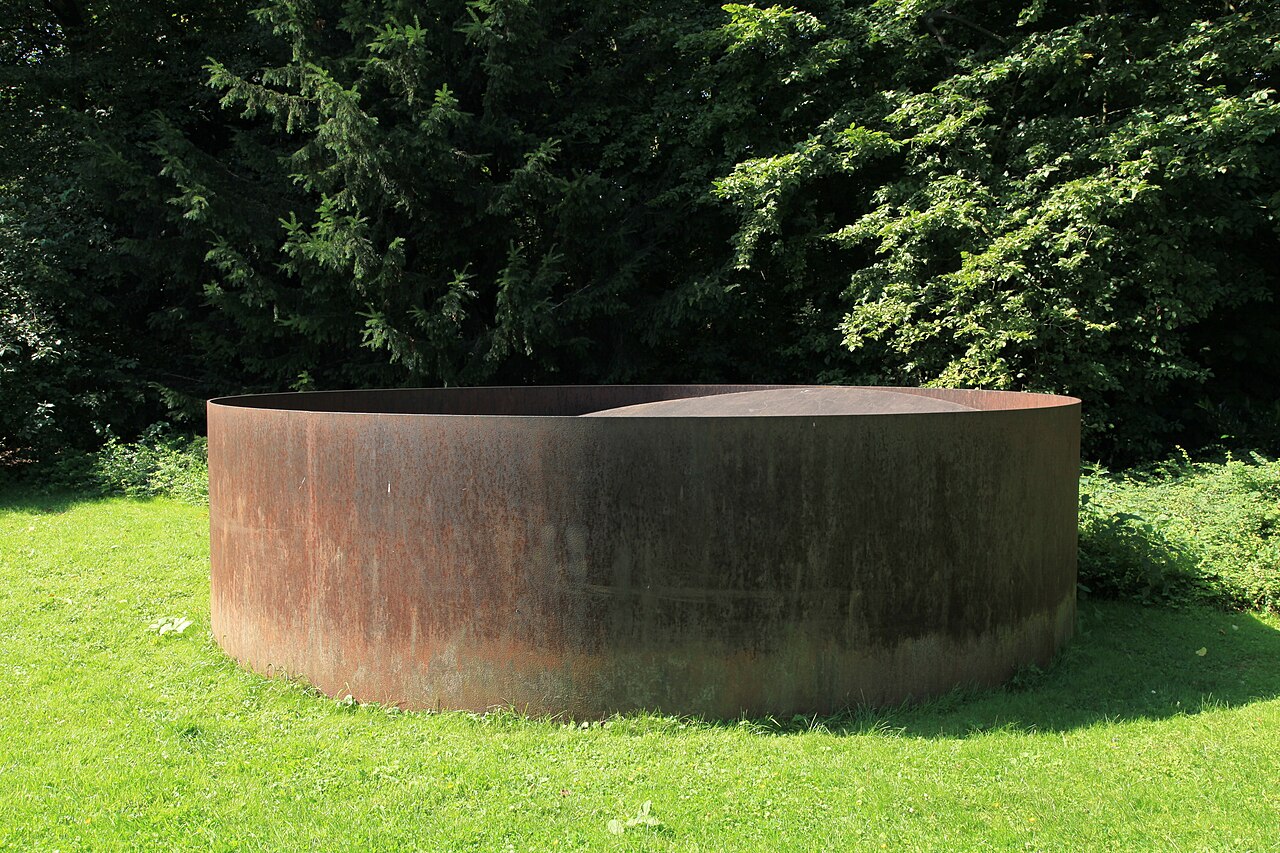
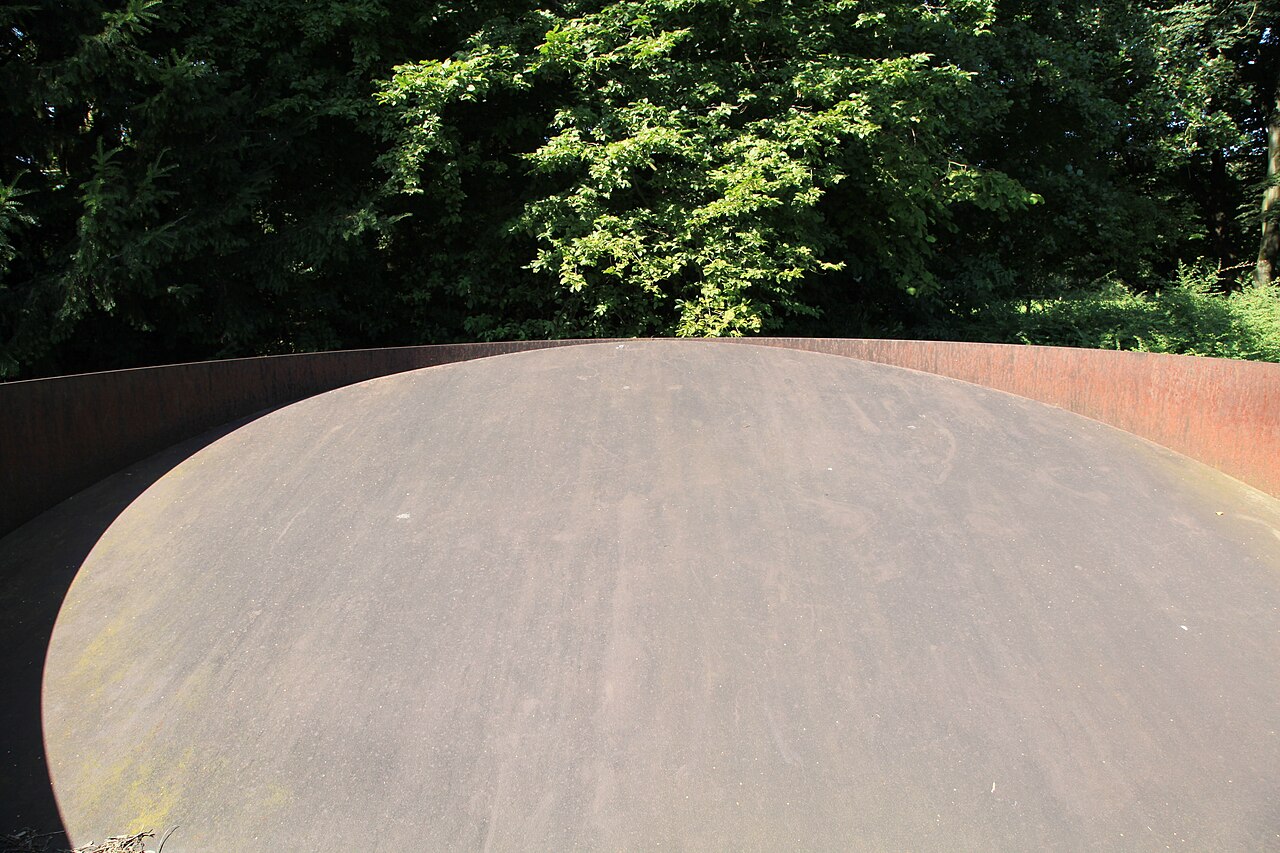
More in Modern & Contemporary Artists 1-24
Spotted an error? Know more?
This is a living reference — every entry is fact-audited, and reader corrections feed straight into our audit queue. Suggest an edit · See this site's audit record