Spinel group
A class of cubic minerals with diverse cation substitutions.

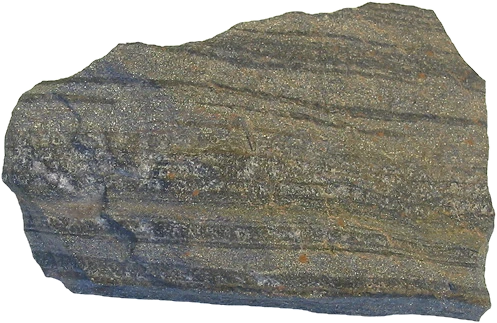
The spinel group is a class of minerals defined by the general formula AB₂X₄, which crystallize in the cubic (isometric) crystal system. In this structure, the X anions—typically chalcogens such as oxygen or sulfur—are arranged in a close-packed cubic lattice, while the A and B cations occupy some or all of the octahedral and tetrahedral sites within that lattice. In the prototypical spinel, the charges on A and B are +2 and +3, respectively, but other combinations are possible, including divalent, trivalent, or tetravalent cations like magnesium, zinc, iron, manganese, aluminium, chromium, titanium, and silicon. The anion is normally oxygen; when other chalcogenides form the anion sublattice, the structure is called a thiospinel. A and B may also be the same metal with different valences, as in magnetite (Fe₃O₄), the most abundant member of the group, or even alloys, such as the material Li₄Ti₅O₁₂ used in some high-energy-density lithium-ion batteries. Spinels are grouped into series based on the B cation. The group is named for the mineral spinel (MgAl₂O₄), once known as "spinel ruby" (today, "ruby" refers only to corundum). Members include aluminium spinels (spinel, gahnite, hercynite, galaxite, pleonaste), iron spinels (cuprospinel, franklinite, jacobsite, magnesioferrite, magnetite, trevorite, ulvöspinel, zinc ferrite), chromium spinels (chromite, magnesiochromite, zincochromite), cobalt spinels (manganesecobaltite), vanadium spinels (coulsonite, magnesiocoulsonite), and others like ringwoodite (an olivine polymorph found in the Earth’s mantle) and musgravite. Many more compounds with a spinel structure, including thiospinels and selenospinels, can be synthesized or occur naturally. The heterogeneity of spinel group members varies with composition; ferrous and magnesium members often form solid solutions, requiring similarly sized cations, while ferric and aluminium spinels are almost entirely homogeneous due to large size differences.
- field
- Mineralogy
- known_for
- Cubic crystal structure with general formula AB2X4; includes magnetite, chromite, and spinel itself
- composition
- Cations A and B can be divalent, trivalent, or tetravalent (e.g., Mg, Zn, Fe, Mn, Al, Cr, Ti, Si); anion is normally oxygen or other chalcogens (thiospinels)
Lore & Background
The spinel group comprises minerals that crystallize in the cubic (isometric) system, with anions such as oxygen or sulfur arranged in a close-packed cubic lattice. Cations occupy some or all of the octahedral and tetrahedral sites within this lattice. The general formula is \(AB_2X_4\), where X is typically a chalcogen like oxygen; when other chalcogenides form the anion sublattice, the structure is termed a thiospinel. In the prototypical form, A carries a +2 charge and B a +3 charge, but other combinations involving divalent, trivalent, or tetravalent cations—including magnesium, zinc, iron, manganese, aluminium, chromium, titanium, and silicon—are possible. A and B may also be the same metal with different valences, as in magnetite (\(Fe_3O_4\)), the most abundant member of the group. The group is named after spinel, once called "spinel ruby," though the term ruby now refers only to corundum. Members are grouped in series by the B cation, yielding aluminium spinels (spinel, gahnite, hercynite, galaxite, pleonaste), iron spinels (cuprospinel, franklinite, jacobsite, magnesioferrite, magnetite, trevorite, ulvöspinel, zinc ferrite), chromium spinels (chromite, magnesiochromite, zincochromite), cobalt spinels (manganesecobaltite), and vanadium spinels (coulsonite, magnesiocoulsonite). Other minerals with the spinel structure include ringwoodite, an olivine polymorph abundant in Earth’s mantle from about 520 to 660 km depth, and musgravite, a type of multi-spinel. The heterogeneity of spinel group members varies with composition: ferrous and magnesium members vary greatly in solid solution, requiring similarly sized cations, while ferric and aluminium spinels are almost entirely homogeneous due to large size differences. The space group is typically \(Fd\bar{3}m\), though spinel itself adopts the tetrahedral \(F\bar{4}3m\) above 452.6 K. In a normal spinel structure, oxygen ions approximate a cubic close-packed lattice, with B ions occupying half the octahedral holes and A ions occupying one-eighth of the tetrahedral holes. Inverse spinel structures have all A cations and half of the B cations in octahedral sites, with the remaining B cations in tetrahedral sites. Intermediate cases exist, described by an inversion degree x, ranging from 0 (normal) to 1 (inverse). Cation distribution relates to crystal field stabilization energies, with some ions showing stro
Reader's Guide
The spinel group is significant in mineralogy and materials science due to its structural flexibility and wide range of compositions. The prototypical charge balance is A2+B3+2X2−4, but many combinations of divalent, trivalent, and tetravalent cations are possible, including alloys such as LiNi0.5Mn1.5O4 used in high-energy lithium-ion batteries. Magnetite (Fe3O4) is the most abundant member, with iron in two valence states. The group's heterogeneity varies: ferrous and magnesium members form solid solutions, while ferric and aluminium spinels are nearly homogeneous due to size differences. Natural spinels occur in Earth's mantle (e.g., ringwoodite) and in meteorites, and synthetic thiospinels and selenospinels expand the group. The structure's space group is usually Fd3m, but spinel itself shows a transition to F43m at high temperature.
Did You Know?
- The spinel group is named after spinel (MgAl2O4), once known as 'spinel ruby'; today 'ruby' refers only to corundum.
- Magnetite (Fe3O4) is the most abundant member of the spinel group and has iron in both +2 and +3 valence states.
- Thiospinels and selenospinels are spinel-structure compounds where the anion sublattice is made of chalcogens other than oxygen.
More in Minerals & Ore Deposits 1-24
Spotted an error? Know more?
This is a living reference — every entry is fact-audited, and reader corrections feed straight into our audit queue. Suggest an edit · See this site's audit record