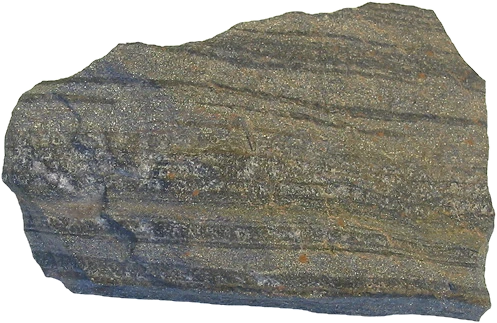
Sphalerite
Primary zinc ore, named for its deceptive appearance.

Sphalerite is a sulfide mineral with the formula (Zn, Fe)S, serving as the primary source of zinc ore. It occurs globally across many deposit types, most notably in sedimentary exhalative, Mississippi-Valley type, and volcanogenic massive sulfide settings. It commonly appears alongside galena, chalcopyrite, pyrite, calcite, dolomite, quartz, rhodochrosite, and fluorite.
The mineral was first identified in 1847 by German geologist Ernst Friedrich Glocker, who named it from the Greek *sphalerós* (meaning "deceiving") because it was tricky to identify. Beyond zinc, sphalerite also yields cadmium, gallium, germanium, and indium. Miners often call it zinc blende, black-jack, or ruby blende. A high-iron, opaque black variety is known as marmatite.
Sphalerite crystallizes in a face-centered cubic zincblende structure—a pattern named after the mineral itself—belonging to the hextetrahedral crystal class (space group F43m). In this arrangement, sulfur and zinc or iron ions each occupy points of a face-centered cubic lattice, offset so that both types of ions are tetrahedrally coordinated to the other. This structure is closely related to diamond’s. The sphalerite group includes colaradoite, hawleyite, metacinnabar, stilleite, and tiemannite. Sphalerite has a hexagonal polymorph called wurtzite (stable above 1,020 °C) and a trigonal polymorph called matraite. Its lattice constant for zinc sulfide is 0.541 nm. Sphalerite can form pseudomorphs after galena, tetrahedrite, barite, and calcite, and it may exhibit Spinel Law twins with a [111] twin axis.
The formula (Zn,Fe)S reflects iron content that typically rises with formation temperature, reaching up to 40%. It can be viewed as a ternary compound between ZnS and FeS, with composition ZnₓFe₁₋ₓS where x ranges from 1 (pure ZnS) to 0.6. All natural sphalerite contains impurities that substitute for zinc in the cation site; common ones include cadmium, mercury, and manganese, while gallium, germanium, and indium can appear in hundreds to thousands of ppm. Cadmium may replace up to 1% of zinc, and manganese is often found in iron-rich specimens. Sulfur can be replaced by selenium or tellurium. Impurity levels are governed by formation conditions such as temperature, pressure, element availability, and fluid composition.
Physically, sphalerite has perfect dodecahedral cleavage (six planes). Pure material is a semiconductor, but it becomes conductive as iron content increases. Its Mohs hardness is 3.5 to 4. It can be distinguished from similar minerals by its perfect cleavage, resinous luster, and reddish-brown streak in darker varieties.
Optically, pure zinc sulfide is a wide-bandgap semiconductor (bandgap ~3.54 eV), making it transparent in visible light. Higher iron content makes it opaque, and other impurities produce various colors. In thin section, sphalerite shows very high positive relief and appears colorless to pale yellow or brown, with no pleochroism. Its refractive index (sodium light, 589.3 nm) ranges from 2.37 (pure ZnS) to 2.50 (40% iron). It is isotropic under cross-polarized light, but birefringence can occur if intergrown with wurtzite, increasing from 0 to 0.022 as wurtzite content rises. Depending on impurities, sphalerite may fluoresce under ultraviolet light and exhibits a characteristic yellow-orange triboluminescence, best seen in end-slab specimens. AI-based optical identification methods have proven effective.
Varieties include cleiophane—a gemmy, nearly pure ZnS (less than 0.1% iron) from Franklin, New Jersey, which fluoresces orange or blue under longwave UV. Marmatite (or christophite) is an opaque black variety with up to 25% iron, named after the Marmato mining district in Colombia and the St. Christoph mine in Saxony, respectively. Neither is recognized by the IMA. Red, orange, or brownish-red sphalerite is called ruby blende or ruby zinc; dark-colored material is termed black-jack.
Sphalerite is among the most common sulfide minerals, found worldwide in many deposit types: skarns, hydrothermal deposits, sedimentary beds, volcanogenic massive sulfide (VMS) deposits, Mississippi-Valley type (MVT) deposits, granite, and coal. It also occurs in sedimentary exhalative deposits.
- discovered_by
- Ernst Friedrich Glocker
- chemical_formula
- (Zn, Fe)S
- crystal_system
- face-centered cubic (zincblende structure)
- hardness
- 3.5 to 4 on Mohs scale
- primary_use
- ore of zinc, also cadmium, gallium, germanium, indium
Quick Facts
- Category
- Sulfide mineral
- Formula
- (Zn,Fe)S
- Imasymbol
- Sp
- Strunz
- 2.CB.05a
- Dana
- 02.08.02.01
- System
- Cubic
- Class
- Hextetrahedral (43m) / H-M symbol: (4 3m)
- Symmetry
- F43m (No. 216)
- Unit Cell
- a = 5.406 Å; Z = 4
- Habit
- Euhedral crystals – occurs as well-formed crystals showing good external form. Granular – generally occurs as anhedral to subhedral crystals in matrix.
- Cleavage
- perfect dodecahedral on [011]
- Twinning
- Simple contact twins or complex lamellar forms, twin axis [111]
Facts from the source article.
Lore & Background
Sphalerite, a sulfide mineral and the primary ore of zinc, was named in 1847 by German geologist Ernst Friedrich Glocker from a Greek word meaning 'deceiving', due to the difficulty of identifying it. It crystallizes in a face-centered cubic structure known as the zincblende structure, which is closely related to diamond. The mineral typically exhibits perfect dodecahedral cleavage, with six cleavage planes, and has a hardness of 3.5 to 4 on the Mohs scale. Pure sphalerite is a wide-bandgap semiconductor, transparent in visible light, but increasing iron content makes it opaque and transitions it to a conductor. Its refractive index ranges from 2.37 for pure zinc sulfide to 2.50 at 40% iron content. Sphalerite is isotropic under cross-polarized light but can show birefringence when intergrown with its hexagonal polymorph, wurtzite. It fluoresces under ultraviolet light depending on impurities and displays a characteristic yellow-orange triboluminescence. The mineral is found worldwide in various deposit types, including sedimentary exhalative, Mississippi-Valley type, and volcanogenic massive sulfide deposits, often associated with galena, chalcopyrite, pyrite, calcite, dolomite, quartz, rhodochrosite, and fluorite. Its iron content, which can reach up to 40%, increases with formation temperature, and common impurities include cadmium, mercury, manganese, gallium, germanium, and indium. Varieties include cleiophane, a nearly pure zinc sulfide that is gemmy and fluorescent; marmatite, an opaque black variety with high iron; and ruby blende or black-jack, named for color. Sphalerite can form pseudomorphs after galena, tetrahedrite, barite, and calcite, and may exhibit Spinel Law twins.
Reader's Guide
Sphalerite is the most important ore of zinc, accounting for about 95% of primary zinc extraction. It is also a significant source of cadmium, gallium, germanium, and indium. The mineral is found in a wide range of deposit types, including sedimentary exhalative (SEDEX) deposits, which provide about 50% of zinc and lead; Mississippi-Valley type (MVT) deposits, accounting for 15–20%; and volcanogenic massive sulfide (VMS) deposits, which account for 25% of zinc reserves. Sphalerite's physical properties include perfect dodecahedral cleavage, a hardness of 3.5 to 4, and a distinctive resinous luster. It is a semiconductor in pure form but becomes conductive with increasing iron content. The mineral exhibits triboluminescence, typically yellow-orange, and can fluoresce under ultraviolet light depending on impurities. Varieties include cleiophane (nearly pure ZnS, fluorescent orange/blue) and marmatite (opaque black with high iron). Sphalerite is not recognized by the IMA in its varieties cleiophane and marmatite.
Did You Know?
- Sphalerite was named from the Greek word sphălerós, meaning 'deceiving', due to the difficulty of identifying the mineral.
- The zincblende crystal structure, named after sphalerite, is closely related to the structure of diamond.
- Sphalerite can be triboluminescent, producing a yellow-orange light when struck.
- Marmatite is an opaque black variety of sphalerite with high iron content, named after the Marmato mining district in Colombia.
More in Minerals & Ore Deposits 1-24
Spotted an error? Know more?
This is a living reference — every entry is fact-audited, and reader corrections feed straight into our audit queue. Suggest an edit · See this site's audit record