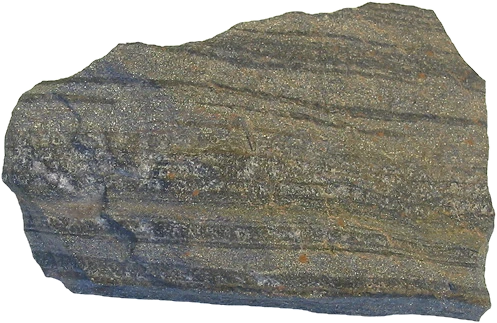
Smithsonite
A zinc carbonate mineral named after James Smithson.

Smithsonite is a zinc carbonate mineral (ZnCO3), also called zinc spar. It was once confused with hemimorphite because the two look very similar, and both were referred to as calamine. The mineral was named in 1832 after James Smithson, the English scientist who first identified it in 1802. Smithsonite is a trigonal mineral that comes in many colors but rarely forms well-shaped crystals; it typically appears as earthy, botryoidal masses. Its Mohs hardness is 4.5, and its specific gravity ranges from 4.4 to 4.5. It forms as a secondary mineral in the weathered or oxidized zones of zinc ore deposits, sometimes replacing carbonate rock to create zinc ore. Common associates include hemimorphite, willemite, hydrozincite, cerussite, malachite, azurite, aurichalcite, and anglesite. Smithsonite has two limited solid solution series: with manganese it grades into rhodochrosite, and with iron into siderite. A bright yellow variety, sometimes called "turkey fat ore," gets its color from inclusions of greenockite.
- type
- mineral
- chemical_formula
- ZnCO3
- mohs_hardness
- 4.5
- specific_gravity
- 4.4 to 4.5
- crystal_system
- trigonal
- named_after
- James Smithson
Lore & Background
Smithsonite, also known as zinc spar, is the mineral form of zinc carbonate. It is a variably colored trigonal mineral that only rarely forms well-shaped crystals, with its typical habit being earthy, botryoidal masses. The mineral has a Mohs hardness of 4.5 and a specific gravity ranging from 4.4 to 4.5. Historically, smithsonite was confused with hemimorphite due to their very similar appearance; both were referred to by the term calamine, which caused considerable confusion. The distinct mineral was named in 1832 after English scientist James Smithson, who had first identified it in 1802. Smithsonite occurs as a secondary mineral in the weathering or oxidation zone of zinc-bearing ore deposits, and it sometimes forms as replacement bodies in carbonate rocks, where it may constitute zinc ore. It is commonly found alongside minerals such as hemimorphite, willemite, hydrozincite, cerussite, malachite, azurite, aurichalcite, and anglesite. The mineral forms two limited solid solution series: substitution with manganese leads to rhodochrosite, while substitution with iron leads to siderite. A bright yellow variety, sometimes called "turkey fat ore," gets its color from inclusions of greenockite within the crystals.
Reader's Guide
Smithsonite, known historically as zinc spar, is the mineral form of zinc carbonate. Its significance is deeply tied to a long-standing confusion with the mineral hemimorphite, as both were once grouped under the term "calamine" due to their similar appearance. This confusion was resolved only after it was recognized that they are distinct minerals. The mineral was formally named in 1832 for James Smithson, the English scientist who first identified it in 1802 and who later founded the Smithsonian Institution. Smithsonite is a trigonal mineral that rarely forms well-developed crystals, typically occurring instead as earthy, botryoidal masses. It has a Mohs hardness of 4.5 and a specific gravity between 4.4 and 4.5. It forms as a secondary mineral in the oxidized zones of zinc-bearing ore deposits and can also appear as replacement bodies in carbonate rocks, sometimes serving as zinc ore. The mineral is commonly found alongside hemimorphite, willemite, hydrozincite, cerussite, malachite, azurite, aurichalcite, and anglesite. Smithsonite participates in two limited solid solution series: one with rhodochrosite, where manganese substitutes for zinc, and another with siderite, where iron substitutes. A notable bright yellow variety, called "turkey fat ore," gets its color from inclusions of greenockite.
Did You Know?
- A bright yellow variety is called 'turkey fat ore' due to greenockite inclusions.
- Smithsonite forms limited solid solution series with rhodochrosite and siderite.
More in Minerals & Ore Deposits 1-24
Spotted an error? Know more?
This is a living reference — every entry is fact-audited, and reader corrections feed straight into our audit queue. Suggest an edit · See this site's audit record