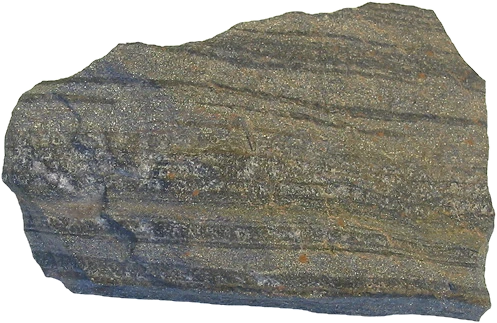
Siderite
Carbonate iron ore with historical steel-making significance.

Siderite is a mineral composed of iron(II) carbonate (FeCO3), with a name derived from the Ancient Greek word for iron. It is a valuable iron ore, consisting of 48% iron and lacking sulfur and phosphorus, though zinc, magnesium, and manganese commonly substitute for the iron. Siderite crystallizes in the trigonal crystal system, typically forming rhombohedral crystals with curved and striated faces, and occurs in colors ranging from yellow to dark brown or black, the darker shades often indicating manganese content. It has a Mohs hardness of 3.75 to 4.25, a specific gravity of 3.96, a white streak, and a vitreous or pearly luster. Its antiferromagnetic properties below its Néel temperature can aid in identification.
Siderite is commonly found in hydrothermal veins alongside barite, fluorite, and galena, and is also a frequent diagenetic mineral in shales and sandstones, where it can form concretions that sometimes preserve three-dimensional fossils. In sedimentary rocks, it typically forms at shallow burial depths, with its elemental composition reflecting the depositional environment. Recent studies have used the oxygen isotopic composition of sphaerosiderite, a soil-associated type, as a proxy for ancient meteoric water. Evidence of siderite on Mars suggests abundant water early in that planet’s history.
As a carbonate iron ore, siderite has been economically important for steel production but is far from ideal. Its hydrothermal mineralization creates small ore lenses along steep bedding planes, making opencast mining impractical and requiring expensive underground stoping. The ore is also harder to smelt than oxide ores, as the carbonate must be driven off as carbon dioxide in a preliminary roasting step to avoid killing a blast furnace. Early nineteenth-century developments by Sir Thomas Lethbridge and Charles Sanderson addressed this with a three-chambered roasting furnace. Despite these challenges, siderite’s richness in manganese and negligible phosphorus gave it a brief advantage during the early Bessemer steel process, when spiegeleisen—a ferromanganese ore—was needed to counteract phosphorus impurities. This demand encouraged mining, but the advent of the Gilchrist Thomas process, which used a basic liner to remove phosphorus as slag, ended that need, leading to the closure of many siderite mines by the 1880s.
- chemical_formula
- FeCO3
- crystal_system
- Trigonal
- mohs_hardness
- 3.75–4.25
- specific_gravity
- 3.96
- streak
- White
- luster
- Vitreous or pearly
Lore & Background
Siderite is commonly found in hydrothermal veins, associated with barite, fluorite, and galena, and also occurs as a diagenetic mineral in shales and sandstones, where it sometimes forms concretions that can encase three-dimensionally preserved fossils. In sedimentary rocks, siderite forms at shallow burial depths, and its elemental composition often relates to the depositional environment. Recent studies have used the oxygen isotopic composition of sphaerosiderite as a proxy for meteoric water shortly after deposition, and evidence of siderite on Mars is interpreted as a possible indicator of abundant water early in that planet's climate history.
Reader's Guide
Although carbonate iron ores such as siderite have been economically important for steel production, they are far from ideal as an ore. Their hydrothermal mineralization tends to form small ore lenses, often following steeply dipping bedding planes, making them unsuitable for opencast working and increasing mining costs. The carbonate ore is more difficult to smelt than haematite or other oxide ores, requiring a preliminary roasting step to drive off carbon dioxide. Siderite's one major benefit came from its negligible phosphorus content, which made it valuable for producing spiegeleisen, a ferromanganese ore used in the Bessemer steel-making process to remove phosphorus. However, after the development of the Gilchrist Thomas process with a basic liner, which removed phosphorus as slag, demand for spathic ores fell, leading to the closure of many mines, including those of the Brendon Hills.
Did You Know?
- It consists of 48% iron and lacks sulfur and phosphorus.
- Siderite can form concretions that encase three-dimensionally preserved fossils.
- Evidence of siderite on Mars is interpreted as a possible indicator of abundant water early in that planet's climate history.
More in Minerals & Ore Deposits 1-24
Spotted an error? Know more?
This is a living reference — every entry is fact-audited, and reader corrections feed straight into our audit queue. Suggest an edit · See this site's audit record