Endospore
A dormant, resilient bacterial survival form triggered by starvation.
Last updated

WMrapids · CC0
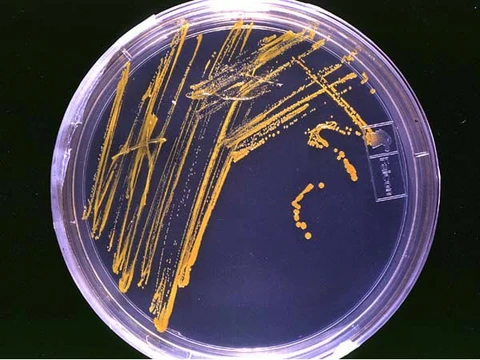
An endospore is a dormant, tough, non-reproductive structure produced by some bacteria in the phylum Bacillota.[1] A lack of nutrients typically triggers endospore formation, which is a process seen in Gram-positive bacteria.[2] The majority of bacterial species lack the ability to produce endospores.[3]
Quick Facts
- Type
- Bacterial dormant structure
- Phylum
- Bacillota
- Discovery hypothesis
- Ferdinand Cohn (thermo-resistant endospores)
- Key components
- DNA
- ribosomes
- dipicolinic acid
- calcium dipicolinate
- SASPs
- Resistance to
- UV radiation
- desiccation
- high temperature
- extreme freezing
- chemical disinfectants
Facts from the source article.
Key facts and history
Ferdinand Cohn was the first to propose the existence of heat-resistant endospores, based on his observations of Bacillus subtilis growing on cheese that had been boiled.[4] Cohn's idea that spores served as a reproductive structure significantly challenged earlier theories of spontaneous generation.[4] Steinn Sigurdsson, who works at Nasa Astrobiology, stated that viable bacterial spores 40 million years old have been discovered on Earth.[5] Soil and water are common habitats for endospores, where they can persist for extended durations.[2]
What the research sources say
The Biology LibreTexts account states that endospores are dormant alternate life forms produced by the genera Bacillus, Clostridium, and several others.[6] Viable endospores have reportedly been isolated from the GI tract of a bee embedded in amber between 25 and 40 million years ago.[6] The heat resistance of endospores is due to factors including calcium-dipicolinate and small acid-soluble proteins that saturate the endospore's DNA.[6] Infections transmitted to humans by endospores include anthrax, tetanus, and botulism.[6]
According to the same source, endospores exhibit resistance to high temperatures, the majority of disinfectants, low energy radiation, and desiccation.[6]
References
- Wikipedia, "Endospore" (CC BY-SA 4.0), which cites: "Manual of Clinical Microbiology", ASM, 2003; C. Michael Hogan, "Bacteria", National Council for Science and the Environment, 2010 (original not read by us) en.wikipedia.org
- Wikipedia, "Endospore" (CC BY-SA 4.0), which cites: "Bacterial Endospores", Cornell University College of Agriculture and Life Sciences, Department of Microbiology (original not read by us) en.wikipedia.org
- Wikipedia, "Endospore" (CC BY-SA 4.0), which cites: ; Madigan, "Brock Biology of Microorganisms", Pearson, 2018, p. 92 (original not read by us) en.wikipedia.org
- Wikipedia, "Endospore" (CC BY-SA 4.0), which cites: BBC Staff, "Impacts 'more likely' to have spread life from Earth", BBC, 23 August 2011 (we also read that source) en.wikipedia.org
- BBC Staff, "Impacts 'more likely' to have spread life from Earth", BBC, 23 August 2011. facts only, no text reused. bbc.co.uk
- "2.4E: Endospores", Biology LibreTexts, 2016-03-02. facts only, no text reused. bio.libretexts.org
Each numbered sentence above was checked against the source it cites before publication. Sentences citing Wikipedia adapt text from the English Wikipedia article Endospore (contributors), used under CC BY-SA 4.0; this entry is available under the same licence. Other sources were used for facts only; no text or images are copied from them.
More in Microbiology
Sources
Compiled from Wikipedia and the sources listed below. Text from Wikipedia is available under CC BY-SA 4.0; this entry is adapted from it.
- Wikipedia: Endospore (CC BY-SA 4.0).
- Word definitions: the , each quoted from its Wikipedia article.
Spotted an error? Know more?
Reader corrections go straight into our review queue. Suggest an edit · How this site is sourced