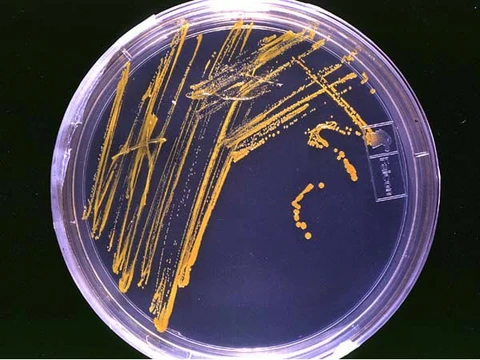
Biodegradation
Microorganisms break down organic matter over time.
Last updated
Microorganisms including bacteria and fungi are responsible for breaking down organic matter in a process called biodegradation.[1] Biodeterioration, biofragmentation, and assimilation are the three sequential phases into which biodegradation is categorized.[2] While nearly every chemical compound and material can undergo biodegradation, the time required for this process spans from a few days to several centuries.[3]
Quick Facts
- Field
- Environmental science, microbiology
Facts from the source article.
Key facts and history
Anaerobic reactions produce methane, while aerobic reactions do not.[4] The first known use of biodegradable in a biological context was in 1959.[5] In 2016, a bacterium named Ideonella sakaiensis was found to biodegrade PET.[6] In 2021, researchers reported that a mix of microorganisms from cow stomachs could break down three types of plastics.[6]
Mechanical compression, light exposure, temperature variations, and environmental chemicals are abiotic factors that contribute to these initial changes.[7] Cleaving bonds within a polymer to produce oligomers and monomers defines the lytic process known as biofragmentation.[2] Aerobic digestion describes microbial breakdown of materials in the presence of oxygen, whereas anaerobic digestion occurs when oxygen is absent.[4] Microbial cells incorporate the products generated from biofragmentation during the assimilation stage.[2]
What the research sources say
The cost to marine industries in the Asia-Pacific region is estimated to be around €1bn per year.[8] The polymer used is a biodegradable plastic based on lactic acid, which the body is able to get rid of in the usual way.[9] Composting systems using perforated piping to control oxygen can result in faster biodegradation times than traditional Windrow systems.[10] According to Judith Schäli, a researcher at the World Trade Institute, environmental harm to marine ecosystems carries an estimated annual cost of approximately $13 billion.[8]
References
- Wikipedia, "Biodegradation" (CC BY-SA 4.0), which cites: Young, "Improved, reference quality genome sequence of the plastic-degrading greater wax moth, Galleria mellonella", G3: Genes, Genomes, Genetics, 2024 (original not read by us) en.wikipedia.org
- Wikipedia, "Biodegradation" (CC BY-SA 4.0), which cites: "Polymer biodegradation: mechanisms and estimation techniques", Chemosphere, September 2008, p. 429–42 (original not read by us) en.wikipedia.org
- Wikipedia, "Biodegradation" (CC BY-SA 4.0), which cites: "Plastics of the future? The impact of biodegradable polymers on the environment and on society", Angewandte Chemie International Edition in English, July 2018, p. 50–62; "Definition of BIOAVAILABILITY", www.merriam-webster.com (original not read by us) en.wikipedia.org
- Wikipedia, "Biodegradation" (CC BY-SA 4.0), which cites: "Aerobic and Anaerobic Biodegradation", Fundamentals of Aerobic & Anaerobic Biodegradation Process; Van der Zee, "Analytical Methods for Monitoring Biodegradation Processes of Environmentally Degradable Polymers", 2011; "Aerobic and Anaerobic Biodegradation", Fundamentals of Aerobic & Anaerobic Biodegradation Process; Klinkner, "Anaerobic Digestion as a Renewable Energy Source and Waste Management Technology: What Must be Done for this Technology to Realize Success in the United States?", University of Massachusetts Law Review, 2014, (or en.wikipedia.org
- Wikipedia, "Biodegradation" (CC BY-SA 4.0), which cites: "Definition of BIODEGRADABLE", www.merriam-webster.com (original not read by us) en.wikipedia.org
- Wikipedia, "Biodegradation" (CC BY-SA 4.0), which cites: Carrington, "New super-enzyme eats plastic bottles six times faster", The Guardian, 28 September 2020; "Plastic-eating enzyme 'cocktail' heralds new hope for plastic waste", phys.org; Knott, "Characterization and engineering of a two-enzyme system for plastics depolymerization", Proceedings of the National Academy of Sciences, 24 September 2020, p. 25476–25485; Spary, "Cows' stomachs can break down plastic, study finds", CNN; Quartinello, "Together Is Better: The Rumen Microbial Community as Biological Toolbox for Degradation of Syntheti en.wikipedia.org
- Wikipedia, "Biodegradation" (CC BY-SA 4.0), which cites: "Polymer biodegradation: mechanisms and estimation techniques", Chemosphere, September 2008, p. 429–42; Muller, "Biopolymers", Wiley-VCH, 2005; Hueck, "The biodeterioration of materials as part of hylobiology", Material und Organismen, January 1966, p. 5–34; Allsopp, "Introduction to Biodeterioration", Cambridge University Press, 2004; Allsopp, "Introduction to Biodeterioration", Cambridge University Press, 2004 (we also read that source) en.wikipedia.org
- Matsangou, "Counting the cost of plastic pollution", World Finance, 2 July 2018. facts only, no text reused. worldfinance.com
- The University of Nottingham, "Using Green Chemistry to Deliver Cutting Edge Drugs", Science Daily, September 13, 2007. facts only, no text reused. sciencedaily.com
- "Biodegradable Products Institute – Composting", bpiworld.org. facts only, no text reused. bpiworld.org
Each numbered sentence above was checked against the source it cites before publication. Sentences citing Wikipedia adapt text from the English Wikipedia article Biodegradation (contributors), used under CC BY-SA 4.0; this entry is available under the same licence. Other sources were used for facts only; no text or images are copied from them.
More in Microbiology
Sources
Compiled from Wikipedia and the sources listed below. Text from Wikipedia is available under CC BY-SA 4.0; this entry is adapted from it.
- Wikipedia: Biodegradation (CC BY-SA 4.0).
- Word definitions: the , each quoted from its Wikipedia article.
Spotted an error? Know more?
Reader corrections go straight into our review queue. Suggest an edit · How this site is sourced