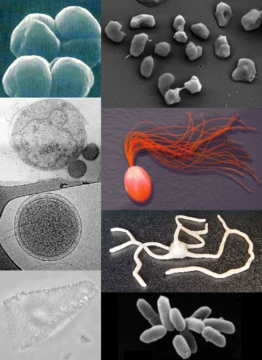
Red algae

Derek Keats · CC BY 2.0
Red algae, known scientifically as Rhodophyta—a name derived from the Greek words for "rose" and "plant"—are among the oldest and most diverse groups of eukaryotic algae, with over 7,000 recognized species spread across more than 900 genera, though these numbers are still being refined by ongoing taxonomic work. Most of these species (6,793) belong to the class Florideophyceae, which includes many familiar multicellular seaweeds found in marine environments. While red algae are most common in the ocean, about 5% of species live in freshwater, particularly in warmer regions; this limited freshwater presence may stem from an evolutionary bottleneck where the last common ancestor shed roughly 25% of its core genes, reducing its adaptability.
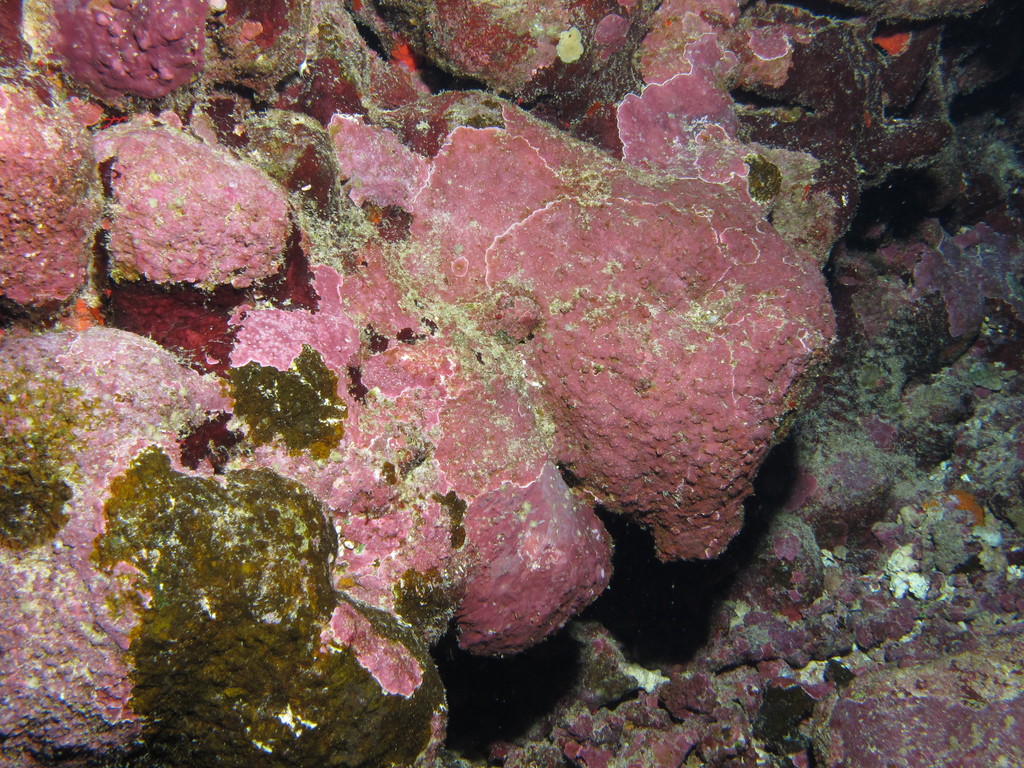
These algae are set apart by several cellular traits: they lack flagella and centrioles throughout their life cycle, their chloroplasts have no external endoplasmic reticulum and feature unstacked thylakoids, and they rely on phycobiliproteins as accessory pigments, which give them their characteristic red hue. Despite the name, their color can range from bright green and soft pink to shades of red, purple, or even brown, and at great depths they may appear almost black—the "red" label comes from the presence of phycobiliproteins and the reddish members of the group. Unlike green algae, red algae store sugars outside the chloroplasts as floridean starch, a type of starch made of highly branched amylopectin without amylose. Most red algae reproduce sexually, and their life history typically involves an alternation of generations that can include three generations instead of the usual two. Coralline algae, which secrete calcium carbonate and help build coral reefs, are part of this group.
The morphology of red algae is highly varied, from single-celled forms to complex thalli that may be parenchymatous or non-parenchymatous. Their cell walls have two layers: the outer layer contains polysaccharides like agarose and agaropectin, which can be boiled out to make agar, while the inner wall is mostly cellulose. Red algae also possess the most gene-rich plastid genomes known. Inside the cells, normal spindle fibers and microtubules are present, along with unstacked photosynthetic membranes, phycobilin pigment granules, and pit connections between cells; they lack chloroplast endoplasmic reticulum. The water-soluble pigments called phycobilins—including phycocyanobilin, phycoerythrobilin, phycourobilin, and phycobiliviolin—are housed in phycobilisomes and give the algae their color. Their chloroplasts have evenly spaced, ungrouped thylakoids and contain chlorophyll a, α- and β-carotene, lutein, and zeaxanthin, enclosed by a double membrane without grana or phycobilisomes on the stromal surface.
Key photosynthetic products include floridoside (the main one), D-isofloridoside, digeneaside, mannitol, sorbitol, and dulcitol. Floridean starch, similar to land-plant amylopectin, is stored long-term and scattered in the cytoplasm. The concentration of these products shifts with environmental factors like pH, salinity, light intensity, and nutrient levels; for instance, higher salinity boosts floridoside production to keep water inside the cells. Pit connections and pit plugs are unique to red algae, forming during incomplete cytokinesis after mitosis. A small pore remains in the new partition, creating a pit connection where daughter cells stay in contact, but cytoplasmic continuity is soon blocked by a pit plug deposited in the wall gap. Primary pit connections link cells from the same parent, and because apical growth is typical, most cells have two such connections—one to each neighbor. Secondary pit connections form between cells that do not share a parent, arising when an unequal cell division produces a nucleated daughter cell that fuses with an adjacent cell; patterns of these are seen in the order Ceramiales. After a pit connection forms, tubular membranes appear, and a granular protein plug core develops around them before the membranes vanish. Some orders have only a plug core, while others add cap membranes on each side. The plug persists until one cell dies, at which point the living cell seals it off with wall material. Pit connections may serve as structural reinforcement or channels for communication and transport, though evidence for this is limited.
Reproduction in red algae can be triggered by factors like day length, and occurs both sexually and asexually. Asexual methods include spore production and vegetative means such as fragmentation, cell division, or propagules. Fertilization is unique because red algae lack motile sperm. Species like *Palmaria palmata* (dulse) and *Porphyra* (laver, nori, or gim) are traditional foods in European and Asian cuisines, and red algae are also used to produce agar, carrageenans, and other food additives.
- field
- Phycology
- known_for
- Oldest and largest phyla of eukaryotic algae; source of agar and carrageenans; c
Lore & Background
Red algae have double cell walls. The outer layers contain the polysaccharides agarose and agaropectin that can be extracted from the cell walls as agar by boiling. The internal walls are mostly cellulose. They also have the most gene-rich plastid genomes known. Their chloroplasts contain evenly spaced and ungrouped thylakoids and contain the pigments chlorophyll a, α- and β-carotene, lutein and zeaxanthin. The presence of water-soluble pigments called phycobilins (phycocyanobilin, phycoerythrobilin, phycourobilin and phycobiliviolin), localized into phycobilisomes, gives red algae their distinctive color. Red algae reproduce sexually as well as asexually. The life history of red algae is typically an alternation of generations that may have three generations rather than two. Red algae lack motile sperm, relying on water currents to transport their gametes to the female organs, though their sperm are capable of 'gliding' to a carpogonium's trichogyne. Animals also help with the dispersal and fertilization of the gametes; the first species discovered to do so is the isopod Idotea balthica. Pit connections and pit plugs are unique and distinctive features of red algae that form during the process of cytokinesis following mitosis. The polyamine spermine is produced, which triggers carpospore production. Unlike green algae, red algae store sugars as food reserves outside the chloroplasts as floridean starch, a type of starch that consists of highly branched amylopectin without amylose. The major photosynthetic products include floridoside (major product), D‐isofloridoside, digeneaside, mannitol, sorbitol, dulcitol etc. The concentration of photosynthetic products are altered by environmental conditions like change in pH, the salinity of medium, change in light intensity, nutrient limitation etc.
Reader's Guide
Coralline algae, which secrete calcium carbonate and play a major role in building coral reefs, belong to the red algae. Red algae such as Palmaria palmata (dulse) and Porphyra species (laver/nori/gim) are a traditional part of European and Asian cuisines and are used to make products such as agar, carrageenans, and other food additives. Their cell structure is distinctive: red algae do not have flagella and centrioles during their entire life cycle, and their distinguishing characters include the presence of normal spindle fibres, microtubules, un-stacked photosynthetic membranes, phycobilin pigment granules, pit connection between cells, filamentous genera, and the absence of chloroplast endoplasmic reticulum. The reproductive cycle may be triggered by factors such as day length. Asexual reproduction can occur through the production of spores and by vegetative means (fragmentation, cell division or propagules production). The life cycle displays alternation of generations; in addition to a gametophyte generation, many have two sporophyte generations, the carposporophyte-producing carpospores, which germinate into a tetrasporophyte – this produces spore tetrads, which dissociate and germinate into gametophytes. The gametophyte is typically (but not always) identical to the tetrasporophyte. The δ13C values of red algae reflect their lifestyles, with the largest difference resulting from their photosynthetic metabolic pathway: algae that use HCO3 as a carbon source have less negative δ13C values than those that only use CO2.
Did You Know?
- Red algae have the most gene-rich plastid genomes known.
- Approximately 5% of red algae species occur in freshwater environments, with greater concentrations in warmer areas.
- The last common ancestor of red algae lost about 25% of its core genes and much of its evolutionary plasticity.
- The isopod Idotea balthica was the first animal discovered to help with the dispersal and fertilization of red algal gametes.
- Red algae store sugars as floridean starch, a type of starch that consists of highly branched amylopectin without amylose.
Taxonomic Breadth and Evolutionary Heritage
Red algae, or Rhodophyta, make up one of the oldest and largest phyla of eukaryotic algae, containing over 7,000 recognized species within over 900 genera amidst ongoing taxonomic revisions. The majority of species (6,793) are in the class Florideophyceae, and mostly consist of multicellular marine algae, including many notable seaweeds. Approximately 5% of red algae species occur in freshwater environments, with greater concentrations in warmer areas. This may be due to an evolutionary bottleneck in which the last common ancestor lost about 25% of its core genes and much of its evolutionary plasticity. The name Rhodophyta derives from Ancient Greek ῥόδον (rhódon) 'rose' and φυτόν (phutón) 'plant'.
Distinctive Cell Architecture and Pigmentation
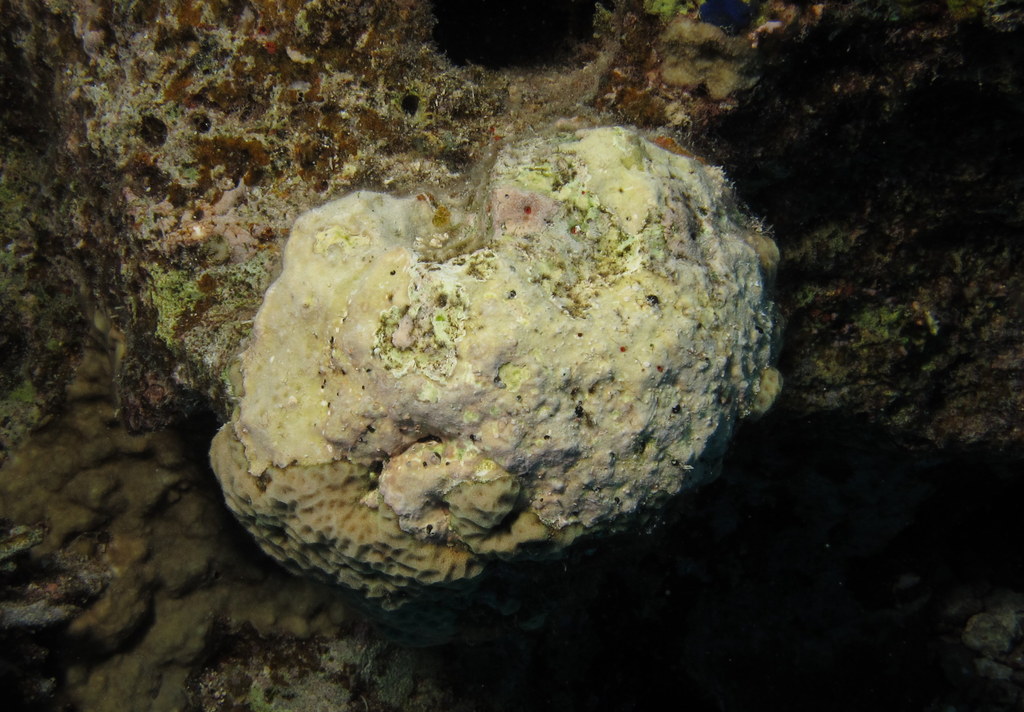
Red algae do not have flagella and centrioles during their entire life cycle. Their chloroplasts are enclosed in a double membrane, lack grana and phycobilisomes on the stromal surface of the thylakoid membrane, and contain evenly spaced and ungrouped thylakoids. The presence of water-soluble pigments called phycobilins (phycocyanobilin, phycoerythrobilin, phycourobilin and phycobiliviolin), which are localized into phycobilisomes, gives red algae their distinctive color. Despite their name, red algae can vary in color from bright green, soft pink, resembling brown algae, to shades of red and purple, and may be almost black at greater depths. Red algae have double cell walls; the outer layers contain the polysaccharides agarose and agaropectin that can be extracted from the cell walls as agar by boiling, while the internal walls are mostly cellulose. They also have the most gene-rich plastid genomes known.
Reproductive Strategies and Life-Cycle Complexity
Red algae reproduce sexually as well as asexually. Asexual reproduction can occur through the production of spores and by vegetative means (fragmentation, cell division or propagules production). The reproductive cycle may be triggered by factors such as day length. Red algae lack motile sperm, relying on water currents to transport their gametes to the female organs – although their sperm are capable of 'gliding' to a carpogonium's trichogyne. Animals also help with the dispersal and fertilization of the gametes; the first species discovered to do so is the isopod Idotea balthica. The life history of red algae is typically an alternation of generations that may have three generations rather than two. In addition to a gametophyte generation, many have two sporophyte generations, the carposporophyte-producing carpospores, which germinate into a tetrasporophyte – this produces spore tetrads, which dissociate and germinate into gametophytes. Pit connections and pit plugs are unique and distinctive features of red algae that form during the process of cytokinesis following mitosis. The polyamine spermine is produced, which triggers carpospore production.
Ecological Roles and Culinary Heritage
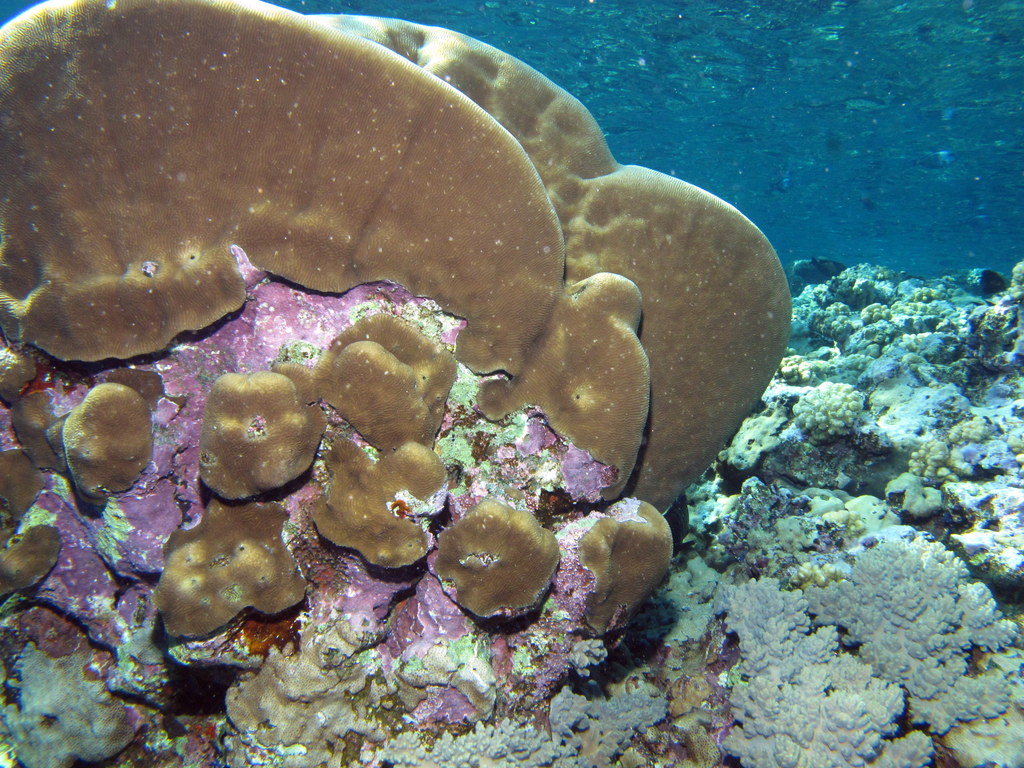
Coralline algae, which secrete calcium carbonate and play a major role in building coral reefs, belong to the red algae. Red algae such as Palmaria palmata (dulse) and Porphyra species (laver/nori/gim) are a traditional part of European and Asian cuisines and are used to make products such as agar, carrageenans, and other food additives. Unlike green algae, red algae store sugars as food reserves outside the chloroplasts as floridean starch, a type of starch that consists of highly branched amylopectin without amylose. The major photosynthetic products include floridoside (major product), D‐isofloridoside, digeneaside, mannitol, sorbitol, dulcitol etc. The concentration of photosynthetic products are altered by environmental conditions like change in pH, the salinity of medium, change in light intensity, nutrient limitation etc. When the salinity of the medium increases, the production of floridoside is increased in order to prevent water from leaving the algal cells.
Gallery
Frequently Asked Questions
What makes Red algae structurally unique among algae?
Their cells lack flagella and centrioles entirely, and their chloroplasts sit without an outer endoplasmic-reticulum membrane. They also depend on phycobiliproteins as accessory pigments rather than the carotenoids typical of green algae, which is what produces their signature red coloration.
How do Red algae contribute to coral reef ecosystems?
Coralline algae, a prominent subgroup within Rhodophyta, secrete calcium carbonate that cements and stabilizes the skeletal framework of coral reefs. They are therefore keystone structural organisms without which many reef architectures would collapse.
Why are Red algae important to human industries?
They are the primary natural source of agar and carrageenans, two polysaccharides indispensable in food processing, pharmaceuticals, and laboratory culture media. Their ecological role in reef construction also underpins the biodiversity of entire marine communities.
More in Microbial Groups And Extremophiles 1-17
Spotted an error? Know more?
This is a living reference — every entry is fact-audited, and reader corrections feed straight into our audit queue. Suggest an edit · See this site's audit record