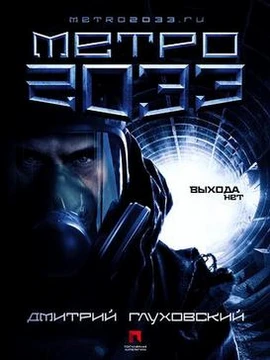
Metro Exodus (2019)
A train, a wasteland, and the last fragile thread of hope across a broken Russia.
Metro Exodus (2019) is a first-person survival horror shooter developed by 4A Games and published by Deep Silver. It is the third mainline entry in the Metro franchise, set in the post-apocalyptic Russian universe created by author Dmitry Glukhovsky. Unlike its predecessors, which were largely confined to the Moscow metro tunnels, Exodus follows protagonist Artyom on a long overland journey by train across the irradiated Russian wilderness toward the Caspian Sea, making it the most spatially ambitious game in the series.
The title is significant in the franchise for its shift to a semi-open structure, a dynamic day-night and weather system, and a branching narrative with multiple endings. It also marked 4A Games' transition to a heavily modified version of their proprietary 4A Engine, a major technical leap that allowed for larger, more detailed environments and more complex lighting. The game is widely regarded as a high-water mark for atmospheric, story-driven post-apocalyptic gaming.
Quick Facts
- Game engine
- 4A Engine (heavily modified proprietary engine)
Lore & Background
In the world of Metro Exodus, the nuclear war of 2033 reduced the surface to a poisoned, irradiated expanse. Humanity clings to survival in the deep metro tunnels of Moscow, where factions war over dwindling resources and ideology. Artyom, a former metro soldier, has spent years fighting to keep his community alive beneath the earth. In Exodus, the tunnels can no longer sustain them.
The decision is made to board the Aurora, a heavily modified locomotive, and drive east across the dead Russian landscape in search of a place where the radiation has faded enough to allow a permanent settlement. The journey is not merely geographic. Each region the train crosses—from the Volga (east of Moscow), to the Caspian Sea (south), then to the Taiga (east/north), and finally to Novosibirsk (further east)—presents a different ecosystem of survivors, each shaped by their own interpretation of the old world.
The Red Father, a charismatic and ruthless leader of the Pioneer faction in Novosibirsk, represents a direct threat in that region: a theocratic regime that views Artyom's journey as heresy and will burn the land rather than let the train pass. (The Children of the Forest, by contrast, are led by the Forest Lord in the Taiga, while the Fanatics are a faction in the Volga region led by the Tsar Fish.) Beneath the surface-level conflict of factions and survival, the game interrogates what it means to carry the memory of a destroyed civilization forward, and whether the old world's sins travel with its survivors.
The Aurora itself becomes a character in the narrative. Its engine, its fuel, its small crew—each element is a lifeline that can be lost. The game's structure, where the player must manage resources across a moving base while exploring hostile biomes, creates a persistent tension between the safety of the train and the necessity of stepping into the wasteland. This tension is the emotional core of the Metro universe: the tunnel is home, but the surface is where the future must be found.
Reader's Guide
Development of Metro Exodus at 4A Games spanned roughly four years, with the project entering full production after the success of Metro: Last Light (2013). The studio, based in Kyiv, made the deliberate decision to move from the modified Unreal Engine 3 pipeline used in the first two titles to Unreal Engine 4. This was a significant creative and technical gamble: it allowed for physically based rendering, more complex global illumination, and larger, more varied environments, but it required reworking much of the studio's tooling and art pipeline from the ground up.
A key creative decision was the shift from the corridor-based, tunnel-heavy design of the first two games to a semi-open structure built around the Aurora train as a mobile hub. Each major region of the map—Moscow, the Volga, the Caspian, the Taiga, the Urals—is a large, explorable zone rather than a linear gauntlet. The dynamic day-night cycle and weather system were designed to make each traversal of a biome feel distinct, with visibility, enemy behavior, and resource availability shifting with the time of day.
Metro Exodus is an original story set within Glukhovsky's universe rather than a direct adaptation of a specific novel, which gave 4A Games greater narrative freedom. The multiple-ending structure, where key story decisions made across the journey converge in different final outcomes, was a notable departure from the more linear narratives of the earlier entries. The game's emphasis on survival mechanics—managing gas mask filters, ammunition, and the train's fuel—created a persistent low-level tension even during exploration.
In terms of legacy, Exodus demonstrated that a narrative-driven, atmosphere-first shooter could succeed with semi-open design without sacrificing the tight, cinematic pacing the series was known for. It influenced subsequent post-apocalyptic titles in their use of a mobile base as a narrative anchor and in their treatment of the wasteland as a varied, biologically active space rather than a uniform grey void. For the Metro franchise specifically, it established that the series could evolve beyond the metro tunnels while retaining its core identity, opening the door for future entries to explore the wider Russian and even global landscape.
Did You Know?
- 4A Games is a Ukrainian studio based in Kyiv, and the development of Metro Exodus took place in the country where the game's post-apocalyptic setting is rooted.
- The Aurora train functions as a persistent, saveable base that the player can return to between excursions, a design choice that distinguishes Exodus from the more linear, checkpoint-based structure of its predecessors.
More in Development & Legacy
Elsewhere in Metro 2033
Spotted an error? Know more?
Reader corrections go straight into our review queue. Suggest an edit · How this site is sourced