
Cognitive development
Field studying how children's cognition emerges and matures.
Last updated

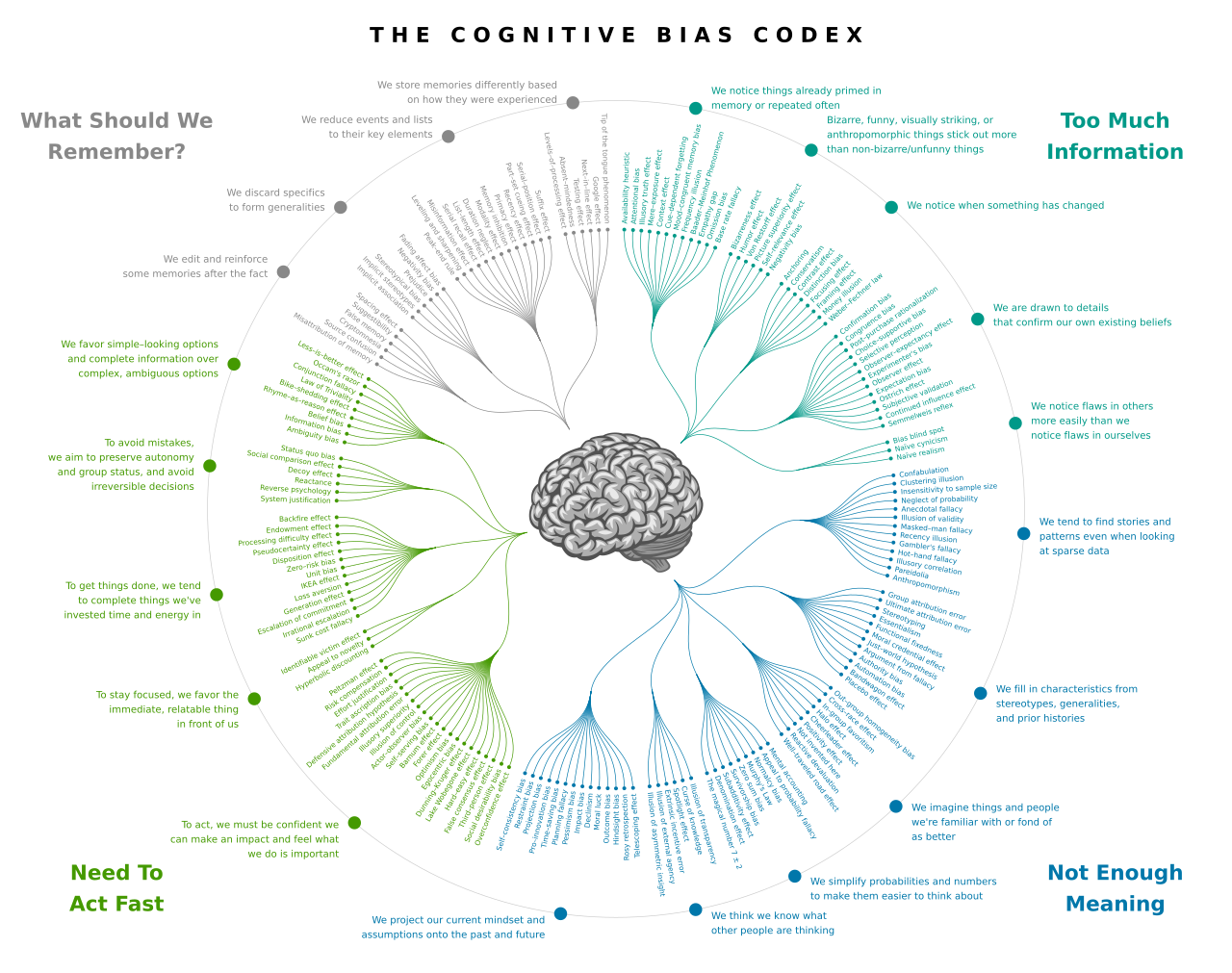
design: John Manoogian III categories and descriptions: Buster Benson implementa · CC BY-SA 4.0
Cognitive development is a field of study in neuroscience and psychology focusing on a child's development in terms of information processing, conceptual resources, perceptual skill, language learning, and other aspects of the developed adult brain and cognitive psychology. It is defined as the emergence of the ability to consciously cognize, understand, and articulate their understanding in adult terms, and is described in terms of four key components: reasoning, intelligence, language, and memory. Jean Piaget was a major force establishing this field, forming his 'theory of cognitive development' with four stages: sensorimotor, preoperational, concrete operational, and formal operational period.
While many of Piaget's specific theoretical claims have since fallen out of favor, his description of the most prominent cognitive changes with age—such as the shift from concrete, external actions to abstract understanding of observable reality and the discovery of underlying rules beginning in adolescence—remains generally accepted. The field acknowledges qualitative differences between child and adult processing, including object permanence, logical relations, and cause-effect reasoning in school-age children. Cognitive development emerges from the interplay of genetic and learning factors, with key aspects like reasoning, intelligence, language, and memory beginning to develop around 18 months as infants interact with their environment through play, listening, and responding to stimuli.
Alternative models have advanced in recent years, including information-processing theory, neo-Piagetian theories that integrate Piaget’s ideas with modern developmental science, theoretical cognitive neuroscience, social-constructivist approaches, and Bronfenbrenner's Ecological Systems Theory. The nature versus nurture debate has been recognized by most experts as a false dichotomy, as gene activity interacts with environmental events from the earliest developmental points. Historically, Jean-Jacques Rousseau described childhood development in three stages based on emotions and reason, while James Sully used detailed observational methods on children.
Quick Facts
- Field
- Neuroscience and psychology
- Known for
- Theory of cognitive development (four stages: sensorimotor, preoperational, concrete operational, formal operational)
Facts from the source article.
Lore & Background
Qualitative differences between how a child processes their waking experience and how an adult processes their waking experience are acknowledged, such as object permanence, understanding of logical relations, and cause-effect reasoning in school-age children. Cognitive development is how a person perceives, thinks, and gains understanding of their world through the relations of genetic and learning factors. These aspects begin to develop around 18 months of age, as infants engage with their environment playing with toys, listening to their parents, watching television, and responding to various stimuli that capture their attention, all of which contribute to their cognitive growth.
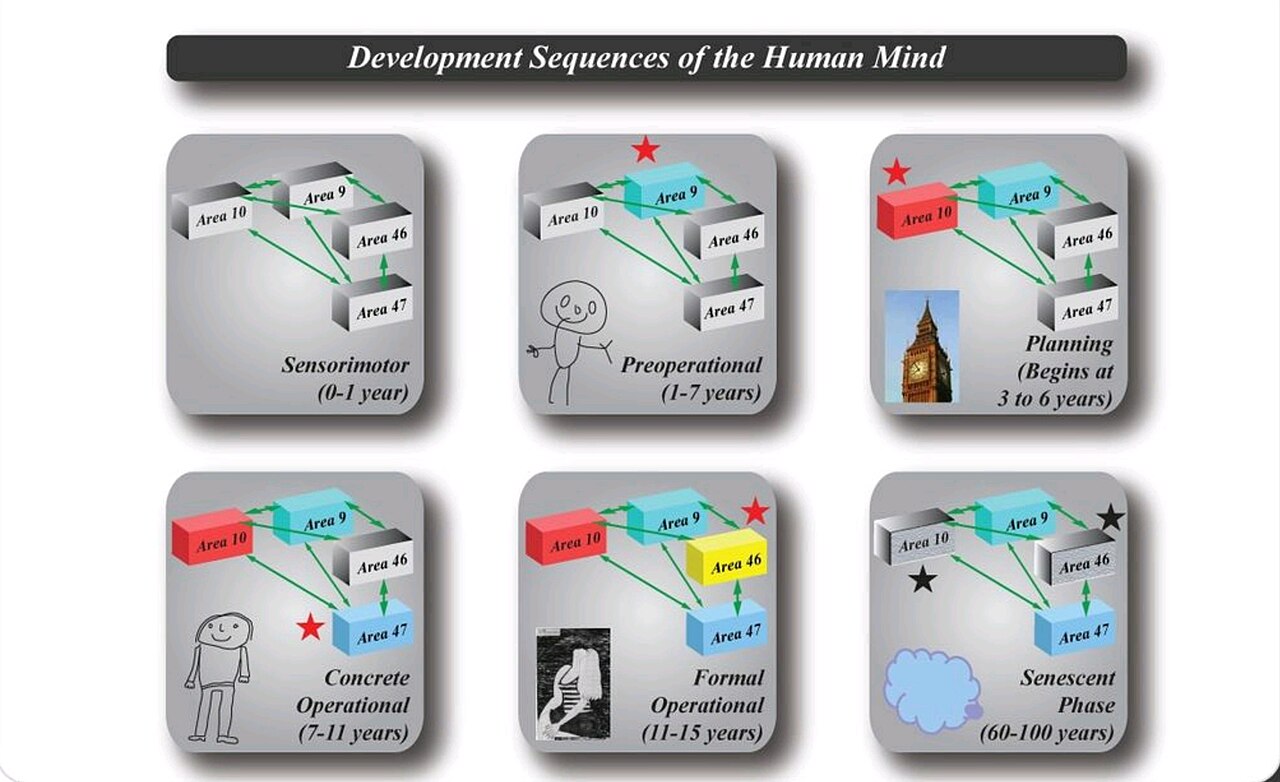
Jean Piaget was a major force establishing this field, forming his 'theory of cognitive development'. Piaget proposed four stages of cognitive development: the sensorimotor, preoperational, concrete operational, and formal operational period. Many of Piaget's theoretical claims have since fallen out of favor, but his description of the most prominent changes in cognition with age is generally still accepted today.
In recent years, alternative models have been advanced, including information-processing theory, neo-Piagetian theories of cognitive development, theoretical cognitive neuroscience, and social-constructivist approaches. Another such model is Bronfenbrenner's Ecological Systems Theory. A major controversy in cognitive development has been 'nature versus nurture', though it is now recognized by most experts that this is a false dichotomy, with gene activity interacting with events and experiences in the environment from the earliest points in development.

Reader's Guide
Cognitive development is significant as a foundational field in neuroscience and psychology, systematically studying how children's information processing, conceptual resources, perceptual skill, and language learning evolve into adult cognition. Jean Piaget established the field with his four-stage theory, which, despite many of its claims falling out of favor, still provides a generally accepted description of the most prominent changes in cognition with age—such as the shift from concrete, external actions to abstract understanding of observable aspects of reality, usually starting in adolescence. The field's legacy includes the recognition that cognitive development emerges from the interaction of genetic and learning factors, resolving the nature versus nurture debate as a false dichotomy.
Alternative models like information-processing theory, neo-Piagetian theories, and Bronfenbrenner's Ecological Systems Theory have expanded understanding. The field also encompasses historical contributions from figures such as Jean-Jacques Rousseau, James Sully, Sigmund Freud, Maria Montessori, Arnold Gesell, Erik Erikson, Lawrence Kohlberg, and Lev Vygotsky, each offering different perspectives on developmental stages, social learning, and environmental contexts. The ongoing controversy about whether cognitive development is mainly determined by innate qualities or personal experiences remains in progress, with arguments from comparative psychology, molecular biology, and neuroscience supporting an ecological component in launching cognition.
Frequently Asked Questions
Who is Cognitive development?
Cognitive development is a branch of neuroscience and psychology that tracks how a child's mind matures from infancy through adulthood. It covers the emergence of reasoning, language, memory, and intelligence as interconnected milestones rather than isolated traits.
What is Cognitive development known for?
Its core role is mapping how information processing, perceptual skills, and conceptual resources build layer by layer across childhood. It breaks this progression into four named stages: sensorimotor, preoperational, concrete operational, and formal operational.
Who created Cognitive development?
Jean Piaget is widely credited with establishing the field through his stage-based theory of how children actively construct knowledge. His early-to-mid twentieth-century work laid the groundwork that modern neuroscience and developmental psychology still build upon.
More in Mental Health & Psychology
Sources
Compiled from Wikipedia and the sources listed below. Text from Wikipedia is available under CC BY-SA 4.0; this entry is adapted from it.
- Wikipedia: Cognitive development (CC BY-SA 4.0).
- Word definitions: the Codexery glossary, each quoted from its Wikipedia article.
Spotted an error? Know more?
Reader corrections go straight into our review queue. Suggest an edit · How this site is sourced