Jean-Jacques Rousseau
Genevan philosopher whose ideas shaped modern political and educational thought.
Last updated

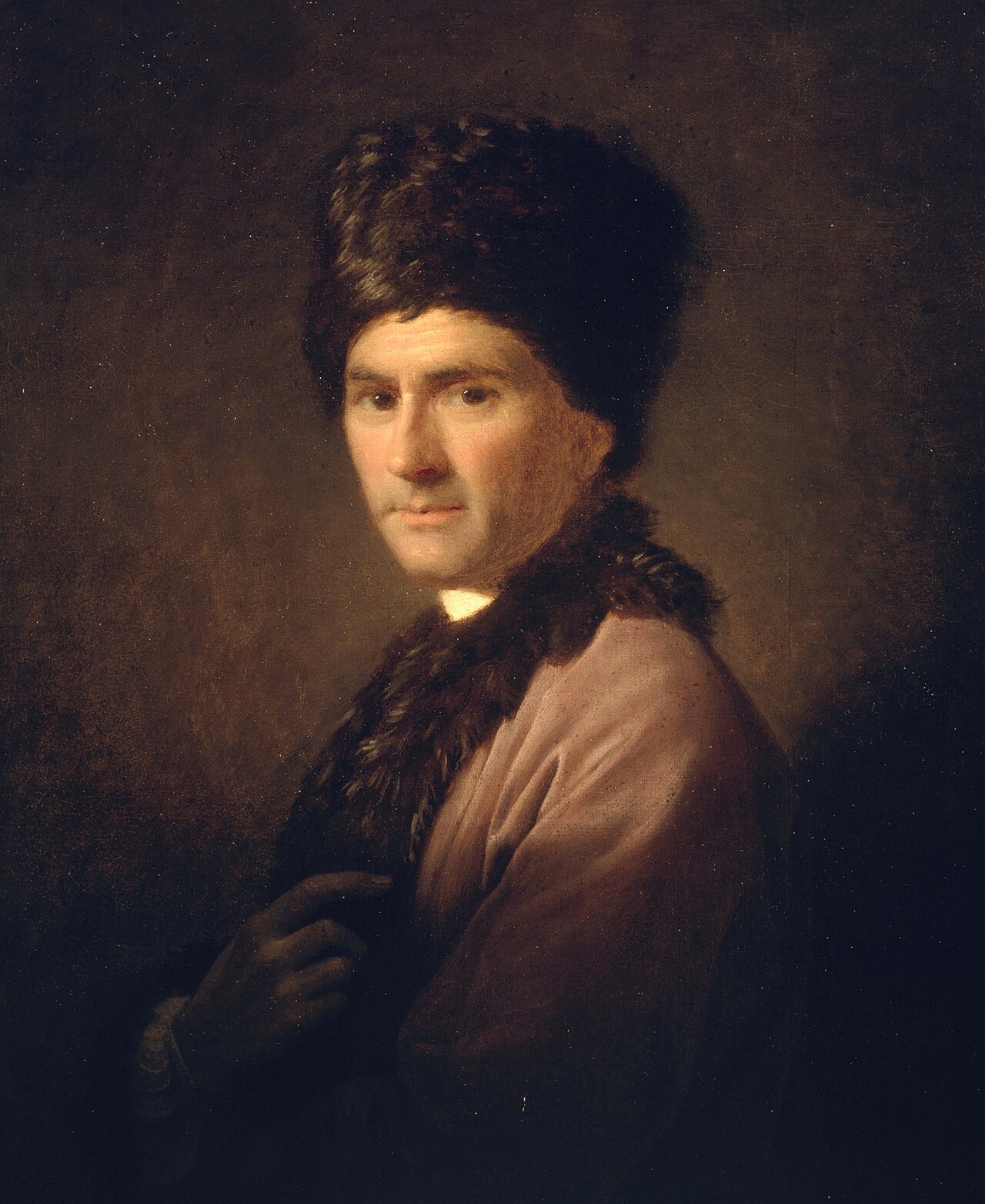
Allan Ramsay · Public domain
Jean-Jacques Rousseau (28 June 1712 – 2 July 1778) was a Genevan philosopher, writer, and composer. His political philosophy influenced the Age of Enlightenment, the French Revolution, and modern political, economic, and educational thought.
Lore & Background
Rousseau was born in Geneva, a Huguenot republic. His father Isaac was a watchmaker. His mother Suzanne died nine days after his birth. Rousseau was raised by his father and aunt.
At age 10, his father moved to Nyon after a legal quarrel with a wealthy landowner on whose lands he had been caught trespassing. Rousseau was then sent to board with a Calvinist minister. At 13 he was apprenticed to a notary then an engraver. At 15 he ran away from Geneva.
Political Philosophy and the Architecture of Modern Thought
Rousseau's political writings remain among the most consequential texts in Western intellectual history. His Discourse on Inequality mounted a sweeping argument that the institution of private property was the fundamental engine of human inequality, challenging the assumption that social hierarchies were natural or divinely ordained. The Social Contract went further, sketching the conditions under which a political order could claim genuine legitimacy rather than mere force.
Together, these two works became what later scholars would call cornerstones of modern political and social thought. Their influence radiated outward across the continent, shaping the broader current of the Age of Enlightenment and feeding directly into the ideological currents that would eventually sweep through the French Revolution. Beyond pure politics, Rousseau's ideas also touched the development of modern economic reasoning and educational philosophy, embedding his Genevan voice into the foundations of how subsequent generations would think about governance, rights, and the individual's relationship to the state.
Literary Innovation and the Birth of Modern Self-Expression
Rousseau's contributions to literature and pedagogy were as transformative as his political theorizing. His 1761 sentimental novel Julie, or the New Heloise, helped open the door to preromanticism and the broader Romantic movement in fiction, shifting narrative priorities toward emotional depth and individual feeling. The following year, Émile, or On Education, offered a systematic treatise on where the individual stands within society and how a child should be formed, making it a landmark in educational philosophy.
Perhaps most remarkably, his autobiographical works redefined the very possibility of self-portraiture in writing. The Confessions, completed in 1770 but published only after his death, is widely credited with initiating the modern autobiography as a literary form. His unfinished Reveries of the Solitary Walker, composed in the final two years of his life, exemplified the late eighteenth-century Age of Sensibility, foregrounding subjectivity and introspection in ways that would come to characterize modern writing for centuries to follow.
Geneva: A City of Contradictions
Rousseau was born into the Republic of Geneva, a small Protestant city-state and associate of the Swiss Confederacy that had, since 1536, served as a Huguenot stronghold and the seat of Calvinism. His family traced its presence in the city back to an ancestor named Didier, a bookseller who may have published Protestant tracts and fled French Catholic persecution in 1549, eventually settling as a wine merchant. Rousseau took pride in his middle-class status and the voting rights it conferred, consistently signing his works Citizen of Geneva. Yet the reality of Genevan governance was far from the democratic ideal.
In theory, male citizens ruled; in practice, a small circle of wealthy families sat on the Council of Two Hundred and delegated authority to a twenty-five-member Small Council. The tension was deadly: in 1707, reformer Pierre Fatio declared that a sovereign who never exercised sovereignty was merely imaginary, and the Small Council had him shot. Rousseau's own grandfather had supported Fatio and was penalized for it.
A Childhood Forged in Loss and Craft
Rousseau entered the world on 28 June 1712 in a state of near-death, and his mother Suzanne died of puerperal fever just nine days later—an event he later called the first of his misfortunes. His father Isaac, a watchmaker who also dabbled in teaching dance, was well-read and passionate about music, and he encouraged young Jean-Jacques's love of reading by sharing his late wife's collection of adventure stories each evening after supper.
The family's circumstances shifted when Isaac sold the house they had inherited from Suzanne's relatives; the proceeds, meant to provide for the boys' future, largely went to the father, and the household relocated from an upper-class quarter into a neighborhood of silversmiths, engravers, and fellow watchmakers. Growing up amid these artisans, Rousseau absorbed both their craft and their political grievances against the privileged families who governed Geneva. His father's own brush with authority—a 1699 quarrel with visiting English officers that ended in Isaac's punishment—left an early imprint of state power turning against an individual.
Reader's Guide
Rousseau's key works include Discourse on Inequality (arguing private property is the source of inequality), The Social Contract (outlining legitimate political order), Julie, or the New Heloise (a sentimental novel important to preromanticism), Émile (an educational treatise), and his autobiographical Confessions and Reveries of the Solitary Walker.
More in Philosophers & Thinkers
Sources
Compiled from Wikipedia and the sources listed below. Text from Wikipedia is available under CC BY-SA 4.0; this entry is adapted from it.
- Wikipedia: Jean-Jacques Rousseau (CC BY-SA 4.0).
Spotted an error? Know more?
Reader corrections go straight into our review queue. Suggest an edit · How this site is sourced