
Cognitive psychology
Scientific study of human mental processes, emerging from the cognitive revolution.
Last updated

Jtneill · Public domain
Cognitive psychology is the scientific study of how people think, focusing on mental processes like attention, language, memory, perception, problem solving, creativity, and reasoning. The field emerged in the 1960s as a departure from behaviorism, which from the 1920s through the 1950s argued that unobservable mental events were not suitable for empirical science. This shift happened when researchers in linguistics, cybernetics, and applied psychology began using models of mental processing to account for human behavior. Insights from cognitive psychology later spread into other areas of psychology and into fields like cognitive science, linguistics, and economics.

History
Philosophical questions about the mind go back to ancient Greece. In 387 BCE, Plato proposed that the brain is where mental processes occur.
In 1637, René Descartes argued for innate ideas and mind-body dualism—the view that mind and body are separate substances. This sparked debates throughout the 19th century over whether thought comes only from experience (empiricism) or includes inborn knowledge (nativism). Key figures included empiricists George Berkeley and John Locke, and nativist Immanuel Kant.
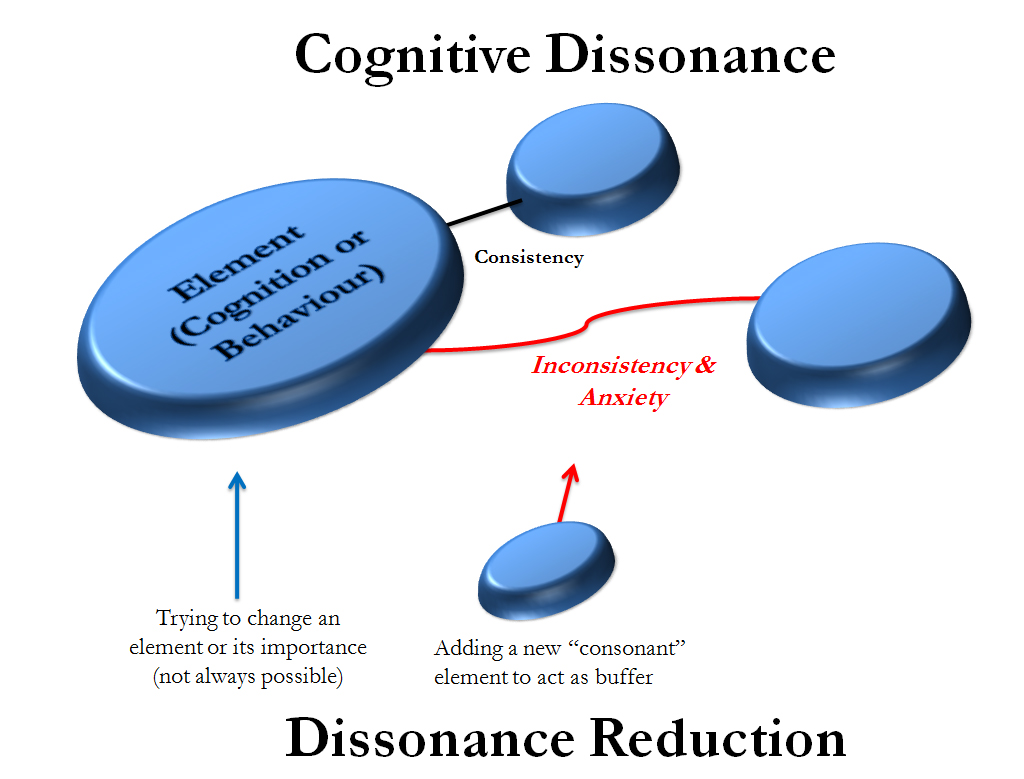
The mid-to-late 19th century was crucial for psychology as a science. Two discoveries later proved important for cognitive psychology: Paul Broca identified a brain region largely responsible for language production, and Carl Wernicke found an area mainly involved in language comprehension. Both areas were named after them, and damage to these regions causes what are now called Broca’s aphasia and Wernicke’s aphasia.
From the 1920s to the 1950s, behaviorism dominated psychology. Its followers initially considered mental events like thoughts, ideas, attention, and consciousness unobservable and therefore outside scientific psychology.

Carl Jung was an early pioneer whose work predated much behaviorist literature; in his 1921 book Psychological Types, he introduced the idea of cognitive functions. Another pioneer, Jean Piaget, worked outside behaviorism’s boundaries. From 1926 through the 1950s and into the 1980s, he studied the thoughts, language, and intelligence of children and adults.
In the mid-20th century, four main influences shaped cognitive psychology as a formal school. First, World War II’s new warfare technology created a need to understand human performance—how to train soldiers and manage attention under stress. Behaviorism offered little help, but Donald Broadbent combined concepts from human performance research and information theory to advance the field. Second, advances in computer science drew parallels between human thought and computer functions, opening new areas of study.
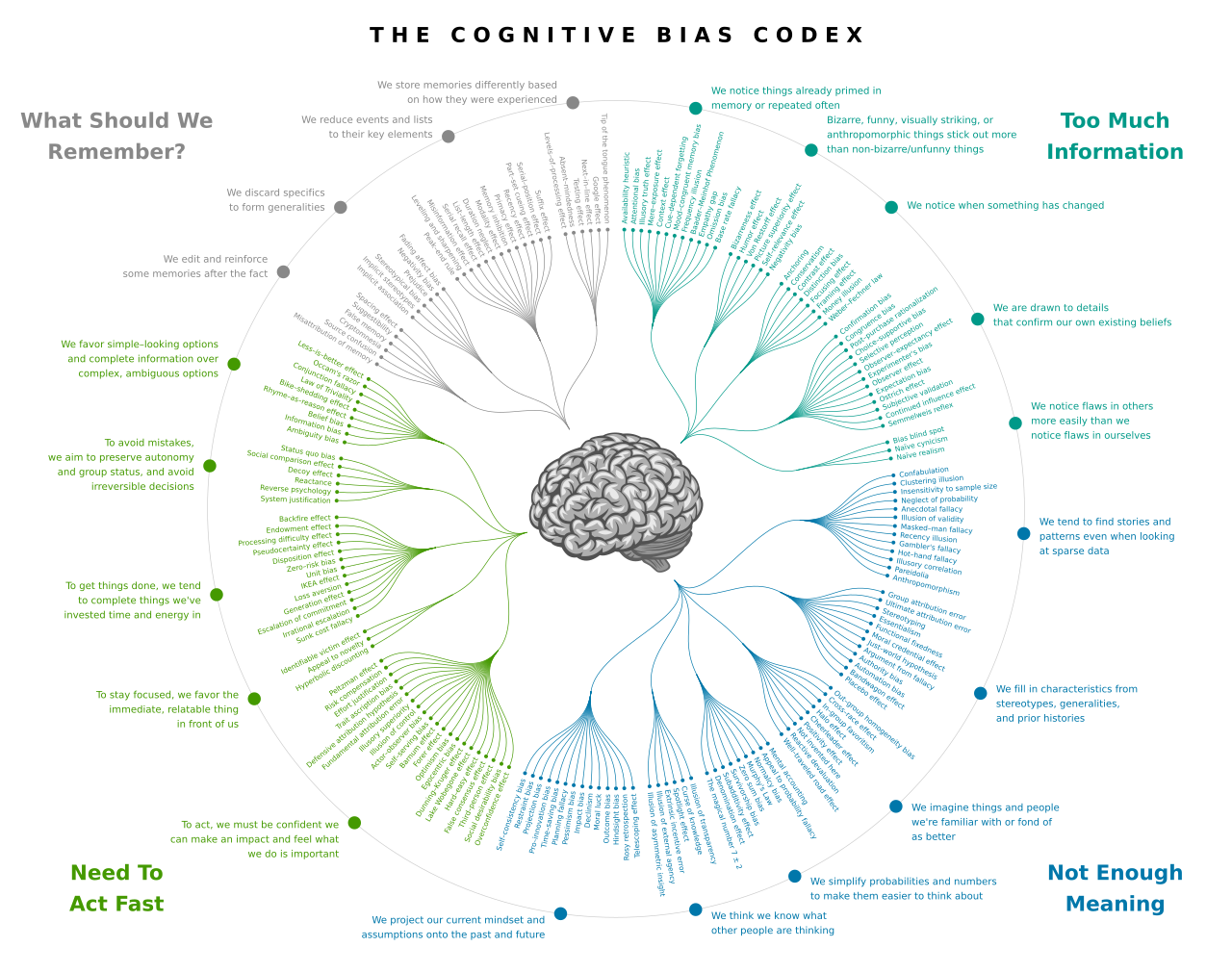
Allen Newell and Herbert Simon developed artificial intelligence and later worked with cognitive psychologists, encouraging a view of mental functions modeled on computer memory storage and retrieval. Third, Noam Chomsky’s 1959 critique of behaviorism and empiricism sparked the “cognitive revolution.” In psychology, J. S. Bruner, J. J. Goodnow, and G. A. Austin published A Study of Thinking in 1956; G. A. Miller, E. Galanter, and K. Pribram published Plans and the Structure of Behavior in 1960; and that same year, Bruner and Miller founded the Harvard Center for Cognitive Studies, which institutionalized the revolution and launched cognitive science. Fourth, formal recognition came with research institutions like George Mandler’s Center for Human Information Processing in 1964.
Mandler later described the field’s origins in a 2002 article. Ulric Neisser popularized the term “cognitive psychology” with his 1967 book Cognitive Psychology. He defined cognition broadly as all processes that transform, reduce, store, recover, and use sensory input, even without external stimulation—as in images or hallucinations. He noted that cognition touches everything humans do, but cognitive psychology approaches this from a particular viewpoint, distinct from other perspectives like dynamic psychology, which starts with motives rather than sensory input.
Quick Facts
- Field
- Psychology
- Known for
- Scientific study of mental processes
- cognitive revolution
- models of memory, attention, and language
- Originated
- 1960s
Facts from the source article.
Lore & Background
Philosophically, ruminations on the human mind and its processes have been around since the time of the ancient Greeks. From that time, major debates ensued through the 19th century about whether human thought is solely experiential (empiricism) or includes innate knowledge (nativism). Some of those involved in this debate include George Berkeley and John Locke on the side of empiricism, and Immanuel Kant on the side of nativism. Two discoveries that later played substantial roles in cognitive psychology were Paul Broca's discovery of the area of the brain largely responsible for language production and Carl Wernicke's discovery of an area thought to be mostly responsible for comprehension of language.
From the 1920s to the 1950s, the main approach to psychology was behaviorism. Initially, its adherents viewed mental events such as thoughts, ideas, attention, and consciousness as unobservable and thus outside the realm of psychology as a science. A pioneer of cognitive psychology, whose work predated much of the behaviorist literature, was Carl Jung. Another pioneer, who worked outside the boundaries of behaviorism, was Jean Piaget.

Reader's Guide
Cognitive psychology's significance lies in its establishment of mental processes as legitimate subjects of empirical science, breaking from behaviorism's restriction to observable behavior. It introduced models of memory (sensory, short-term, long-term) and attention (exogenous and endogenous control, divided attention, the cocktail party effect) that remain foundational.
The field's integration into cognitive science, linguistics, and economics demonstrates its broad influence. Its legacy includes the cognitive revolution, which reshaped psychology and allied disciplines, and the ongoing use of information-processing and computational metaphors to understand human cognition. The work of pioneers such as Carl Jung, Jean Piaget, Donald Broadbent, Allen Newell, Herbert Simon, Noam Chomsky, J. S. Bruner, G. A. Miller, and Ulric Neisser collectively established cognitive psychology as a central framework for studying the mind.
Frequently Asked Questions
What is Cognitive psychology?
Cognitive psychology is the branch of psychology focused on studying how humans process information, covering attention, memory, language, perception, reasoning, and problem-solving. It treats the mind as a system that can be modeled and tested rather than an unobservable black box.
What are Cognitive psychology's core 'domains' of study?
Its main areas include attention, memory, language use, perception, creativity, and reasoning. Each is treated as an information-processing step that can be broken down into testable models.
How did Cognitive psychology come to be?
It emerged in the 1960s as a direct challenge to behaviorism, which had ruled from the 1920s through the 1950s and declared unobservable mental states outside the scope of science. Researchers in linguistics, cybernetics, and applied psychology began building computational models of mental processing, sparking what is now called the cognitive revolution.
Where does Cognitive psychology's story go after its 1960s rise?
Rather than ending, it branched outward—its principles were woven into cognitive neuroscience, educational psychology, and applied fields like human-computer interaction. It became a foundational layer that other branches of psychology build upon rather than a standalone endpoint.
More in Mental Health & Psychology
Sources
Compiled from Wikipedia and the sources listed below. Text from Wikipedia is available under CC BY-SA 4.0; this entry is adapted from it.
- Wikipedia: Cognitive psychology (CC BY-SA 4.0).
- Word definitions: the Codexery glossary, each quoted from its Wikipedia article.
Spotted an error? Know more?
Reader corrections go straight into our review queue. Suggest an edit · How this site is sourced