Omaha Beach
The bloodiest beach of D-Day, where American troops faced unexpected defenses and heavy casualties to secure a foothold in Normandy.

Jebulon · CC0
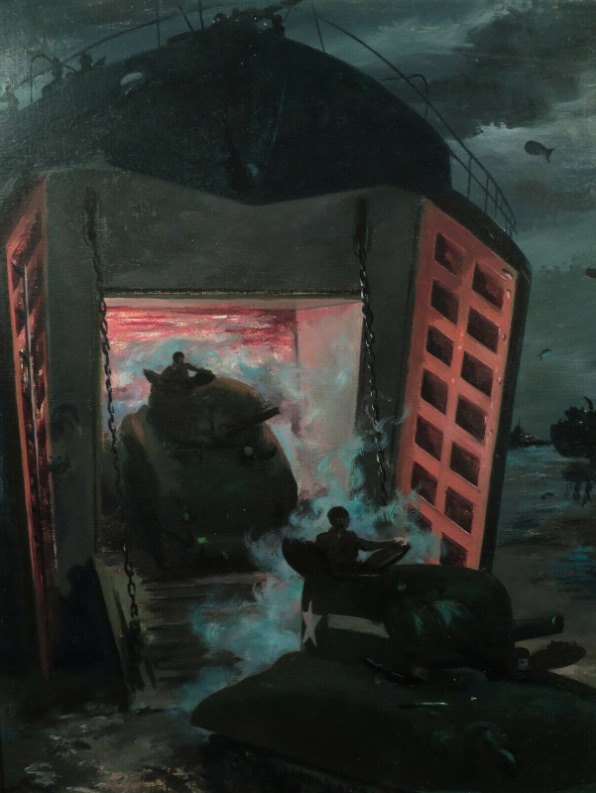
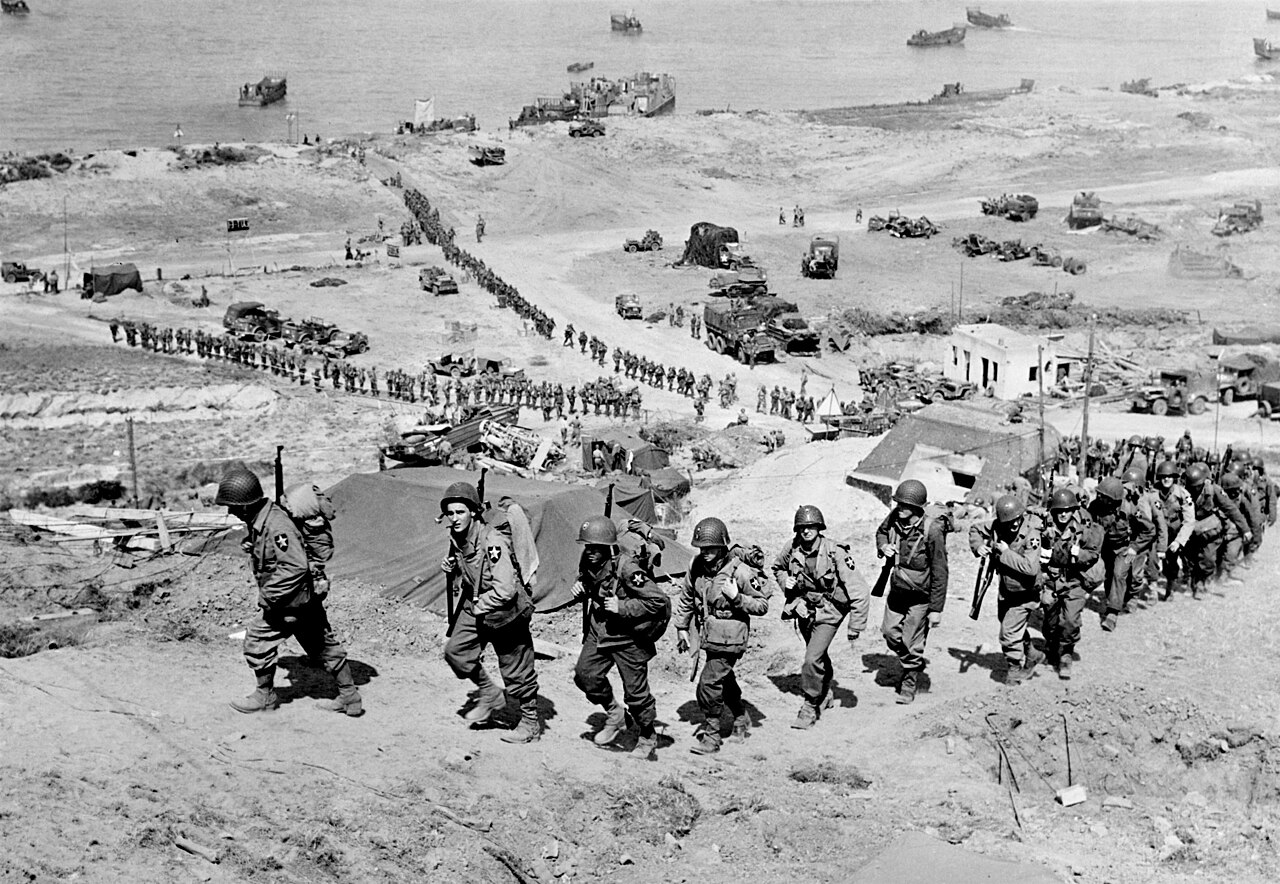
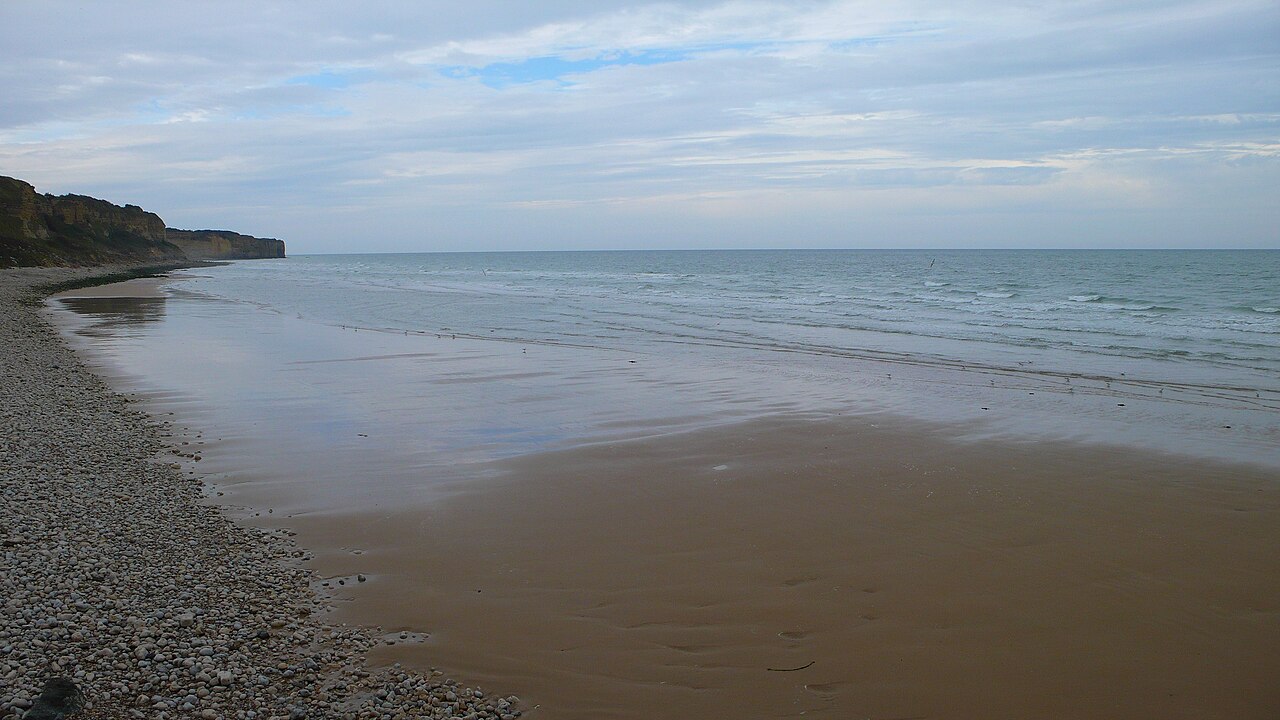
Omaha Beach was one of five Allied beach landing sectors of the amphibious assault component of Operation Overlord during the Second World War. On June 6, 1944, the Allies invaded German-occupied France with the Normandy landings. "Omaha" refers to a 5-mile section of the coast of Normandy, France, facing the English Channel, from Sainte-Honorine-des-Pertes in the east to Vierville-sur-Mer in the west; the Douve river estuary lies to the west of the beach. Landings here were necessary to link the British landings to the east at Gold with the American landing to the west at Utah, thus providing a continuous lodgement on the Normandy coast of the Baie de Seine. Taking Omaha was the responsibility of United States Army troops, with sea transport and a naval bombardment force provided predominantly by the United States Navy and Coast Guard, with contributions from the British, Canadian and Free French navies.
Quick Facts
- Game title
- Medal of Honor: Allied Assault
- Developer
- 2015
- Publisher
- Electronic Arts
- Protagonist
- Lt. Mike Powell
- Setting
- Omaha Beach
- Normandy
- France
- Date of operation
- June 6, 1944
Lore & Background
The primary objective at Omaha was to secure a beachhead 8 km deep, between Port-en-Bessin and the Vire river, linking with the British landings at Gold to the east, and reaching the area of Isigny to the west to link up with VII Corps landing at Utah. The American 29th Infantry Division, which included some units with prior combat experience, along with three companies of U.S. Army Rangers (Companies C, D, and E of the 2nd Ranger Battalion) redirected from Pointe du Hoc, assaulted the western half of the beach. The battle-hardened 1st Infantry Division was given the eastern half. Opposing the landings was the German 352nd Infantry Division. Of its 12,020 men, 6,800 were experienced combat troops, detailed to defend a 53 km front. The German strategy was based on defeating any seaborne assault at the water line, and the defenses were mainly deployed in strongpoints along the coast. The Allied plan called for initial assault waves of tanks, infantry, and combat engineer forces to reduce the coastal defenses, allowing larger ships to land in follow-up waves. But very little went as planned. Difficulties in navigation caused most of the landing craft to miss their targets throughout the day. The defenses were unexpectedly strong, and inflicted substantial casualties on landing U.S. troops. Under intense fire, the engineers struggled to clear the beach obstacles; later landings bunched up around the few channels that were cleared. Weakened by the casualties taken just in landing, the surviving assault troops could not clear the exits off the beach. This caused further problems and consequent delays for later landings. Small penetrations were eventually achieved by groups of survivors making improvised assaults, scaling the bluffs between the most well-defended points. By the end of the day, two small isolated footholds had been won by the American forces, which were subsequently exploited against weaker defenses further inland, achieving the original D-Day objectives over the following days. American forces suffered 2,400 casualties at Omaha on June 6, but by the end of the day they had landed 34,000 troops. The German 352nd Division lost 10 percent of its strength, with 1,200 casualties.
Reader's Guide
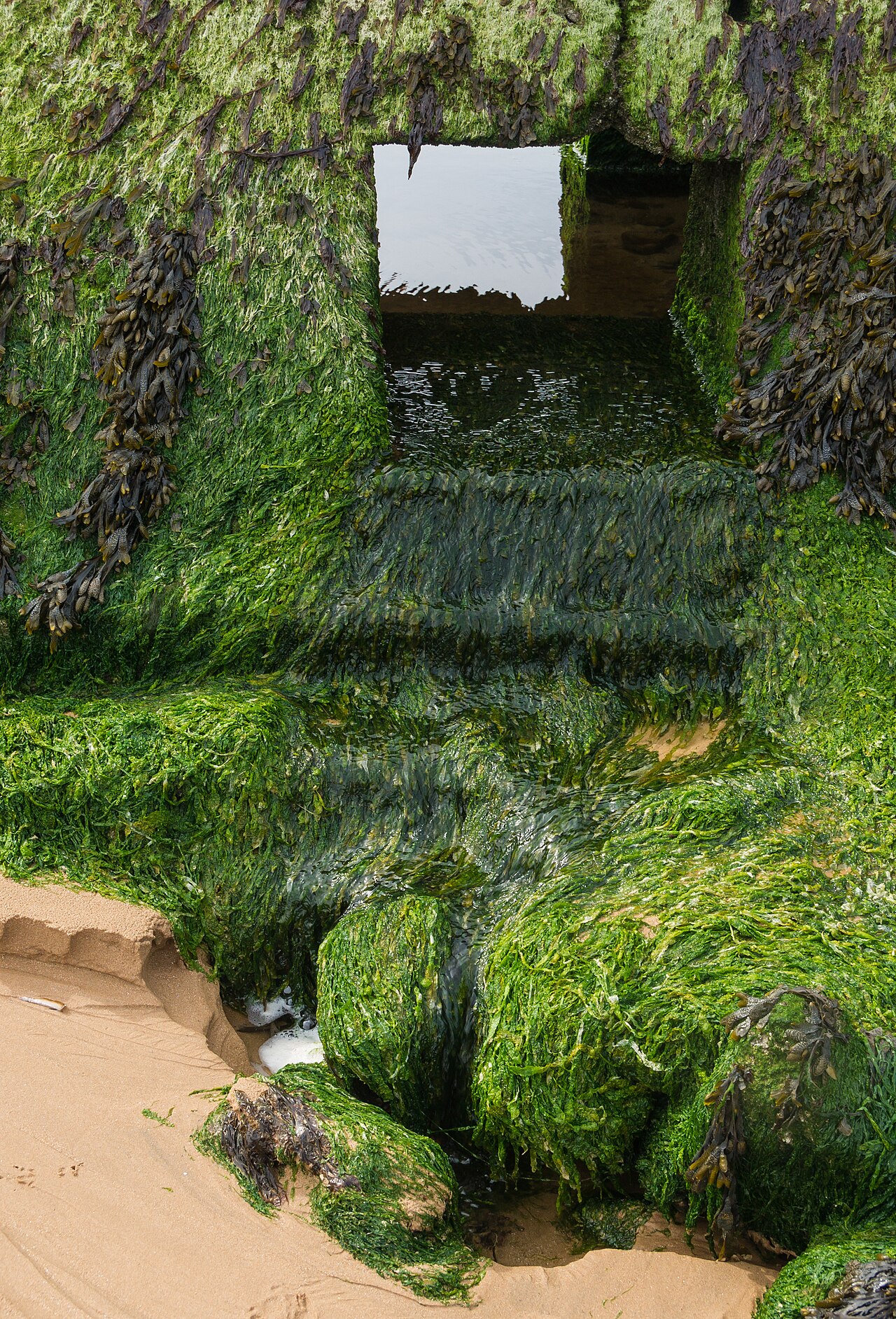
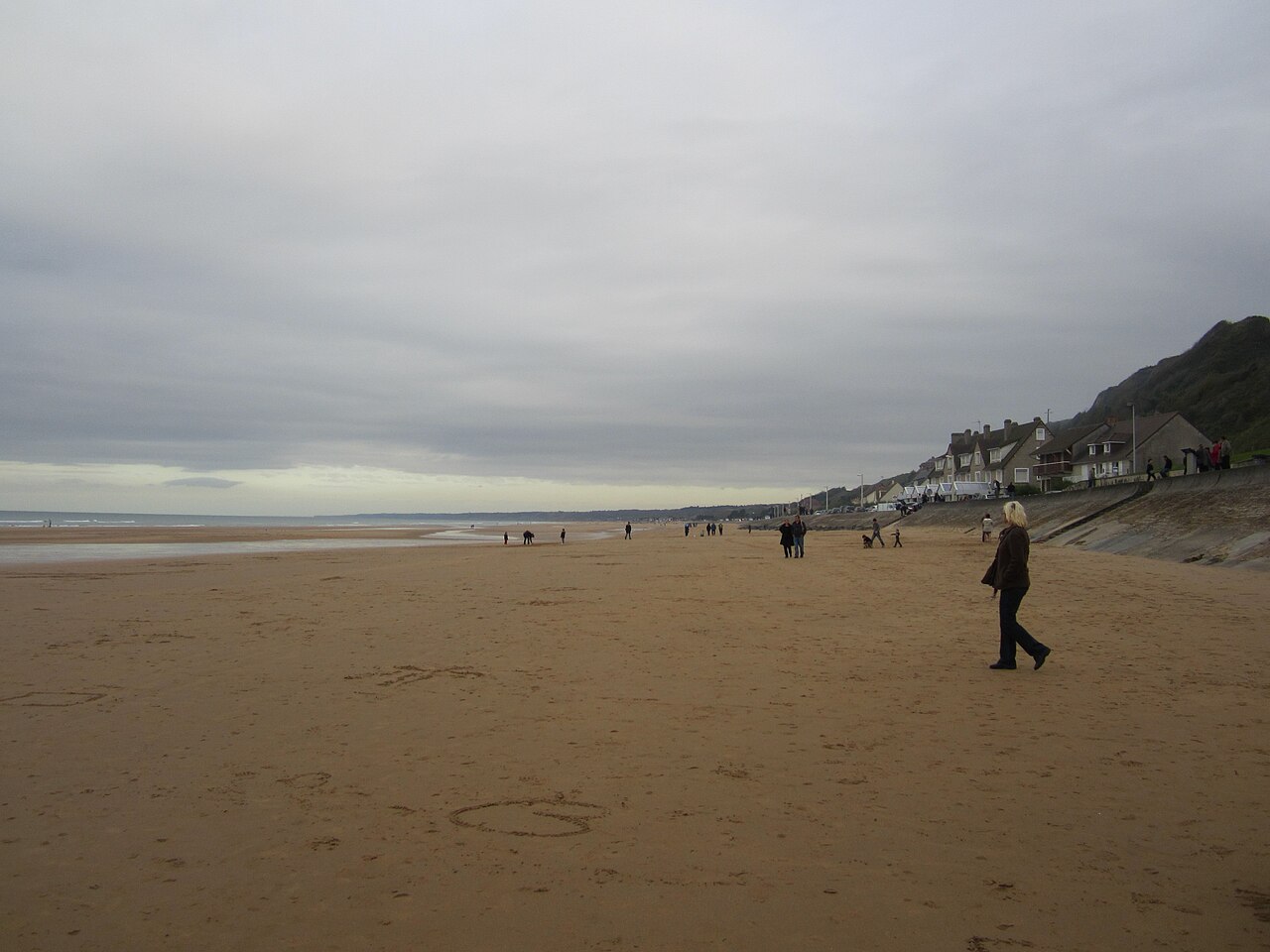
The coastline of Normandy was divided into sixteen sectors, which were assigned code names using a spelling-alphabet – from Able, west of Omaha, to Roger on the east flank of Sword. The area of beach that would become Omaha was originally designated X-Ray; the name was changed on 3 March 1944. The names of both Omaha and Utah were probably suggested by Omar Bradley, as two privates fitting out his London headquarters were from Omaha, Nebraska and Provo, Utah; they were not named after the corps commanders. Eight further sectors were added when the invasion was extended to include Utah on the Cotentin Peninsula. Sectors were divided into beaches identified by the colors Red, White and Green. Omaha was bounded at either end by large rocky cliffs. The crescent-shaped beach presented a gently sloping tidal area averaging 300 m between low and high-water marks. Above the tide line was a bank of shingle 2.5 m high and up to 15 m wide in places. At the western end, the shingle bank rested against a stone sea wall which ranged from 1.5–4 m in height. For the remaining two thirds of the beach after the seawall ended, the shingle lay against a low sand embankment. Behind the sand embankment and sea wall was a level shelf of sand, narrow at either end and extending up to 200 m inland in the center, and behind that rose steep escarpments or bluffs 30–50 m high, which dominated the whole beach and were cut into by small wooded valleys or draws at five points along the beach, codenamed west to east D-1, D-3, E-1, E-3 and F-1. The German defensive preparations and the lack of any defense in depth indicated that their plan was to stop the invasion at the beaches. Four lines of obstacles were constructed in the intertidal zone. The first consisted of 200 Belgian Gates with mines lashed to the uprights. 30 m behind these was a continuous line of logs driven into the sand pointing seaward, every third one capped with an anti-tank mine. Another 30 m shoreward of this line was a continuous line of 450 ramps sloping towards the shore, also with mines attached. The final line of obstacles was a continuous line of hedgehogs 150 m from the shoreline. The area between the shingle bank and the bluffs was both wired and mined, and mines were also scattered on the bluff slopes.
Game Development and Engine Technology
Medal of Honor: Allied Assault stands as a pivotal entry in the franchise, released in 2002 by Electronic Arts with development handled by 2015. This third installment in the series was designed for Windows and Mac OS X platforms, aiming to deliver an immersive infantry combat experience across World War II's European and North African theaters. Technologically, the title leveraged the id Tech 3 engine but incorporated significant modifications derived from Heavy Metal: F.A.K.K.² to enhance its simulation capabilities. These technical adjustments allowed for a more dynamic representation of battlefield chaos compared to previous entries. The game distinguished itself by focusing heavily on historical accuracy regarding military operations, setting a new standard for first-person shooters in the genre at the time. By integrating these specific engine tweaks, the developers successfully created an environment that felt both authentic and mechanically robust for players navigating through various war zones.
The Omaha Beach Experience
One of the most defining aspects of Allied Assault is its recreation of the D-Day invasion at Omaha Beach, a mission that serves as a direct homage to Steven Spielberg's 1998 film Saving Private Ryan. In this sequence, players control Lieutenant Mike Powell as he storms Charlie sector alongside the 2nd Ranger Battalion under Captain Ramsay. The level design meticulously mirrors the cinematic scenery and specific sequences from the movie, capturing the intense chaos of securing bunkers amidst heavy casualties. This mission is not merely a gameplay segment but a narrative bridge that connects the player's actions to the broader historical context of Operation Overlord. Following the beach landing, Powell ventures into the countryside to support airborne troops clearing paths toward Carentan, engaging in critical tasks like calling air support on Flak 88 cannons and destroying Nebelwerfer batteries. This section of the game remains a landmark example of how video games can translate cinematic war drama into interactive experiences.
Campaign Narrative and Global Operations
The single-player campaign follows Lieutenant Mike Powell, a skilled U.S. Army Ranger and OSS agent whose journey spans multiple critical fronts. The story begins in North Africa during Operation Torch, where Powell survives an ambush in Arzew to rescue Major Jack Grillo and sabotage German airfields before signaling the Allied fleet. The narrative then shifts to occupied Norway, where Powell infiltrates Trondheim to destroy a prototype Naxos radar detector on a U-boat, neutralizing a major threat despite losing his partner Grillo in action. Later missions take him behind enemy lines in France to collaborate with French Resistance member Manon Batiste, securing blueprints for the King Tiger tank and eventually hijacking one to secure a vital bridge at Brest. The campaign culminates at Fort Schmerzen along the Siegfried Line, where Powell infiltrates a mustard gas facility disguised as a German officer, destroying weapon stockpiles and communications before storming the base with Rangers on a hijacked freight train.
Multiplayer Mechanics and Modes
Beyond its single-player narrative, Allied Assault introduced a robust multiplayer component that emphasized strategic team play and individual skill. Upon selecting a server, players begin in spectator mode before choosing to fight as either Allies or Axis powers, customizing their loadout with various weapons. The system utilizes a point-based scoring structure where kills and completed rounds earn points, while suicides and deaths incur penalties. Four distinct modes cater to different competitive styles: Deathmatch focuses on individual kill counts, Team Deathmatch requires coordinated squad efforts against opposing teams, Round Based tracks victories over multiple engagements rather than raw scores, and Objective mode challenges players to win by completing specific mission goals. This variety ensured that the multiplayer experience remained engaging for both casual skirmishes and organized tactical warfare, solidifying the game's reputation as a community favorite among WWII enthusiasts.
Gallery
Frequently Asked Questions
Which game contains the Omaha Beach mission?
This level is featured in Medal of Honor: Allied Assault, which was developed by 2015 and published by Electronic Arts in 2002. It remains one of the most recognized moments in the series due to its historical recreation.
What historical event does this mission depict?
The scenario recreates the D-Day landings that occurred on June 6, 1944, as part of Operation Overlord. It specifically focuses on the intense fighting at Omaha Beach in France.
Does the level reference any other media?
Many sequences are directly inspired by Steven Spielberg's 1998 film Saving Private Ryan. The game developers quoted scenery and action from that movie to enhance realism.
More in Campaigns & Missions
Related in Medal of Honor
Links follow this subject's own source article.
Elsewhere in Medal of Honor
Spotted an error? Know more?
Reader corrections go straight into our review queue. Suggest an edit · How this site is sourced