
After Blue
A 2021 French sci-fi fantasy film by Bertrand Mandico.

Sam2875 · CC BY-SA 4.0
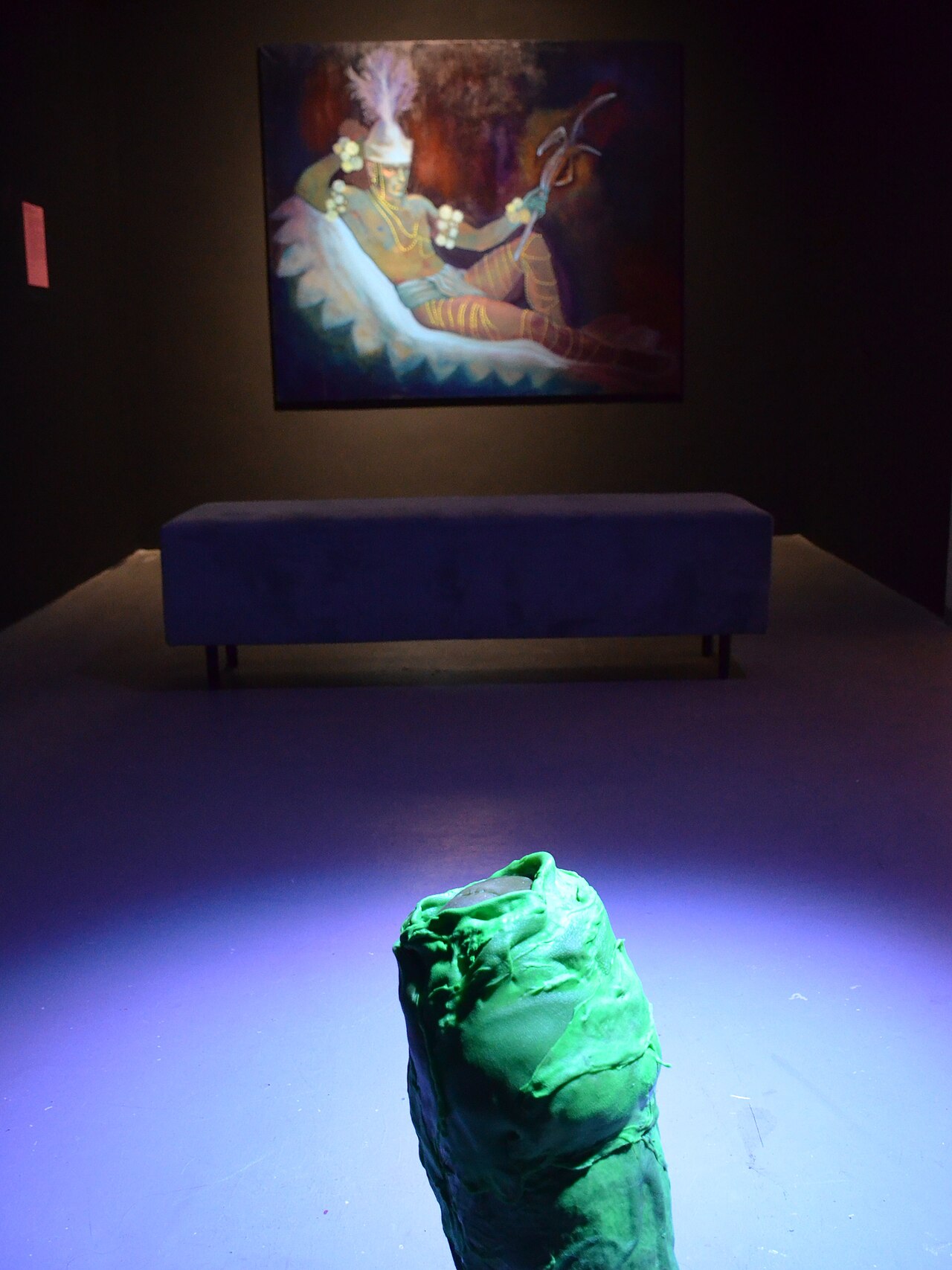
After Blue (Dirty Paradise) is a 2021 French science-fiction fantasy film written and directed by Bertrand Mandico. The story takes place on the planet After Blue, where only women live. A teenage girl named Roxy lives there with her mother, Zora. One day, Roxy and other girls find a woman named Kate Bush trapped in the sand. Despite warnings that Kate Bush might be a criminal being punished, Roxy frees her. Roxy becomes infatuated with Kate Bush, who has one hairy arm and an eye on her mons pubis, but Kate immediately resumes her criminal behavior. Roxy and her mother are blamed and exiled from their community, ordered to kill Kate Bush to be allowed back. They travel across dangerous lands and encounter threatening people and environments while hunting their target.
Principal photography began on 12 November 2019 and lasted seven and a half weeks, shot on 35 mm film. Most filming took place in Corrèze and Creuse, France; beach scenes were filmed near La Tremblade, Charente-Maritime. A hangar in Brive-la-Gaillarde served as a studio set.
According to review aggregate Rotten Tomatoes, 74% of critics gave the film a positive rating based on 50 reviews, with an average score of 6.2/10. The site’s consensus states that while its overwhelming inscrutability may feel like a flaw for some, the film is nothing if not original. Metacritic assigned a weighted average score of 52 out of 100 based on 12 reviews, indicating mixed or average reception. Jude Dry of IndieWire gave the film a B, describing it as a kaleidoscopic fantasy warped through a 1970s sci-fi Western lens, calling it a synthetic siren song for freaks of the future and past.
Quick Facts
- Native Name
- fr · After Blue (Paradis sale)
- Director
- Bertrand Mandico
- Producer
- Emmanuel Chaumet
- Starring
- Elina Löwensohn / Paula Luna / Vimala Pons / Agata Buzek
- Cinematography
- Pascale Granel
- Editing
- George Cragg
- Music
- Pierre Desprats
- Studio
- Ecce Films / Ha My Productions
- Distributor
- Altered Innocence
- Runtime
- 129 minutes
- Country
- France
- Language
- French
Facts from the source article.
Lore & Background
In an undetermined future, Roxy is a teenage girl who lives in a community with her mother, Zora, on the planet After Blue, a planet inhabited only by women. One day on a beach, Roxy and other girls encounter a woman named Kate Bush stuck in the sand. Despite suggestions that Kate Bush may be a criminal undergoing punishment, Roxy helps her and sets her free. Roxy sees Kate Bush has one hairy arm and an eye on her mons pubis and becomes infatuated with her, but Kate immediately resumes her criminal activities. Roxy and her mother are held responsible and are exiled from the community, tasked with murdering Kate Bush if they wish to return. Roxy and Zora encounter dangerous people and environments as they traverse the lands in search of their bounty.
Reader's Guide
After Blue received a mixed critical reception. Film review aggregate Rotten Tomatoes reports that 74% of critics gave the film a positive rating, based on 50 reviews with an average score of 6.2/10. The site's consensus reads, 'its overwhelming inscrutability may begin to feel more like a bug than a feature for some viewers, but After Blue is nothing if not original.' Metacritic assigned the film a weighted average score of 52 out of 100, based on 12 reviews from mainstream critics, considered to be 'mixed or average'. Jude Dry, writing for IndieWire, gave the film a B score, describing the film as 'a kaleidoscopic fantasy warped through the lens of a 1970s sci-fi Western, "After Blue" is a synthetic siren song for the freaks of the future and the past.' The film is notable for its all-female cast and its distinctive visual style shot on 35 mm film.
Did You Know?
- Principal photography began on 12 November 2019, occurring over seven and a half weeks.
- The movie was shot with 35 mm film.
- Filming largely took place in Corrèze and Creuse, France, while beach scenes were filmed near La Tremblade, Charente-Maritime.
- A hangar in Brive-la-Gaillarde was used as a studio set.
Narrative & Character Dynamics
The film centers on a single charged night between two men whose shared past is tangled in ways neither can easily untangle. Aaron Eagle, a Los Angeles-based camboy who specializes in financial domination, accepts a fifty-thousand-dollar offer from an anonymous client who arrives at his rental house wearing a balaclava. What begins as a transactional arrangement with a camera rolling quickly unravels into something far more personal and confrontational. Aaron's client turns out to be Hank Grant, his former middle school English teacher, a self-admitted pederast who was arrested for attempting to assault a student named James Scott. Hank served seven years in prison and now works at a supermarket in Bedford, Maine, where he has turned to religion. The night between them oscillates between intimacy, heated argument, and raw confession. Aaron reveals his real name is Alex McConnell, while Hank admits his supposed change of heart during the assault was a fabrication. The film closes the next morning with Hank departing, leaving behind old yearbook photos and the remainder of his money.
Production & Festival Journey
Written and directed by Elliot Tuttle, Blue Film was a lean, tightly contained production. In December 2024, it was announced that Kieron Moore and Reed Birney would headline the project, with Mark Duplass attached as consulting producer. Principal photography was completed in just two weeks, suggesting a meticulously scripted shoot with a small cast and limited locations. The film's path to audiences was far from straightforward. It was turned down by multiple major festivals, including Sundance and South by Southwest, before finally earning a world premiere slot at the Edinburgh International Film Festival on August 16, 2025. It also found a home at Newfest, screening on October 11, 2025. In February 2026, Obscured Releasing acquired U.S. distribution rights, and the film reached theaters on May 8, 2026. That trajectory — from repeated festival rejections to a respected independent distributor — highlights how the film's challenging subject matter likely made it a difficult commercial sell, even as its eventual critical reception proved otherwise.
Critical Reception & Industry Response
Blue Film earned strong and largely unanimous critical praise upon its release. On Rotten Tomatoes, 95 percent of 42 critics' reviews are positive, with the site's consensus describing the film as equal parts bracing and sensitive in its exorcism of taboo, praising it as provocative without being exploitative thanks to phenomenal performances and Tuttle's emotional frankness. On Metacritic, the film holds a weighted average score of 86 out of 100 based on 10 critics, a rating the platform designates as universal acclaim. Reviewers consistently singled out the lead performances by Moore and Birney, as well as Tuttle's willingness to engage with deeply uncomfortable material — pedophilia, childhood sexual abuse, concealed identity — without resorting to sensationalism. The film's capacity to balance frankness with genuine empathy appears to have been its defining critical strength, distinguishing it from work that might otherwise have been dismissed as exploitative or gratuitous.
Thematic Depth & Emotional Core
At its heart, Blue Film is a study in confession, identity, and the stories people construct to make their lives bearable. Aaron builds a professional persona around financial domination, yet his Diablo tattoo — a mark left by an ex-boyfriend named Rafael with whom he no longer speaks — reveals how much of his sense of self remains entangled in past relationships he cannot fully shed. Hank, meanwhile, frames his pedophilia as the product of being raped by his own grandfather, also named Hank, with his mother's tacit approval, yet he ultimately confesses that his redemption during the assault on James Scott was a lie. The film interrogates who gets to narrate their own trauma and how sexual desire, guilt, and longing braid together in ways that resist simple moral categorization. Tuttle's approach treats both characters with an unflinching tenderness, allowing the audience to sit in genuine discomfort without being handed a prescribed emotional response.
Gallery




Frequently Asked Questions
What is After Blue?
After Blue, also known as Dirty Paradise, is a 2021 French science-fiction fantasy film written and directed by Bertrand Mandico. It is set on an all-female planet and follows a teenage girl's encounter with a mysterious stranger.
Who is the main character in After Blue?
The story revolves around Roxy, a teenager who lives with her mother Zora on the planet After Blue. Roxy is the one who discovers Kate Bush buried in the sand and decides to free her despite warnings.
What is the basic plot of After Blue?
On a world where only women live, Roxy and other girls unearth Kate Bush from the sand and release her against the community's advice. Roxy becomes deeply infatuated with Kate, but Kate quickly reverts to criminal behavior, leading to Roxy and her mother being exiled.
Why is After Blue considered LGBTQ-relevant?
The entire society depicted is composed exclusively of women, and the emotional core of the narrative is a young girl's intense attraction to and obsession with another woman, Kate Bush. The film explores desire, infatuation, and identity within a fully female world.
How does After Blue end?
After Kate Bush resumes her criminal activities, Roxy and her mother Zora are held responsible and banished from the planet. The film closes on their exile rather than offering a conventional resolution to Roxy's feelings.
More in LGBTQ-related fantasy films 1-24
Spotted an error? Know more?
Reader corrections go straight into our review queue. Suggest an edit · How this site is sourced