Tarand (animal)
Legendary color-changing creature from classical and medieval texts.

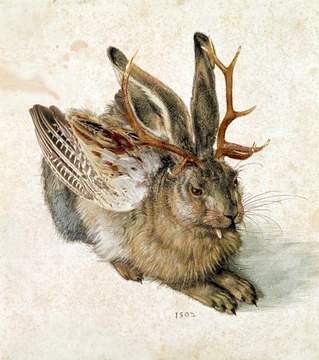
The tarand, also known as tarandos, tarandus, parandrus, or parandros, is a legendary creature resembling a reindeer or moose, described as having chameleon-like color-changing properties. First recorded in Pliny the Elder's Natural History, it appears in classical and medieval texts, with its veracity later discussed by the naturalist Baron Cuvier.
- First described by
- Pliny the Elder
Lore & Background
The tarand was first described in Pliny the Elder's Natural History as a rare beast among the Scythians called Geloni. Pliny wrote that it changes the color of its hair according to its surroundings, making it difficult to catch, and that it is the size of an ox with a head like a deer. In his Natural History, Pliny added that the tarand has cloven hoofs, hair as deep as a bear's, and a hide so tough that Scythians make breastplates from it; he noted it takes the color of trees, shrubs, and places where it lies. Aelian similarly described the tarand as native to Scythia, with a back and size resembling a bull, and noted that Scythians cover their shields with its hide.
Reader's Guide
The tarand appears in key medieval texts, including The York Mystery Cycle (1440), where it is used as an insult ('thou tarand'), and in Francois Rabelais' Pantagruel (1552), which provides a detailed description of the animal's color-changing ability, noting that its hair and skin can take on the color of nearby objects, and that it can change color voluntarily based on fear or other affections. The veracity of the tarand was discussed by Baron Cuvier, indicating its place in early natural history debates. The creature's shifting habitat—Scythia in Aristotle, Pliny, and Aelian, but Aethiopia in Solinus—reflects the uncertainty and legendary nature of the accounts. Its legacy lies in its persistence as a symbol of shape-shifting and camouflage in pre-modern zoology.
Did You Know?
- The tarand is first described in Pliny the Elder's Natural History, not in Aristotle's works.
- Pliny wrote that the tarand's hide is so tough that Scythians make breastplates from it.
- Baron Cuvier discussed the veracity of the tarand.
Frequently Asked Questions
What is the Tarand (animal)?
The Tarand is a legendary creature from classical and medieval lore that looks much like a reindeer or moose. Its most striking trait is a chameleon-like ability to shift its color, which set it apart from any real cervid in the eyes of ancient writers.
Who first recorded the Tarand (animal) in writing?
Pliny the Elder is credited with the earliest known description of the Tarand in his Natural History. Later medieval authors picked up the creature, and the naturalist Baron Cuvier eventually weighed in on whether the accounts were credible.
What other names is the Tarand (animal) known by?
Depending on the source text, the creature appears under several variants: tarandos, tarandus, parandrus, and parandros. These alternate names reflect the way the legend was transliterated and retold across different classical and medieval traditions.
What special ability is the Tarand (animal) famous for?
Its hallmark power is a chameleon-like capacity to change color, which ancient and medieval writers treated as a defining, almost supernatural feature. This trait is what distinguishes the Tarand from ordinary reindeer or moose in the folklore record.
Why does the Tarand (animal) matter in the history of natural lore?
The Tarand bridges classical Greek-Roman natural writing and later medieval bestiaries, showing how a single mythical animal persisted across centuries of scholarship. Its later examination by Baron Cuvier also marks an early example of a naturalist questioning the literal truth of inherited creature legends.
More in Legendary mammals 1-22
Spotted an error? Know more?
Reader corrections go straight into our review queue. Suggest an edit · How this site is sourced