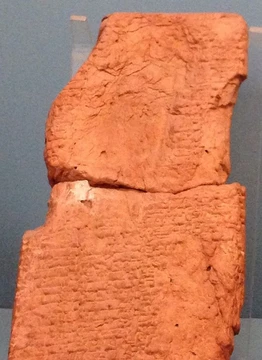
Sources of law
Last updated
Binding rules that allow a state to govern its territory originate from what are termed sources of law.[1] Cicero, in ancient Rome, employed the Latin word "fons" (fountain) as a metaphor for the origin of law.[1] Any action or entity that has the capacity to establish, alter, or abolish a legal right or rule is technically classified as a source of law.[1]
Key facts and history
Material sources refer to places where formal law can be found, such as official gazettes or newspapers.[1] The central national legislature is normally the ultimate source of law within a state.[2] Judicial precedent, based on the doctrine of stare decisis, is mostly associated with English common law jurisdictions.[3] Legal theorists often separate sources into two categories—formal and material—but this division is applied with varying consistency.[1]
Statutes, case law, and contracts are examples of formal sources, which are linked to the actual creation of legal rules.[1] In civil law jurisdictions, legal codes and customary practices serve as sources; in common law jurisdictions, a combination of different sources constitutes "the law".[4] Ideas and doctrines are frequently exchanged between civil law and common law systems.[5] Although international law can override national law, its primary components are ratified conventions and treaties.[2]
England and Wales have a unique source of law called equity, which was created by the Court of Chancery, a body that no longer exists.[6]
What the cited sources add
Riofrio develops additional potential sources of law following the Aristotelian notion of the four causes.[1] Efficient sources of law would include actions of nature or "of God" that change the law.[1] In England, there is a hierarchy of sources including legislation, case law, parliamentary conventions, general customs, and books of authority.[7] Among the final sources of law are the objectives of legal rules, the aims of a constitution, and the purposes of the parties involved in a legal transaction.[1]
A critic might argue that Kim Jong-un, despite holding de facto power as a tyrant, lacks a de jure (legitimate) source for his authority.[8]
References
- Wikipedia, "Sources of law" (CC BY-SA 4.0), which cites: Riofrio, "The Four Causes of "Ius" (Res Iusta) as the Proper Sources of Law", Forum. Supplement to Acta Philosophica, 2023, p. 71–91 (original not read by us) en.wikipedia.org
- Wikipedia, "Sources of law" (CC BY-SA 4.0), which cites: The UK is (in 2018) taking steps to denounce European Law; The UK ’s Westminster Parliament can, for instance, suspend at will Northern Ireland’s Assembly at Stormont (original not read by us) en.wikipedia.org
- Wikipedia, "Sources of law" (CC BY-SA 4.0), which cites: Mozley & Whiteley's Law Dictionary - E.R. Hardy Ivamy (original not read by us) en.wikipedia.org
- Wikipedia, "Sources of law" (CC BY-SA 4.0), which cites: For example, in Louisiana Civil Code art. 1, the sources of law are custom and legislation. (original not read by us) en.wikipedia.org
- Wikipedia, "Sources of law" (CC BY-SA 4.0), which cites: For instance , the ECJ is a civil court that embraces binding precedent (original not read by us) en.wikipedia.org
- Wikipedia, "Sources of law" (CC BY-SA 4.0), which cites: The Judicature Acts 1873-75 abolished the Courts of Chancery. Chancery Division of the High Court succeeds the old Courts of Chancery (original not read by us) en.wikipedia.org
- Wikipedia, "Sources of law" (CC BY-SA 4.0), which cites: Slapper & Kelly, English Legal System, Routledge, 2016 (original not read by us) en.wikipedia.org
- Wikipedia, "Sources of law" (CC BY-SA 4.0), which cites: Austin's "command theory of law" asserts that to be effective, law must have a sovereign and a sanction to back it up. (original not read by us) en.wikipedia.org
Each numbered sentence above was checked against the source it cites before publication. Sentences citing Wikipedia adapt text from the English Wikipedia article Sources of law (contributors), used under CC BY-SA 4.0; this entry is available under the same licence. Other sources were used for facts only; no text or images are copied from them.
Also in the Codexery
More in Legal Systems & Concepts
Sources
Compiled from Wikipedia and the sources listed below. Text from Wikipedia is available under CC BY-SA 4.0; this entry is adapted from it.
- Wikipedia: Sources of law (CC BY-SA 4.0).
Spotted an error? Know more?
Reader corrections go straight into our review queue. Suggest an edit · How this site is sourced