
Shakira
Colombian singer who globalized Latin music and philanthropy.

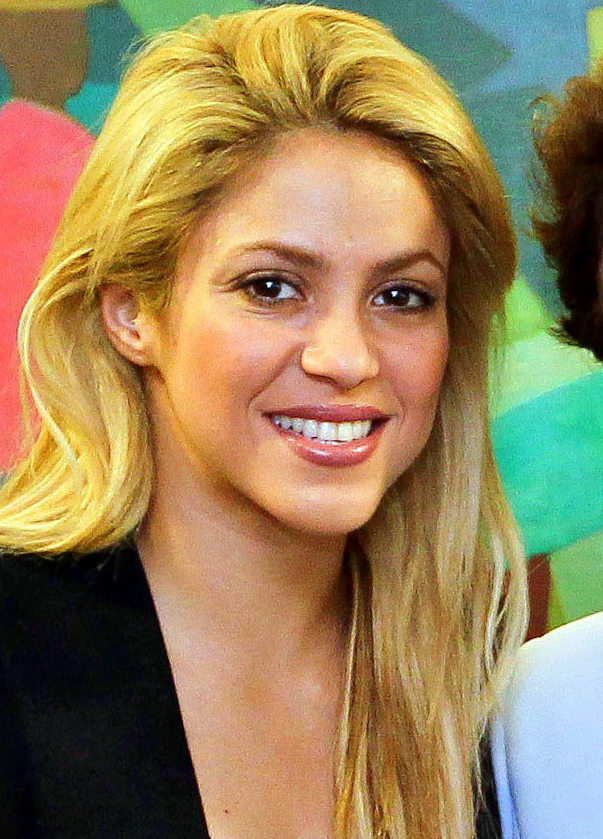
Serenity · CC BY 3.0
Shakira Isabel Mebarak Ripoll, born on 2 February 1977 in Barranquilla, Colombia, is a singer-songwriter, dancer, and record producer. She is the only child of William Mebarak Chadid and Nidia Ripoll Torrado, with Lebanese, Catalan, and Colombian heritage, and distant Italian ancestry. Raised Catholic, she attended Catholic schools and has eight older half-siblings from her father’s previous marriage. Her early life included tragedy: when she was two, a half-brother died in a motorcycle accident. At age four, she wrote her first poem, and after receiving a guitar from an aunt, she composed her first song, inspired by her father’s grief. Her family’s comfortable circumstances ended when her father’s jewelry business failed when she was eight, leading to a period of adjustment after a stay with relatives in Los Angeles. At four, she first heard the doumbek drum at a Middle Eastern restaurant and began belly dancing on tables. She performed at her Catholic school weekly, but was rejected from the choir in second grade because her vibrato was considered too strong. After her father showed her local orphans, she vowed to help them as a famous artist. She won a talent contest at age ten, and between ten and thirteen, she attended various events. She made her recording debut with Sony Music Colombia at 14, and after receiving money for the *Magia* album, bought her parents a car.
- field
- Music, dance, television, philanthropy
- nationality
- Colombian
- known_for
- Popularizing Latin music worldwide; best-selling female Latin artist; FIFA World Cup icon
Lore & Background
Shakira was born in Barranquilla, a city on Colombia’s northern Caribbean coast, to parents of Lebanese, Catalan, and Colombian descent, with distant Italian roots through an ancestor named Pisciotti. Raised Catholic, she attended Catholic schools and has eight older half-siblings from her father’s previous marriage. Her first poem, “La Rosa de Cristal,” was written at age four, and her poetry gradually evolved into song lyrics. At two, her half-brother died in a motorcycle accident; six years later, inspired by her father’s use of dark glasses to conceal his grief, she composed her first song, “Gafas Oscuras,” after receiving a guitar from her aunt. Her family lived comfortably until her father, a jeweler, went bankrupt when she was eight. Sent temporarily to relatives in Los Angeles, she returned to find their cars, furniture, and television gone, forcing her to adapt to reduced circumstances. At age four, her father took her to a Middle Eastern restaurant where she first heard the doumbek drum and spontaneously danced on a table; she later performed belly dancing at her Catholic school each Friday, encouraged by parents, teachers, and students. In second grade, she was rejected from the school choir because her vibrato was deemed too strong, and classmates compared her voice to a goat’s. Her hyperactivity led to frequent removal from class. To teach her gratitude, her father showed her orphans living in a local park; the sight stayed with her, and she vowed to help them when she became famous. At ten, she won a local television talent contest, receiving a bicycle as the prize.
Reader's Guide
Shakira’s career is defined by her fusion of Western pop with Middle Eastern musical and dance elements, a blend rooted in her Lebanese heritage and first sparked when she heard a doumbek drum at age four and began belly dancing. She writes or co-writes the vast majority of her own material, a practice that began with her first poem at age four and her earliest song, “Gafas Oscuras,” inspired by her father’s grief after her half-brother’s death. Her breakthrough came with the albums *Pies Descalzos* and *Dónde Están los Ladrones?*, but her first English release, *Laundry Service*, sold over 13 million copies, making it the best-selling album by a female Latin artist. She has since achieved number-one singles in multiple languages, including “Whenever, Wherever,” “Hips Don’t Lie,” and “Waka Waka (This Time for Africa),” the latter cementing her role as a recurring artistic and humanitarian icon for the FIFA World Cup. Her impact extends beyond sales: she is credited with opening the international market for other Latin artists and popularizing Spanish-language music globally, contributing to increased worldwide Spanish learning. Her philanthropic work, notably the Barefoot Foundation, grew from a childhood vow after her father showed her orphans in a park; this advocacy for children’s rights, women, and the Global South earned her the Latin Recording Academy Person of the Year and Harvard Foundation Artist of the Year awards in 2011. She also served as a coach on *The Voice*, voiced a character in *Zootopia*, and was nominated for the Rock and Roll Hall of Fame in 2026.
Did You Know?
- Shakira was rejected from her school choir because her vibrato was considered too strong; classmates said she sounded like a goat.
- She wrote her first poem, 'La Rosa de Cristal,' at age four.
- Her father took her to see orphans in a local park when she was young, inspiring her later philanthropic work.
Career & Musical Achievements
A singer-songwriter, dancer, and record producer, she is widely called the "Queen of Latin Music." Her recording career began at just fourteen with Sony Music Colombia, and she quickly rose to prominence through the mid-1990s albums Pies Descalzos and Dónde Están los Ladrones?. She has since topped the Billboard Top Latin Albums chart with releases spanning four different decades—a first for any woman—while her English albums Oral Fixation, Vol. 2, She Wolf, and the self-titled Shakira all reached platinum status worldwide. Her catalog includes four Grammy Awards, fifteen Latin Grammy Awards, and a long list of number-one singles.
Defining Moments & Cultural Milestones
Several moments in Shakira's career transcended music to become cultural touchstones. More recently, collaborations such as "Bzrp Music Sessions, Vol. 53," "TQG," and "Dai Dai" have kept her at the forefront of contemporary Latin music. Her ability to blend Western pop sensibilities with Middle Eastern melodic and rhythmic influences has made her sound instantly recognizable, and her status as an "international phenomenon" is reflected in the sheer breadth of her number-one singles across languages and decades.
Legacy & Impact on Global Music
Few artists have reshaped the global music landscape the way Shakira has. She is widely credited with popularizing Hispanophone music on the world stage and with contributing to a measurable increase in the learning and use of the Spanish language worldwide. By proving that a Latin artist could dominate both the Spanish- and English-language markets simultaneously, she opened the doors of the international pop industry for a generation of artists who followed. Her songwriting—she has written or co-written the vast majority of her own material—reflects a distinctive fusion of Western pop structures with the melodic and rhythmic vocabulary of the Middle East, a blend rooted in her own Lebanese, Catalan, and Colombian heritage.
Life Beyond the Spotlight
Shakira's story extends well beyond the stage. Born the only child of William Mebarak Chadid and Nidia Ripoll Torrado in Barranquilla, she grew up in a family of Lebanese, Catalan, and Colombian descent with distant Italian roots. Her childhood carried both wonder and hardship: her father, a jeweler, went bankrupt when she was eight, and the family lost their cars, furniture, and television. She was sent to stay with relatives in Los Angeles. At four she wrote her first poem, "La Rosa de Cristal," and at eight she composed "Gafas Oscuras," inspired by her father's years of dark glasses worn to conceal grief after losing a son. A childhood visit to a local orphanage planted a lifelong commitment to helping vulnerable children, a promise fulfilled through her Barefoot Foundation. In 2011 she received both the Latin Recording Academy Person of the Year and the Harvard Foundation Artist of the Year honors for her philanthropy. She actively advocates for equitable development of the Global South, children's rights, Latino communities in the U.S. and Canada, women, and other under-represented groups.
Gallery


Frequently Asked Questions
Who is Shakira?
Shakira is a Colombian singer widely recognized as the "Queen of Latin Music" who helped bring Spanish-language pop and rock to mainstream audiences around the world.
What is Shakira best known for?
She is celebrated as the best-selling female Latin artist of all time and for bringing Latin sounds into the global pop arena, including her iconic FIFA World Cup performances.
What fields is Shakira active in beyond music?
In addition to singing and dancing, she has worked in television and is well known for her philanthropy efforts.
Why is Shakira considered so important to Latin music?
She is credited with breaking down barriers for Hispanophone artists by opening the international market, paving the way for many other Latin musicians to reach global audiences.
Where is Shakira from?
She is Colombian and has carried that identity throughout her career, blending Latin American rhythms with international pop production.
More in Latin Music Icons 1-24
Spotted an error? Know more?
This is a living reference — every entry is fact-audited, and reader corrections feed straight into our audit queue. Suggest an edit · See this site's audit record