
Nuevo León
Northeastern Mexican state, industrial hub, named after the Kingdom of León in Spain.

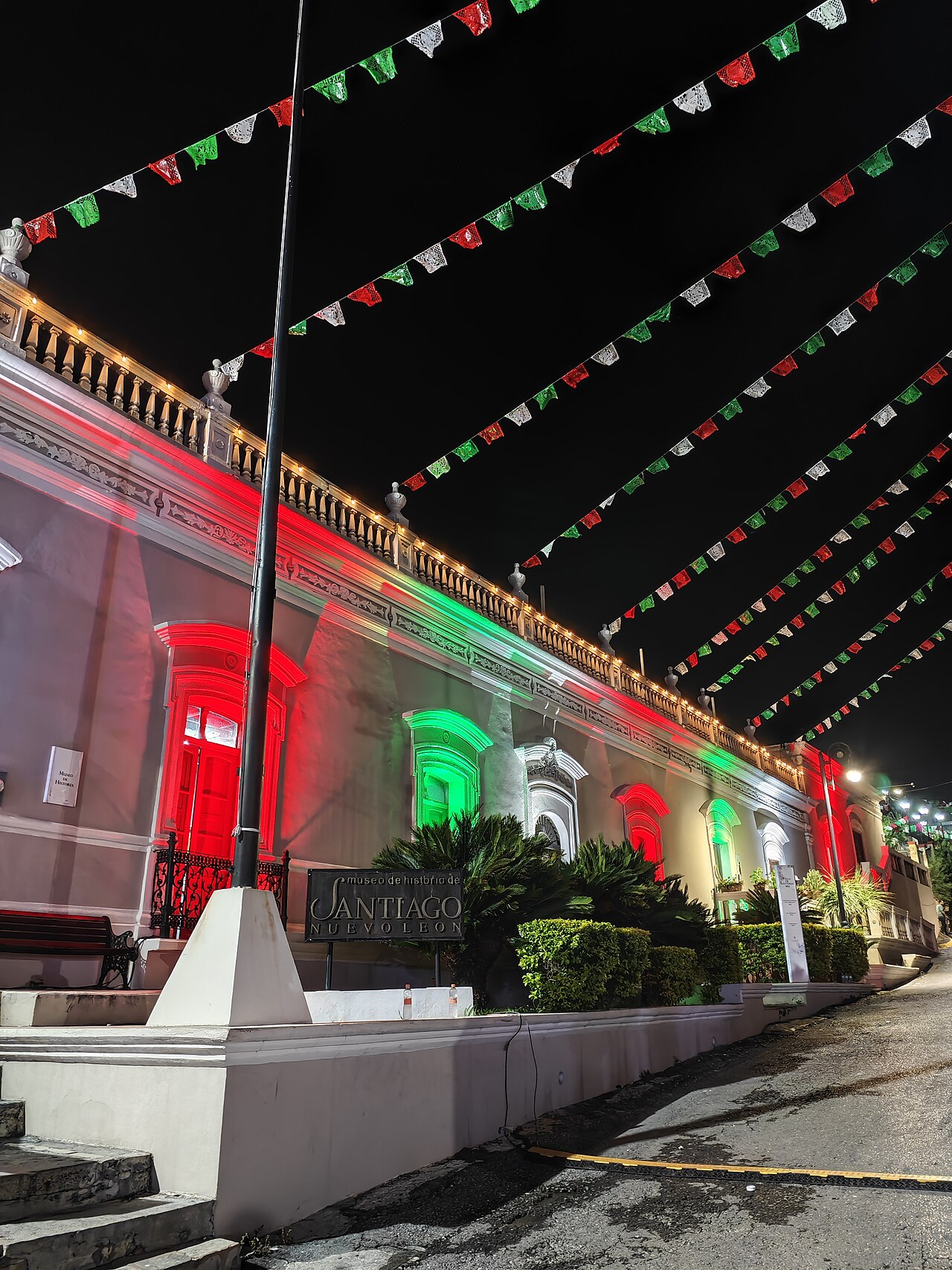
Tefita228 · CC BY-SA 4.0
Nuevo León, officially called the Free and Sovereign State of Nuevo León, sits in northeastern Mexico. It shares borders with the Mexican states of Tamaulipas, Coahuila, Zacatecas, and San Luis Potosí, plus a very short international boundary with the U.S. state of Texas. Spanning 64,156 square kilometers (24,771 square miles) and home to 5.78 million people as of 2020, it ranks as the thirteenth-largest federal entity by area and the seventh most populous. Its capital, Monterrey, is the state’s biggest city and the ninth-largest in Mexico. The Monterrey metropolitan area, where roughly 92% of the state’s population lives, is the country’s second-largest metro region, with an estimated 5.3 million residents in 2020.
Before Europeans arrived, the area now known as Nuevo León was inhabited by various nomadic groups, whom the Spanish called chichimecas. The region was first claimed in 1580 through an expedition led by Luis Carvajal y de la Cueva, who established the New Kingdom of León—a territory covering parts of modern-day Coahuila, Nuevo León, Tamaulipas, and Texas. Permanent settlement didn’t take hold until 1596. Following Mexico’s independence, Nuevo León became a state in 1824. Industrialization began in the late 1800s and early 1900s, with several large companies forming, and this growth accelerated after the Mexican Revolution. Today, the state is a key manufacturing center and boasts one of Mexico’s largest economies.
**Etymology** The name Nuevo León traces back to the late 1500s, when explorer Luis Carvajal y de la Cueva called the region the New Kingdom of León, honoring the Kingdom of León in Spain. He noted similarities between the two areas, especially their mountainous landscapes. After Mexican independence, the name was shortened to Nuevo León.
**History**
**Prehispanic history** No established nation-state existed in the region before European colonization. Historians believe around 250 distinct indigenous nomadic groups lived there, collectively referred to by the Spanish as chichimecas. Archaeological finds—like cave paintings and carved stones—have helped identify four main groups: the Coahuiltecans in the west, the Alazapas in the north, the “Borrados” in the east, and the Guachichiles in the south. Like many peoples across Aridoamerica, these groups moved constantly in search of food, relying mainly on hunting and gathering. They traveled in small bands and set up temporary settlements called rancherías, typically housing one or two families. These consisted of dome-shaped huts made from woven branches and thatched roofs. Groups near rivers like the Salinas or in milder climates near the Sierra Madre Oriental could fish and practice limited agriculture. Because of their nomadic lifestyle, these communities never claimed permanent land or developed political hierarchies like those in Mesoamerican societies; governance was decentralized and largely absent.
**Colonial period** One of the first expeditions into Nuevo León territory was led by Álvaro Núñez Cabeza de Vaca in 1535. Colonization attempts began in 1577 under Alberto del Canto, who founded Santa Lucía in what is now Monterrey, but these failed due to raids by indigenous people, whom the colonizers called Indios Bárbaros. In 1579, Luis Carvajal y de la Cueva—a member of del Canto’s expedition—returned to Spain and negotiated with King Philip II to create a new territory in northern New Spain. He came back in 1580 and founded the New Kingdom of León in 1582, with its capital, San Luis Rey de Francia, built where Santa Lucía had stood—marking Monterrey’s second founding. This colonization effort also failed in 1588, when Carvajal was reported to the Inquisition and accused of being a descendant of New Christians. The region then remained mostly uninhabited by Spaniards.
In 1596, Diego de Montemayor, along with twelve families, tried to repopulate the New Kingdom of León. On September 20, he established the Ciudad Metropolitana de Nuestra Señora de Monterrey, which became Monterrey’s third and final founding. During this time, most people lived in Monterrey, but the town stayed small and isolated from other important settlements like Saltillo and Zacatecas. Life was hard, with residents focused on subsistence agriculture and livestock farming. Spanish settlements in the north faced constant Coahuiltecan attacks, often in response to Spanish slave raids on the natives. Evangelization was a key tool of colonization and cultural assimilation; many friars arrived in the 1600s and 1700s to convert the indigenous population. The first Franciscan convent in Monterrey, the convent of San Andrés, was established in 1602. Over the colonial period, a total of twenty missions were founded, ten of which became present-day municipalities in Nuevo León—including Salinas Victoria (Mission Guadalupe de las Salinas), Agualeguas (Mission Nuestra Señora de Agualeguas), and Guadalupe (Mission Valle de Nuestra Señora de Guadalupe). Some missions failed due to native resistance or deadly diseases brought by the Spaniards, while others thrived with help from Tlaxcalan reinforcements. The New Kingdom of León claimed territories in what are now Coahuila, Nuevo León, Tamaulipas, and Texas, though throughout the 17th century...
- Area
- 64,220 km² (24,795 sq mi)
Verified Timeline
Lore & Background
Prior to European colonization, Nuevo León was home to various nomadic groups, known as chichimecas to the Spaniards. Estimates of distinct indigenous groups vary widely, but they included the Coahuiltecans in the south and east, the Borrados to the east, and the Guachichiles to the south. They lived in small bands, relying on hunting and gathering, and built temporary settlements called rancherías—semispherical huts of interwoven branches with thatched roofs. They never claimed permanent land or developed political hierarchies. Spanish colonization began with Luis Carvajal y de la Cueva's expedition in 1580, founding the New Kingdom of León in 1582, which originally included parts of what is now Coahuila and Texas. Permanent settlement did not occur until 1596, when Diego de Montemayor established the Ciudad de Nuestra Señora de Monterrey on 20 September. During the colonial period, evangelization was key, with twenty missions established; ten are present-day municipalities, including Salinas Victoria, Agualeguas, and Guadalupe. Later, the separate administrative entity of Nuevo Santander (present-day Tamaulipas) was established in 1746, distinct from Nuevo León.
Reader's Guide
Nuevo León's significance lies in its transformation from a sparsely populated colonial frontier into a modern economic powerhouse. After Mexican independence, the state was formally constituted on 7 May 1824. Industrialization began in the late 19th century and early 20th century, accelerating after the Mexican Revolution. Today, it is a major manufacturing hub with one of Mexico's largest economies, centered on the Monterrey metropolitan area, which holds about 92% of the state's population. The state's name derives from the New Kingdom of León, named by Luis Carvajal y de la Cueva for the Kingdom of León due to similarities in mountainous terrains. Key historical moments include the failed colonization attempts of 1577 and 1588, the third and definitive founding of Monterrey in 1596, and the state's role in the Mexican War of Independence—where Governor Manuel de Santa María proclaimed the insurgency on 17 January 1811, though the region remained largely royalist until Joaquín de Arredondo endorsed the Plan of Iguala on 3 July 1821. The state's indigenous heritage, marked by nomadic groups, contrasts with its current role as a densely populated industrial center.
Did You Know?
- About 92% of Nuevo León's population lives in the Monterrey metropolitan area, which had an estimated population of 5.3 million in 2020.
- Prior to European colonization, the region was home to various nomadic indigenous groups, though exact numbers are uncertain and vary widely among historians.
- The state's name comes from the New Kingdom of León, named by Luis Carvajal y de la Cueva after his birthplace, the Kingdom of León in Spain.
- Monterrey was definitively founded on 20 September 1596 as Ciudad de Nuestra Señora de Monterrey by Diego de Montemayor, though earlier settlements such as Santa Lucía (1577) and San Luis Rey de Francia (1582) existed in
- During the colonial period, a total of twenty missions were established, of which ten are present-day municipalities of Nuevo León.
Geography and Extreme Urban Concentration
Nuevo León occupies a stretch of northeastern Mexico, bordered by four fellow states—Tamaulipas, Coahuila, Zacatecas, and San Luis Potosi—while sharing a remarkably thin international boundary with Texas. Spanning 64,156 square kilometers, it ranks thirteenth among Mexico's federal entities by land area. Yet its demographic picture is far more lopsided than its size suggests. With approximately 5.78 million residents recorded in 2020, the state is the seventh-most populous in the nation, and a striking 92 percent of that population is packed into the Monterrey metropolitan area. That metro region, home to an estimated 5.3 million people, is the second-largest urban agglomeration in all of Mexico. Monterrey itself, serving as the state capital, is the ninth-largest city nationally. This extraordinary concentration means that virtually all of Nuevo León's economic activity, cultural production, and social infrastructure orbits a single metropolitan core, while the surrounding territory remains comparatively sparsely inhabited.
Prehispanic Nomadic Societies
Centuries before any European vessel reached the Gulf coast, the land now called Nuevo León was populated not by a unified nation but by an estimated 250 distinct nomadic bands, collectively branded chichimecas by later Spanish colonizers. Archaeological traces—cave paintings and carved stones—allow scholars to distinguish four principal groups: the Coahuiltecans in the west, the Alazapas to the north, the so-called Borrados in the east, and the Guachichiles in the south. These peoples subsisted as hunter-gatherers, drifting in small family units and raising temporary settlements called rancherías, usually sheltering one or two households in semispherical huts of woven branches and thatch. Communities positioned near the Salinas River or within the Sierra Madre Oriental could supplement their diet with fishing and modest cultivation. Because they never anchored themselves to fixed territory, they never developed the permanent political hierarchies or centralized governance structures characteristic of sedentary Mesoamerican civilizations.
The Turbulent Founding of Monterrey
Monterrey's origins read as a chronicle of repeated collapse. In 1535, Álvar Núñez Cabeza de Vaca became one of the first Europeans to penetrate the region. A colonization push followed in 1577 when Alberto del Canto established Santa Lucía, but indigenous raids—dismissed by the colonizers as the work of Indios Bárbaros—destroyed the settlement. Luis Carvajal y de la Cueva, a member of that original expedition, secured royal authorization from Philip II, returned in 1580, and founded the New Kingdom of León in 1582, placing its capital at San Luis Rey de Francia on the site of Monterrey's second founding. In 1588, however, Carvajal was denounced to the Inquisition on suspicion of Jewish descent, and the colony fell apart. The region lay essentially unoccupied by Spaniards until 1596, when Diego de Montemayor arrived with twelve families and, on September 20, laid the foundations of the Ciudad Metropolitana de Nuestra Señora de Monterrey—the city's third and definitive founding. Early settlers endured poverty and isolation, surviving on subsistence farming and small herds, while Coahuiltecan resistance, frequently provoked by Spanish slave raids, kept the frontier dangerous.
From Subsistence Frontier to Manufacturing Powerhouse
The economic story of Nuevo León stretches across a remarkable arc. Throughout the colonial period, the territory's inhabitants—clustered in the small, isolated town of Monterrey—lived in persistent poverty, dependent on self-consumption agriculture and modest livestock herding with little surplus for trade. The state's fortunes turned after Mexican independence, when in 1824 Nuevo León was formally constituted as a state within the new republic. Industrialization took hold in the late nineteenth and early twentieth centuries as large enterprises took root, and the pace quickened considerably in the years following the Mexican Revolution. Today the state functions as one of Mexico's foremost manufacturing hubs and commands one of the country's largest economies. That transformation—from a scattered mosaic of nomadic bands, through centuries of failed colonization and subsistence farming, to a modern industrial engine—represents one of the most dramatic economic metamorphoses in Mexican history, concentrated overwhelmingly in the Monterrey metropolitan area that now defines the state's identity.
Gallery

More in Latin American States/Provinces 1-24
Related in Latin American States/Provinces
Links follow this subject's own source article.
Spotted an error? Know more?
This is a living reference — every entry is fact-audited, and reader corrections feed straight into our audit queue. Suggest an edit · See this site's audit record