
Neuquén Province
Argentine province at the northern end of Patagonia.

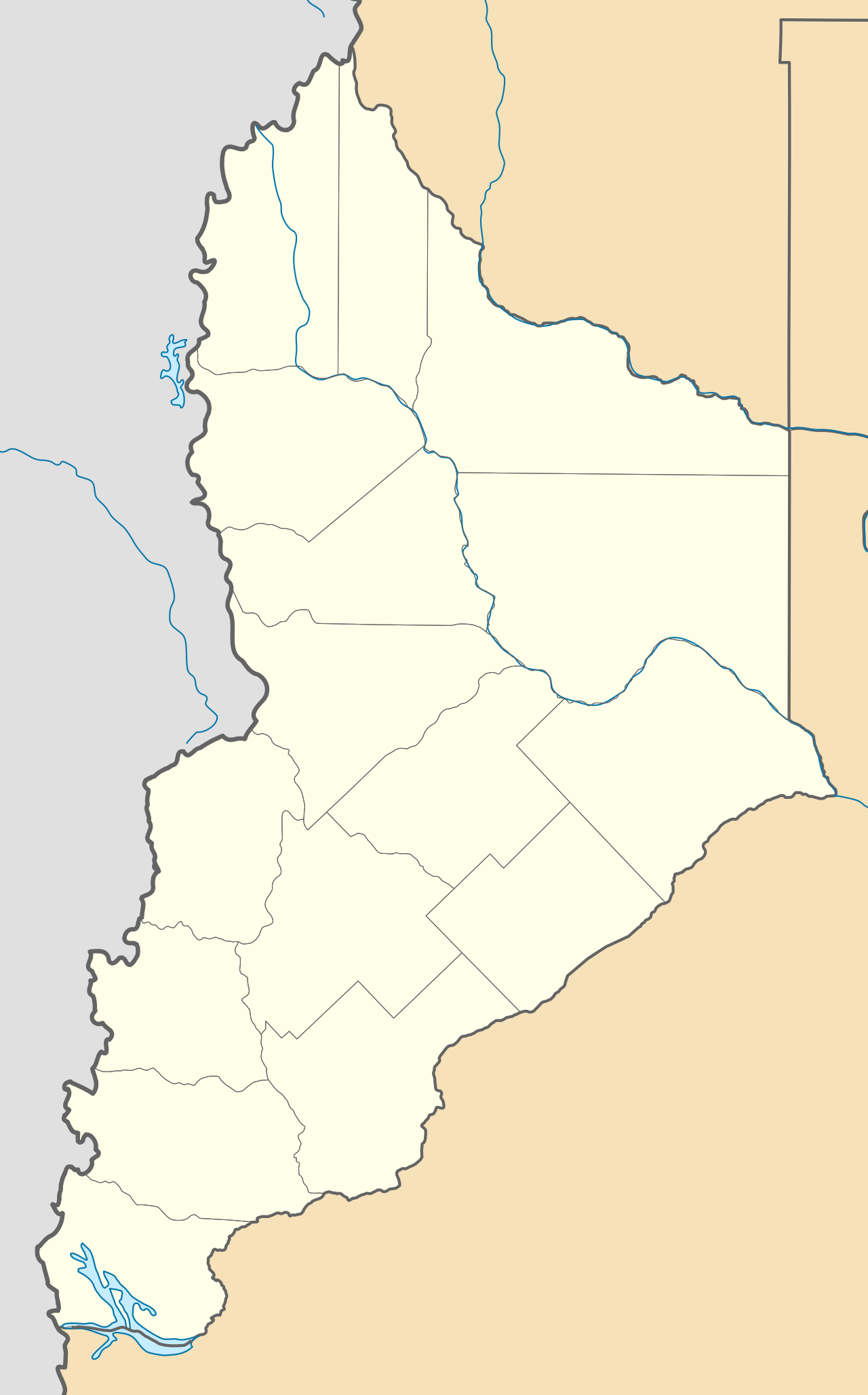
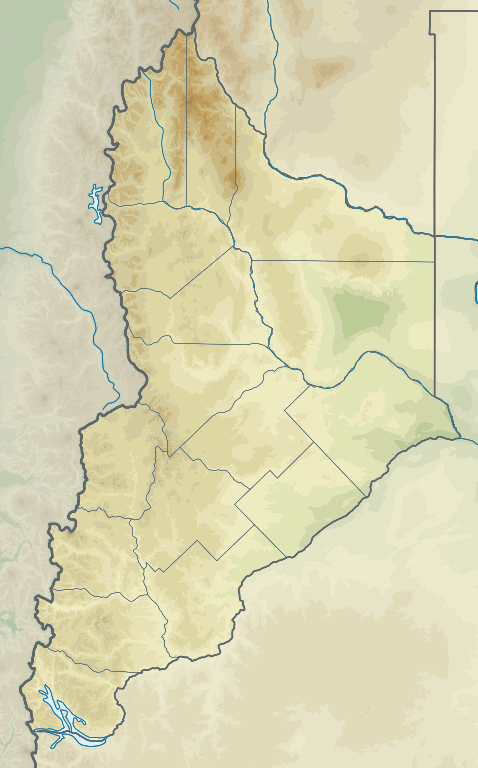
Argentina_location_map.svg : NordNordWest Map_of_Neuquén_Province.svg : Pertile · CC BY-SA 3.0
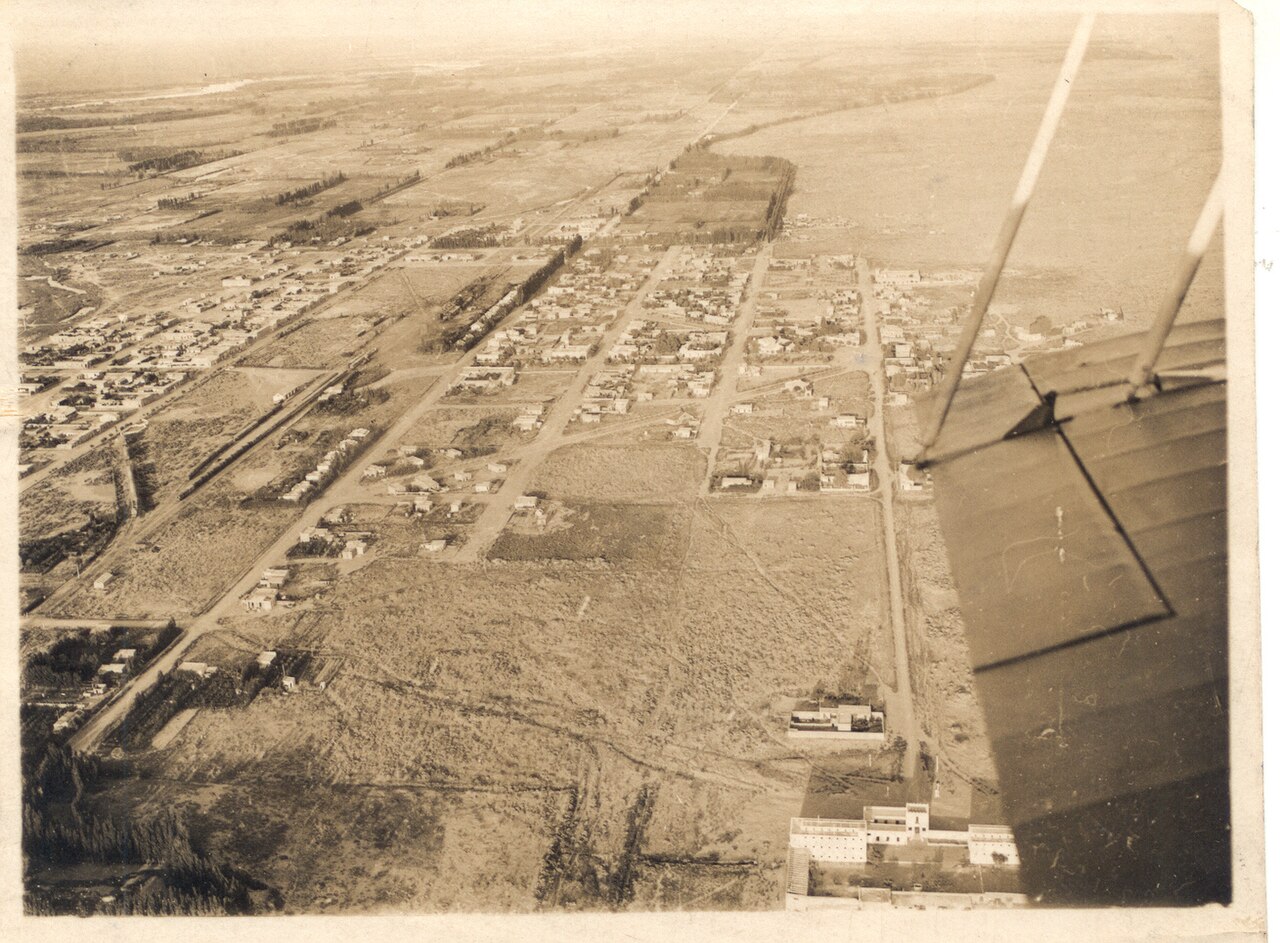
Neuquén is a province of Argentina, located in the west of the country at the northern end of Patagonia. It borders Mendoza Province to the north, Río Negro Province to the southeast, and Chile to the west, and meets La Pampa Province at its northeast corner. The province receives its name from the Neuquén River, and the term 'Neuquén' derives from the Mapudungun word 'nehuenken', meaning drafty, which the local Mapuche people used for the river. The area was originally inhabited by Tehuelche and Pehuenche peoples. Before the arrival of Europeans, maize cultivation reached as far south as the Lácar Department, with remains found at Melinquina, likely brought across the Andes during the Inca Empire. However, by the time Spanish conquistadores arrived from Chile in the 1550s, no agriculture was recorded in northern Patagonia, as the abundant grasslands and guanaco game supported a hunter-gatherer lifestyle. Jesuit missionary Nicolás Mascardi founded a mission on the northern shore of Nahuel Huapi Lake in 1670, but all missions in the region were destroyed by 1717, and activity ceased after the Jesuit order was suppressed in 1767. During the independence wars, the Pincheira brothers—a royalist outlaw gang allied with Ranquel and Boroano tribes—established a permanent encampment at Varvarco, from which they raided the new republics. In 1827, Chilean troops under Jorge Beauchef crossed the Andes, raided the camp, and forced about three thousand people back to repopulate Antuco. Argentine influence grew after explorer Perito Francisco Moreno visited the area in 1875, and the Conquest of the Desert in 1879 broke indigenous resistance. The Territory of Neuquén acquired its current boundaries in 1884, with its capital moving several times before settling at Confluencia (now Neuquén city). The railway and irrigation systems arrived in the early 20th century, and petroleum was discovered at Plaza Huincul in 1918. Local politics became dominated by the Movimiento Popular Neuquino, founded by Elias Sapag, a Lebanese-born businessman. The territory became a province on June 15, 1955, and its constitution was promulgated on November 28, 1957.
- Known For
- Rich in natural resources such as natural gas, petroleum, virgin forests, and water
Lore & Background
Neuquén Province is located in western Argentina at the northern edge of Patagonia. It borders Mendoza Province to the north, Río Negro Province to the southeast, and Chile to the west, with a short northeastern boundary meeting La Pampa Province. The province takes its name from the Neuquén River; the word "Neuquén" comes from the Mapudungun term "Nehuenken," meaning drafty, which the indigenous people used for the river. The region was originally inhabited by Tehuelches and Pehuenche peoples. Agriculture was practiced in pre-Hispanic times as far south as southern Mendoza, just north of Neuquén, but by the time Spanish explorers arrived in the 1550s, no farming was recorded in northern Patagonia. The area’s extensive grasslands and abundant guanaco game likely encouraged a hunter-gatherer lifestyle. Jesuit missionaries from Chile established a short-lived mission on Nahuel Huapi Lake in 1670, but the last mission was destroyed in 1717, and further efforts ended with the suppression of the Jesuit order in 1767. During the independence wars, the royalist Pincheira brothers established a large encampment at Varvarco, from which they raided the new republics until Chilean troops crossed the Andes in 1827 and forced about three thousand people back to Chile. Argentine explorer Perito Francisco Moreno reached Nahuel Huapi Lake in 1875, and the Conquest of the Desert in 1879 broke indigenous resistance. The territory’s current boundaries were set in 1884, and the capital was moved several times before settling at Confluencia, now known as Neuquén. The railway reached the city in the early 20th century, and petroleum was discovered at Plaza Huincul in 1918, spurring growth. The province is rich in natural gas, petroleum, forests, and water resources. Local politics have long been dominated by the Movimiento Popular Neuquino, founded by Elias Sapag, a businessman born in Argentina to Lebanese immigrants, along with his brothers Felipe and Amado. The movement is rooted in federalism and greater local control over the territory’s resources. Neuquén became a province on June 15, 1955, and its constitution was promulgated on November 28, 1957.
Reader's Guide
Neuquén Province holds significance as a resource-rich region in Argentine Patagonia, with natural gas, petroleum, virgin forests, and water resources. The province was initially explored by conquistadores from Chile, and Jesuit missions were established in the 17th century but were short-lived. During the independence wars, the Pincheira brothers, the last royalist armed group in what is today Argentina and Chile, established a permanent encampment in Varvarco, from which they led raids into the countryside of the newly established republics. The province's integration into Argentina accelerated after Perito Francisco Moreno's explorations and the Conquest of the Desert. The MPN has dominated local politics since its founding, winning every province-wide election since its inception.
Did You Know?
- The name 'Neuquén' derives from the Mapudungun word 'nehuen' meaning strong or brave.
- The Movimiento Popular Neuquino (MPN) was founded by Elias Sapag, a prosperous businessman born in Argentina to Lebanese immigrant parents.
A Province Within a Vast Federation
Neuquén Province exists as one of twenty-three provinces within the Argentine Republic, a federal state that spans 2,780,085 square kilometres, making it the second-largest nation in South America after Brazil and the eighth-largest on the planet. The country occupies the far southern reaches of the continent, sharing the bulk of the Southern Cone with Chile to the west, while touching Bolivia and Paraguay to the north, Brazil to the northeast, and Uruguay along the South Atlantic coast to the east. To the south lies the Drake Passage. Each province, including Neuquén, maintains its own constitution while operating under the overarching federal system. Buenos Aires, the autonomous capital city, serves as the nation's largest urban centre. Argentina also asserts sovereignty over the Falkland Islands, South Georgia, the South Sandwich Islands, the Southern Patagonian Ice Field, and a portion of Antarctica, claims that extend well beyond the provincial boundaries of Neuquén.
Deep Roots: Human Presence and Indigenous Worlds
The land that would become Neuquén Province carries evidence of human habitation stretching back roughly 21,000 years to the Paleolithic period. Fossilised remains of Neosclerocalyptus, a large extinct armoured mammal, discovered near Buenos Aires in 2015, bear cut marks from stone-tool butchering, pointing to human activity during the Last Glacial Maximum. Further afield in Santa Cruz Province, the Piedra Museo site has yielded artifacts and spearheads linked to extinct megafauna like Mylodon and Hippidion, dating to approximately 11,000 years ago, while Cueva de las Manos preserves stencilled handprints and hunting scenes spanning from 7,300 BC to 700 AD. Before European arrival, the region was home to diverse indigenous cultures organised into broad categories: basic hunter-gatherers without pottery in the extreme south, advanced food-gathering groups such as the Puelche, Querandí, Serranos, and Tehuelche in the centre and south, and farming communities with pottery like the Guaraní in the northeast. The Mapuche, spreading from Chile, eventually conquered several of these central and southern groups.
From Viceroyalty to Federation: The Long Road to Statehood
The modern political identity of Neuquén Province traces its origins to the Spanish colonisation of the Río de la Plata basin during the 16th century. The region's name itself, Argentina, derives from the Latin argentum meaning silver, a reference to the abundant silver early explorers believed they found along the river. The first written Spanish use of the name appears in Martín del Barco Centenera's 1602 poem La Argentina, though the territory was formally administered as the Viceroyalty of the Río de la Plata, established by the Spanish Crown in 1776. The Argentine Declaration of Independence on July 9, 1816, and the broader War of Independence spanning 1810 to 1825, set the stage for a new nation. However, the path to stable governance proved long and painful. An extended civil war persisted until 1880, at which point the country was finally reorganised as a federation, the very structure under which Neuquén would later function as a constituent province. The 1853 constitution formalised the name Argentine Confederation, and a 1860 presidential decree settled on Argentine Republic.
Coups, Darkness, and the Long Recovery
The decades following the 1880 federation brought relative peace and a flood of European immigrants, predominantly Italians and Spaniards, who reshaped the culture and demography of the young nation, including its western provinces. The National Autonomist Party dominated politics during the Conservative Republic era until the 1916 elections. Then the Great Depression triggered the first military coup in 1930 under José Félix Uriburu, opening the Infamous Decade that lasted until 1943. Four further coups followed in 1943, 1955, 1962, and 1966. After President Juan Perón died in 1974, his widow Isabel Perón assumed the presidency before being overthrown in the final coup of 1976. The resulting military junta waged the Dirty War, a campaign of state terrorism in which thousands of political critics, activists, and leftists were persecuted and murdered. This period of civil unrest endured until Raúl Alfonsín's election in 1983. Today Argentina retains its status as a regional and middle power, holds the second-highest HDI in Latin America after Chile, and participates in G-15, G-20, Mercosur, and numerous other international bodies.
Gallery
More in Latin American States/Provinces 1-24
Spotted an error? Know more?
This is a living reference — every entry is fact-audited, and reader corrections feed straight into our audit queue. Suggest an edit · See this site's audit record