
Morelos
Landlocked state in south-central Mexico, named for independence hero.

Alberto0617 · CC0
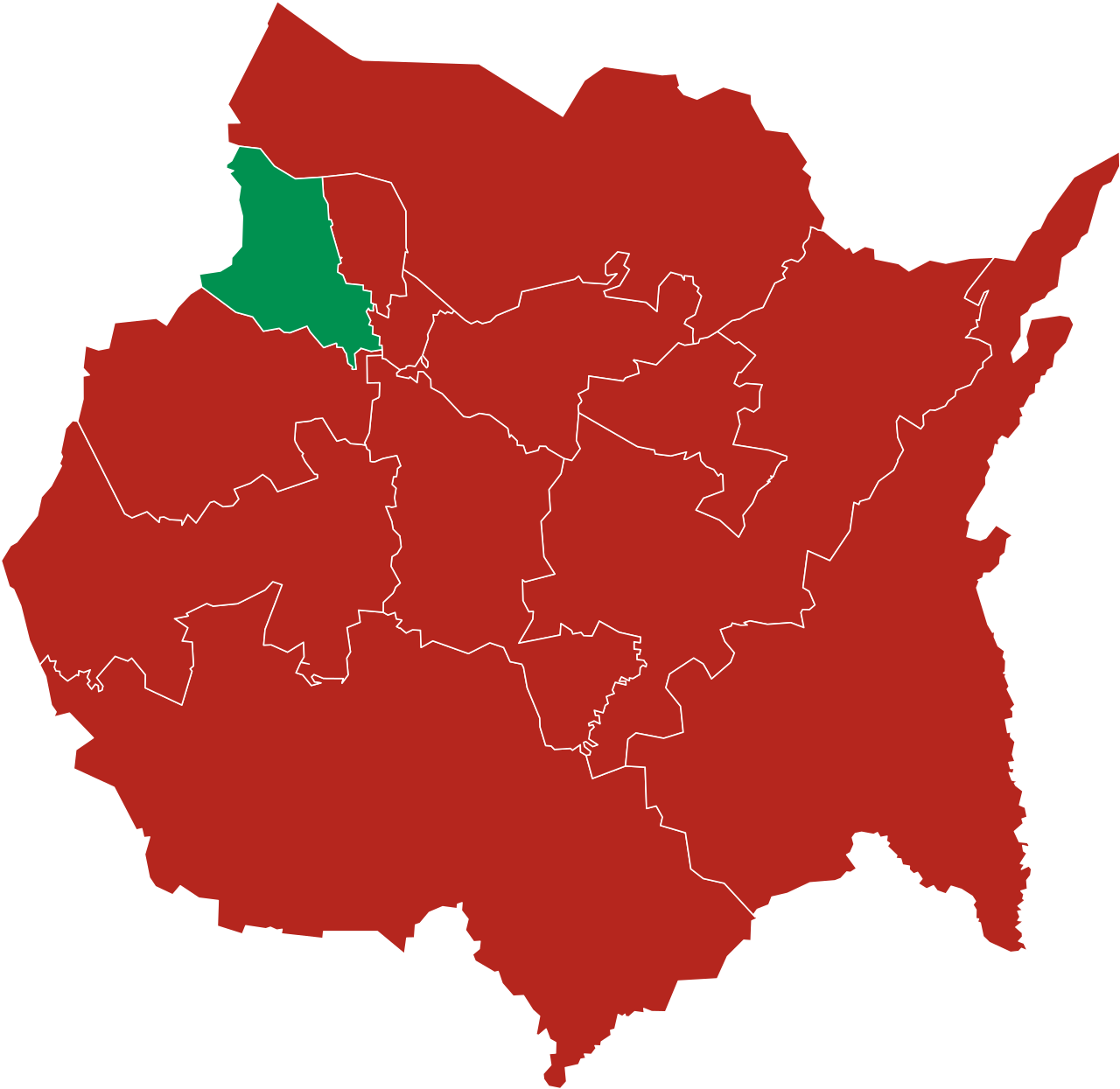
Morelos, officially called the Free and Sovereign State of Morelos, is a landlocked state in south-central Mexico. It is one of the country’s 32 federal entities. The state is divided into 36 municipalities, with Cuernavaca serving as its capital. It is the second-smallest state in Mexico, only larger than Tlaxcala. Morelos shares borders with Mexico City to the north, the State of México to the northeast and northwest, Puebla to the east, and Guerrero to the southwest.
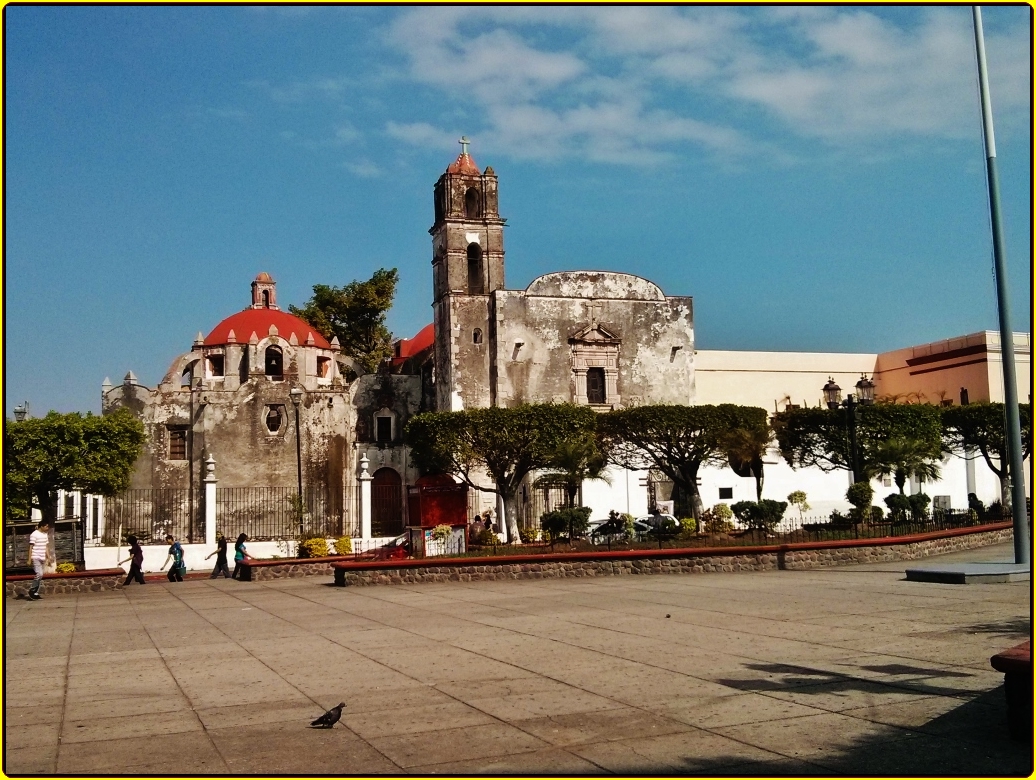
Until 1869, Morelos was part of the much larger State of Mexico. That year, President Benito Juárez ordered its separation, naming it after José María Morelos y Pavón, who defended Cuautla from royalist forces during the Mexican War of Independence. Most of the state enjoys a warm climate year-round, which supports crops like sugar cane. Since Aztec times, people from the Valley of Mexico have visited Morelos. The state is known for the Chinelos, costumed dancers who appear at festivals, especially Carnival in several communities. It also contains the Monasteries on the slopes of Popocatépetl, a UNESCO World Heritage Site.
**History**
**Pre-Hispanic period**
Historian Ward Barrett argued that the region now called Morelos has a physical unity that sets it apart from other parts of Mexico. Much of this comes from its geography: a basin where abundant water flows. When the Spanish arrived, they shifted local agriculture from subsistence maize and cotton to sugar cane and sugar refining in nearby mills. This system largely stayed in place until the Mexican Revolution.
The first human evidence in what is now Morelos dates to around 6000 B.C., showing nomadic hunters and gatherers in Yautepec and Chimalacatlan. Other early finds include clay jars and figures in Cuernavaca’s Gualupita neighborhood, plus three mounds in Santa María Ahuacatitlán that likely were house remains.
Francisco Plancarte y Navarrete, Cuernavaca’s second bishop (1898–1911), wrote *Tamoanchan—El Estado de Morelos y El Principio de la Civilizacion en Mexico* in 1911. He proposed that the first agriculturally based settlements in Mexico appeared around 1500 B.C. in a place called Tamoanchan, which he linked to Morelos. He wrote that Tamoanchan was not far from Teotihuacan, that travelers passed through Xumiltepec to get there, and that Tepuztecal and his companions discovered pulque in the Tamoanchan region. He insisted Tamoanchan was a real, not mythological, place.
The earliest identified culture in the area is the Olmec, dominant from 200 B.C. to about A.D. 500. Evidence appears in reliefs on Cantera Mountain in Chalcatzingo and in clay figures. After the Olmec period, several waves of migration came from the Valley of Mexico to the north. The Toltecs founded Mazatepec in A.D. 603. A second Toltec wave established the city-state of Xochicalco (City of Flowers). Their influence shows at Teotihuacan’s temple of Quetzalcoatl, with signs of Mayan, Mixtec, and Zapotec influences too. The last Toltec wave arrived in the 12th century, with two groups. First came the Xochimilcas, settling in Tetela, Hueyapan, Tepoztlán, and Xumiltepec. Shortly after, the Tlahuicas arrived and settled around Cuauhnáhuac (Cuernavaca) by 1250. Evidence suggests the Tlahuicas might have been expelled by the Xochimilcas if not protected by Xólotl, lord of Acolhua, who granted territory to Tochintecutli, the first lord of Cuauhnáhuac. The Tlahuicas are thought to be an offshoot of the Toltec-Chichimec Nahuatl-speaking group that had occupied the area since the seventh century.
The Tlahuica eventually became the dominant ethnic group in Morelos. They organized into about fifty small city-states, each with a hereditary ruler (tlatoani). Each city-state had a central town with a temple, plaza, palace, and surrounding countryside and villages. The largest were Cuauhnáhuac and Huaxtepec (Oaxtepec). These people had advanced astronomy and a highly developed agricultural system. They were known for growing cotton wherever land could be irrigated. Tlahuica women spun and wove cloth, which became important for exchange and tribute.
The Mexica (Aztecs) began arriving as early as 1398, but efforts to dominate the area started in the 1420s. In the 1420s and 1430s, Itzcoatl conquered Cuauhnáhuac and Xiutepec (Jiutepec). In the mid-15th century, other Morelos city-states attacked Aztec-held Cuauhnahuac, giving the Aztecs an excuse to conquer Yautepec, Tetlama, and other locations, eventually dominating the whole state. The area’s inclusion into the Aztec Empire was sealed when Aztec emperor Huitzilihuitl married Miahuaxochitl, daughter of Cuauhnáhuac’s lord. Their son became emperor Moctezuma Ilhuicamina. Conquered areas kept local political structures as long as they paid tribute, mostly in cotton items. However, in 1487 the Mexica replaced the rulers of Cuauhnahuac, Xochitepec, Tepoztlan, and Oaxtepec. The territory was divided into two tributary provinces, one centered on Cuauhnáhuac.
- Capital
- Cuernavaca
- Area rank
- Second-smallest in Mexico
- Number of municipalities
- 36
- Bordering entities
- Mexico City, State of Mexico, Puebla, Guerrero
- Named after
- José María Morelos y Pavón
- Climate
- Warm year-round
Lore & Background
The region now known as Morelos possesses a physical unity defined by its basin geography, a natural catchment for abundant water flow. This landscape strongly contrasts with other parts of Mexico. The earliest identified culture in the area was the Olmec, whose presence is evidenced by reliefs on Cantera Mountain at Chalcatzingo and by clay figures. Following the Olmec period, successive waves of migration arrived from the Valley of Mexico. The Toltecs founded settlements such as Mazatepec and later established the city-state of Xochicalco, which shows influences from Teotihuacan as well as Maya, Mixtec, and Zapotec cultures. A later wave of Toltecs included the Xochimilcas, who settled in places like Tetela and Tepoztlán, and the Tlahuicas, who became the dominant ethnic group. The Tlahuicas were organized into roughly fifty small city-states, each with a hereditary ruler. The largest of these were Cuauhnáhuac (modern Cuernavaca) and Huaxtepec. They possessed advanced astronomical knowledge and a highly developed agricultural system, notably cultivating cotton for cloth, which served as a key trade and tribute item. The Aztecs began arriving as early as 1398 and, through conquests led by Itzcoatl and later campaigns, eventually dominated the entire state, sealing their control through marriage alliances. Despite conquest, local political structures were largely preserved as long as tribute, primarily cotton goods, was paid.
Reader's Guide
Morelos is a landlocked state in south-central Mexico, bordered by Mexico City, the State of Mexico, Puebla, and Guerrero. It is the second-smallest state in the nation, after Tlaxcala. Its capital is Cuernavaca. The region was part of the large State of Mexico until 1869, when President Benito Juárez decreed its separation, naming it after José María Morelos y Pavón, a hero of the Mexican War of Independence. The state enjoys a warm climate year-round, ideal for cultivating sugar cane and other crops. This climate has attracted visitors from the Valley of Mexico since Aztec times. Morelos is known for the Chinelos, costumed dancers who appear at festivals, particularly Carnival, celebrated in many communities. It is also home to the Monasteries on the slopes of Popocatépetl, a designated World Heritage Site. Pre-Hispanic history dates to 6000 B.C. with nomadic hunters; later, the Olmec, Toltec, Tlahuica, and Aztec cultures dominated. The Tlahuica, an offshoot of Toltec-Chichimec groups, became the dominant ethnic group, organized into about fifty city-states with advanced astronomy and agriculture, especially cotton cultivation. The Aztecs conquered the area in the 15th century, demanding tribute of cotton items. The Spanish later shifted agriculture to sugar cane and refining, a system that persisted until the Mexican Revolution.
Did You Know?
- Morelos is the second-smallest state in Mexico, after Tlaxcala.
- The state was named after José María Morelos y Pavón, who defended Cuautla during the Mexican War of Independence.
- The Tlahuica were the dominant ethnic group in pre-Hispanic Morelos, organized into about fifty small city-states.
- The Monasteries on the slopes of Popocatépetl in Morelos are a designated World Heritage Site.
Gallery
More in Latin American States/Provinces 1-24
Spotted an error? Know more?
This is a living reference — every entry is fact-audited, and reader corrections feed straight into our audit queue. Suggest an edit · See this site's audit record