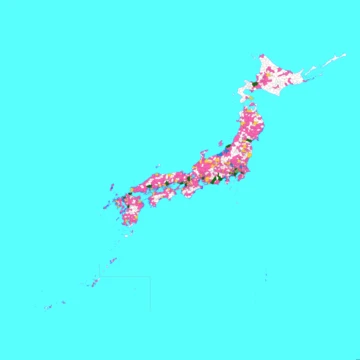
Fukuoka
Ancient gateway city and modern hub of Kyushu.
Last updated
Where it is
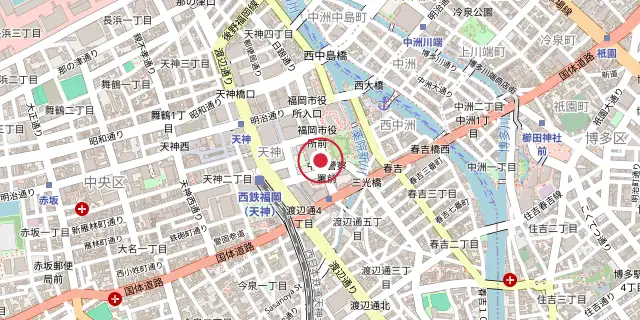
Coordinates: 33°35′24″N 130°24′07″E (33.5900, 130.4020) · Open in OpenStreetMap
Coordinates and connected clubs: the infobox of Wikipedia: Fukuoka (CC BY-SA 4.0). Map: drawn by Codexery from OpenStreetMap tiles.
Fukuoka is a designated city in the Kyushu region of Japan and the capital city of Fukuoka Prefecture. Built along the shores of Hakata Bay, it has been a center of international commerce since ancient times and is considered the gateway to the country, being the nearest point among Japan's main islands to the Asian mainland. The city rose to prominence during the Yamato period and, due to cross-cultural exposure and distance from Kyoto, Osaka, and Edo, developed a distinctive local culture and dialect that persists today.
Lore & Background
The area has been occupied since the Jomon period, with early pit dwellings found on the Itoshima Peninsula and pottery sites in the South Ward. During the Yayoi period, rice cultivation led to moated villages like Itazuke, and the region became a hub for bronze and copper technologies. Contact with China was recorded as early as 57 A.D., when an envoy received a gold seal from Emperor Guangwu. By the Asuka period, Fukuoka served as a critical administrative center and trade port with Tang China.
During the Heian and Kamakura periods, monks such as Eisai founded Shōfuku-ji, the oldest Zen temple in Japan, and introduced tea culture. The Hakata Gion Yamakasa festival originated in 1241 when Enni was carried through the town to pray against plague. In 1274 and 1281, Mongol invasions under Kublai Khan were repelled, aided by typhoons that became known as Kamikaze. A stone barrier 20 km long was built along Hakata Bay between 1276 and 1277.
In the 1300s, Hakata became the first free city in Japan, governed by a council of 12 wealthy merchants. The modern city formed on April 1, 1889, from the merger of Hakata and Fukuoka. The name Fukuoka was introduced in 1600 by daimyō Kuroda Nagamasa, who named his castle town after his ancestral home in Bizen Province.
Reader's Guide
Fukuoka's significance lies in its role as Japan's historic gateway to mainland Asia, facilitating trade and cultural exchange from the Yayoi period onward. Its location made it a natural point of entry for immigrants, technologies, and ideas from Korea and China, shaping early Japanese civilization. The city's resistance to Mongol invasions in the 13th century gave rise to the Kamikaze legend, a term later used during World War II. Fukuoka's distinctive local culture and dialect, developed through centuries of cross-cultural exposure and distance from political centers, remain notable.
As the most populous city on Kyushu and the largest west of Keihanshin, it is a major industrial and metropolitan hub within the Fukuoka–Kitakyushu zone. In July 2011, Fukuoka surpassed Kyoto in population, marking the first time since Kyoto's founding in 794 that a city west of Kansai had a larger population. The city's designation by government ordinance in 1972 reflects its modern administrative importance.
More in Japanese Cities
Sources
Compiled from Wikipedia and the sources listed below. Text from Wikipedia is available under CC BY-SA 4.0; this entry is adapted from it.
- Wikipedia: Fukuoka (CC BY-SA 4.0).
Spotted an error? Know more?
Reader corrections go straight into our review queue. Suggest an edit · How this site is sourced