Government of Japan
Japan's government is a constitutional monarchy with a parliamentary system.

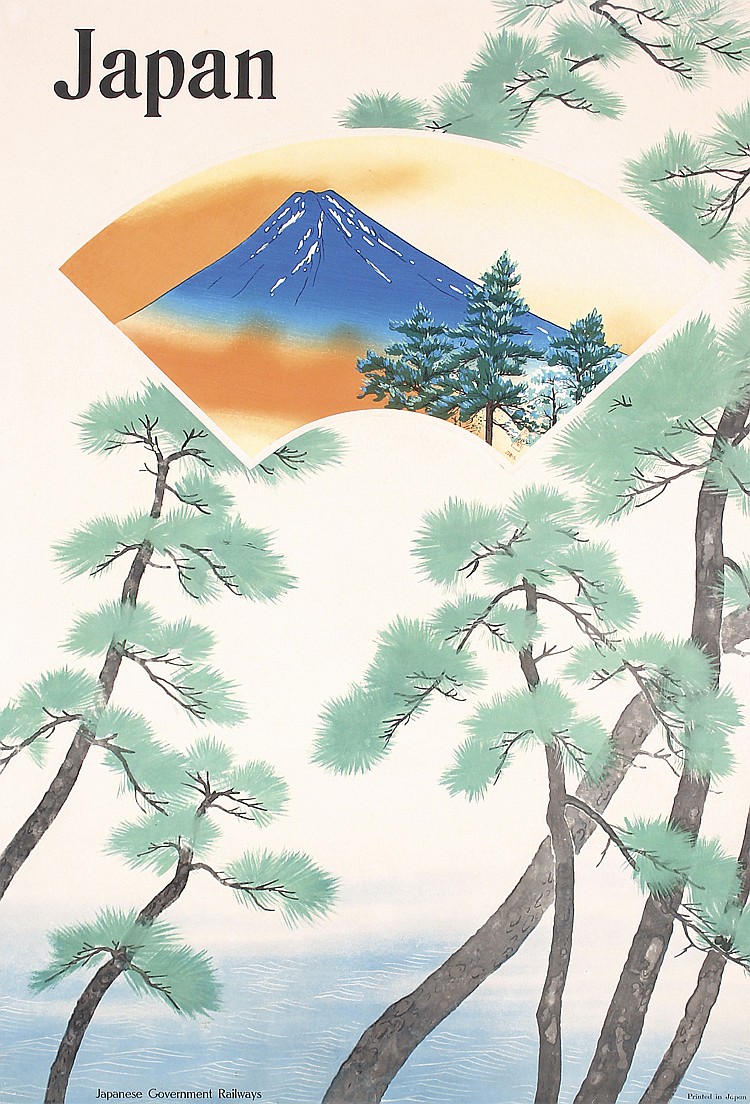
Japanese Government Railways · Public domain
The Government of Japan is the central government of the country, operating under the framework of the Constitution of Japan. It consists of legislative, executive, and judiciary branches, with the emperor serving as a ceremonial head of state and the Cabinet, led by the prime minister, holding executive power.
Quick Facts
- Native Name
- ja · 日本国政府
- Constitution
- Constitution of Japan
- Legislature
- National Diet
- Legislature Place
- National Diet Building
- Upperhouse
- House of Councillors
- Upperhouse Speaker
- Masakazu Sekiguchi
- Upperhouse Speaker Title
- President of the House of Councillors
- Lowerhouse
- House of Representatives
- Lowerhouse Speaker
- Eisuke Mori
- Lowerhouse Speaker Title
- Speaker of the House of Representatives
- Title Hos
- Emperor
- Current Hos
- Naruhito
Facts from the source article.
Lore & Background
Before the Meiji Restoration, Japan was ruled by successive military shōgun, who held effective power while the emperor's role was ceremonial. The Meiji Constitution of 1889 established a mixed constitutional-absolute monarchy and the first parliamentary system in Asia, creating the Imperial Diet with a House of Representatives elected by a highly restricted franchise based on tax qualifications (only about 1% of the male population could vote) and a House of Peers. Universal male suffrage was not introduced until 1925. After World War II, the present Constitution of Japan was adopted, replacing imperial rule with a Western-style liberal democracy.
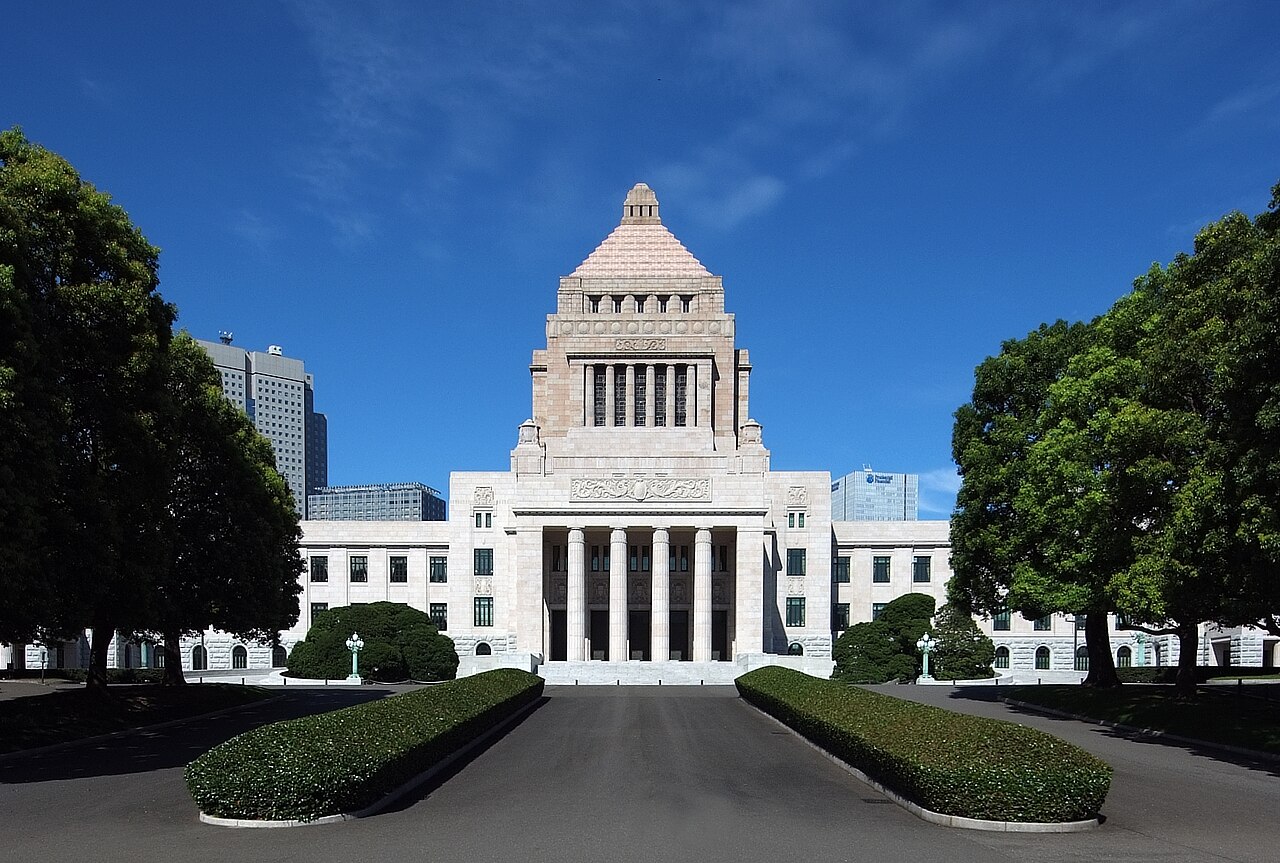
The current government is based in Tokyo, where the National Diet Building, Imperial Palace, Supreme Court, and Prime Minister's Office are located. The emperor's role is entirely ceremonial, with powers such as appointing the prime minister as designated by the Diet and performing ceremonial functions on the advice of the Cabinet. The Cabinet, comprising the prime minister and ministers of state, directs and controls the government and civil service.
As of 2020, a widely cited figure from government surveys indicated that only 7.5% of administrative procedures could be completed entirely online, highlighting the largely analog nature of the national government at the time. On February 12, 2021, Tetsushi Sakamoto was appointed as the Minister of State for Loneliness and Isolation to address social isolation, a role created to combat rising loneliness and its associated social issues.
Reader's Guide
The Government of Japan is significant as a model of a constitutional monarchy where the emperor serves as a symbolic head of state without political power, while the prime minister and Cabinet exercise executive authority. Its bicameral legislature, the National Diet, is defined as the supreme organ of sovereignty, with members directly elected by the people. The judiciary, led by the Supreme Court, holds the power of judicial review and is independent from the other branches. The government's evolution from shogunate rule through the Meiji Restoration to its current democratic framework reflects Japan's adaptation to modern governance. The current cabinet, the Takaichi Cabinet led by Prime Minister Sanae Takaichi, has been in place since October 21, 2025, with a Liberal Democratic supermajority since 2026. The government's analog nature, as noted in 2020, highlights ongoing challenges in digital transformation.
Did You Know?
- The emperor's role is entirely ceremonial, with no powers related to government, as stated in Article 4 of the Constitution.
- The National Diet is bicameral, consisting of the House of Councilors (upper house) and the House of Representatives (lower house).
- As of 2020, only 7.5% of the national government's administrative procedures could be completed entirely online, according to government surveys.
- The current prime minister, Shigeru Ishiba, assumed office on October 1, 2024.
Constitutional Architecture & the Three Branches
The Government of Japan operates under a tripartite structure—legislative, executive, and judicial—anchored by the post-war Constitution. The National Diet stands as the supreme organ of sovereignty, a bicameral body whose members in both the House of Representatives and the House of Councilors are chosen through direct popular election, reflecting the principle that sovereignty resides in the people. Executive authority rests with the Cabinet, headed by the prime minister, who is nominated by the Diet and formally appointed by the Emperor. The current Takaichi Cabinet, led by Sanae Takaichi since October 21, 2025, directs both government policy and the civil service. The judicial branch, led by the Supreme Court, holds ultimate authority to interpret the constitution and exercise judicial review. Crucially, judges are nominated or appointed by the Cabinet but cannot be removed by either the executive or the legislature except through impeachment, ensuring genuine independence from political interference.
The Emperor as Symbol
Under Article 1 of Japan's Constitution, the Emperor is defined as the symbol of the State and the unity of the people, a formulation that deliberately strips the throne of governing authority. Article 4 explicitly states he holds no powers related to government. Yet the Constitution still channels a remarkable set of ceremonial functions through him: promulgating constitutional amendments and treaties, dissolving the lower house, proclaiming general elections, attesting to ministerial appointments and diplomatic credentials, awarding honors, and receiving foreign ambassadors. Every one of these acts is performed in accordance with the binding advice of the Cabinet, meaning the Emperor serves as a constitutional conduit rather than a decision-maker. This arrangement echoes a far older pattern: during the shogunate era, the Emperor nominally appointed the shogun while wielding no real governance, a dynamic that persists in the modern system where he appoints the prime minister designated by the Diet.
From Shogun to Liberal Democracy
Before the Meiji Restoration, effective governance in Japan fell to successive military shoguns—hereditary commanders whose rank paralleled a modern generalissimo—while the Emperor remained a figurehead. The turning point came at the close of 1867, when Shogun Tokugawa Yoshinobu agreed to resign and become merely the instrument for carrying out the Emperor's orders, restoring political authority to the Imperial Court. The 1889 Meiji Constitution, modeled on the Prussian system, then created Asia's first parliamentary framework, blending constitutional and absolute monarchy elements. It established the Imperial Diet with a directly elected lower house and an upper House of Peers drawn from the Imperial Family, the newly created kazoku aristocracy, and imperial nominees. However, the document's internal ambiguities weakened civilian oversight of the military, allowing the armed forces to exert outsized political influence. Only after World War II did Japan adopt its present constitution, replacing imperial rule with a Western-style liberal democracy.
Modern Governance & the Digital Gap
Japan's seat of power is concentrated in Tokyo, where the National Diet Building, the Imperial Palace, the Supreme Court, the Prime Minister's Office, and all central ministries share the capital's landscape. Since 2026, the country has been governed by a Liberal Democratic supermajority, and the current Takaichi Cabinet under Sanae Takaichi directs national policy. Yet behind this institutional modernity lies a striking administrative lag: a 2020 Japan Research Institute survey found that only 7.5 percent of the roughly 55,000 national administrative procedures could be completed entirely online. Variations across ministries were stark—7.8 percent at the Ministry of Economy, Trade and Industry, 8 percent at the Ministry of Internal Affairs and Communications, and a mere 1.3 percent at the Ministry of Agriculture, Forestry and Fisheries. In a contrasting move toward social governance, the government appointed Tetsushi Sakamoto as Minister of Loneliness in February 2021, a dedicated portfolio aimed at alleviating social isolation across all age groups and genders.
Gallery


Frequently Asked Questions
What kind of political system does Japan operate under?
Japan runs a constitutional monarchy combined with a parliamentary system, meaning elected legislators choose the head of government while a hereditary monarch serves in a symbolic capacity. The entire structure is anchored by the post-war Constitution of Japan.
Who holds executive power in the Japanese government?
The Cabinet, headed by the prime minister, wields executive authority. As of October 1, 2024, that role is filled by Shigeru Ishiba.
What is the Emperor's actual role in governance?
The emperor functions purely as a ceremonial figurehead and does not participate in day-to-day policymaking or legislative decisions. Under the Constitution of Japan, sovereignty rests with the people rather than the throne.
How are the three branches of Japan's government organized?
Legislative power sits with the National Diet, a bicameral parliament; executive power rests with the Cabinet; and judicial power is exercised by the Supreme Court and lower courts. Each branch operates within the framework laid out in the Constitution of Japan.
Why is the Government of Japan significant in the broader political landscape?
As the central authority of the world's third-largest economy, its policies shape trade, security alliances, and diplomatic relations across the Asia-Pacific region. Its parliamentary model also serves as a reference point for other democracies navigating the balance between elected leadership and constitutional limits.
More in Governments And Political Systems 1-23
Spotted an error? Know more?
Reader corrections go straight into our review queue. Suggest an edit · How this site is sourced