
Emperor Guangwu of Han
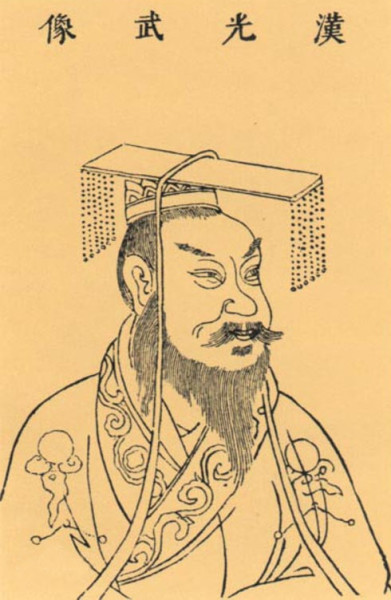
Founding emperor of the Eastern Han dynasty.

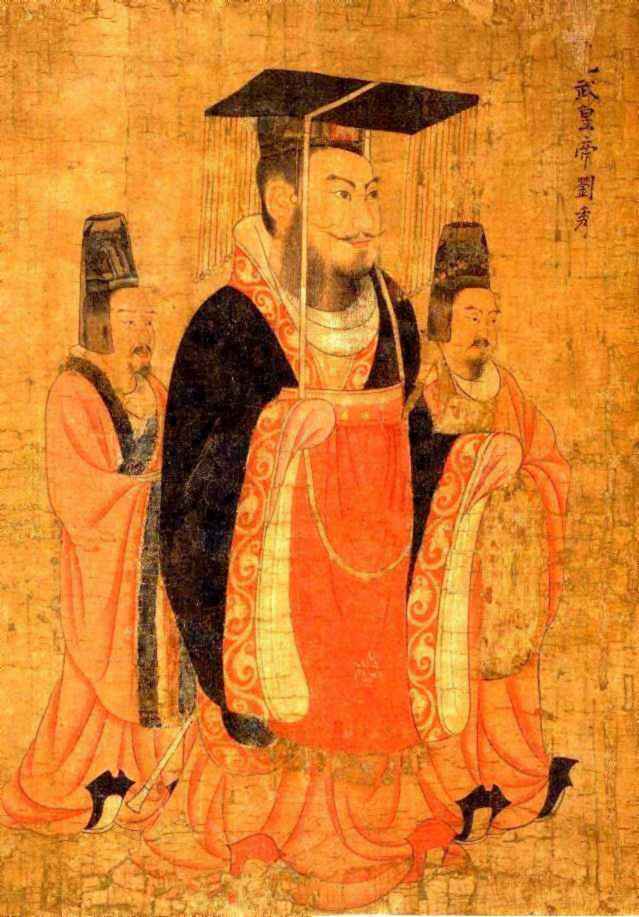
Yan Li-pen · Public domain
Emperor Guangwu of Han (15 January 5 BC – 29 March AD 57), born Liu Xiu, was the founding emperor of the Eastern Han dynasty. A sixth-generation descendant of Emperor Jing of the Western Han, he was the son of a county magistrate and was raised by an uncle after his father’s early death. Unlike his ambitious older brother Liu Yan, Liu Xiu was initially content as a farmer, though a prophecy that a man named Liu Xiu would become emperor encouraged him toward greater ambition. In AD 22, as the empire rebelled against the usurper Wang Mang, Liu Yan planned an uprising. Local youths only joined the rebellion after seeing the cautious Liu Xiu participate, believing this indicated careful planning. After early setbacks in which their brother and sister were killed, the brothers achieved a major victory against Xin forces in AD 23. Other rebel leaders, jealous of Liu Yan’s capabilities, instead elevated a weak cousin, Liu Xuan, as the Gengshi Emperor. Liu Xiu served under this regime before eventually proclaiming himself emperor. He proved a brilliant strategist, often directing his generals from afar with accurate predictions, a skill later emperors imitated disastrously. Uniquely among founding emperors, he combined decisiveness with mercy, preferring peaceful means and never killing any of his victorious generals or officials out of jealousy. He established his capital at Luoyang, east of the former capital Chang’an, ushering in the Eastern Han. His reforms, including land reform, aimed to correct structural imbalances that had caused the Western Han’s fall, granting the dynasty another two centuries of life. During his reign, Taoism was made the official religion, and Chinese folk religion began to decline. By his death in AD 57, he had consolidated Eastern Han rule over all of China proper. His era is known as the “resurgence of Guangwu,” and the capable reigns of his son and grandson are called the Rule of Ming and Zhang.
- born
- 15 January 5 BC
- died
- 29 March AD 57
- field
- Emperor, military leader
- nationality
- Chinese (Eastern Han dynasty)
- known_for
- Founding emperor of the Eastern Han dynasty; reunification of China; making Taoism the official religion; noted for decisiveness and mercy
Quick Facts
- Succession
- Emperor of the Han dynasty
- Reign
- 5 August AD 25 – 29 March AD 57
- Predecessor
- Gengshi Emperor
- Successor
- Emperor Ming
- Birth Date
- 15 January 5 BC
- Birth Place
- Jiyang County, Chenliu Commandery, Western Han dynasty
- Death Date
- 29 March AD 57 (aged 61)
- Death Place
- Luoyang, Eastern Han dynasty
- Full Name
- Family name: Liu (c=劉) · Given name: Xiu (c=秀) · Courtesy name: Wenshu (c=文叔)
- Era Dates
- Jianwu (c=建武): AD 25–56 · Jianwu Zhongyuan (c=建武中元): AD 56–58
- Posthumous Name
- Emperor Guangwu (光武 · 皇帝)
- Temple Name
- Shizu (c=世祖)
Facts from the source article.
Lore & Background
Liu Xiu was a sixth-generation descendant of Emperor Jing of the Western Han. His father Liu Qin was magistrate of Nandun County. After his father died early, Liu Xiu was raised by his uncle Liu Liang. Initially content as a farmer, he was encouraged by his brother-in-law Deng Chen, who believed a prophecy that a man named Liu Xiu would become emperor. In AD 22, his brother Liu Yan began a rebellion against Wang Mang's Xin dynasty; Liu Xiu joined, and his participation persuaded others that the rebellion was carefully planned. After initial setbacks, including the deaths of his brother Liu Zhong and sister Liu Yuan, Liu Yan's forces achieved a major victory against Xin forces in AD 23.
Reader's Guide
Emperor Guangwu's significance lies in his successful reunification of China after the chaos of Wang Mang's Xin dynasty and the civil war that followed. His reign marked the official adoption of Taoism as the state religion and the beginning of a decline in Chinese folk religion. Unique among Chinese emperors, he combined decisiveness with mercy, often seeking peaceful means of control and refraining from killing generals or officials who contributed to his victories after his rule was secure. His campaigns featured able generals but lacked major strategists, likely because he himself was a brilliant strategist who often instructed his generals from afar with accurate predictions.
Did You Know?
- Emperor Guangwu was a sixth-generation descendant of Emperor Jing of the Western Han.
- He was one of the few founding emperors in Chinese history who did not kill any of his generals or officials after securing his rule.
- During his reign, Taoism was made the official religion of the Eastern Han, and Chinese folk religion began to decline.
- His brother Liu Yan was executed by the Gengshi Emperor, prompting Liu Xiu to return to the capital and beg for forgiveness.
From Farmer to Founding Emperor
Liu Xiu was born on 15 January 5 BC into a family tracing its lineage back six generations to Emperor Jing of the Western Han. His father Liu Qin held the post of magistrate in Nandun County, near present-day Xiangcheng in Henan, and the ancestral line passed through a succession of military and civil officials—governors, vice governors, and a marquess—before reaching Prince Ding of Changsha, a brother of the celebrated Emperor Wu. Despite this distinguished pedigree, young Liu Xiu was remembered as a cautious, unambitious man who preferred the quiet rhythm of farming. His older brother Liu Yan, by contrast, had been scheming against Wang Mang's Xin dynasty since the usurpation in AD 8. Only when the entire empire was in open revolt did Liu Xiu join the cause in AD 22, and his participation actually reassured frightened locals that the uprising was serious. After a disastrous frontal assault on Wancheng cost him his brother Liu Zhong and sister Liu Yuan, Liu Xiu survived and pressed on. By AD 36 he had defeated his rivals, crushed the marauding Chimei peasant army, and reunified China, founding the Eastern Han dynasty.
The Strategist Who Ruled from Afar
One of the most distinctive features of Emperor Guangwu's military campaigns was the apparent absence of major strategists among his generals—a gap that observers attributed to the emperor's own extraordinary strategic mind. Liu Xiu routinely instructed his commanders on tactics from a distance, and his predictions about the course of battles and campaigns proved remarkably accurate time after time. This created a troubling template for later Chinese emperors, many of whom imitated the practice of directing warfare from the throne while lacking his genuine brilliance, with disastrous consequences for their armies. Equally remarkable was his rare combination of decisiveness and clemency. Unlike most founding emperors in Chinese history, who purged their victorious generals out of jealousy or paranoia once their rule was secure, Liu Xiu consistently sought peaceful means of subduing regions rather than resorting to force. He did not kill a single general or official who had contributed to his victories, making him a singular figure among dynasty founders.
Reunification, Reform, and the Eastern Han
With China reunified in AD 36, Liu Xiu established his capital at Luoyang, a city situated 335 kilometers east of the former Western Han capital Chang'an (modern Xi'an), thereby inaugurating the Eastern Han dynasty. His reign, later celebrated as the "resurgence of Guangwu," was marked by a series of reforms designed to address the structural imbalances that had contributed to the collapse of the Former Han. Land reform was among his most notable attempts, though it achieved only limited success. Nevertheless, these measures, combined with the steady suppression of regional warlords, consolidated the dynasty's authority over all of China proper by the time of his death in AD 57. His capable rule set the stage for the equally strong reigns of his son Emperor Ming and grandson Emperor Zhang, a period collectively remembered as the Rule of Ming and Zhang. The Han dynasty thus received a new lease of life spanning roughly two centuries. During his reign, Taoism was elevated to the status of official religion, and traditional Chinese folk religion began a gradual decline.
The Lulin Rebellion and Early Hardships
The road to the throne was paved with personal loss and military setbacks. In AD 22, Liu Xiu's ambitious brother Liu Yan, together with Li Tong and his cousin Li Yi, plotted to kidnap the governor of Nanyang Commandery and rally local support. The scheme leaked before it could be executed; Li Tong and Li Yi barely escaped while their families were slaughtered. Liu Yan pivoted, persuading the Xinshi and Pinglin branches of the Lulin rebel forces to join him. Encouraged by early successes, he launched a frontal assault on Wancheng, the commandery capital, and suffered a devastating defeat. Liu Xiu and his sister Liu Boji survived, but his brother Liu Zhong and sister Liu Yuan perished in the fighting. His allies wavered, yet Liu Yan managed to retain them and attract the Xiajiang Force as well. By AD 23, the coalition achieved a significant victory, killing Zhen Fu, the Xin-appointed governor of Nanyang. Despite these gains, jealous rival rebel leaders sidelined Liu Yan, installing the weaker Liu Xuan as the Gengshi Emperor, with Liu Yan as prime minister and Liu Xiu holding the title of general.
Gallery
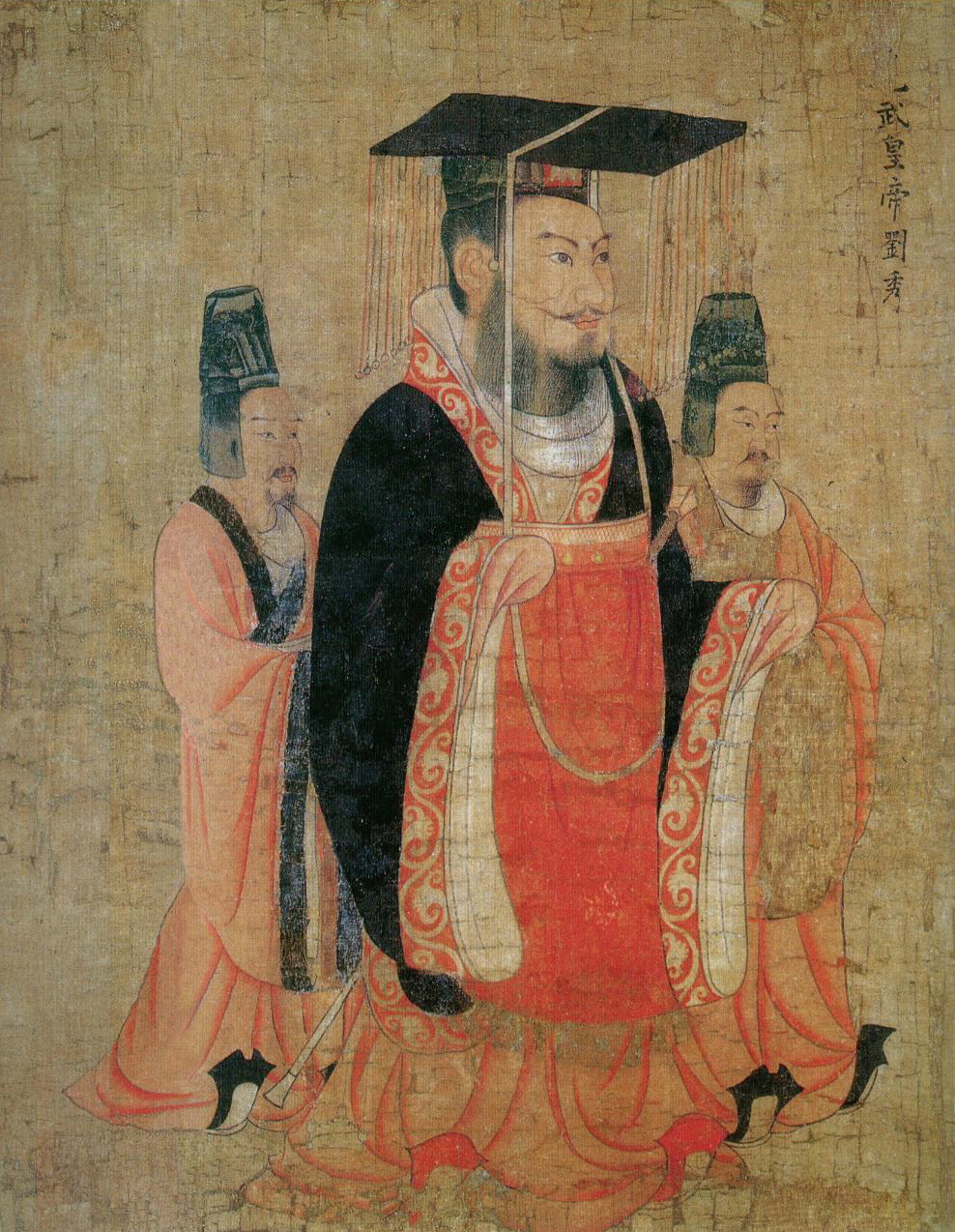
More in Chinese Emperors And Leaders 1-22
Spotted an error? Know more?
This is a living reference — every entry is fact-audited, and reader corrections feed straight into our audit queue. Suggest an edit · See this site's audit record