Hydrogen cyanide
A highly toxic, flammable liquid and key industrial precursor.

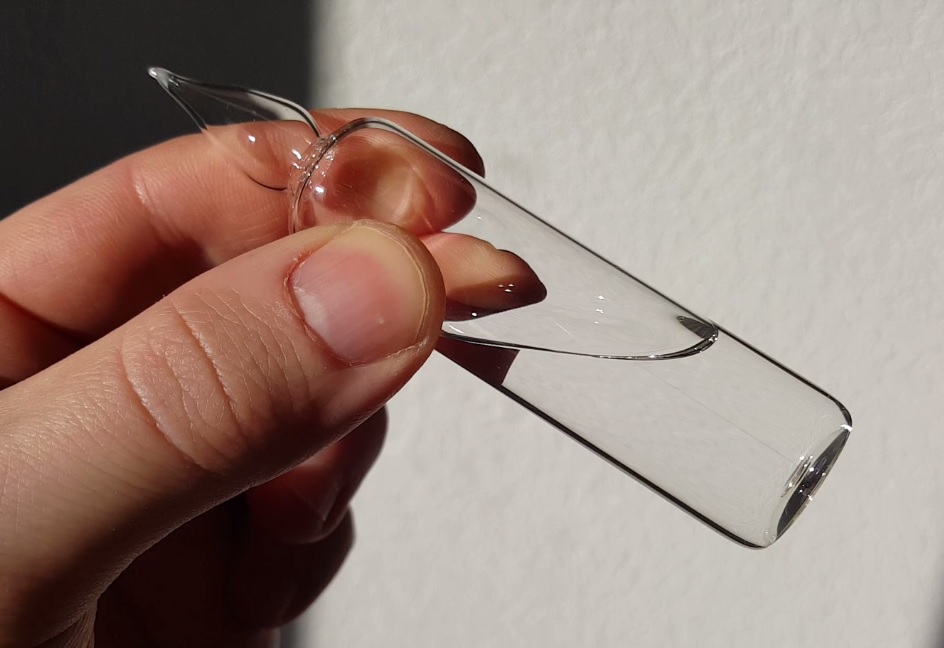
Apotashg · Public domain
Hydrogen cyanide, also known as prussic acid, is a chemical compound with the formula HCN. It is a highly poisonous and flammable liquid that boils at 25.6 °C, just above room temperature. Industrially, HCN is produced on a large scale and serves as a valuable starting material for many products, from polymers to pharmaceuticals. Its major uses include making potassium cyanide for mining and adiponitrile for plastics. Because it is volatile, it is more toxic than solid cyanide compounds. When dissolved in water, it forms hydrocyanic acid, and its salts are called cyanides. Chemists debate whether HCN is organic or inorganic; it is traditionally seen as inorganic but can also be classified as a nitrile, leading to the names methanenitrile and formonitrile.
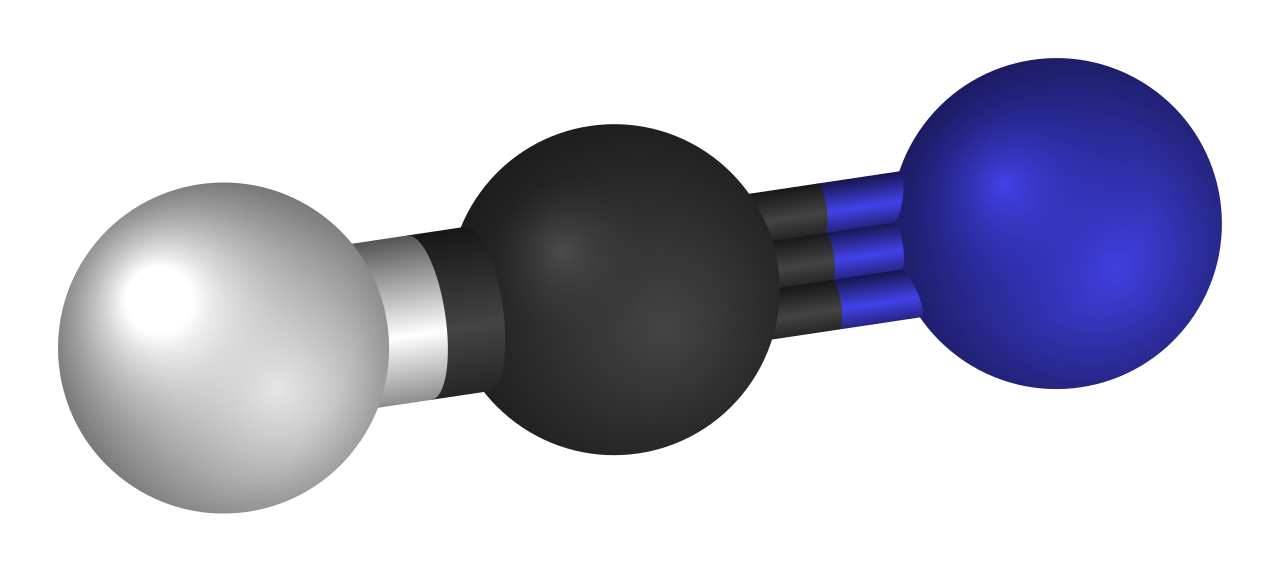
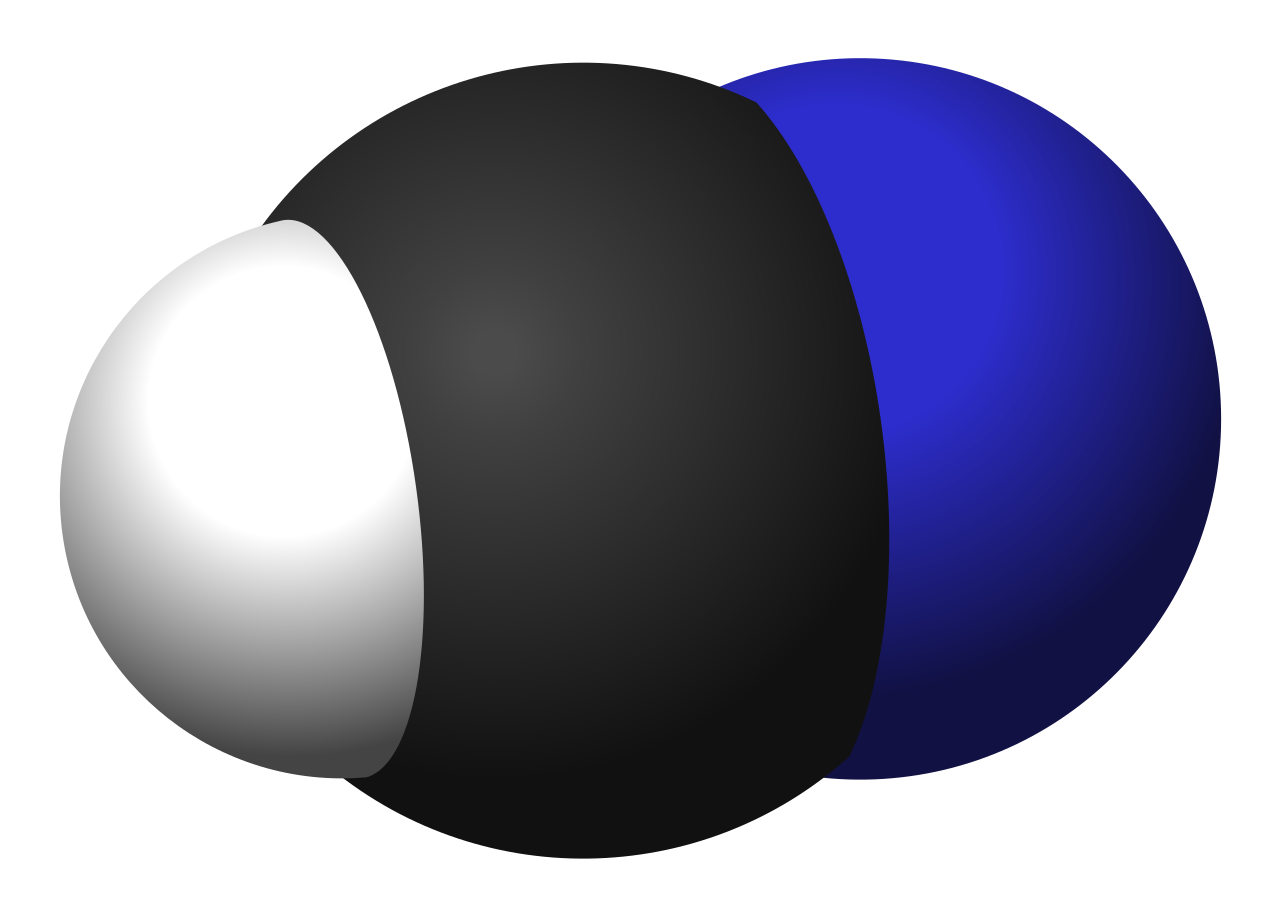
The molecule is linear, with a triple bond between carbon and nitrogen, and a C-N bond length of 115 picometers. Its isomer is hydrogen isocyanide (HNC). About half of people cannot smell hydrogen cyanide due to a recessive genetic trait; those who can often describe its odor as similar to bitter almonds.
Chemically, HCN is weakly acidic, with a pKa of 9.2. It partially ionizes in water to release the cyanide anion and forms hydrogen bonds with its conjugate base. One key reaction is hydrocyanation, where HCN adds to alkenes to form nitriles using nickel catalysts. HCN is unstable and can self-condense; four molecules tetramerize into diaminomaleonitrile, a reaction of interest for studies on the origin of life. Metal cyanides are usually made by salt metathesis from alkali metal cyanides, but mercuric cyanide can be formed directly from aqueous HCN.
Hydrogen cyanide was first isolated in 1752 by French chemist Pierre Macquer, who obtained it from Prussian blue. Swedish chemist Carl Wilhelm Scheele prepared it from Prussian blue in 1782, and it was later named Blausäure (German for "blue acid") due to its acidity and origin. In English, it became known as prussic acid. In 1787, Claude Louis Berthollet showed that prussic acid contained no oxygen, challenging the then-prevailing theory that all acids must contain oxygen. Joseph Louis Gay-Lussac prepared pure liquid HCN in 1811 and deduced its formula in 1815.
The word cyanide comes from the French cyanure, coined by Gay-Lussac from the Greek κύανος, meaning dark blue enamel or lapis lazuli, again referencing its derivation from Prussian blue. This Greek root also gives the color name cyan.
Industrially, the main production method is the Andrussow oxidation, invented by Leonid Andrussow at IG Farben, where methane and ammonia react with oxygen at about 1200 °C over a platinum catalyst. In 2006, between 230,000 and 450,000 tonnes were produced in the US. HCN is also a recovered waste product from acrylonitrile manufacture. The Degussa (BMA) process, which adds no oxygen and transfers heat through the reactor wall, is less important. The Shawinigan Process reacts hydrocarbons like propane with ammonia. In the lab, small amounts are made by adding acid to alkali metal cyanide salts, a reaction that can cause accidental poisoning by releasing gaseous HCN. HCN can also be obtained from potassium ferricyanide and acid.
Historically, George Thomas Beilby patented a method in 1892 that passed ammonia over glowing coal. Hamilton Castner developed a synthesis in 1894 from coal, ammonia, and sodium to produce sodium cyanide, which then reacts with acid to give HCN.
HCN is the precursor to sodium and potassium cyanide, used mainly in gold and silver mining and electroplating. Through cyanohydrins, it yields useful organic compounds such as the monomer methyl methacrylate, the amino acid methionine (via the Strecker synthesis), and the chelating agents EDTA and NTA. In hydrocyanation, HCN adds to butadiene to make adiponitrile, a precursor to Nylon-6,6. Globally, HCN is used as a fumigant against pest insects in food production facilities; its efficacy and application method mean very small amounts are needed compared to other toxic substances, and it has less environmental impact.
Quick Facts
- Discovered by
- Carl Wilhelm Scheele (1782)
Facts from the source article.
Lore & Background
Hydrogen cyanide was first isolated in 1752 by French chemist Pierre Macquer who converted Prussian blue to an iron oxide plus a volatile component and found that these could be used to reconstitute it. The new component was what is now known as hydrogen cyanide. It was subsequently prepared from Prussian blue by the Swedish chemist Carl Wilhelm Scheele in 1782, and was eventually given the German name Blausäure (lit. "Blue acid") because of its acidic nature in water and its derivation from Prussian blue. In English, it became known popularly as prussic acid. In 1787, the French chemist Claude Louis Berthollet showed that prussic acid did not contain oxygen, an important contribution to acid theory, which had hitherto postulated that acids must contain oxygen (hence the name of oxygen itself, which is derived from Greek elements that mean "acid-former" and are likewise calqued into German as Sauerstoff and into Slavic languages, such as kyslík into Czech, or кислород into Russian). In 1811, Joseph Louis Gay-Lussac prepared pure, liquified hydrogen cyanide, and in 1815 he deduced prussic acid's chemical formula. The word cyanide for the radical in hydrogen cyanide was derived from its French equivalent, cyanure, which Gay-Lussac constructed from the Ancient Greek word κύανος for dark blue enamel or lapis lazuli, again owing to the chemical’s derivation from Prussian blue. This Greek word is also the root of the English color name cyan.
The Long Road to Naming
In 1752, French chemist Pierre Macquer made a pivotal observation when he decomposed Prussian blue into an iron oxide and a volatile substance, then demonstrated that recombining those two components restored the original material. That volatile component was what we now recognize as hydrogen cyanide. Two decades later, Swedish chemist Carl Wilhelm Scheele independently prepared the same substance from Prussian blue, and it received the German name Blausäure, literally "blue acid," reflecting both its acidic behavior in water and its mineral origin. In English-speaking circles it became popularly known as prussic acid. A crucial theoretical breakthrough came in 1787 when Claude Louis Berthollet demonstrated that the compound contained no oxygen at all, a finding that challenged the prevailing assumption that all acids must include oxygen. Joseph Louis Gay-Lussac then isolated pure liquid hydrogen cyanide in 1811 and, four years later, deduced its molecular formula. The very word "cyanide" traces back to the Ancient Greek κύανος, meaning dark blue enamel or lapis lazuli, a root that also gave English the color name cyan.
From Methane to Molecule: Industrial Synthesis
The dominant industrial route to hydrogen cyanide is the Andrussow oxidation, developed by Leonid Andrussow at IG Farben. In this process, methane and ammonia are fed together with oxygen at roughly 1,200 °C over a platinum catalyst, yielding HCN and water as products. By 2006, American output alone ranged between 500 million and one billion pounds (230,000 to 450,000 tonnes) annually, with additional quantities recovered as a byproduct during acrylonitrile manufacture. A secondary route, the Degussa or BMA process, omits oxygen entirely and instead transfers heat indirectly through reactor walls, producing hydrogen gas alongside the cyanide. The Shawinigan Process takes a different feedstock, reacting hydrocarbons such as propane with ammonia. In the laboratory, small batches are typically generated by adding acid to alkali-metal cyanide salts. Historically, the 1890s mining boom drove demand; George Thomas Beilby patented a method in 1892 passing ammonia over glowing coal, and Hamilton Castner followed in 1894 with a coal-ammonia-sodium route yielding sodium cyanide, which acid then converts to gaseous HCN.
A Versatile Precursor Across Industry
Hydrogen cyanide serves as a foundational building block across multiple sectors. Its most prominent role is as a feedstock for sodium and potassium cyanide, compounds central to gold and silver extraction in mining and to the electroplating of those precious metals. Through cyanohydrin intermediates, HCN is converted into a wide array of organic molecules, including methyl methacrylate derived from acetone, the essential amino acid methionine via the Strecker synthesis, and the chelating agents EDTA and NTA. In the hydrocyanation process, HCN adds across butadiene to form adiponitrile, the key precursor for Nylon-6,6 production. Beyond manufacturing, hydrogen cyanide is deployed worldwide as a fumigant to control pest insects in food-storage facilities. Because of its high toxicity and the precision of its application, only very small quantities are needed, and it carries a lower environmental footprint than alternatives such as sulfuryl fluoride or methyl bromide. More broadly, HCN is a valued precursor to polymers and pharmaceuticals, underscoring its irreplaceable position in modern chemistry.
Molecular Architecture and Chemical Behavior
Hydrogen cyanide is a linear molecule featuring a carbon-nitrogen triple bond with a bond length of 115 picometers; its structural isomer is hydrogen isocyanide (HNC). The compound is weakly acidic, with a pKa of 9.2, and partially ionizes in water to release the cyanide anion. It also forms hydrogen-bonded complexes with its own conjugate base. A notable self-reaction involves the tetramerization of four HCN molecules into diaminomaleonitrile, a transformation that has attracted interest for its potential relevance to prebiotic chemistry and the origin of life. In practical chemistry, HCN undergoes hydrocyanation with alkenes in the presence of nickel-complex catalysts to produce nitriles. Metal cyanides are generally prepared through salt metathesis from alkali-metal cyanide salts, though mercuric cyanide is formed directly from aqueous HCN and mercuric oxide. An intriguing sensory fact: roughly half the human population cannot detect HCN's bitter-almond odor due to a recessive genetic trait, while those who can perceive it describe the smell distinctly. Whether HCN should be classified as organic or inorganic remains a matter of ongoing debate among chemists, since it is traditionally inorganic yet can also be viewed as a nitrile, earning the alternative names methanenitrile and formonitrile.
Gallery

Frequently Asked Questions
Who is Hydrogen cyanide?
Hydrogen cyanide (HCN), nicknamed prussic acid, is a linear H−C≡N molecule first isolated by Carl Wilhelm Scheele in 1782. It is a flammable liquid whose boiling point sits at just 25.6 °C, barely above room temperature.
What is Hydrogen cyanide known for?
HCN functions as a versatile industrial precursor, feeding into the production of polymers, pharmaceuticals, and a host of other chemicals manufactured at scale. Its reactivity, however, is paired with extreme toxicity, making it one of the most dangerous intermediates in the chemical toolkit.
More in Inorganic Compounds & Materials
Spotted an error? Know more?
Reader corrections go straight into our review queue. Suggest an edit · How this site is sourced