Ferrocyanide
An iron-cyanide complex used in pigments and anticaking agents.

Xhmikos · CC BY 3.0
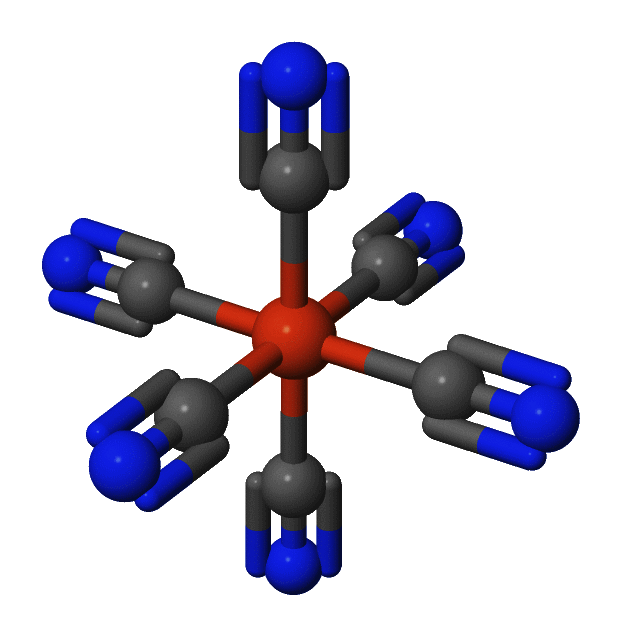
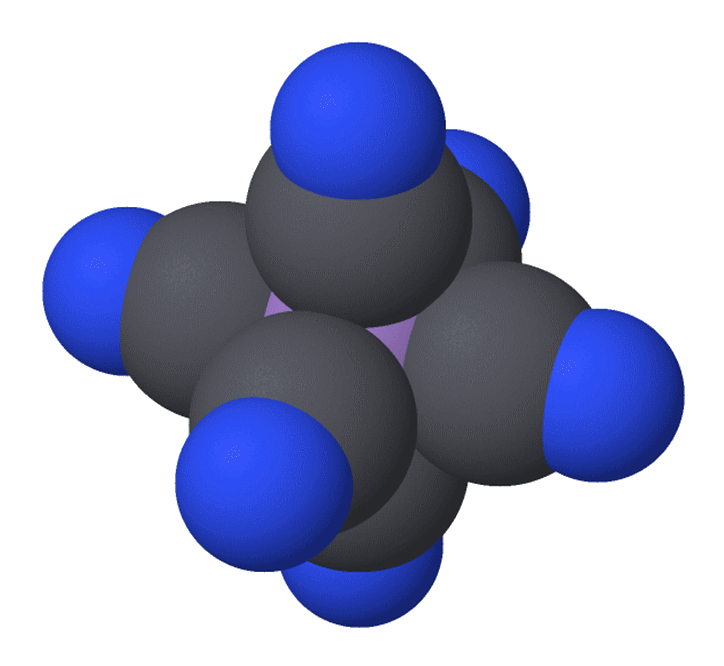
Ferrocyanide is the anion [Fe(CN)6]4−, a coordination complex whose salts typically yield yellow solutions. It is usually available as potassium ferrocyanide (K4Fe(CN)6). Ferrocyanide is of commercial interest as a precursor to the pigment Prussian blue and, as its potassium salt, an anticaking agent.
Quick Facts
- Chemical formula
- [Fe(CN)6]4−
- Spin state
- low-spin iron(II) center
- Magnetic property
- diamagnetic
- Coordination geometry
- octahedral
- Key application
- precursor to Prussian blue pigment
- Toxicity note
- less toxic than many cyanide salts because it tends not to release free cyanide
Facts from the source article.
Lore & Background
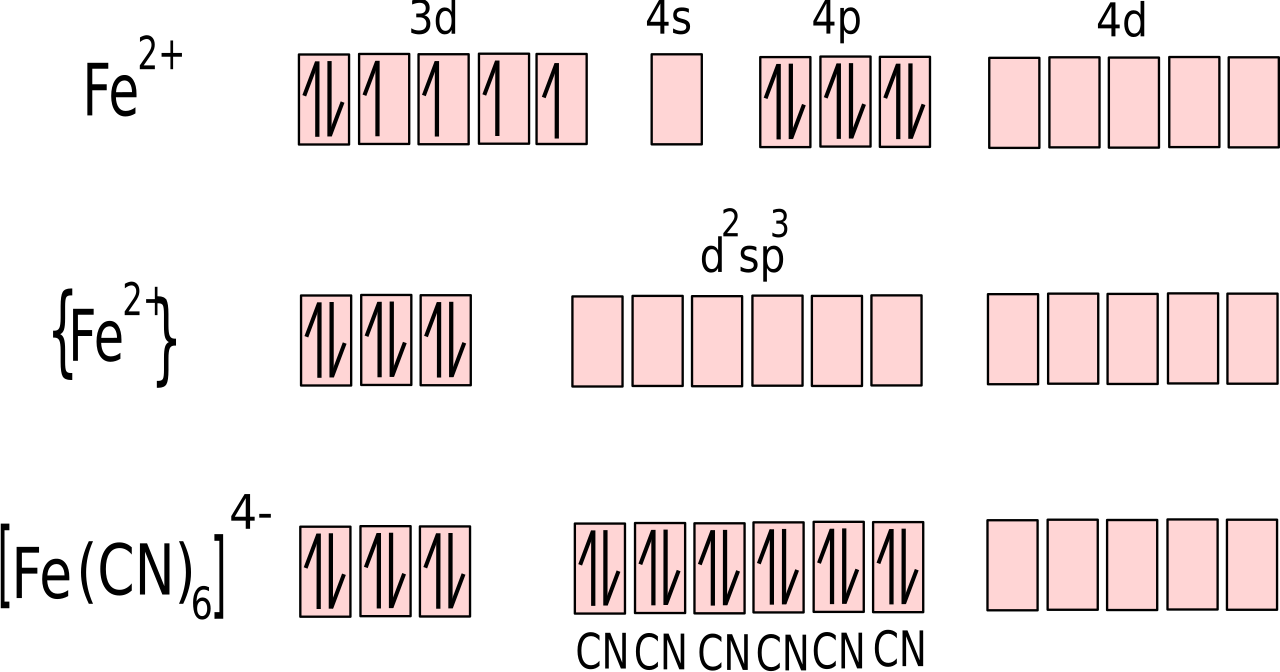
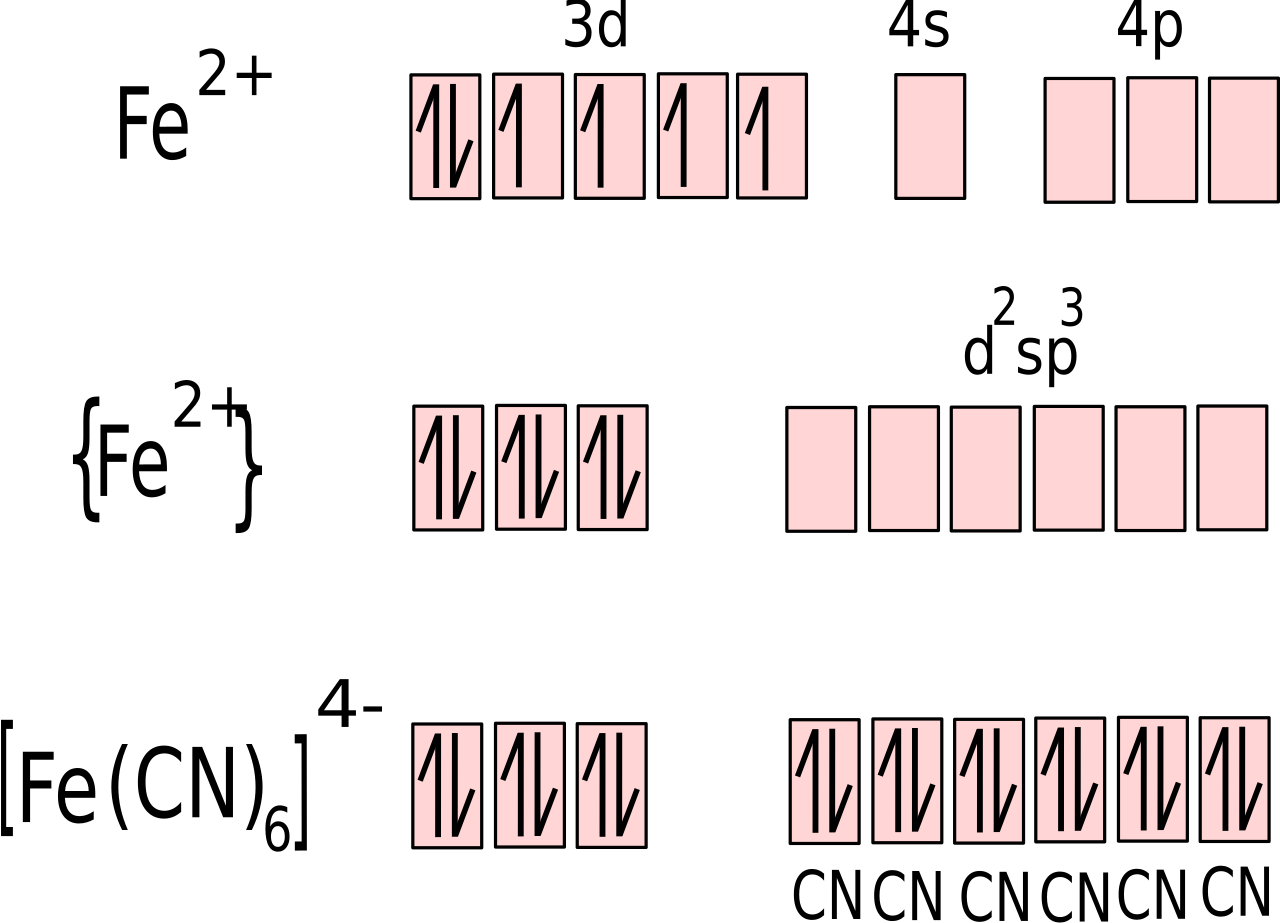
Ferrocyanide is the anion [Fe(CN)6]4−, featuring a low-spin iron(II) center in an octahedral ligand environment. It is diamagnetic and its salts give yellow solutions. The compound is usually available as potassium ferrocyanide, K4Fe(CN)6. Although many cyanide salts are highly toxic, ferro- and ferricyanides are less toxic because they tend not to release free cyanide. Treatment of ferrocyanide with ferric-containing salts produces the intensely coloured pigment Prussian blue, sometimes called ferric ferrocyanide and ferrous ferricyanide. Ferrocyanide can be reversibly oxidized by one electron to give ferricyanide, a conversion that can be followed spectroscopically at 420 nm.
Gallery


More in Inorganic Compounds & Materials
Spotted an error? Know more?
Reader corrections go straight into our review queue. Suggest an edit · How this site is sourced