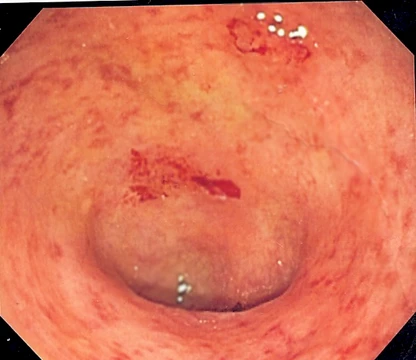
Esophagitis
Inflammation of the esophagus, often from acid reflux.
Last updated

CoRus13 · CC BY-SA 4.0
Esophagitis is an inflammation of the lining of the esophagus, the tube that carries food from the throat to the stomach.[1] The most common cause is the reverse flow of acid from the stomach into the lower esophagus, known as gastroesophageal reflux disease (GERD).[2] A person with esophagitis may have no symptoms, or they may feel a burning pain in the upper middle chest or behind the breastbone, which can worsen when they lie down or strain.[2]
Quick Facts
- Complications
- Cancer
Facts from the source article.
Key facts and history
The major types of esophagitis are medication-induced, infectious, eosinophilic, corrosive, and acid reflux.[3] If the disease remains untreated, it can cause scarring and discomfort in the esophagus.[4] This organ links the throat to the stomach, and it is the normal passageway for food and liquids that are swallowed.[5] A condition called lymphocytic esophagitis, which is uncommon and not well understood, involves an elevated count of lymphocytes within the esophageal lining.[5]
The first description of lymphocytic esophagitis in the medical literature occurred in 2006.[5]
What the research sources say
The same source notes that eosinophilic esophagitis is often related to having allergies, though acid backup from the stomach can also be the culprit.[1] The Lecturio Medical Concept Library describes that treatment for esophagitis depends on the underlying etiology and includes dietary changes, avoidance of offending agents, antibiotic therapy, or proton pump inhibitor use.[3] The WebMD account lists drugs linked to drug-induced esophagitis, including pain relievers such as aspirin, ibuprofen, and naproxen sodium.[1] The Lecturio Medical Concept Library states that if left untreated, esophagitis can lead to complications such as strictures and metaplasia.[3]
The WebMD account advises that to avoid getting esophagitis, one should avoid foods that are spicy, fatty, hard, or acidic, and keep caffeine, chocolate, and mint-flavored foods to a minimum.[1] The WebMD article "Understanding Esophagitis" notes that erosive esophagitis, also called reflux esophagitis, is among the most frequent forms of the disease.[1]
References
- "Understanding Esophagitis", WebMD. facts only, no text reused. webmd.com
- Wikipedia, "Esophagitis" (CC BY-SA 4.0), which cites: "Esophagitis-Topic Overview", WebMD (original not read by us) en.wikipedia.org
- "Esophagitis", The Lecturio Medical Concept Library. facts only, no text reused. lecturio.com
- Wikipedia, "Esophagitis" (CC BY-SA 4.0), which cites: "Esophagitis", Johns Hopkins Medicine, 19 November 2019 (original not read by us) en.wikipedia.org
- Wikipedia, "Esophagitis" (CC BY-SA 4.0), which cites: "Esophagitis – Symptoms and causes – Mayo Clinic", www.mayoclinic.org (original not read by us) en.wikipedia.org
Each numbered sentence above was checked against the source it cites before publication. Sentences citing Wikipedia adapt text from the English Wikipedia article Esophagitis (contributors), used under CC BY-SA 4.0; this entry is available under the same licence. Other sources were used for facts only; no text or images are copied from them.
More in Inflammatory diseases of the digestive system
Sources
Compiled from Wikipedia and the sources listed below. Text from Wikipedia is available under CC BY-SA 4.0; this entry is adapted from it.
- Wikipedia: Esophagitis (CC BY-SA 4.0).
- Word definitions: the Codexery glossary, each quoted from its Wikipedia article.
Spotted an error? Know more?
Reader corrections go straight into our review queue. Suggest an edit · How this site is sourced