Salvatore Riina
Sicilian Mafia boss known as 'the beast' and 'boss of bosses.'
Last updated

Kadriannsalumae · CC BY-SA 4.0
Salvatore “Totò” Riina, born 16 November 1930 and died 17 November 2017, was a Sicilian Mafia boss. He earned the nicknames “the beast” and “boss of bosses” for a brutal campaign of murder that climaxed in the early 1990s with the killings of anti-Mafia prosecutors Giovanni Falcone and Paolo Borsellino. Those assassinations sparked public outrage, legal reforms, and a major police crackdown.
Early life and career
Riina grew up in a poor rural home in Corleone. In September 1943, his father tried to open an unexploded American bomb to sell its powder and metal; it detonated, killing him and Riina’s seven-year-old brother Francesco and wounding another brother, Gaetano. At 19, Riina received a 12-year sentence for killing Domenico Di Matteo with a handgun in a fight, and was released in 1956.
The Corleone Mafia family was led by Michele Navarra until August 1958, when he was shot dead by three gunmen with submachine guns on orders of Luciano Leggio, a ruthless 33-year-old Mafioso. Leggio then took over, and together with Riina, Calogero Bagarella, and Bernardo Provenzano—the three who killed Navarra—he began building the Corleonesi’s power.
In the early 1960s, after arrest warrants were issued, Leggio, Riina, and Provenzano went into hiding while hunting down dozens of Navarra’s surviving supporters. Riina and Leggio were arrested and tried in 1969 for earlier murders but acquitted after jurors and witnesses were intimidated. Later that year, Riina was indicted on another murder charge and went into hiding, remaining a fugitive for 23 years.
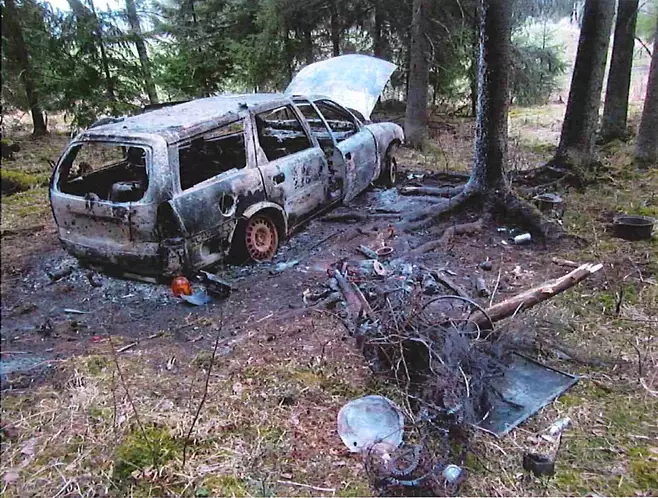
When Leggio was captured and imprisoned in May 1974 for Navarra’s murder, Riina became the effective head of the Corleonesi, though Leggio still had some influence from prison. Riina also had close ties to the ’Ndrangheta; at his wedding in 1974, his trusted friend and best man was Domenico Tripodo, a powerful ’Ndrangheta boss and cigarette smuggler.

Riina’s main rivals were Palermo bosses Stefano Bontade, Salvatore Inzerillo, and Tano Badalamenti. In 1981, Riina’s Corleonesi killed Bontade and Inzerillo, triggering the Second Mafia War, which saw up to a thousand murders.
By the war’s end, the Corleonesi dominated the Mafia. Riina then eliminated former allies like Filippo Marchese, Giuseppe Greco, and Rosario Riccobono. Tommaso Buscetta fled to Brazil in January 1981 to escape the brewing conflict.
Lore & Background
Riina was born on 16 November 1930 and raised in poverty in Corleone. In September 1943, his father died attempting to open an unexploded American bomb, also killing Riina's brother Francesco.
At age 19, Riina was sentenced to 12 years for killing Domenico Di Matteo; he was released in 1956. He later became a key figure in the Corleonesi under Luciano Leggio, participating in the 1958 murder of boss Michele Navarra. Riina went into hiding in 1969 after being indicted for murder and remained a fugitive for 23 years.
Riina succeeded Leggio as head of the Corleonesi in the mid-1970s. He achieved dominance through a campaign of violence, causing police to target his rivals. In violation of established Mafia codes, he advocated killing women and children and innocent members of the public to distract law enforcement.
In December 1987, the Maxi Trial verdict sentenced Riina to life in absentia. He was finally captured on 15 January 1993. In retaliation for his arrest and the crackdown on the Mafia, Riina ordered a series of bombings of art galleries and churches in May and July 1993.
Reader's Guide
Riina's significance lies in his transformation of the Sicilian Mafia from a relatively covert organisation into one that openly challenged the Italian state. His strategy of violence—including the murders of judges, prosecutors, and police—culminated in the 1992 assassinations of Giovanni Falcone and Paolo Borsellino, which sparked public outrage and led to legal changes and a major crackdown. Riina's capture in 1993 ended 23 years as a fugitive but triggered retaliatory bombings of cultural sites.
His legacy includes the Maxi Trial, which convicted 338 Mafia members, and the use of informants like Tommaso Buscetta, whose testimony revealed the Mafia's hierarchical structure. Riina's methods, including the killing of women and children, violated traditional Mafia codes and ultimately weakened the organisation by provoking sustained law enforcement action. His lack of repentance ensured he remained under the strict Article 41-bis prison regime until his death.
Did You Know?
- Hitman Giovanni Brusca estimated he murdered between 100 and 200 people on Riina's behalf.
- Riina ordered the 23 December 1984 Train 904 bombing, known as the 'Christmas Massacre,' which killed 17 and wounded 267.
Frequently Asked Questions
Who is Salvatore Riina?
Salvatore "Totò" Riina (1930–2017) was a Sicilian Mafia leader who headed the Corleone faction and became one of the most feared crime figures in Italian history. He earned the nickname "the beast" because of the extraordinary brutality he ordered during his reign over the organization.
What was Riina's role in the Sicilian Mafia?
He functioned as the top commander of the Corleonesi clan and effectively operated as the "boss of bosses," directing criminal operations and eliminating rivals across Sicily. His power peaked in the late 1980s and early 1990s, when he oversaw some of the most high-profile killings in Mafia history.
How did Riina get caught?
In January 1993, police arrested him in Palermo after a prolonged manhunt, finding him hiding in a civilian apartment. His capture led to a life sentence for multiple murders and stood as a landmark victory for Italian anti-Mafia investigators.
More in Infamous Criminals & Outlaws
Sources
Compiled from Wikipedia and the sources listed below. Text from Wikipedia is available under CC BY-SA 4.0; this entry is adapted from it.
- Wikipedia: Salvatore Riina (CC BY-SA 4.0).
- Word definitions: the Codexery glossary, each quoted from its Wikipedia article.
Spotted an error? Know more?
Reader corrections go straight into our review queue. Suggest an edit · How this site is sourced