
Ronnie Biggs
British criminal who helped plan the Great Train Robbery.
Last updated

Staff Sgt. Casey McGeorge · Public domain
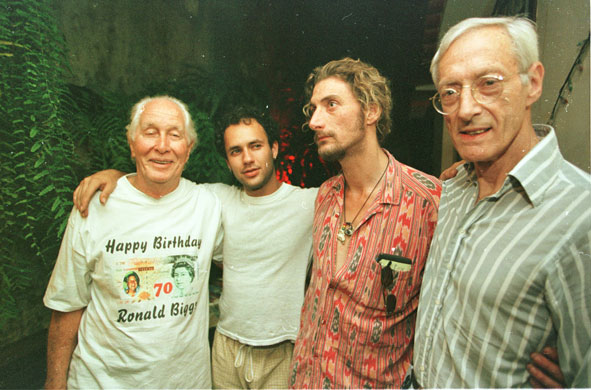
Ronald Arthur Biggs (8 August 1929 – 18 December 2013) was a British criminal best known for his role in planning and executing the Great Train Robbery of 1963. He gained further notoriety for escaping from prison in 1965 and living as a fugitive for 36 years, during which he engaged in various publicity stunts while in exile. After returning to the United Kingdom in 2001, he served several years in prison before being released on compassionate grounds in 2009; he died in a nursing home in 2013.
Lore & Background
Biggs served 15 months before escaping from Wandsworth Prison on 8 July 1965, scaling the wall with a rope ladder and dropping onto a waiting removal van. He fled to Brussels by boat, then to Paris where he acquired new identity papers and underwent plastic surgery. In 1966, he fled to Sydney, then moved to Glenelg, Adelaide.

By then, he had spent all but £7,000 of his share: £40,000 on plastic surgery, £55,000 on a package deal to leave the UK, and the rest on legal fees and expenses. In 1967, after an anonymous letter warned that Interpol suspected he was in Australia, the family moved to Melbourne. In October 1969, a Reuters report revealed he was in Melbourne; Biggs fled, and five months later left on a passenger liner from the Port of Melbourne, using an altered passport. He arrived in Panama and within two weeks flew to Brazil.

In 1970, Brazil had no extradition treaty with the UK. In 1974, a Daily Express team confirmed he was in Rio de Janeiro; Scotland Yard detective Jack Slipper arrived, but Biggs could not be extradited because his girlfriend, nightclub dancer Raimunda de Castro, was pregnant—Brazilian law did not allow extradition of a parent of a Brazilian child. Biggs later recorded vocals on one song for The Great Rock 'n' Roll Swindle (1980), the Sex Pistols film: 'No One Is Innocent' (also known as 'Cosh the Driver').
Reader's Guide
Ronnie Biggs's significance lies in his central role in the Great Train Robbery, one of the most famous heists in British history, and his subsequent 36-year life as a fugitive, which turned him into a folk anti-hero. His escape from Wandsworth Prison and his ability to evade capture for decades, aided by plastic surgery and the lack of an extradition treaty with Brazil, captured public imagination.
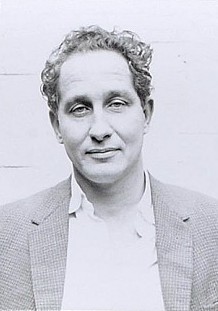
While his actual role in the robbery was minor—he failed to move the train—his notoriety grew through media coverage and his own publicity stunts, including recording with the Sex Pistols. His case highlighted issues of extradition, the limits of international law enforcement, and the public's fascination with charismatic criminals. His eventual return to the UK, imprisonment, and release on compassionate grounds due to declining health brought a final chapter to a story that had spanned nearly half a century.
Frequently Asked Questions
Who is Ronnie Biggs?
Ronald Arthur Biggs (1929–2013) was a British criminal from Stockwell, London, who became one of the most notorious outlaws in British history. He is best remembered for his involvement in the 1963 Great Train Robbery and for spending 36 years on the run after escaping custody.
How did Ronnie Biggs escape from prison?
In 1965, while serving his sentence for the robbery, Biggs managed to get out of custody and vanished before authorities could recapture him. His escape set off a manhunt that ultimately kept him out of British reach for over three decades.
What did Ronnie Biggs do during his 36 years as a fugitive?
Living in exile outside the UK, Biggs periodically made headlines by staging publicity stunts and appearing in the media to taunt British law enforcement. His long absence from the country turned him into a cultural icon and a symbol of the era's criminal underworld.
More in Infamous Criminals & Outlaws
Sources
Compiled from Wikipedia and the sources listed below. Text from Wikipedia is available under CC BY-SA 4.0; this entry is adapted from it.
- Wikipedia: Ronnie Biggs (CC BY-SA 4.0).
Spotted an error? Know more?
Reader corrections go straight into our review queue. Suggest an edit · How this site is sourced