
Modern Family
A mockumentary sitcom about three interrelated modern families.

Mohammad Bahareth · CC0
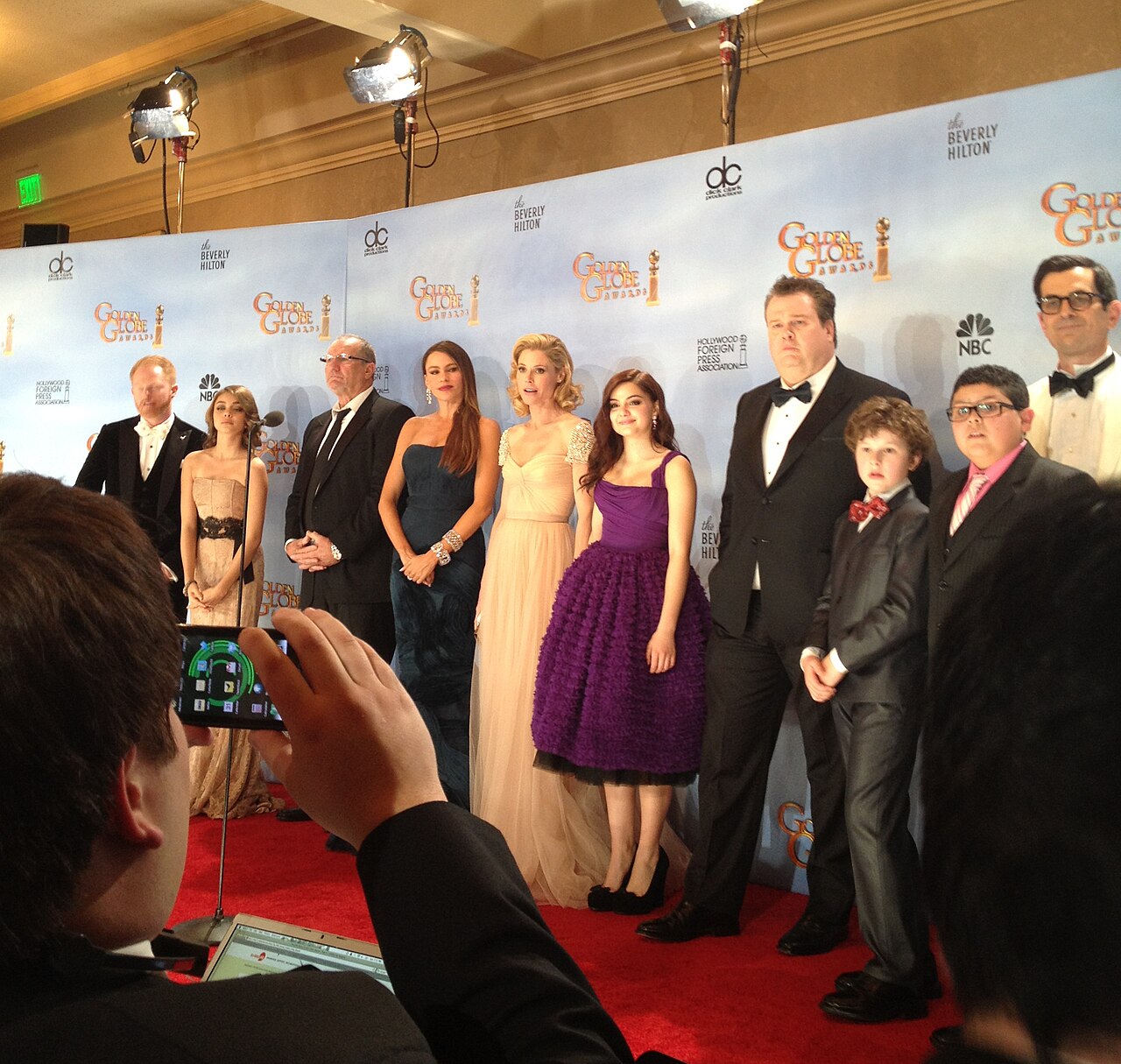
Modern Family is an American television mockumentary sitcom created by Christopher Lloyd and Steven Levitan for ABC. It aired for 11 seasons from September 23, 2009, to April 8, 2020, following three diverse but interrelated family set-ups living in suburban Los Angeles. The series was highly acclaimed early on, winning multiple Emmy Awards and a Golden Globe, and its success made it a significant revenue-generating show.
Quick Facts
- Genre
- Sitcom / Mockumentary
- Creator
- Christopher Lloyd / Steven Levitan
- Producer
- Jeffrey Morton / Chris Smirnoff / Sally Young / Becky Mann / Audra Sielaff
- Company
- Lloyd-Levitan / (2009–12) / Picador Productions (2012–20) / Steven Levitan Productions (2012–20) / 20th Century Fox Television
- Theme Music Composer
- Gabriel Mann
- Country
- United States
- Language
- English
- Location
- Los Angeles, California
- Cinematography
- David Hennings (Pilot) / James R. Bagdonas / Hugo Cortina
- Camera
- Single camera
- Runtime
- 20–24 minutes
- Network
- ABC
Facts from the source article.
Lore & Background
Modern Family revolves around three different types of families interrelated through patriarch Jay Pritchett and his two adult children, Claire and Mitchell. Jay remarried a much younger woman, Gloria, a Colombian immigrant, with whom he has a son, Joe, and a stepson, Manny. Claire is married to Phil Dunphy, a realtor, and they have three children: Haley, Alex, and Luke. Mitchell is in a same-sex relationship with Cameron Tucker; they adopt a daughter, Lily, and later a son, Rexford. The series employs an ensemble cast and is presented in a mockumentary style, with characters frequently speaking directly to the camera.
Reader's Guide
Modern Family was highly acclaimed by critics during its first few seasons, with its critical reception becoming more mixed as it progressed. The final season received positive reviews, and the finale episode had 7.37 million first-run viewers. The series won a total of 22 Primetime Emmy Awards, including five for Outstanding Comedy Series, and the Golden Globe Award for Best Television Series – Musical or Comedy in 2011. Its broadcast syndication rights were sold to NBCUniversal's USA Network and other stations for a fall 2013 premiere. The show's success led to it being the 10th-highest revenue-generating show for 2012, earning $2.13 million an episode. The series is noted for its depiction of a modern-day tight-knit extended family, with many episodes comically based on situations many families encounter in real life.
Did You Know?
- The series won five Primetime Emmy Awards for Outstanding Comedy Series.
- The show earned $2.13 million an episode in 2012, making it the 9th-highest revenue-generating show that year.
- The retrospective documentary aired before the final episode had 6.72 million first-run viewers.
Roots in Radio and the Birth of the Form
British television comedy did not emerge in a vacuum; its DNA was spliced from the radio comedies of the 1940s and 1950s. The very first regular half-hour televised sitcom, Pinwright's Progress (1946–1947), was broadcast live in black and white from Alexandra Palace by the BBC, following the misadventures of a small-shop owner whose helpful staff only compounded his troubles. Though early shows borrowed structural ideas from American formats, they rapidly cultivated a distinctly British voice centred on dry wit, social satire, and the textures of everyday life. Hancock's Half Hour, which ran on BBC Radio from 1954 before jumping to television in 1956, is widely regarded as the first modern TV sitcom. Tony Hancock portrayed a self-parodying everyman whose schemes were perpetually derailed by misfortune, while Sid James supplied a wryer counterpoint. The term 'situation comedy' itself was first recorded in a BBC memo dated 31 March 1953, penned by radio comedy producer Peter Eton, who proposed the format as an ideal vehicle for the medium. Post-war working-class settings and domestic milieus defined this era, and ITV's The Army Game parodied the lives of National Service conscripts until the scheme ended in 1963.
The Golden Age and a Writing Standard
The decade from 1970 to 1979 is frequently cited as the Golden Age of British sitcom, a period when the genre reached a level of craft that set a benchmark still invoked today. Fawlty Towers, with its 1975 and 1979 series, has been described as the British sitcom by which all others must be measured. Central to that era's quality was the writing partnership of Ray Galton and Alan Simpson, whose body of work became the paradigm against which British sitcom scripts were judged—a notable contrast to the collaborative team-writing model that dominated American television. Production techniques also carried a transatlantic lineage: the live-audience, multi-camera method had been pioneered in the United States by Desi Arnaz and Lucille Ball on I Love Lucy in 1951 before being adopted across the UK. While most shows were recorded on studio sets, a handful, such as Last of the Summer Wine, were filmed almost entirely on location and then screened before a studio audience to capture authentic laughter before final post-production. By the time television sets had become standard household furniture, these comedies had become significant mirrors of everyday British life.
Breaking the Mold: Single-Camera and the Mockumentary Turn
A conscious departure from traditional sitcom conventions began to reshape the genre. Series like Blackadder (1983–1989) and Yes Minister (1980–1988, with a 2013 revival) transplanted what was typically a domestic or workplace comedy into the corridors of political power, while a later wave embraced the mockumentary style. The Office (2001–2003) is generally credited with heralding the modern single-camera sitcom that dispensed entirely with live audiences. Since the turn of the century, shows such as The Royle Family (1998–2000, 2006–2012) and PhoneShop (2009–2013) were filmed on a single-camera setup or wholly on location, with no studio screening and no laugh track. Yet the traditional format did not vanish; Miranda (2009) returned to a live-audience, multi-camera structure, demonstrating that both approaches could coexist. This bifurcation gave writers and producers a wider palette of narrative methods and unusual subject matter, expanding what a British sitcom could be beyond the kitchen, the office, or the pub.
Cultural Mirror and Enduring Legacy
From the late 1950s through the late 1980s, situation comedy served as one of the richest arenas for public conversation about class in Britain, offering what critics called a best-available window on the country's social hierarchy, its conflicts, and its prejudices. That cultural weight was formally acknowledged in 2004 when the BBC, ITV, and Channel 4 commissioned Britain's Best Sitcom, a twelve-episode documentary series built around a national poll. The resulting list was dominated by traditional, audience-recorded shows—Only Fools and Horses claimed first place, with favourites like Dad's Army, Are You Being Served?, and Hi-de-Hi! rounding out the top ranks. It was not until nineteenth place, The Royle Family, that a show without a live studio audience appeared. Christmas television programming has long leaned on sitcoms for holiday-spirit episodes and emotional set-pieces, and Christmas specials have kept series like The Royle Family and Only Fools and Horses alive in the public imagination for over a decade after their regular runs ended. In a 2003 essay for the British Film Institute, critic Phil Wickham summed up the genre's reach: good sitcoms function as a kind of virtual reality, reflecting the rhythms of daily life, the pain of the human condition, and the simple joy of laughter, making audiences think about themselves by laughing at their own absurdity.
Gallery



Frequently Asked Questions
What is Modern Family about?
It's an American sitcom that follows three connected family units in suburban Los Angeles: a couple with young kids, a widower raising a teenage daughter, and a gay couple parenting an adopted child. The show is shot in a mockumentary style, with characters frequently pausing to speak directly into a fictional documentary camera.
Who created Modern Family?
Steven Levitan and Christopher Lloyd developed the series for ABC, and it premiered on September 23, 2009.
How many seasons did Modern Family run?
The show aired for 11 seasons, with its series finale broadcast on April 8, 2020.
What makes Modern Family's format stand out from typical sitcoms?
Rather than relying on a live studio audience, it uses a mockumentary approach in which characters break the fourth wall to share candid asides and reactions. This single-camera style gives the ensemble a more intimate, documentary-like feel compared to traditional multi-cam comedies.
More in Iconic Tv Sitcoms 1-18
Spotted an error? Know more?
Reader corrections go straight into our review queue. Suggest an edit · How this site is sourced