
Laverne & Shirley
Two bottle-capping friends navigate life and laughter.

American Broadcasting Company (ABC) · Public domain
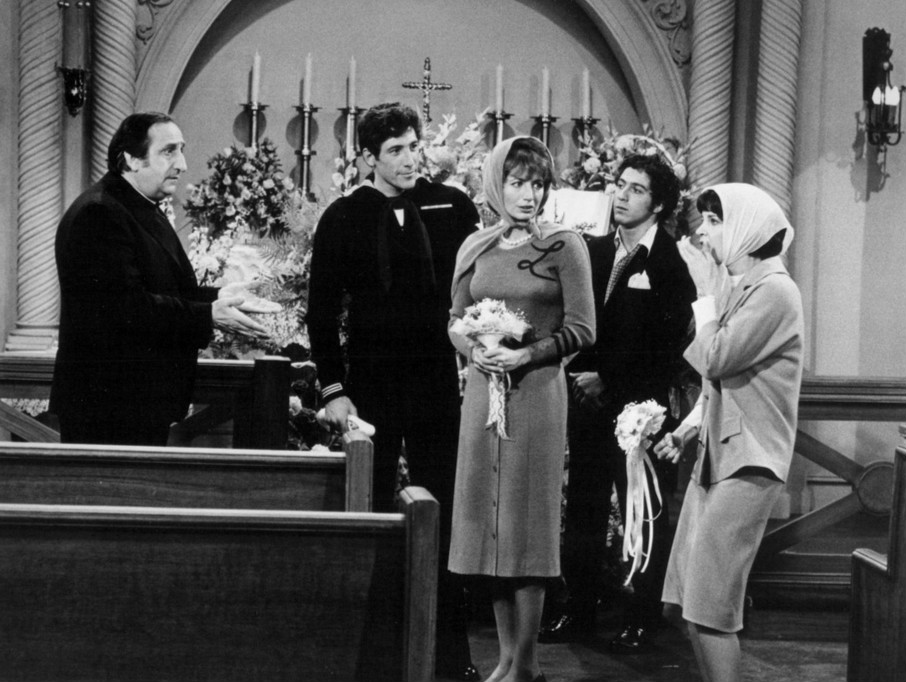
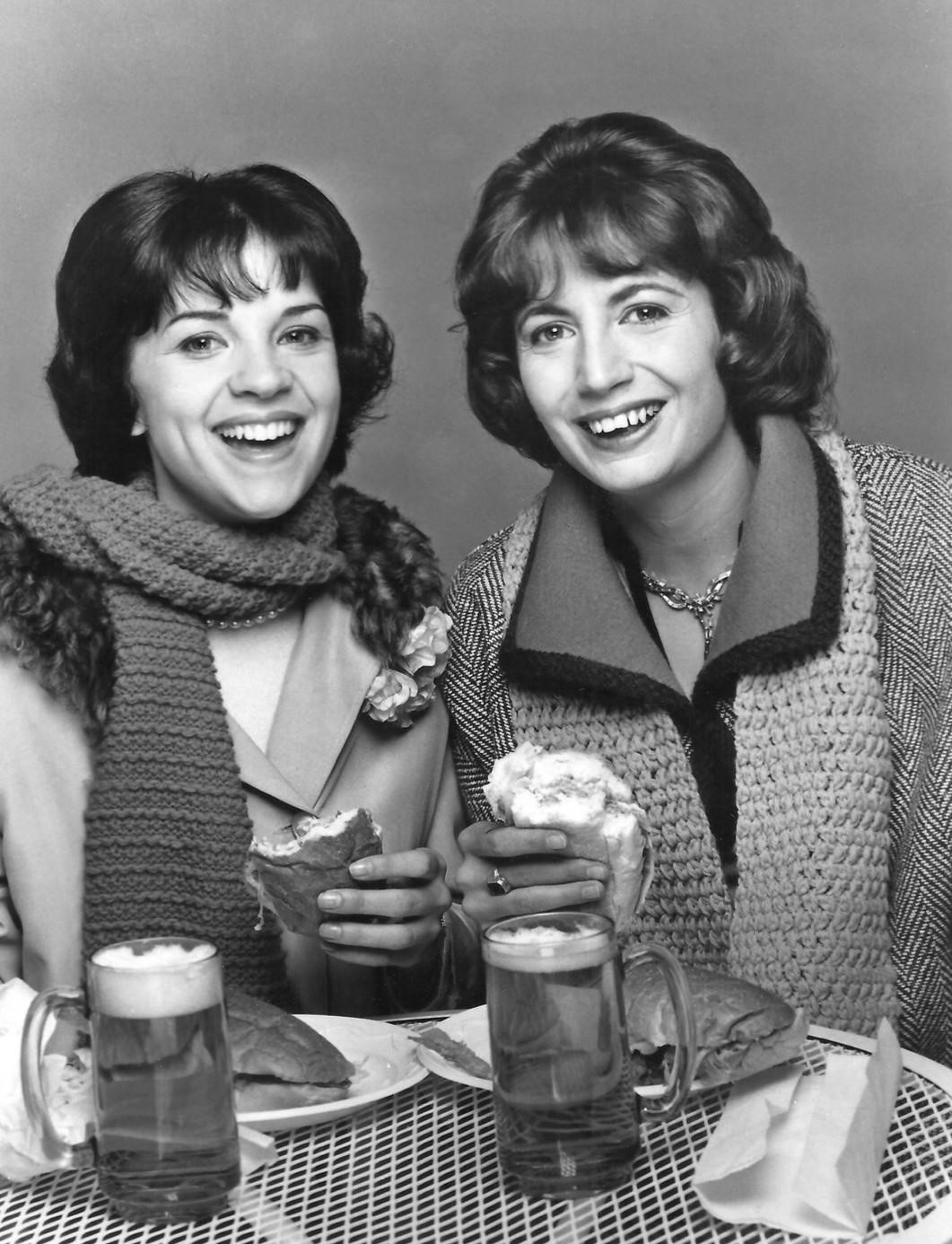
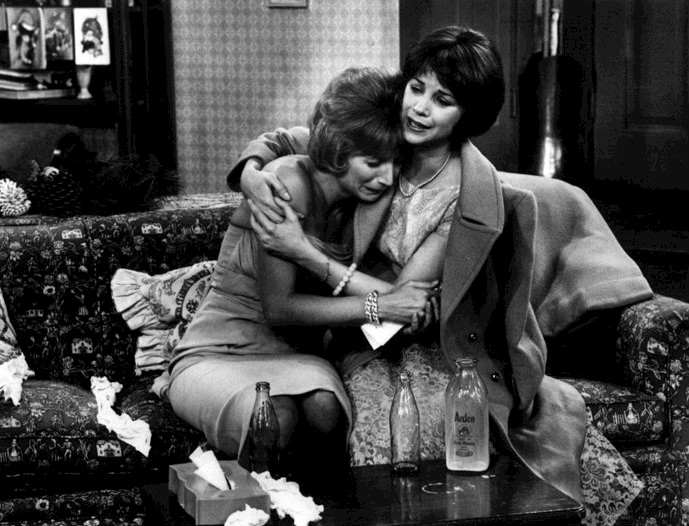
Laverne & Shirley is an American sitcom that ran on ABC for eight seasons, from January 27, 1976, to May 10, 1983. It spun off from *Happy Days*, centering on two friends and roommates, Laverne DeFazio and Shirley Feeney, who cap bottles at the fictional Shotz Brewery in Milwaukee, Wisconsin, during the late 1950s to early 1960s. Starting with the sixth season, the setting shifted to mid-1960s Burbank, California. The show relied heavily on physical comedy and became the most-watched program on American television by its third and fourth seasons. It earned six Golden Globe nominations and one Emmy nomination.
The series originated from *Happy Days*, where Laverne and Shirley first appeared as acquaintances of Fonzie. Originally conceived as "two girls who date the fleet," the characters were toned down for family viewing, which Cindy Williams felt added depth. The timeline begins around 1958 and ends in 1967. Paramount Television produced it, with creators Garry Marshall, Lowell Ganz, and Mark Rothman, and executive producers Garry Marshall, Edward K. Milkis, and Thomas L. Miller of Miller-Boyett Productions.
Cindy Williams initially refused the spin-off, so Liberty Williams was cast for a screen test. Between that afternoon shoot and evening, Williams agreed to the role and refilmed the scene with Penny Marshall that night. Executives wanted to see both versions, but Paramount president Michael Eisner hid the first reel in a closet and claimed it was lost, so only the second performance was screened.
The opening credits feature Laverne and Shirley reciting a Yiddish-American hopscotch chant from Penny Marshall’s childhood: “1, 2, 3, 4, 5, 6, 7, 8 Schlemiel! Schlimazel! Hasenpfeffer Incorporated!” This leads into the theme song "Making Our Dreams Come True" by Cyndi Grecco. In the final season without Williams, schoolchildren recite the chant.
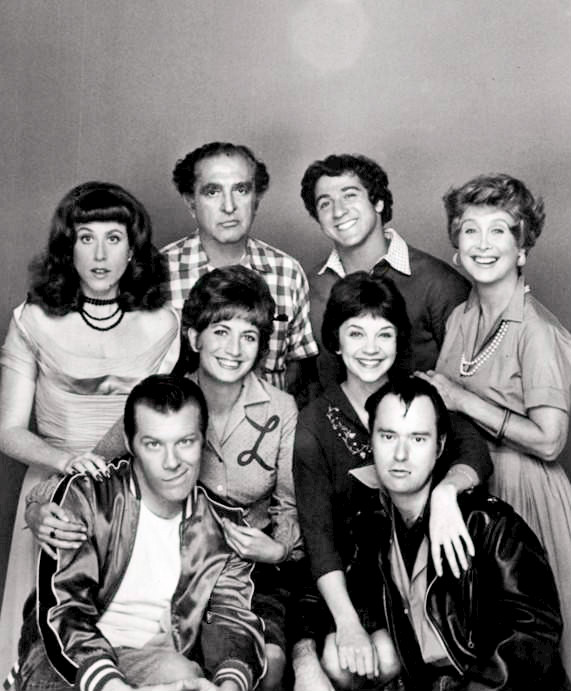
For the first five seasons (1976–1980), the show is set in Milwaukee, roughly from 1958–59 through the early 1960s. Laverne and Shirley live in a basement apartment and communicate with upstairs neighbors Lenny and Squiggy via a dumbwaiter shaft. Other characters include Laverne’s father Frank DeFazio, who runs the Pizza Bowl, and landlady Edna Babish, who later marries Frank. Shirley has an on-again, off-again romance with dancer/singer/boxer Carmine "The Big Ragu" Ragusa.
- Episodes
- 179 (including the unaired pilot)
Lore & Background
The series originated as a spin-off of Happy Days, where Laverne and Shirley were introduced as acquaintances of Fonzie. The original working title was Laverne DeFazio & Shirley Feeney. Initially conceived as 'two girls who date the fleet,' the characters were mellowed for family hour, which Cindy Williams felt gave the show more depth. According to former Paramount president Michael Eisner, Williams initially refused the spin-off, leading to a recast with Liberty Williams for a screen test; however, Williams was eventually persuaded to rejoin, and Eisner hid the first reel to ensure only her performance with Penny Marshall was seen.
Reader's Guide
Laverne & Shirley holds a significant place in television history as a top-rated sitcom that dominated ratings during its third and fourth seasons. Its blend of physical comedy and character-driven humor, set against a nostalgic 1950s-60s backdrop, resonated with audiences. The show received six Golden Globe nominations and one Emmy nomination. The series' move from Milwaukee to Burbank in its sixth season reflected a shift in setting and tone, while the departure of Cindy Williams in the eighth season led to a final season focusing solely on Laverne. Despite this, the show remained strong enough to be considered for a ninth season, which was not renewed due to the high cost of moving production to New York City. The series' legacy includes its memorable theme song 'Making Our Dreams Come True' and the enduring popularity of its characters.
Did You Know?
- The opening chant '1, 2, 3, 4, 5, 6, 7, 8 Schlemiel! Schlimazel! Hasenpfeffer Incorporated!' came from Penny Marshall's childhood.
- Michael McKean and David Lander created Lenny and Squiggy while high on marijuana as theater students at Carnegie Mellon University.
- Cindy Williams left the show in 1982 after filing a $20 million lawsuit against Paramount over her scheduled due date; the case was settled out of court.
- The series' timeline spanned from approximately 1958 to 1967.
Early Life and Family Roots
Penny Marshall was born Carole in Manhattan on October 15, 1943. Her mother, Marjorie Irene, ran a tap dance school, while her father, Anthony W. Marshall (born Masciarelli, of Italian Abruzzo descent), directed industrial films and later produced them. Her first name honored her mother's favorite actress, Carole Lombard, while her middle name "Penny" was a consolation for her older sister Ronny, who had been saving pennies for a horse. The family lived at 3235 Grand Concourse in the Bronx—a building that also raised Neil Simon, Paddy Chayefsky, Calvin Klein, and Ralph Lauren. Religion was treated practically: each child was baptized in a different denomination depending on which church had a hall where their mother could stage a recital. Penny began tap dancing at age three and later taught at her mother's school. She attended Walton High School, then studied math and psychology at the University of New Mexico for two and a half years. In 1963 she married a football player, Michael Henry, and had a daughter, Tracy, before divorcing in 1966. She supported herself as a choreographer before moving to Los Angeles in 1967 to join her brother Garry.
Building a Career in Television
Before becoming a household name, Marshall accumulated a steady stream of small roles. She appeared in a Head and Shoulders shampoo commercial alongside Farrah Fawcett, auditioned for Witchiepoo on H.R. Pufnstuf (losing to Billie Hayes), and landed parts in How Sweet It Is! and The Savage Seven in 1968. She was considered for Gloria Bunker Stivic on All in the Family but lost the role to Sally Struthers. In 1971, her brother Garry added her to the permanent cast of The Odd Couple as secretary Myrna, a role she held for four years. In her final episode, Myrna married Rob Reiner's character—and Reiner was Marshall's real-life husband. The episode also featured her siblings Garry and Ronny as Myrna's brother and sister. She guest-starred on That Girl and appeared in several TV movies. In 1974, James L. Brooks and Allan Burns cast her in Paul Sand in Friends and Lovers, which was canceled mid-season despite decent reviews. Impressed by her comedic range, they then brought her onto The Mary Tyler Moore Show as one of Mary Richards' neighbors.
Laverne & Shirley and the Breakthrough
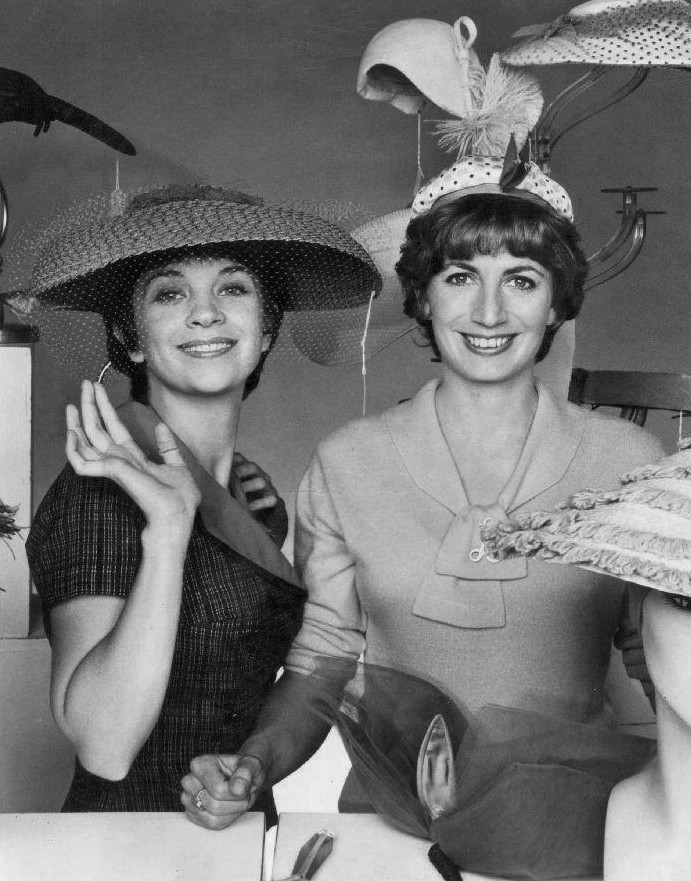
The character that defined Marshall's public identity was born from a single guest appearance. In November 1975, Garry Marshall cast her and Cindy Williams in an episode of Happy Days titled "A Date with Fonzie," where they played wisecracking brewery workers Laverne DeFazio and Shirley Feeney as dates for Henry Winkler and Ron Howard. The pair's chemistry with the studio audience was so electric that Marshall decided to spin them into their own series. Laverne & Shirley ran from 1976 to 1983, with Marshall portraying the loud, lovable, blue-collar Laverne DeFazio. Her performance earned her three nominations for the Golden Globe Award for Best Actress in a Television Series Musical or Comedy. The show made her a cultural icon and cemented her as one of the most recognizable comedic actresses of the late 1970s and early 1980s, a role she would carry into her subsequent work in front of and behind the camera.
Behind the Camera: Directing and Producing
After Laverne & Shirley, Marshall transitioned to directing, making her feature debut with Jumpin' Jack Flash in 1986. Her 1988 film Big became a landmark achievement: it was the first movie directed by a woman to cross the $100 million mark at the U.S. box office. She followed with Awakenings (1990), which received an Academy Award nomination for Best Picture, then A League of Their Own (1992), Renaissance Man (1994), The Preacher's Wife (1996), and Riding in Cars with Boys (2001). Beyond directing, she produced Cinderella Man and the television adaptation of Bewitched, both released in 2005. Later in her career she directed episodes of the sitcoms According to Jim and United States of Tara. Her body of work behind the camera—spanning comedies, dramas, and family films—established her as one of the most commercially successful and critically respected female directors in Hollywood history, a trailblazer whose impact extended far beyond her own screen roles.
Gallery
Frequently Asked Questions
What is Laverne & Shirley?
Laverne & Shirley is an American sitcom that aired on ABC for eight seasons between 1976 and 1983. It follows two best friends and roommates who work as bottle capers, and it originated as a spin-off from Happy Days.
What are Laverne and Shirley's jobs?
Both leads work as bottle capers at the fictional Shotz Brewery in Milwaukee, Wisconsin. Their repetitive factory work provides the stage for much of the show's slapstick and workplace humor.
How many episodes of Laverne & Shirley are there?
The series produced 179 episodes across eight seasons, a count that includes the unaired pilot.
Why did the show move from Wisconsin to California?
Starting with the sixth season, the setting shifted to mid-1960s Burbank, California, which opened up new storylines and a different visual backdrop for the characters.
How successful was Laverne & Shirley?
By its third and fourth seasons, the show had become the most-watched program on American television. It also accumulated six Golden Globe nominations and one win over its run.
More in Iconic Tv Sitcoms 1-18
Spotted an error? Know more?
Reader corrections go straight into our review queue. Suggest an edit · How this site is sourced