
Syl Apps
Olympic pole vaulter, Maple Leafs captain, and Ontario MPP.

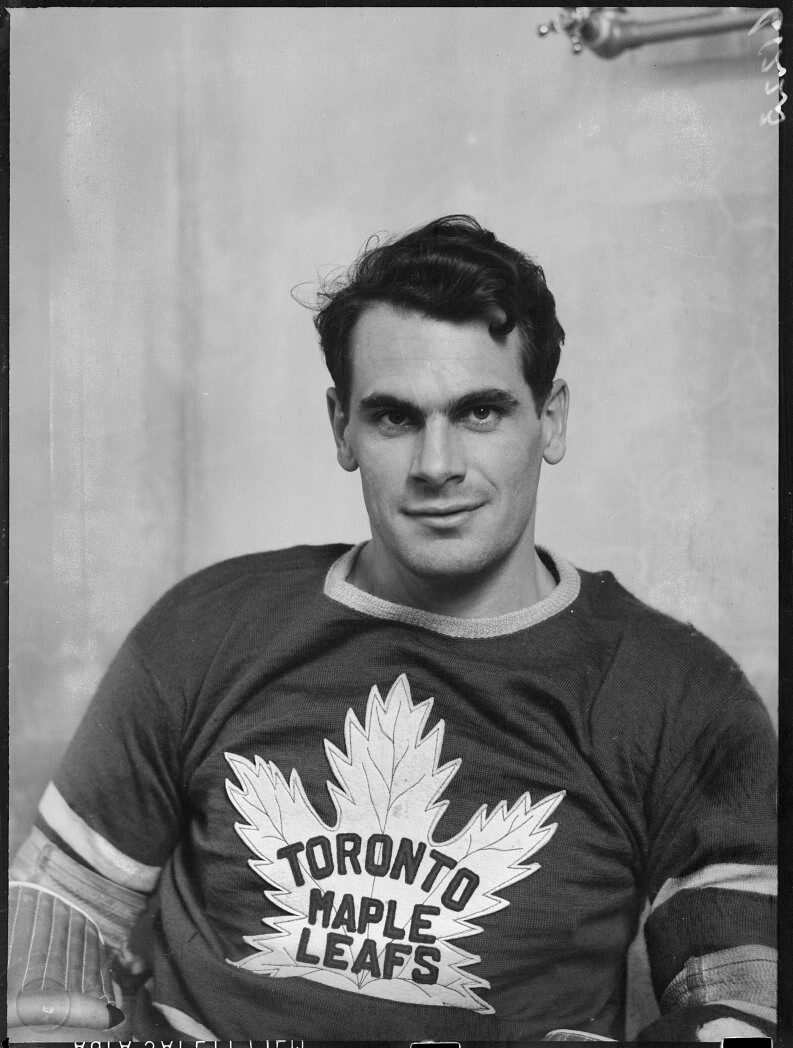
Charles Joseph Sylvanus Apps lived a life that spanned elite sport, military service, and provincial politics. Born on January 18, 1915, he stood six feet tall and weighed 185 pounds. At the 1934 British Empire Games, he won gold in the pole vault. Two years later, he represented Canada at the Berlin Olympics, finishing sixth in the same event. While studying economics at McMaster University, he played football, which caught the eye of Conn Smythe. Smythe signed him to the Toronto Maple Leafs.
Apps spent his entire NHL career as a centre for the Leafs, wearing number 10. He claimed the first-ever Calder Memorial Trophy in 1937 and the Lady Byng Memorial Trophy in 1942. He captained the team during the first NHL All-Star Game on October 13, 1947, at Maple Leaf Gardens. Earlier, on October 29, 1939, he played in an all-star game in Montreal to raise money for Babe Siebert’s family.
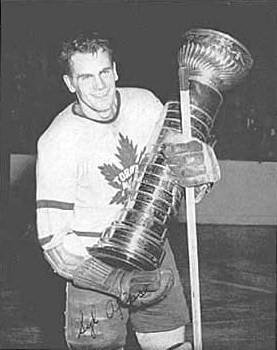
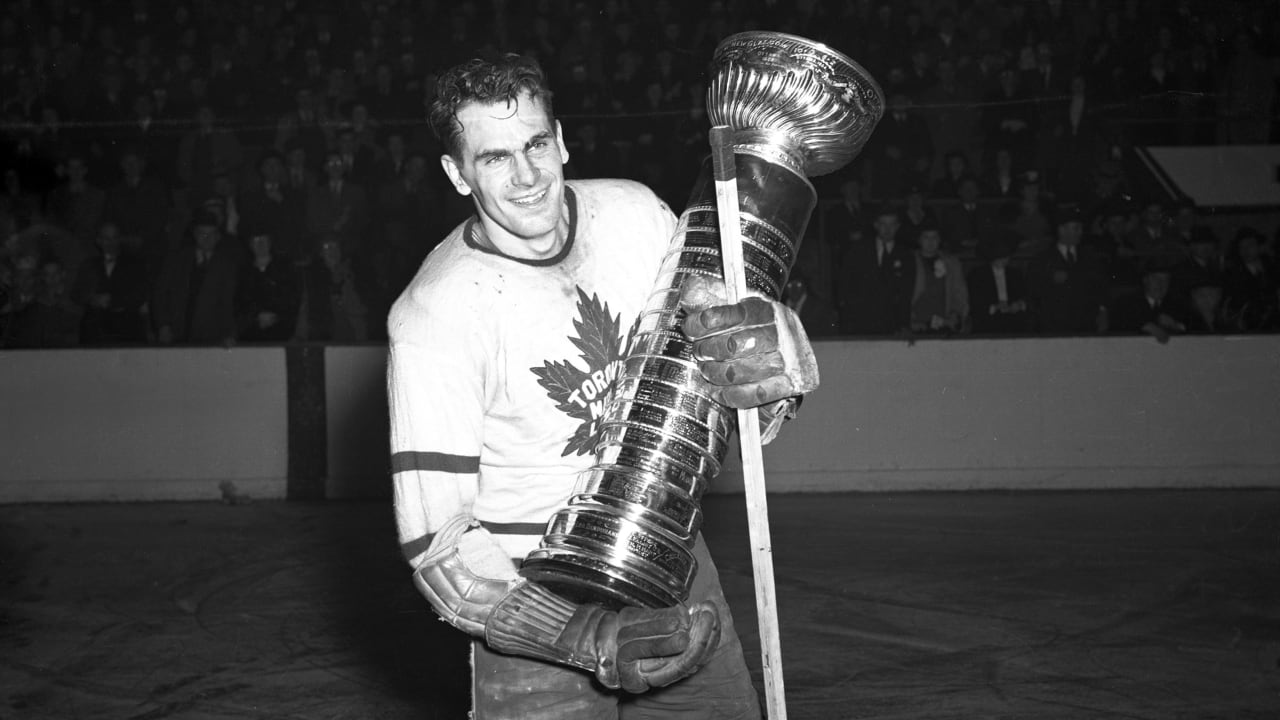
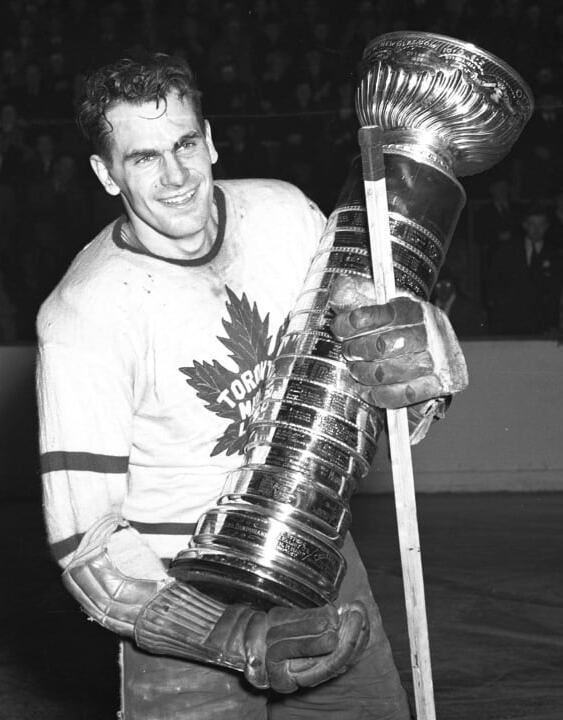
At the end of the 1943 season, with his career at its peak, Apps joined the Canadian Army. He served for two years until the war ended, then returned to captain the Leafs to Stanley Cup victories in 1947 and 1948. After the 1947 Cup win, he considered retiring but wanted to reach 200 career goals. Heading into the final weekend of the regular season with 196 goals, he scored five times in two games to surpass the mark. Despite a career-high 53 points in 55 games, he retired at age 33, taking a marketing job at Simpson’s department store. He also served as Ontario’s Athletic Commissioner.
Apps first ran for federal parliament in 1940, representing Brant for the National Government Party. He lost to incumbent George Wood by 138 votes. Later, from 1963 to 1975, he served as a Progressive Conservative member of the Ontario Legislative Assembly, first for Kingston and then for Kingston and the Islands. From 1971 to 1974, he was the Minister of Correctional Services.
On December 24, 1998, Apps died of a heart attack and was buried in Mountview Cemetery in Cambridge, Ontario. The Maple Leafs later honoured his number 10, along with George Armstrong’s, but did not retire it due to a policy that only retired numbers for players who suffered a career-ending incident while with the team. That policy changed for the Leafs’ centennial season, and on October 15, 2016, Apps’s number was officially retired alongside 15 others.
Quick Facts
- Birth Date
- 18 January 1915
- Birth Place
- Paris, Ontario, Canada
- Death Date
- 24 December 1998 · 1915 · 1 · 18
- Death Place
- Kingston, Ontario, Canada
- Height Ft
- 6
- Height In
- 0
- Weight Lb
- 185
- Position
- Centre
- Shoots
- Left
- Played For
- Toronto Maple Leafs
- Career Start
- 1936
- Career End
- 1948
Facts from the source article.
Lore & Background
Apps was a strong athlete who won the gold medal at the 1934 British Empire Games in pole vault and placed sixth at the 1936 Olympics in Berlin. After watching him play football at McMaster University, where he was majoring in Economics, Conn Smythe signed Apps to play hockey with the Toronto Maple Leafs. He played centre for the Maple Leafs his entire professional career, serving as captain during the first NHL All-Star Game on October 13, 1947, at Maple Leaf Gardens. He also played for an all-star team on October 29, 1939, to raise money for Babe Siebert's family.
Apps joined the Canadian Army during World War II at the end of the 1943 season, serving two years. He returned to captain the Leafs and won two more Stanley Cups in 1947 and 1948. He contemplated retirement after the 1947 Cup win but returned to reach the 200 career goals milestone, scoring five goals in the final weekend of the regular season to surpass it. He retired from the NHL at age 33, taking a marketing job with Simpson's department store and serving as Ontario Athletic Commissioner.
While still playing hockey, Apps ran for parliament in the 1940 federal election as a candidate for the National Government Party in Brant, losing to incumbent George Wood by 138 votes. He later served as a Progressive Conservative member of the Legislative Assembly of Ontario from 1963 to 1975, representing Kingston and later Kingston and the Islands, and was Minister of Correctional Services from 1971 to 1974.
Reader's Guide
Apps was known for his athleticism, character, skating, and play-making abilities, alongside a scoring touch that saw him reach the 20-goal plateau six times. He has been praised by Maple Leafs alumni, authors, historians, and competitors. Conn Smythe called Apps the greatest player in franchise history, and Jack Adams stated Apps was the greatest centre he had ever seen. Boston Bruins legend Milt Schmidt called Apps the greatest player he ever played against, and Ted Lindsay praised his centre position play and gentlemanly characteristics.
In 1975, Apps was elected to Canada's Sports Hall of Fame, and two years later he was made a Member of the Order of Canada. Several institutions are named for him, including the Syl and Molly Apps Research Centre in Kingston, Ontario, and the Syl Apps Youth Centre in Oakville, Ontario. The sports arena in his hometown of Paris is named the Syl Apps Community Centre. In 1997, he was inducted into the Ontario Sports Hall of Fame, and the Syl Apps Award, emblematic of Ontario's Athlete of the Year, was unveiled on January 13, 1998. In 2001, Canada Post included Apps in a series of NHL All-Star 47-cent postage stamps. The National Hockey League listed Apps as one of the 100 Greatest Players in 2017. His jersey number 10 was officially retired by the Maple Leafs on October 15, 2016, during the team's centennial season.
Did You Know?
- Apps won the gold medal in pole vault at the 1934 British Empire Games and placed sixth at the 1936 Olympics.
- Apps served as a Progressive Conservative MPP in Ontario from 1963 to 1975 and was Minister of Correctional Services.
- His granddaughter Gillian Apps won three Olympic gold medals with Canada's women's ice hockey team.
Athletic Versatility and the Maple Leafs Era
Syl Apps arrived in professional hockey as a multi-sport athlete whose résumé already included a gold medal in the pole vault at the 1934 British Empire Games and a sixth-place finish at the 1936 Berlin Olympics. Standing six feet tall and weighing 185 pounds, he was studying Economics at McMaster University when Maple Leafs owner Conn Smythe spotted him playing football and decided to sign him to the professional roster. Apps settled into the centre position and wore number 10 for his entire eleven-season tenure with Toronto. His rookie year in 1937 saw him claim the very first Calder Memorial Trophy ever awarded, and in 1942 he added the Lady Byng Memorial Trophy for gentlemanly play combined with offensive production. He captained the league's inaugural All-Star Game at Maple Leaf Gardens in October 1947 and had earlier suited up for a charity all-star tilt in Montreal in 1939 to raise funds for the family of the late Babe Siebert. Over his career he crossed the twenty-goal mark six times, and his career-high season produced 53 points in 55 games.
War Service, the Two-Hundred-Goal Sprint, and Retirement
Apps left the ice at the peak of his abilities when he enlisted in the Canadian Army at the close of the 1943 season, serving two full years until the war's end. Upon his return he assumed the captaincy once more and guided Toronto to back-to-back Stanley Cup triumphs in 1947 and 1948. After the 1947 championship he seriously considered hanging up his skates, yet he chose to come back for one final campaign with a singular purpose: reaching two hundred career goals. Entering the last weekend of that regular season with 196 to his name, Apps tallied five goals across two games to cross the milestone. Despite posting a career-best 53 points in 55 appearances, he retired at the age of thirty-three. Beyond the rink, he took a marketing position at Simpson's department store and simultaneously served as Ontario's Athletic Commissioner, channeling his public profile into community and sporting governance.
A Life in Public Service and Politics
Even while still an active Maple Leaf, Apps ventured into electoral politics, running as the National Government Party candidate in the riding of Brant during the 1940 federal election. He fell just 138 votes short of unseating Liberal incumbent George Wood. His political ambitions resurfaced in the 1960s when he was elected as a Progressive Conservative to the Legislative Assembly of Ontario, representing Kingston from 1963 to 1967 and the expanded riding of Kingston and the Islands from 1967 to 1975. During that stretch he held the cabinet portfolio of Minister of Correctional Services from 1971 to 1974, overseeing the province's penal system. His tenure in the provincial legislature spanned twelve years, a period during which he balanced legislative duties with his earlier role as Ontario's Athletic Commissioner. The trajectory from a young athlete losing a close federal race to a seasoned minister of a provincial department illustrates a sustained commitment to public life that extended well beyond his hockey career.
Enduring Legacy and a Dynasty of Athletes
Apps's reputation as one of the league's finest centres was cemented by tributes from peers and rivals alike: Conn Smythe named him the greatest player in franchise history, Detroit's Jack Adams declared him the greatest centre he had ever seen, and Boston's Milt Schmidt called him the finest player he ever played against, a sentiment echoed by Ted Lindsay regarding the centre position and gentlemanly conduct. He was enshrined in the Hockey Hall of Fame in 1961, elected to Canada's Sports Hall of Fame in 1975, made a Member of the Order of Canada in 1977, and inducted into the Ontario Sports Hall of Fame in 1997. The NHL's 2017 centennial list placed him among the 100 Greatest Players, and Toronto retired his number 10 on October 15, 2016. His family's athletic lineage is remarkable: son Syl Apps Jr. played in the NHL, granddaughter Gillian Apps collected three Olympic gold medals in women's hockey (2006, 2010, 2014), grandson Darren Barber won Olympic gold in rowing at Barcelona 1992, and cousins Dave and Ken Dryden both became NHL goalkeepers.
Gallery

More in Hockey Hall of Fame Players 1-24
Spotted an error? Know more?
Reader corrections go straight into our review queue. Suggest an edit · How this site is sourced