
Ace Bailey
First professional athlete to have his jersey number retired.

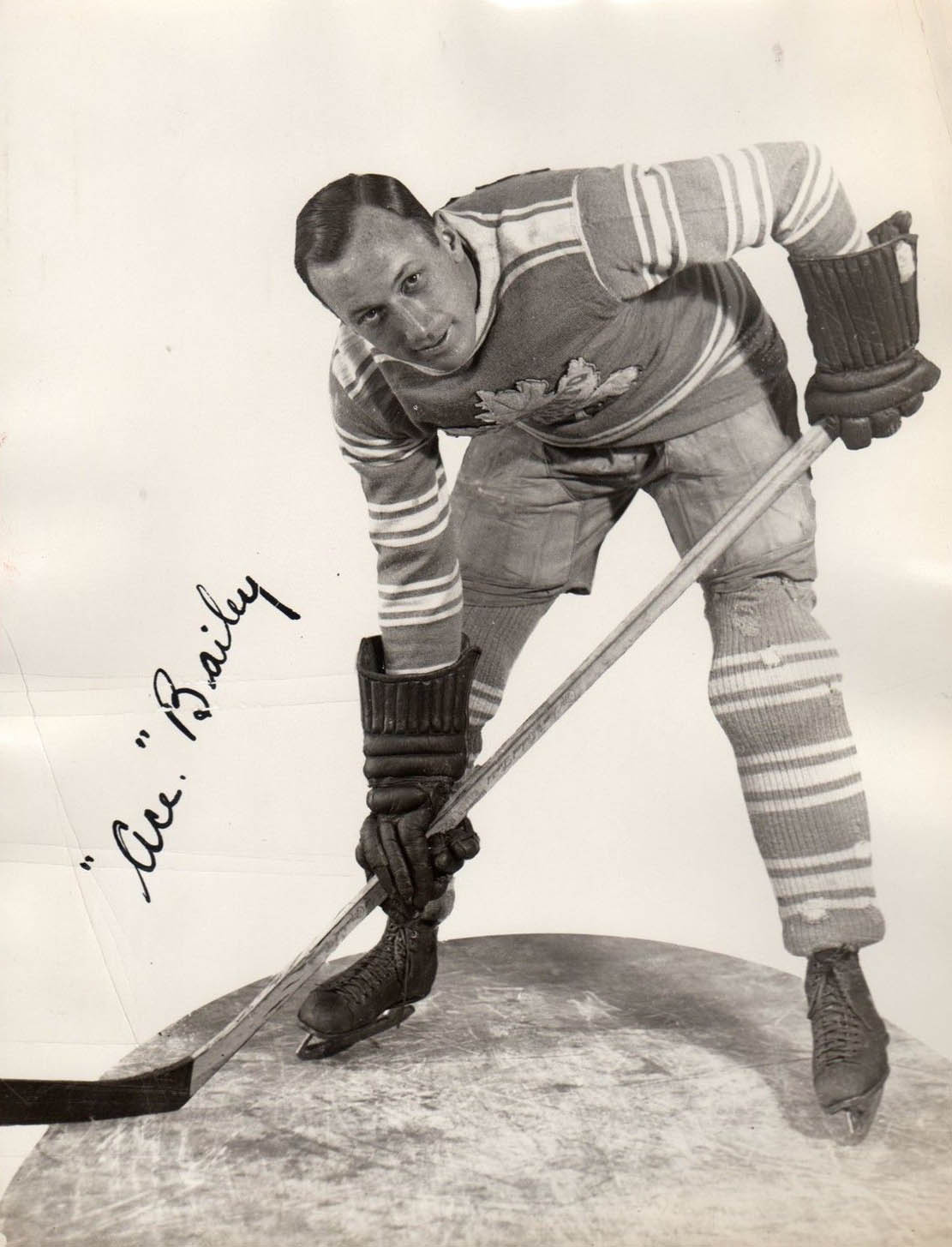
Irvine Wallace 'Ace' Bailey (July 3, 1903 – April 7, 1992) was a Canadian professional ice hockey player who played for the Toronto Maple Leafs for eight seasons, from 1926 to 1933. He is notable as the first professional sports player to have a jersey number retired in his honour, and for leading the NHL in scoring in 1929. His playing career ended abruptly after a severe injury from a hit by Eddie Shore, which fractured his skull.
Quick Facts
- Position
- Winger
- Shoots
- Right
- Height Ft
- 5
- Height In
- 10
- Weight Lb
- 160
- Played For
- Toronto Maple Leafs
- League
- NHL
- Birth Date
- 1903-07-03
- Birth Place
- Bracebridge, Ontario, Canada
- Death Date
- 1992-04-07
- Death Place
- Toronto, Ontario, Canada
- Career Start
- 1926
Facts from the source article.
Lore & Background
Ace Bailey grew up in Toronto and attended the University of Toronto before joining junior hockey with Toronto St. Mary's. He played senior hockey in Peterborough for two seasons (1924–1926) and was signed by the Toronto St. Patricks in November 1926, which was renamed the Toronto Maple Leafs in his first season. He led the NHL in scoring in the 1928–29 season with 22 goals and 32 points in 44 games, and helped the Maple Leafs win the Stanley Cup in 1932, scoring the Cup-winning goal in game 3 of the finals. Bailey's career ended on December 12, 1933, when he was hit from behind by Eddie Shore of the Boston Bruins after a check by teammate King Clancy. Bailey fell, fracturing his skull upon hitting the ice, and convulsed. He was in a coma and came out of it for the second time 10 days later, making a full recovery but never playing professionally again. An all-star benefit game was held at Maple Leaf Gardens on February 14, 1934, raising $20,909 for Bailey and his family; before the game, Bailey and Shore shook hands and embraced at centre ice.
Reader's Guide
Ace Bailey's legacy is defined by his being the first professional sports player to have a jersey number retired in his honour. The Toronto Maple Leafs retired his #6 sweater at the benefit game organized for him on February 14, 1934, by then-owner Conn Smythe. Bailey's number was one of 13 numbers (19 players) permanently retired by the Maple Leafs; in 1968, Bailey asked it be unretired so Ron Ellis could wear it, and it was again retired on April 1, 1992. He was inducted into the Hockey Hall of Fame in 1975. After his playing career, Bailey coached the University of Toronto Varsity Blues men's ice hockey team from 1935 to 1940 and again from 1945 to 1949, winning three Canadian Interuniversity Athletics Union championships. He also worked as a timekeeper at Maple Leaf Gardens from 1938 until his retirement in 1984. The Ace Bailey Memorial ice hockey tournament for youth players is held annually in Stoney Creek, Ontario.
Did You Know?
- He scored the Stanley Cup-winning goal in game 3 of the 1932 finals.
- His #6 jersey was the first ever retired in professional sports.
- Bailey and Eddie Shore shook hands and embraced at centre ice before the 1934 benefit game.
The Scoring Machine of Maple Leaf Gardens
Born in Bracebridge, Ontario, in 1903, Irvine Wallace "Ace" Bailey grew up in Toronto and attended the University of Toronto before turning to competitive hockey. After stints with the junior Toronto St. Mary's and two seasons of senior play in Peterborough, he was signed as a free agent by the Toronto St. Patricks in November 1926, a franchise that would be renamed the Maple Leafs during his first season. Bailey quickly established himself as the league's premier offensive talent. In the 1928–29 campaign he led the entire NHL in scoring with 22 goals and 32 points across 44 games, and he remained Toronto's top scorer the following year before finishing just a single point short of repeating his league-leading total in 1930–31. Three consecutive 20-goal seasons underscored his consistency. Though his production dipped in 1931–32, he still delivered the Cup-winning goal in Game 3 of the 1932 Stanley Cup Finals. Over his eight-season career he tallied 111 goals and 82 assists in 313 games.
The Boston Garden Tragedy
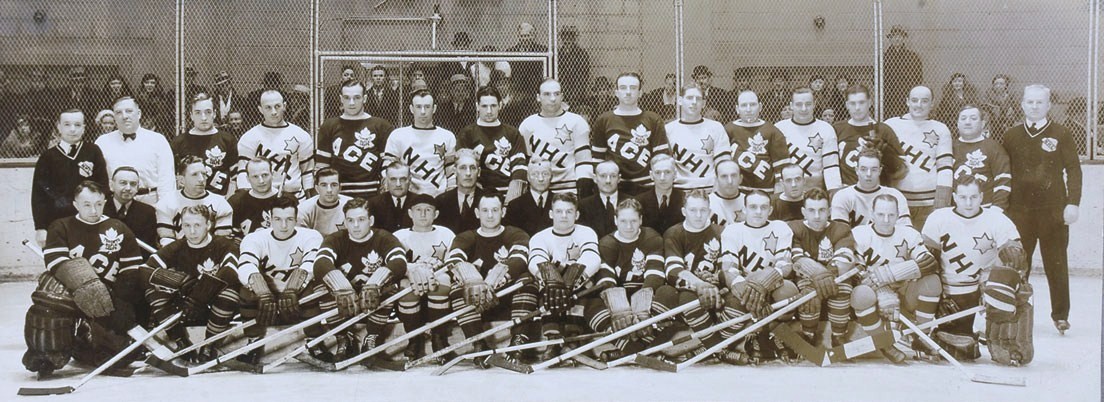
On December 12, 1933, at Boston Garden, a single retaliatory hit ended Bailey's playing career forever. Maple Leafs teammate King Clancy had delivered a hard check on Boston's Eddie Shore as the latter raced up the ice. Dazed and furious, Shore mistook Bailey for Clancy and struck him from behind. Bailey's head struck the ice, fracturing his skull, and he convulsed on the ice while losing consciousness. Fellow Leaf Red Horner immediately punched Shore unconscious in the chaos that followed. Fears mounted that Bailey would not survive; he lapsed into a coma and only emerged for the second time ten days later. He made a full physical recovery but never suited up professionally again. League president Frank Calder suspended Shore for sixteen games once Bailey's survival was confirmed. On February 14, 1934, an all-star benefit game at Maple Leaf Gardens raised $20,909 for Bailey and his family. Before the game began, Bailey and Shore met at centre ice, shook hands, and embraced. Thirteen years later, the NHL would formalize its own annual all-star game.
A First in Professional Sports
When the Toronto Maple Leafs retired Ace Bailey's number six sweater, they created a precedent that had never before existed in professional athletics. No team in any major sport had ever permanently retired a player's jersey number. The honour was arranged by then-owner Conn Smythe at the February 1934 benefit game held in Bailey's name. Over the decades, number six became one of thirteen jerseys, representing nineteen players, permanently retired by the franchise. In a remarkable gesture of generosity, Bailey himself requested in 1968 that the number be unretired so that Ron Ellis could wear it. His legacy extended well beyond the ice: the NHL enshrined him in the Hockey Hall of Fame in 1975, and an annual youth tournament in Stoney Creek, Ontario, bears his name. On April 1, 1992, the Maple Leafs retired his number a second time, a fitting capstone to a career that reshaped how professional sports honour their greatest players.
Life After the Final Whistle
After his career ended, Bailey sought a role on the ice as a linesman, but the NHL declined his request. He turned instead to coaching, leading the University of Toronto Varsity Blues men's hockey program from 1935 to 1940 and again from 1945 to 1949, during which he captured three Canadian Interuniversity Athletics Union championships. From 1938 until his retirement in 1984, he served as a timekeeper at Maple Leaf Gardens, a position he held for nearly half a century. His final days carried a bitter irony: on April 1, 1992, the Maple Leafs once again retired his number six, and that very same day Bailey suffered a stroke. He passed away on April 7, 1992, from lung failure, at the age of eighty-eight. His life's arc, from a Bracebridge boy to a league scoring champion, from a near-fatal injury to decades of quiet service at the very arena that defined his career, remains one of the most complete and touching narratives in Canadian sports history.
Gallery
More in Hockey Hall of Fame Players 1-24
Spotted an error? Know more?
Reader corrections go straight into our review queue. Suggest an edit · How this site is sourced