
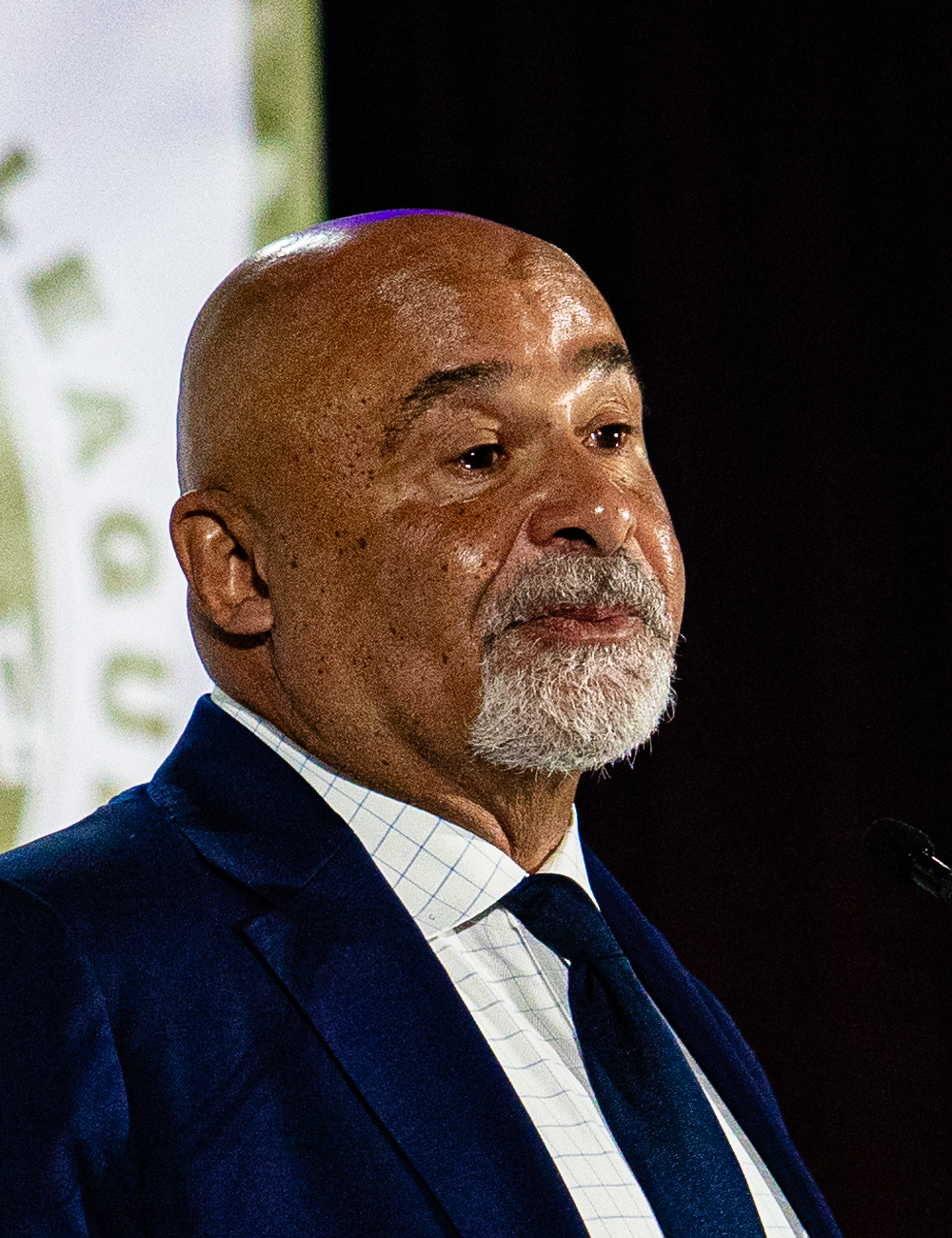
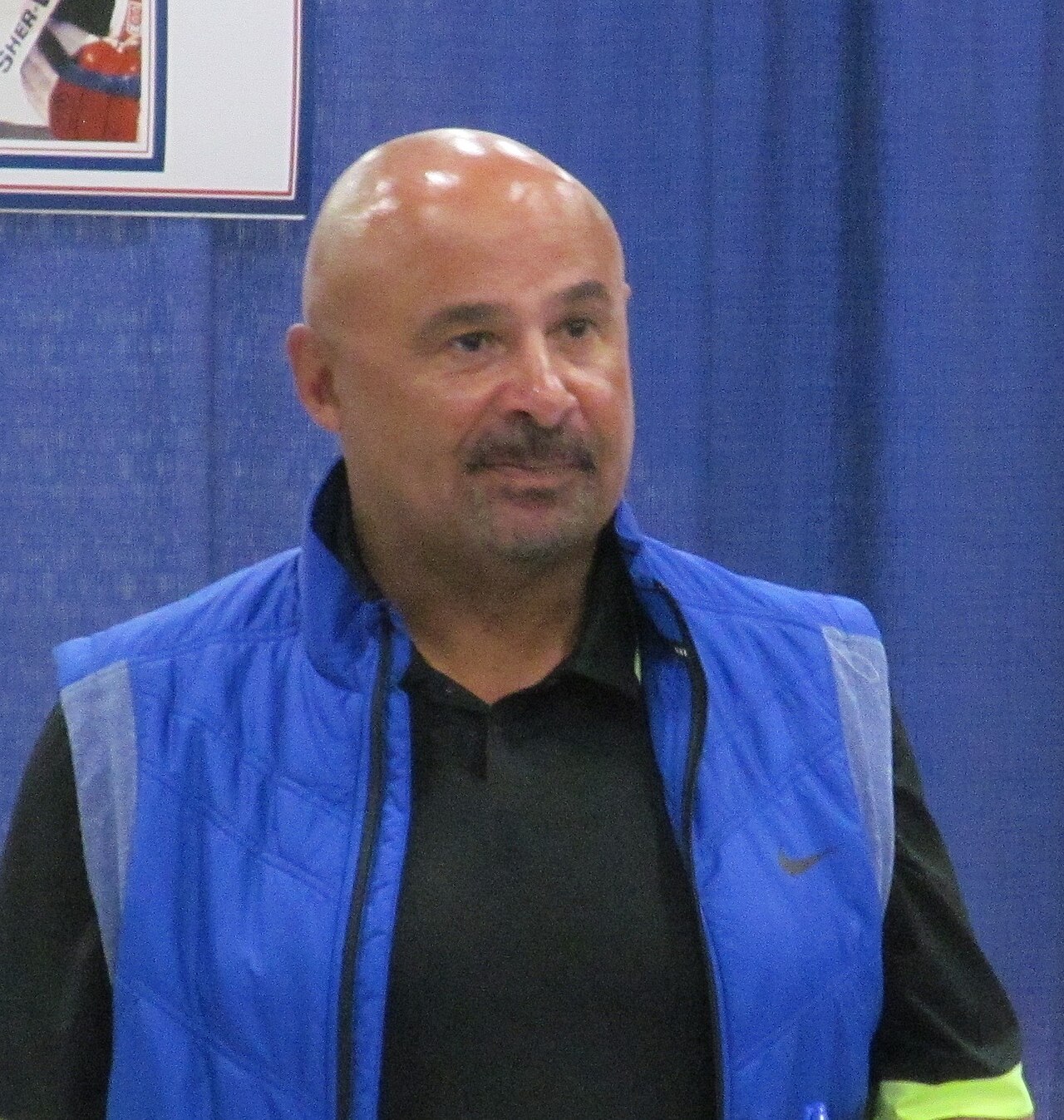
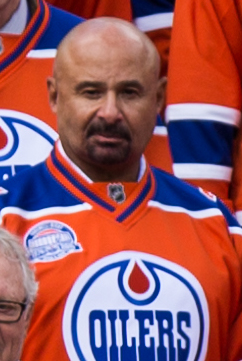
Grant Fuhr
First Black player inducted into the Hockey Hall of Fame.

Dealphungo · CC BY-SA 4.0
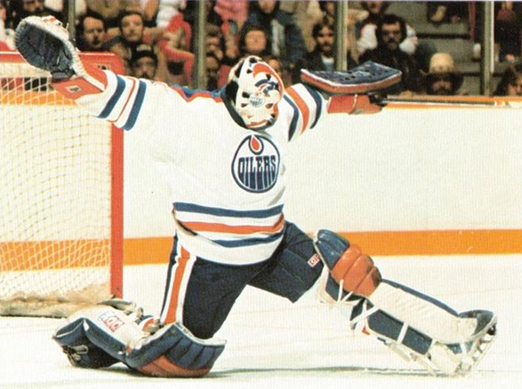
Grant Scott Fuhr (born September 28, 1962) is a Canadian former professional ice hockey goaltender who played 19 seasons in the National Hockey League (NHL), primarily for the Edmonton Oilers. He is widely regarded as one of the best goaltenders of his era, won five Stanley Cup championships with the Oilers, and was elected to the Hockey Hall of Fame in 2003.
Quick Facts
- Halloffame
- 2003
- Birth Date
- 1962-09-28
- Birth Place
- Spruce Grove, Alberta, Canada
- Height Ft
- 5
- Height In
- 10
- Weight Lb
- 201
- Position
- Goaltender
- Catches
- Right
- Ntl Team
- CAN
- Played For
- Edmonton Oilers / Toronto Maple Leafs / Buffalo Sabres / Los Angeles Kings / St. Louis Blues / Calgary Flames
- Draft
- 8th overall
- Draft Year
- 1981
Facts from the source article.
Lore & Background
Fuhr was born in Spruce Grove, Alberta, to a Black Canadian and a First Nation-Canadian from the Enoch Cree Nation; he never knew his birth parents and was adopted by Betty Wheeler and Robert Fuhr less than three weeks after birth. He played for the Enoch Tomahawks in the mid-1970s and joined the Victoria Cougars of the Western Hockey League (WHL) at age 16 in 1979. After two seasons in Victoria, including a league championship and a Memorial Cup trip in 1981, he was drafted eighth overall by the Edmonton Oilers in the 1981 NHL entry draft.
Fuhr played ten seasons for the Oilers, teaming with Andy Moog (1981–1987) and Bill Ranford (1988–1991) to form a formidable goaltending tandem. He won the Stanley Cup four times in five seasons (1983–84 through 1987–88) and a fifth in 1989–90 despite missing the entire playoff run due to injury. He also won the Canada Cup twice with Canada (1984 as backup, 1987 as starter) and finished second at the World Championships in 1989. Fuhr was the first Black ice hockey player to win the Stanley Cup and the first inducted into the Hockey Hall of Fame.
Reader's Guide
Grant Fuhr's significance lies in his record-setting career as a goaltender and his role as a trailblazer. He holds NHL records for most games played by a goaltender in a single season (79) and most assists and points by a goaltender in regular season and playoffs combined (61). His rookie season featured an undefeated streak of 23 straight games without a loss. He won the Vezina Trophy in 1987–88 after playing a then-record 75 games, and he was selected to six NHL All-Star Games. Fuhr shared the William M. Jennings Trophy in 1993–94 for allowing the fewest goals. He became the sixth goaltender to win 400 career games. Fuhr was named by the league as one of the '100 Greatest NHL Players' in 2017. After retiring, he served as a goaltending coach for the Calgary Flames (2000–2002) and Arizona Coyotes (2004–2010).
Did You Know?
- He holds the NHL record for most games played by a goaltender in a single season (79), set in 1995–96 with the St. Louis Blues.
- In his rookie season, Fuhr went on an undefeated streak of 23 straight games without a loss.
- He won the Canada Cup twice: as backup in 1984 and as starting goaltender in 1987.
Career & Achievements
Grant Fuhr's nineteen-year NHL career spanned five franchises and produced a trophy case that few goaltenders can match. Over fourteen postseason campaigns, he captured five Stanley Cups, four of them with the Edmonton Oilers, and added two Canada Cup titles with Team Canada—once as a backup in 1984 and once as the undisputed starter in 1987. His 1989 World Championship run earned him a silver medal. In the regular season, he collected the Vezina Trophy in 1987–88, earned six All-Star selections, and shared the William M. Jennings Trophy in 1993–94 for allowing the fewest goals. His statistical footprint is remarkable: 211 wins in his first eight seasons, a career total of 400 victories that made him the sixth goaltender to reach that mark, and franchise-leading marks for assists and points by a netminder in combined regular-season and playoff play. Across his tenure with the Oilers, Maple Leafs, Sabres, Blues, and Flames, only three seasons saw him post more losses than wins—a testament to the consistency that defined his era.
Defining Moments
Few goaltenders have a career punctuated by such dramatic highs and lows as Fuhr. His rookie campaign in 1981–82 opened with a loss to Winnipeg, then erupted into a record-setting 23-game unbeaten streak that stunned the league. Yet the very first playoff run brought heartbreak: the "Miracle on Manchester" game saw six unanswered goals against him, and he surrendered 26 across five games as Los Angeles eliminated Edmonton. In 1984, a collision with Pat LaFontaine in Game 3 of the Cup Final cost him the rest of the series, though his name still went on the Cup. The 1986 second-round Game 7 against Calgary remains one of hockey's cruelest moments—a deflected own goal from a Steve Smith pass sealed the Oilers' elimination. The 1987–88 season, however, was his masterpiece: 75 games, a Vezina, a 16–2 playoff run, and a Cup. Injuries in 1989–90 sidelined him for the fifth Cup, and by 1991, personal struggles led to his trade to Toronto.
Legacy & Impact
Fuhr's place in hockey history extends far beyond statistics. He was the first Black ice hockey player to win the Stanley Cup and the first to be enshrined in the Hockey Hall of Fame, a milestone achieved in 2003. In 2017, the NHL itself recognized him among its 100 Greatest Players, cementing his status as one of the most accomplished netminders of his generation. His fearless, athletic style of play set him apart in an era when goaltenders were often more reactive than dynamic. On the ice, his partnerships with Andy Moog and then Bill Ranford created what is widely considered one of the most dominant goaltending tandems in league history, with Fuhr himself crediting those rivalries for sharpening his game. He also holds the NHL record for most games played by a goaltender in a single season (79, set with the Blues in 1995–96) and leads all goaltenders in combined regular-season and playoff assists and points (61). These records, paired with his trailblazing identity, ensure his legacy transcends a single franchise or decade.
Life Beyond the Spotlight
Long before the NHL, Grant Scott Fuhr's story was one of resilience and reinvention. Born on September 28, 1962, in Spruce Grove, Alberta, he was the child of a Black Canadian parent and a First Nation parent from the Enoch Cree Nation, though he never knew his birth parents. Adopted within three weeks of his birth by Betty Wheeler and Robert Fuhr, he grew up in that small Alberta town, playing for the Enoch Tomahawks in the mid-1970s. By 1979, at just sixteen, he had signed with the Victoria Cougars in the Western Hockey League, where two standout seasons—including a league title and a 1981 Memorial Cup appearance—caught the eye of the Edmonton Oilers, who selected him eighth overall in the 1981 entry draft. After hanging up his skates, Fuhr remained in the game as a goaltending coach, guiding the Calgary Flames from 2000 to 2002 and the Arizona Coyotes from 2004 to 2010, passing on the craft he had mastered over two decades in the crease.
Gallery


Frequently Asked Questions
Who is Grant Fuhr?
Grant Fuhr is a Canadian former NHL goaltender born on September 28, 1962, in Spruce Grove, Alberta. He is best known for anchoring the Edmonton Oilers' defense during their 1980s dynasty, playing 19 seasons in the league.
How many Stanley Cups did Grant Fuhr win?
Fuhr lifted the Stanley Cup five times, all with the Edmonton Oilers. His calm, frame-style goaltending and knack for shutouts in playoff series made him a defining piece of their championship era.
What major individual honors did Grant Fuhr earn?
He captured the Vezina Trophy as the NHL's top goaltender in the 1987–88 season. He was also a six-time NHL All-Star selection over the course of his career.
When was Grant Fuhr inducted into the Hockey Hall of Fame?
Fuhr was elected to the Hockey Hall of Fame in 2003, about a decade after his final NHL season. The induction cemented his reputation as one of the most dependable netminders of his generation.
Where did Grant Fuhr come from and how did he get to the NHL?
He grew up in the small Alberta town of Spruce Grove and developed through the local junior hockey system. His steady progression through the minors eventually led to a long, stable tenure as the Oilers' starting goaltender.
More in Hockey Hall of Fame Goaltenders 1-24
Spotted an error? Know more?
Reader corrections go straight into our review queue. Suggest an edit · How this site is sourced