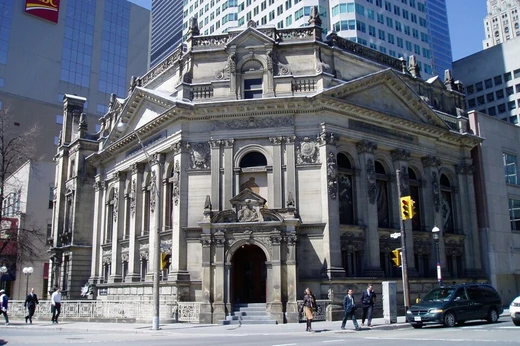
Keith Allen (ice hockey)
Builder inductee; first coach and GM of the Philadelphia Flyers.
Courtney Keith 'Bingo' Allen (August 21, 1923 – February 4, 2014) was a Canadian professional ice hockey defenceman who played 28 games in the National Hockey League (NHL) for the Detroit Red Wings during the 1953–54 and 1954–55 seasons. He is most notable for his later career as a coach and executive, serving as the first head coach and general manager of the Philadelphia Flyers and helping build the team that won consecutive Stanley Cups in 1974 and 1975.
Quick Facts
- Position
- Defence
- Played For
- Detroit Red Wings
- Shoots
- Left
- Height Ft
- 5
- Height In
- 11
- Weight Lb
- 190
- Birth Date
- 1923-08-21
- Birth Place
- Saskatoon, Saskatchewan, Canada
- Death Date
- 2014-02-04
- Death Place
- Newtown Square, Pennsylvania, U.S.
- Career Start
- 1941
- Career End
- 1957
Facts from the source article.
Lore & Background
Allen played junior hockey for the Saskatoon Quakers in 1940–41, then moved through several minor leagues, including the Eastern Amateur Hockey League, American Hockey League, and Western Canada Senior Hockey League. During the Second World War, he played on the Saskatoon Navy hockey team. In 1946, he joined the Springfield Indians of the American Hockey League, staying with the franchise when it moved to Syracuse in 1951. In February 1954, after a dispute with owner Eddie Shore over an assignment, Allen was sold to the Detroit Red Wings, playing 10 games in the 1953–54 season and appearing in the playoffs, earning his name on the Stanley Cup. He played 18 more games for Detroit in 1954–55, then spent most of that season with the Edmonton Flyers of the Western Hockey League, a farm team whose roster included future Hall of Famers Johnny Bucyk, Norm Ullman, Glenn Hall, Al Arbour, and player-coach Bud Poile. He retired as a player in 1957 to become a full-time coach.
Reader's Guide
After retiring as a player, Allen became a head coach in the Western Hockey League from 1956 to 1965 with the Seattle Americans/Seattle Totems, posting only one losing season in eight years. With the NHL's expansion in 1967, he was hired as the first head coach of the Philadelphia Flyers, with Bud Poile as general manager. In their inaugural season, the Flyers finished first in their division with the best record among the six new teams. After the 1968–69 season, Allen became the Flyers' general manager while also serving as general manager of the Quebec Aces. In that role, he helped construct the famed 'Broad Street Bullies' that led the Flyers to consecutive Stanley Cups in 1974 and 1975. He also helped start the AHL's Maine Mariners, one of the most successful franchises in that league's history. Allen was elected to the Hockey Hall of Fame as a Builder in 1992 and served as executive vice-president of the Flyers from 1980 for the rest of his life.
Did You Know?
- Allen played only 28 NHL games, all for the Detroit Red Wings, but his name is on the Stanley Cup from the 1953–54 playoffs.
- He was the first head coach and general manager of the Philadelphia Flyers, hired in 1967 during NHL expansion.
- Allen helped construct the 'Broad Street Bullies' that won consecutive Stanley Cups in 1974 and 1975.
A Long Road Through the Minors
Courtney Keith "Bingo" Allen's path to the NHL was anything but direct. Born in Saskatoon, Saskatchewan, in 1923, he began with the Saskatoon Quakers in the 1940–41 junior season before moving through the Washington Eagles and the Buffalo Bisons. World War II interrupted his progress, during which he suited up for the Saskatoon Navy team. After the war he played with the Saskatoon Elks before landing a spot on the Springfield Indians of the American Hockey League in 1946, where he remained for five seasons. When the franchise relocated to Syracuse and became the Warriors in 1951, Allen stayed as a reliable defensive presence. A February 1954 confrontation with owner Eddie Shore over a forced assignment to a lower-league club ended in suspension, but within two weeks he was sold to the Detroit Red Wings. He played 10 games for Detroit that year and appeared in the postseason, earning his name on the Stanley Cup. An additional 18 games in 1954–55 closed out his NHL chapter, while the bulk of that season was spent with the Edmonton Flyers, a Western Hockey League farm club whose roster included future Hall of Famers Johnny Bucyk, Norm Ullman, Glenn Hall, and Al Arbour.
Building a Dynasty in Philadelphia
After retiring as a player in 1957, Allen transitioned into coaching with the Seattle Americans and later the Seattle Totems in the Western Hockey League, where he guided the club from 1956 to 1965 and posted only one losing season in eight years. That track record caught the attention of the NHL as it expanded in 1967, and Allen was named the first head coach of the newly created Philadelphia Flyers, with his former coach and teammate Bud Poile serving as general manager. The Flyers' inaugural campaign was a triumph, finishing first in their division and posting the best record among all six expansion teams. Though the 1968–69 season saw them slip to third in the division, Allen's influence on the franchise endured. He transitioned to the general manager role and simultaneously served in that capacity with the Quebec Aces, where he helped assemble the legendary "Broad Street Bullies" that captured back-to-back Stanley Cups in 1974 and 1975. He also helped launch the AHL's Maine Mariners, which would become one of the most successful franchises in that league's history.
A Builder's Legacy
Allen's contributions to hockey extended far beyond any single season or title. As the founding coach and general manager of the Philadelphia Flyers, he helped lay the organizational groundwork that would produce one of the NHL's most storied dynasties. His tenure as general manager with the Flyers stretched until 1983, and from 1980 onward he held the title of executive vice-president, a position he maintained for the remainder of his life. His work with the Quebec Aces in the American Hockey League was instrumental in developing the talent pipeline that fed the Broad Street Bullies' championship runs, and his role in establishing the Maine Mariners added another layer of lasting impact to the minor-league landscape. In 1992, the Hockey Hall of Fame recognized his lifetime contributions by electing him as a Builder, a category reserved for individuals whose influence on the sport transcended on-ice performance. For Allen, that recognition validated a career that spanned from a small-town Saskatchewan junior rink to the executive offices of a major-league franchise, touching generations of players and fans along the way.
A Life Beyond the Rink
Off the ice, Allen's story was defined by family and quiet devotion. He married Joyce Webster, and together they shared 65 years of marriage, raising a daughter, Traci, and two sons, Brad and Blake. In the 1960s, the family relocated from Seattle to the Philadelphia area, settling in Bryn Mawr, Pennsylvania, where Allen could be close to the Flyers organization he had helped build. As the decades passed and Allen's health declined, the couple moved into an assisted living community in Newtown Square, Pennsylvania, where Joyce continued to care for her husband through the progression of his dementia. Allen passed away on February 4, 2014, at the age of 90. His life had been a long arc from the junior rinks of Saskatoon to the executive suites of professional hockey, but in its final chapters it returned to something simpler: a husband, a wife, and the small comforts of a shared home in suburban Pennsylvania.
Gallery


More in Hockey Hall of Fame Defencemen 1-24
Spotted an error? Know more?
Reader corrections go straight into our review queue. Suggest an edit · How this site is sourced