Doug Harvey (ice hockey)
Seven-time Norris Trophy winner and six-time Stanley Cup champion.
Doug Harvey was a Canadian professional hockey defenceman whose NHL career spanned 1947 to 1964, with a brief return from 1966 to 1969. Considered one of the best defenders the league has ever seen, he entered the Hockey Hall of Fame in 1973 and was listed among the NHL’s 100 Greatest Players in 2017. Over his career, he won the James Norris Memorial Trophy seven times as the league’s top defenceman and was named a First-Team All-Star ten times. He is most closely associated with the Montreal Canadiens, but also played for the New York Rangers, Detroit Red Wings, and St. Louis Blues, along with several minor-league clubs. Harvey served as a player-coach for the Rangers for one season and held a similar role with the minor-league Kansas City Blues, and later worked as a coach.
Harvey was born and raised in Montreal. He played junior hockey for local teams before joining the Royal Canadian Navy during the Second World War. Most of his naval time was spent on the hockey team, but he also saw active duty protecting merchant shipping. A strong all-around athlete, he played Canadian football and baseball during this period but eventually gave up both to focus on hockey. Signed by the Canadiens, he made the team in 1947, though his playing style was initially criticized. Within a few years, however, he emerged as one of the NHL’s top defenders. Regarded as a team leader, he was named captain in 1960, but personal clashes with Canadiens management—combined with his age—led to a trade to New York in 1961.
Harvey spent two seasons with the Rangers before the team judged him ineffective, assigning him to their minor-league affiliate and releasing him in 1963. He then spent five years in the minors, with a brief stint in Detroit, before joining the Blues during the 1968 playoffs. He played one final NHL season with St. Louis before retiring in 1969. After his playing days, Harvey worked in coaching and scouting, but a serious alcohol problem that had developed late in his career prevented him from holding any position for long. He reconciled with the Canadiens a few years before his death, and the team retired his number 2 sweater. He also served as a part-time scout for Montreal. With the Canadiens, Harvey won the Stanley Cup six times and appeared in the Final five additional times.
Quick Facts
- Position
- Defence
- Shoots
- Left
- Height Ft
- 5
- Height In
- 11
- Weight Lb
- 190
- Played For
- Montreal Canadiens / New York Rangers / St. Louis Blues / Detroit Red Wings
- Birth Date
- 1924-12-19
- Birth Place
- Montreal, Quebec, Canada
- Death Date
- 1989-12-26
- Career Start
- 1945
- Career End
- 1969
- Halloffame
- 1973
Facts from the source article.
Lore & Background
Harvey was born and raised in Montreal, the second child of Alfred and Martha Harvey. He played junior hockey for local teams and enlisted in the Royal Canadian Navy during the Second World War, where he spent most of his time with the naval hockey team but also saw active service defending merchant shipping. A standout athlete, he also played Canadian football and baseball at a competitive level before giving up both to concentrate on hockey. Signed by the Montreal Canadiens, he made the team in 1947, though initially criticized for his style of play. He later became regarded as one of the top defenders in the NHL and was voted captain of the Canadiens in 1960, but clashed with management due to personal differences, leading to his trade to the New York Rangers in 1961. Harvey spent two years with the Rangers before being assigned to their minor-league affiliate and released in 1963. He then spent five years in the minor leagues, briefly played for the Detroit Red Wings, and joined the St. Louis Blues during the 1968 playoffs, retiring after one final NHL season in 1969.
Reader's Guide
Harvey's significance lies in his revolutionary style of play as a defenceman. In an era when defencemen were not expected to score points, he used his skating speed and passing ability to become a factor in making the Canadiens a high-scoring team. He won the James Norris Memorial Trophy as the NHL's best defenceman seven times, including every year from 1955 to 1962 except 1959, when it went to teammate Tom Johnson. He was named to the NHL First All-Star Team 10 times. With the Canadiens, he won the Stanley Cup six times and played in the Stanley Cup Final five more times. After his playing career, he served in coaching and scouting roles, but a serious alcohol problem that developed during the latter stages of his career limited his tenure. He reconciled with the Canadiens a few years before his death, having his #2 sweater retired, and served as a part-time scout for the team.
Did You Know?
- Harvey scored a Cup-losing own-goal in the 1954 Finals when he tried to block a shot by Tony Leswick but tipped it past his own goalie.
- He was an outspoken critic of the reserve clause that restricted player rights.
- Harvey also played Canadian football and was named most valuable player of the Quebec Rugby Football Union in 1942.
- He turned down a contract offer from Major League Baseball's Boston Braves.
A Defenceman Among the Game's Elite
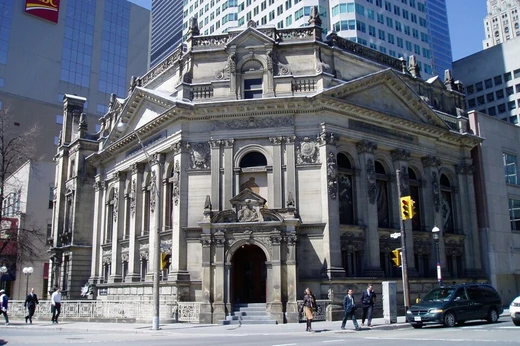
The Hockey Hall of Fame, established in 1943 and housed in Toronto, Ontario, has long served as the definitive repository of ice hockey's greatest achievements. For a defenceman like Doug Harvey, induction into the player category represents the pinnacle of recognition in a position that has produced the largest contingent of any current role in the Hall. As of the most recent tallies, seventy-seven defencemen have earned their place among the 319 total player inductees, surpassing every other position. The player category itself dates to the Hall's very first class in 1945, when nine pioneers were enshrined. Harvey's inclusion places him within a tradition of back-end players whose defensive mastery and playmaking from the blue line shaped the sport's evolution across decades. Unlike goaltenders, who number only 36 among the inductees, defencemen have consistently represented the backbone of the game's highest honors, and Harvey stands as a testament to that enduring legacy of blue-line excellence.
The Maple Leafs' Enduring Legacy in the Hall
No NHL franchise has contributed more inductees to the Hockey Hall of Fame than the Toronto Maple Leafs, whose lineage traces back through the Toronto St. Patricks and Toronto Arenas to a remarkable total of sixty player honourees. For a player associated with that storied franchise, the connection to the Hall carries an almost geographic intimacy. The institution itself is located in Toronto, Ontario, meaning that the city where the Maple Leafs have called home for over a century is also the permanent address of hockey's highest honor. The first induction class took place in 1945, and the ceremony has been held at the Hall's building ever since, with television coverage beginning in 1994 through The Sports Network. Harvey's name among those sixty Maple Leaf inductees reflects a franchise that has consistently produced talent worthy of the Hall's most exclusive recognition, reinforcing Toronto's identity as the spiritual capital of the sport in North America.
The Path to Induction
Earning a place in the Hockey Hall of Fame is a process governed by strict procedural safeguards. An elected eighteen-person selection committee, composed of existing Hall members and media personalities, must nominate each candidate, with every committee member permitted to put forward one name per category annually. A candidate then requires the support of at least seventy-five percent of the members present, or a minimum of ten affirmative votes, to secure induction. Players must have been retired for a minimum of three years before becoming eligible, a waiting period that has been waived only ten times in the Hall's history for individuals deemed exceptionally notable. Harvey navigated this rigorous pathway, his career judged against the standard set by the committee's collective memory and the broader narrative of the game. The maximum number of player inductees in a single year is four, a cap that underscores the selectivity of the honor and the weight each induction carries within the Hall's broader roster.
A Canadian Story in a Canadian Institution
The Hockey Hall of Fame's membership reflects the deep roots of the sport in Canadian soil. Of the 319 players inducted to date, two hundred and thirty-two were born in Canada, a majority that speaks to the nation's outsized role in shaping the game's history and culture. The institution itself was founded in 1943 in Toronto, Ontario, cementing the city's status as hockey's spiritual home. While sixteen European-born players have also earned induction, the overwhelming Canadian presence in the Hall tells a story of a sport that grew from Canadian rinks and Canadian communities before spreading across the globe. For a player like Harvey, whose career unfolded within this distinctly Canadian framework, the Hall represents not merely a personal achievement but a continuation of a national tradition. The broader membership also includes 120 builders and 16 on-ice officials, reminding visitors that the game's story extends far beyond those who laced up skates, encompassing the administrators, referees, and visionaries who built the sport into what it is today.
Gallery


More in Hockey Hall of Fame Defencemen 1-24
Spotted an error? Know more?
Reader corrections go straight into our review queue. Suggest an edit · How this site is sourced