
Absolute monarchy
Sovereign power unchecked by constitution or legislature.
Last updated

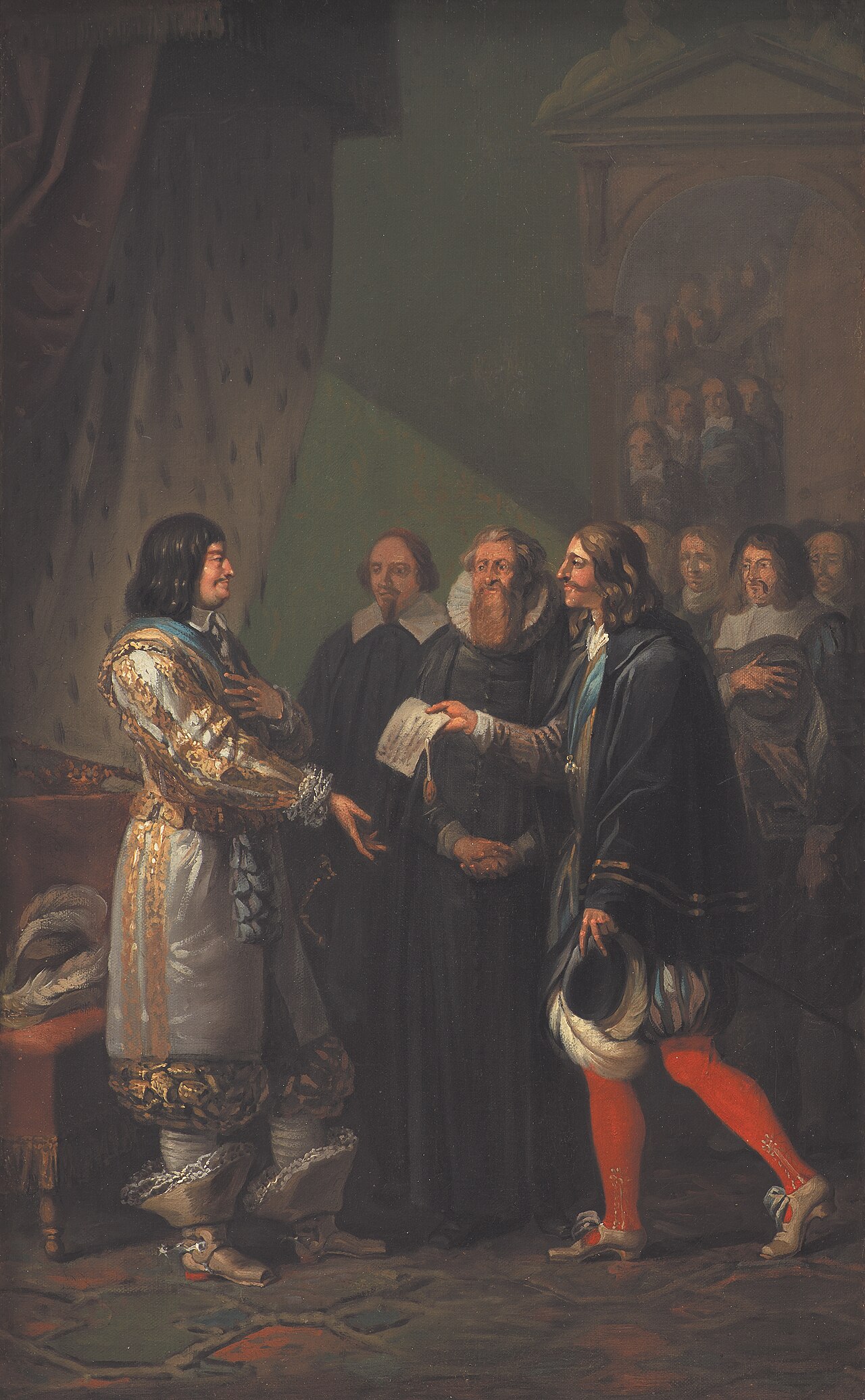
Nicolai Abildgaard · Public domain
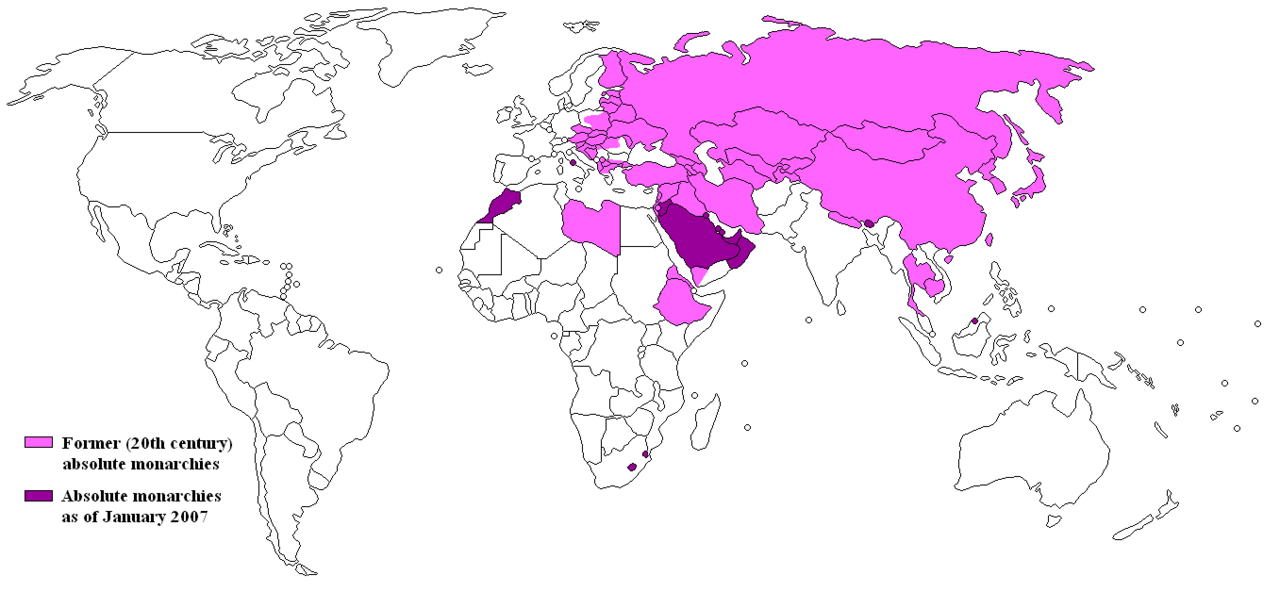
Absolute monarchy is a system of government where the monarch holds all political power, with no limits imposed by a constitution, a legislature, or any other authority. Throughout history, many rulers have governed this way, including famous figures like Louis XIV of France and Frederick the Great of Prussia. Today, most sources agree that Brunei, Eswatini, Oman, Qatar, and Saudi Arabia are absolute monarchies. Some also classify Bahrain, Bhutan, Jordan, Kuwait, Liechtenstein, Monaco, Morocco, Tonga, Vatican City, and the United Arab Emirates as such.
Outside Europe
While some absolute monarchies have been backed by written legal documents—such as the King's Law of Denmark–Norway—they differ from constitutional monarchies, where a monarch's power is limited by a legislature, unwritten customs, or other officials like a prime minister, as seen in the United Kingdom or the Nordic countries. Absolute monarchies are also distinct from hereditary dictatorships, such as those in North Korea, Duvalier's Haiti, or Ba'athist Syria. In the Ottoman Empire, the Sultan held absolute power and was called Padishah, or "Great King." Many sultans claimed authority through heavenly mandates, using titles like "Shadow of God on Earth." In ancient Mesopotamia, rulers of Assyria, Babylonia, and Sumer were also absolute monarchs. In Imperial China, emperors—and one empress, Wu Zetian—ruled absolutely under the Mandate of Heaven.
In the Americas before Columbus, the Inca Empire was governed by a Sapa Inca, considered the son of the sun god Inti and an absolute ruler. Korea under the Joseon dynasty and its short-lived empire was also an absolute monarchy. In Europe, the divine right of kings often justified absolute monarchy. Many monarchs claimed supreme power came directly from God, and that subjects had no right to limit it.
Europe
In England and Scotland, James VI and I and his son Charles I tried to introduce divine right. Charles I's attempt to impose episcopal governance on the Church of Scotland sparked the Bishops' Wars and rebellion by the Covenanters. Fears that he aimed to establish absolutist rule like other European monarchs were a major cause of the English Civil War, though he ruled without Parliament for 11 years starting in 1629. Denmark–Norway saw the first written constitution underpinning absolutism in Europe in 1665.
This law authorized the king to eliminate all other centers of power, most notably the Council of the Realm in Denmark. Absolute monarchy there lasted until 1814 in Norway and 1848 in Denmark. The House of Habsburg is extinct in its male line after the death of childless Charles II of Spain in 1700, but the House of Habsburg-Lorraine continues through the female line. Joseph II, raised during the Enlightenment, was the first Habsburg-Lorraine ruler of the Holy Roman Empire.
He granted full legal freedom to serfs in 1781. Franz Joseph I of Austria reigned from 1848 until 1916, followed by Charles I, who abdicated on 12 November 1918 after Austria-Hungary lost World War I. In France, Louis XIV (1638–1715) concentrated legislative, executive, and judicial powers in himself. He was the supreme judge, could condemn people to death without appeal, and had the duty to punish and prevent crimes. From this judicial authority came his power to make and annul laws.
In Brandenburg-Prussia, absolute monarchy took a different turn, emphasizing the monarch as the "first servant of the state." The House of Hohenzollern ruled as a feudal monarchy from 1525, then as an absolute monarchy from 1701 to 1848, after which it became a federal semi-constitutional monarchy until the monarchy was abolished in 1918. Frederick I became the first King in Prussia in 1701. Frederick the Great adopted the title King of Prussia in 1772, the same year he annexed most of Royal Prussia in the First Partition of Poland. He practiced enlightened absolutism until his death in 1786, introducing a general civil code, abolishing torture, and establishing that the Crown would not interfere in justice.
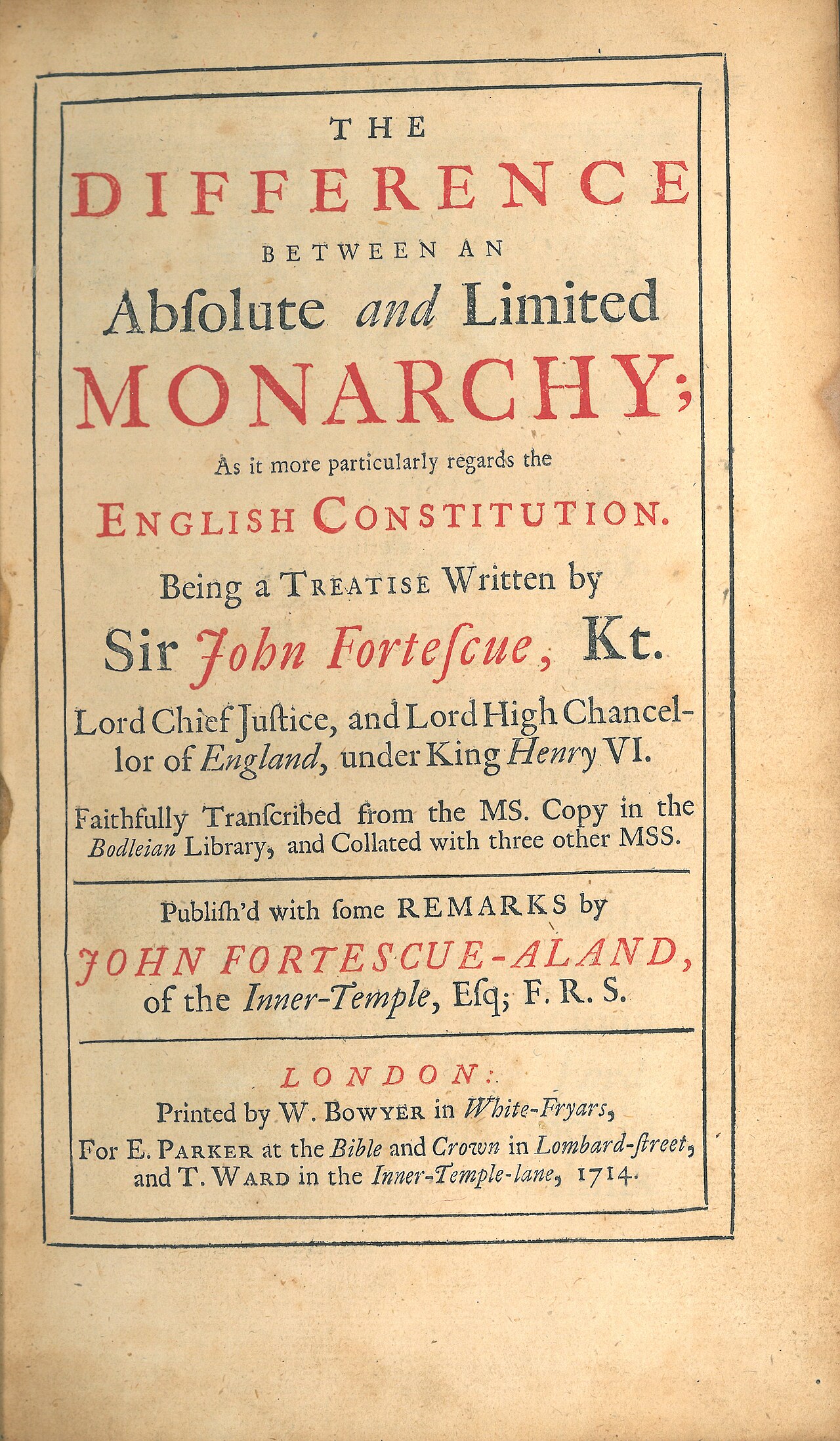
He also promoted advanced secondary education, the forerunner of the German gymnasium system, which was later emulated in countries including the United States. In Russia, the tsars and emperors governed as absolute monarchs until 1905. Ivan IV ("the Terrible") was known for his reign of terror through the oprichnina. After the Time of Troubles in the early 17th century, the traditional alliance of autocratic monarchy continued.
Lore & Background
Throughout history, there have been many examples of absolute monarchs, with some famous examples including Louis XIV and Frederick the Great. The number of absolute monarchies in the world varies but most datasets agree that Brunei, Eswatini, Oman, Qatar, and Saudi Arabia are absolute monarchies, while others include Bahrain, Bhutan, Jordan, Kuwait, Liechtenstein, Monaco, Morocco, Tonga, Vatican City and the United Arab Emirates. Though absolute monarchies are sometimes supported by legal documents (such as the King's Law of Denmark–Norway), they are distinct from constitutional monarchies.
Absolute monarchies are distinct from hereditary dictatorships such as North Korea, Duvalier Haiti or Ba'athist Syria. Historical examples include the Ottoman Empire, Imperial China, the Inca Empire, Joseon Korea, and many European states. In Europe, divine right of kings was the theological justification. Denmark–Norway's absolutism was underpinned by a written constitution in 1665.
Absolute monarchy lasted until 1814 in Norway, and 1848 in Denmark. In Russia, tsars governed as absolute monarchs until 1905. Vatican City continues to be an absolute monarchy, but is unique because it is also a microstate, ecclesiastical jurisdiction, and elective monarchy.
Reader's Guide
Absolute monarchies are distinct from constitutional monarchies, in which the authority of the monarch is restricted (e.g. by legislature or unwritten customs) or balanced by that of other officials, such as a prime minister, as is in the case of the United Kingdom, or the Nordic countries. Many nations formerly with absolute monarchies, such as Jordan, Kuwait, Morocco and Qatar, have de jure moved towards a constitutional monarchy, but the monarch still retains tremendous powers. In Liechtenstein, the prince was given vast expanded powers after a referendum in 2003, which led BBC News to describe the prince as an 'absolute monarch again'.
Did You Know?
- Louis XIV of France is said to have proclaimed 'L'État, c'est moi' (I am the state).
- Vatican City is the smallest state in the world both by area and by population, with 764 residents as of 2023.
- The Pope is the absolute monarch of Vatican City, elected by a papal conclave with a two-thirds supermajority.
Frequently Asked Questions
What is absolute monarchy?
It is a form of government in which a single sovereign wields complete political authority, unconstrained by a written constitution, elected legislature, or any other institutional check. The ruler's legitimacy is typically rooted in claims of divine right or hereditary supremacy.
What powers does an absolute monarch actually hold?
The sovereign controls legislation, the judiciary, taxation, and the military without needing approval from any other body. In practice this means no parliament, no independent courts, and no constitutional document can override the ruler's will.
Why does absolute monarchy matter in the study of political history?
It represents the pre-modern baseline of concentrated sovereign power, making the later rise of constitutionalism, republics, and parliamentary systems easier to understand by contrast. Its gradual erosion across Europe during the 17th and 18th centuries is a central thread in the story of modern governance.
More in Historical & Cultural Concepts
Sources
Compiled from Wikipedia and the sources listed below. Text from Wikipedia is available under CC BY-SA 4.0; this entry is adapted from it.
- Wikipedia: Absolute monarchy (CC BY-SA 4.0).
Spotted an error? Know more?
Reader corrections go straight into our review queue. Suggest an edit · How this site is sourced