Na Tcha Temple
Small Chinese temple built to end a plague in Macau.
Last updated

via Wikipedia: Na Tcha Temple · see source
Where it is
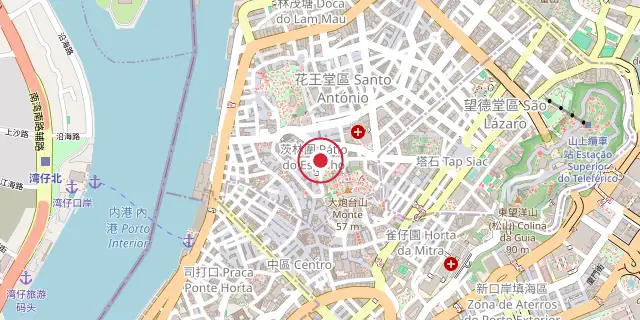
Coordinates: 22°11′53″N 113°32′28″E (22.1980, 113.5410) · Open in OpenStreetMap
Coordinates and connected clubs: the infobox of Wikipedia: Na Tcha Temple (CC BY-SA 4.0). Map: drawn by Codexery from OpenStreetMap tiles.
The Na Tcha Temple, a small Chinese folk religion site in Macau’s Santo António area, was constructed in 1888. It honors the deity Na Tcha, also called Sam Tai Tsz. Locals built it to stop a plague that was devastating the region. The temple became part of the UNESCO World Heritage-listed Historic Centre of Macau in 2004.
Background
The Na Tcha Temple was built in 1888 to honor the guardian deity Na Tcha, also called Sam Tai Tsz. Local belief holds that the temple was constructed specifically to stop a plague that was ravaging the region at the time. The small traditional Chinese temple is a simple single-chambered building measuring 8.4 m long and 4.51 m wide. The entrance porch opens to the temple building measuring 5 m in depth.
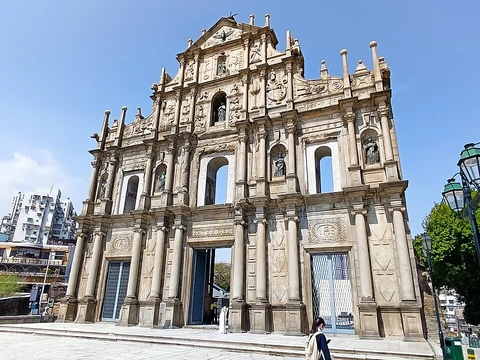
The building is painted gray, with few ornamentations, except for paintings on walls under the entrance porch. The temple's roof, rising five meters, is a traditional gable roof. True to traditional Chinese architecture, the Na Tcha has protective ceramic animal figurines on its ridge. The temple is behind the Ruins of St. Paul's, remains of a principal Jesuit cathedral in the region, serving as one of the best examples of Macau's multicultural identity.
It stands where the ends of two alleys meet: the Rua da Ressurreição (大三巴右街, by St. Paul's) and the (大三巴斜巷, 聖方濟各斜巷). The entry next to temple leads to the Pátio do Espinho, a tiny area within the old city wall.
More in Historic Centre of Macau
Sources
Compiled from Wikipedia and the sources listed below. Text from Wikipedia is available under CC BY-SA 4.0; this entry is adapted from it.
- Wikipedia: Na Tcha Temple (CC BY-SA 4.0).
Spotted an error? Know more?
Reader corrections go straight into our review queue. Suggest an edit · How this site is sourced