
Coca
The sacred leaf of the Andes, chewed for millennia as a mild stimulant and cultural cornerstone.
Last updated

Ralf Roletschek · Public domain
Coca refers to any of the four cultivated plants in the family Erythroxylaceae, native to western South America. It is known worldwide for its psychoactive alkaloid, cocaine. The leaves contain cocaine, which acts as a mild stimulant when chewed or consumed as tea; this traditional use involves slower absorption than purified cocaine, and there is no evidence of addiction or withdrawal symptoms from such natural consumption.
Lore & Background
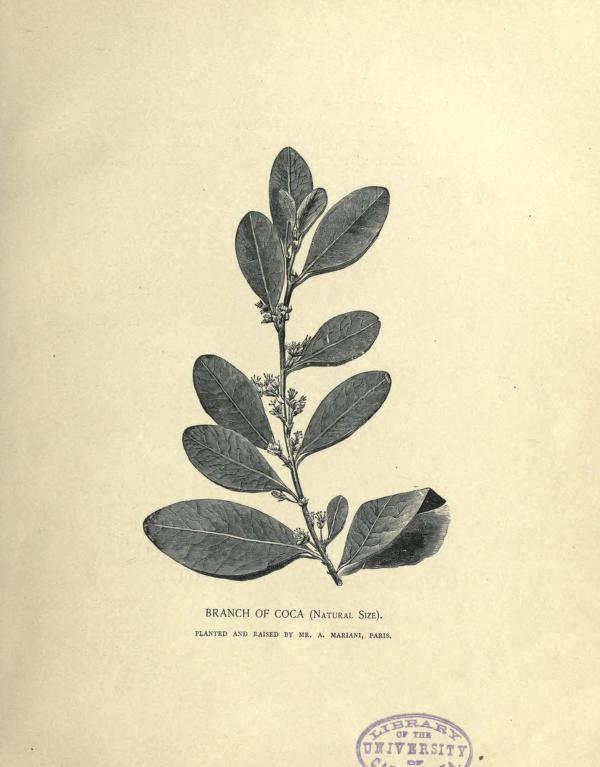
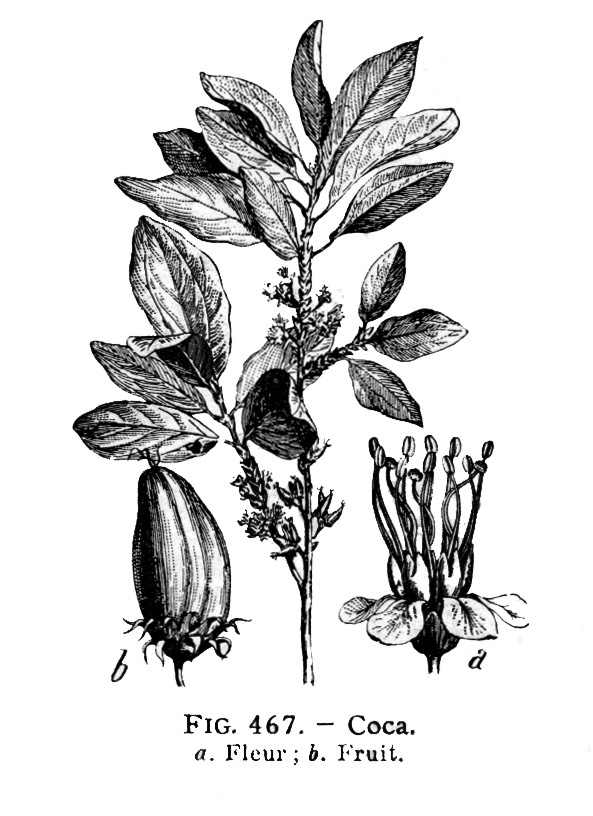
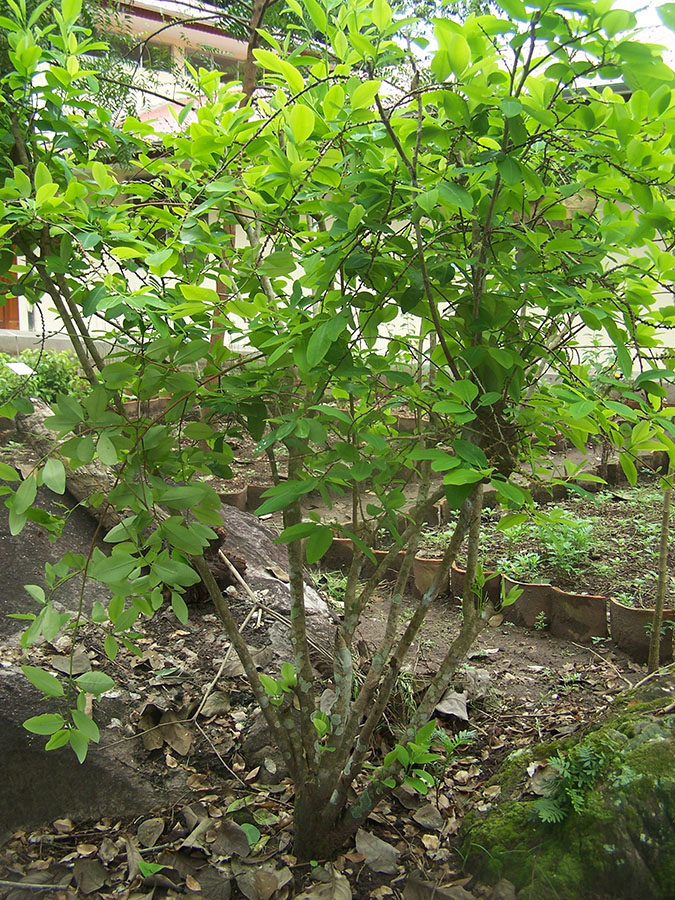
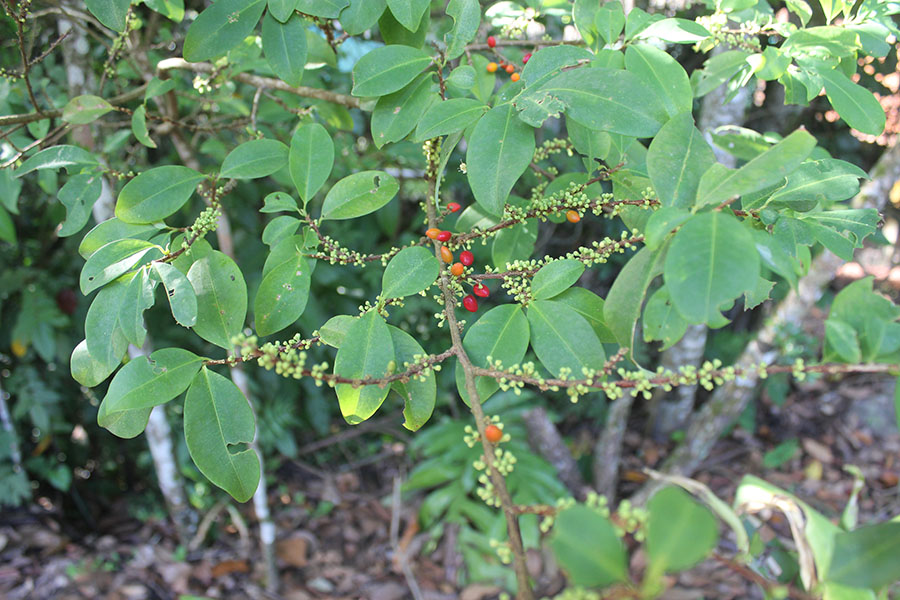
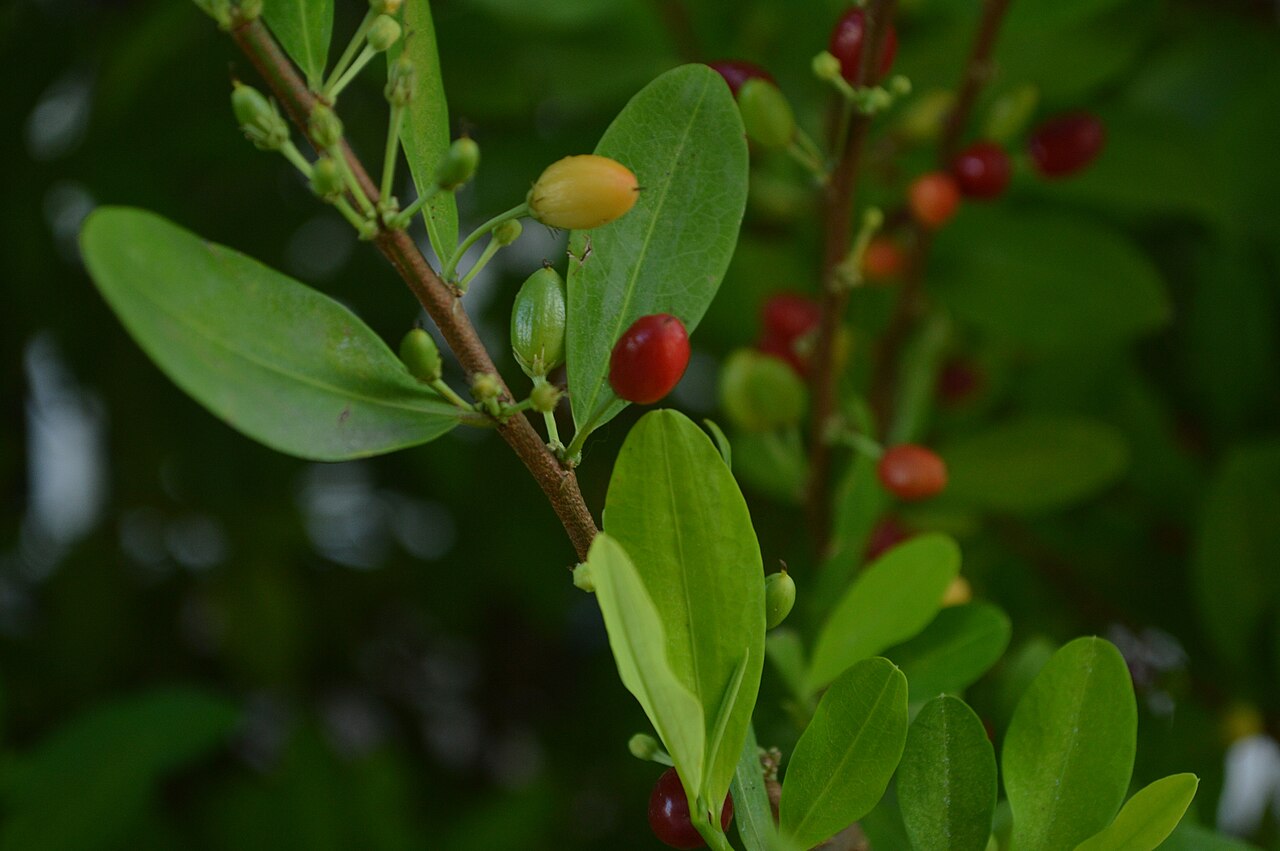
The coca plant is a shrub, growing two to three meters tall, with curved branches and oval leaves marked by distinctive curved lines. Its small, yellowish-white flowers develop into red berries.
Species
Four cultivated varieties exist, all domesticated from the wild species Erythroxylum gracilipes by different South American groups during the Holocene. Two main species are Erythroxylum coca and Erythroxylum novogranatense, each with two varieties adapted to different regions: the Bolivian or Huánuco coca of the eastern Andes, the Amazonian coca of the lowland basin, the Colombian coca suited to drier highlands, and the Trujillo coca grown in Peru, including for Coca-Cola's decocainized leaf extract. A glyphosate-resistant form, Boliviana negra, emerged after Colombia's aerial eradication campaign.
Pharmacological aspects
Coca leaves contain the psychoactive alkaloid cocaine, ranging from 0.23% to 0.96% in dry leaves. When chewed or consumed as tea, the natural leaf provides a mild stimulant effect through slower absorption than purified cocaine, with no evidence of addiction or withdrawal from traditional use. Extracting cocaine requires an acid–base chemical process using several solvents. The plant thrives in hot, humid environments and can be harvested multiple times a year from tended plots.
In South America
Chewing coca leaves dates back at least 8,000 years in South America, as shown by leaf fragments and calcite found in house floors in Peru's Nanchoc Valley, indicating early communal use alongside the rise of farming. Under Inca rule, coca was deeply integrated into society for labor, religion, and trade, and the Incas colonized new lands to cultivate it. Spanish colonizers initially tried to suppress its use but later relied on it to sustain enslaved laborers. Across Andean cultures, the leaves have traditionally served medicinal, nutritional, religious, and social purposes, primarily through chewing and tea.
Today, coca is grown as a cash crop in Argentina, Bolivia, Brazil, Colombia, Venezuela, Ecuador, and Peru, including in areas where cultivation is unlawful. There are reports of cultivation in southern Mexico using seeds from South America as an alternative to smuggling processed cocaine. The plant remains fundamental to many Amazonian and Andean cultures, as well as indigenous groups in Colombia's Sierra Nevada de Santa Marta.
Commercial and industrial uses
Commercially, coca leaves are used in teas, foods, cosmetics, and beverages, with growing political and market support in Bolivia and Peru despite restrictions elsewhere. The 1961 United Nations Single Convention prohibited the coca leaf without distinguishing it from cocaine, a stance widely contested by Bolivia and Peru, who have led efforts for reevaluation, including a scheduled 2025 WHO review based on cultural and scientific grounds. Outside South America, the leaf is generally illegal or heavily restricted, with limited exceptions for scientific or medical use and for authorized imports like the decocainized extract used in Coca-Cola flavoring in the United States.

Reader's Guide
Coca thrives in hot, humid environments and can be harvested multiple times a year from carefully tended plots. The seeds are sown from December to January in small plots sheltered from the sun.
The leaves are gathered from plants varying in age from one and a half to upwards of forty years, but only the new fresh growth is harvested. The first and most abundant harvest is in March after the rainy season, the second at the end of June, and the third in October or November. The green leaves are spread in thin layers on coarse woollen cloths and dried in the sun, then packed in sacks kept dry to preserve quality.
Did You Know?
- Coca-Cola used coca leaf extract in its products from 1885 until about 1903, when it switched to using a decocainized leaf extract.
- Boliviana negra, also known as supercoca or la millionaria, is a form of coca resistant to glyphosate, with no evidence of genetic modification.
Frequently Asked Questions
What is coca?
Coca is a domesticated shrub native to western South America, belonging to the Erythroxylaceae family. It reaches roughly 2 to 3 meters in height, sporting curved branches and thin, oval leaves that taper at the tips. Two species have been cultivated, each producing two varieties, for a total of four recognized forms.
What makes coca leaves so well-known?
The leaves contain the psychoactive alkaloid cocaine, which is the plant's global claim to fame. In Andean and Amazonian cultures, however, coca is valued chiefly as a mild stimulant and medicinal crop rather than as a source of the purified drug.
How is coca traditionally consumed?
People in the Andes and Amazonian regions typically chew the fresh leaves or steep them to brew a tea. In either form the cocaine is absorbed slowly, producing a gentle stimulant effect without the sharp intensity of the isolated alkaloid.
Is traditional coca use addictive?
Because the plant's cocaine is absorbed far more gradually when chewed or brewed than when taken in refined form, traditional use shows no evidence of addiction or withdrawal symptoms. This sets everyday Andean coca consumption apart from the pharmacological effects of purified cocaine.
How many types of coca exist?
There are two cultivated species—Erythroxylum coca and Erythroxylum novogranatense—each with two varieties, yielding four cultivated forms in total. E. coca was domesticated from E. gracilipes, while E. novogranatense was in turn domesticated from E. coca.
More in Herbs & Spices
Sources
Compiled from Wikipedia and the sources listed below. Text from Wikipedia is available under CC BY-SA 4.0; this entry is adapted from it.
- Wikipedia: Coca (CC BY-SA 4.0).
- Word definitions: the Codexery glossary, each quoted from its Wikipedia article.
Spotted an error? Know more?
Reader corrections go straight into our review queue. Suggest an edit · How this site is sourced