
Grains of paradise
A pungent West African spice once traded as 'grains of paradise.'
Last updated

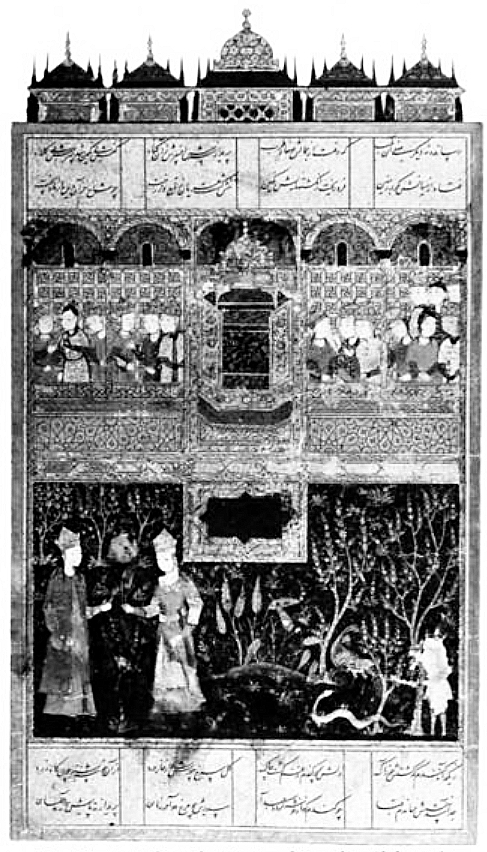
John Milton · Public domain
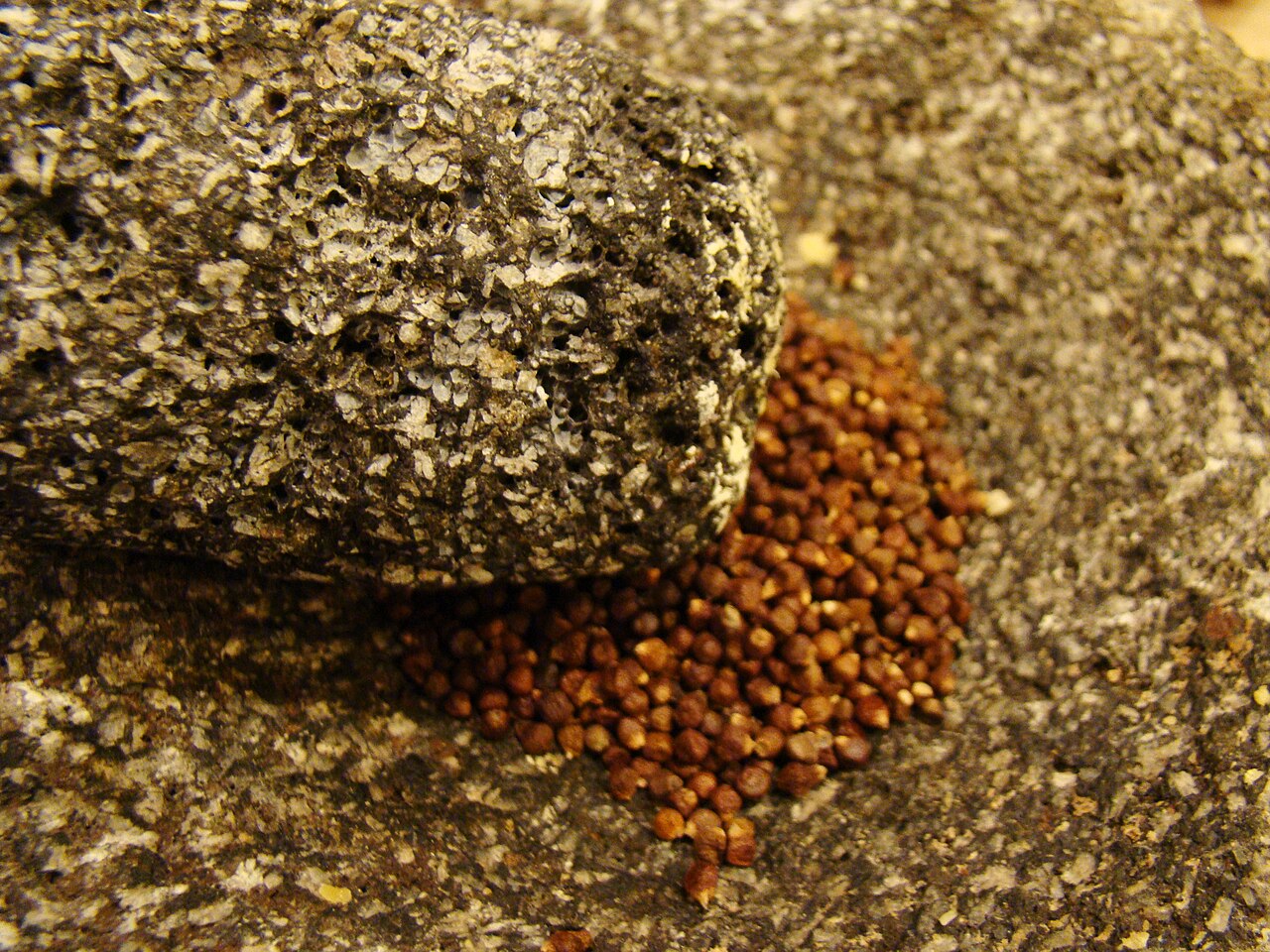
Grains of paradise, or Aframomum melegueta, is a plant from the ginger family, making it a close relative of cardamom. Its seeds, used whole or ground as a spice, deliver a sharp, peppery taste with a touch of citrus.
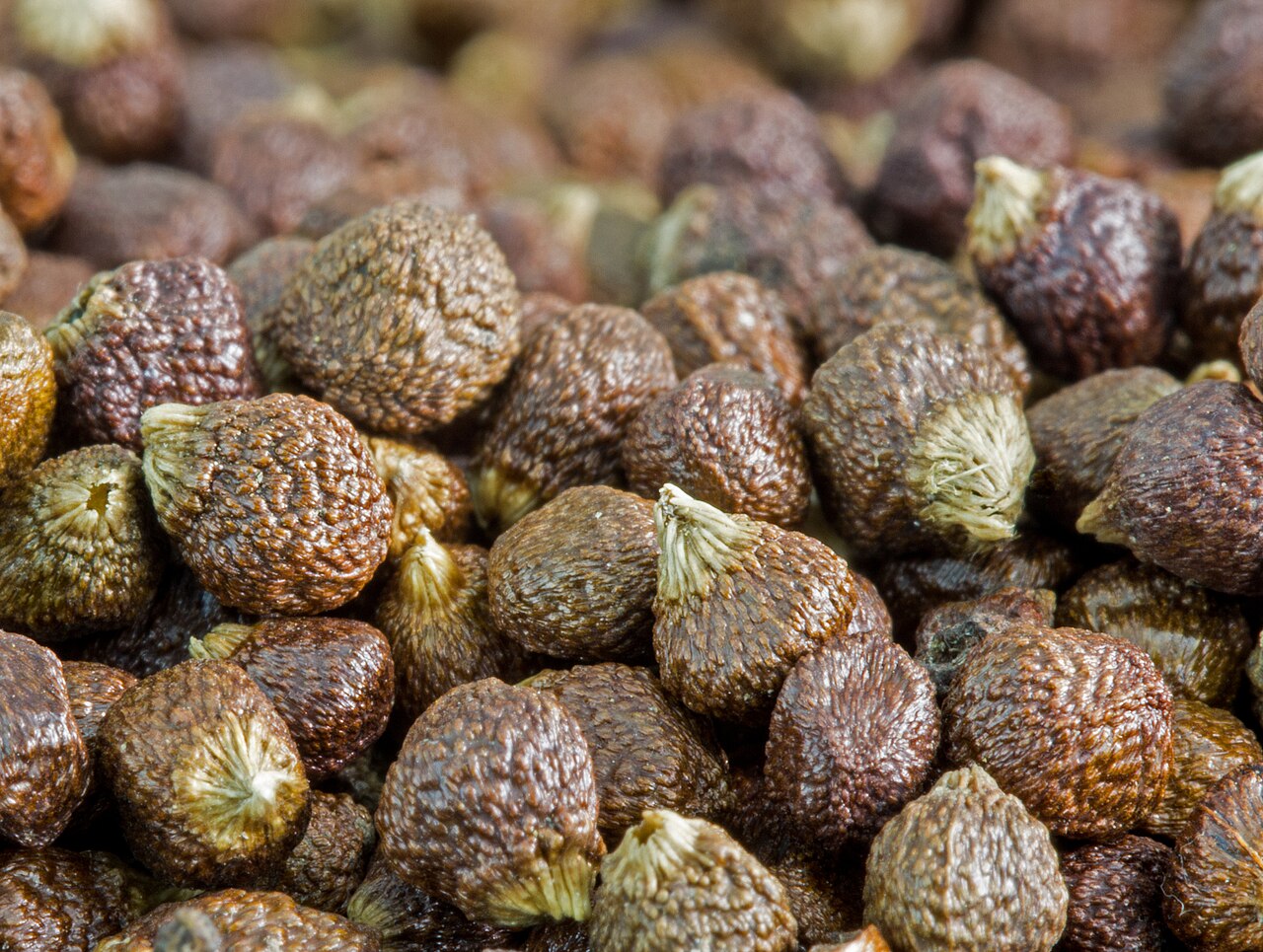
It goes by many names, including melegueta pepper, Guinea grains, ossame, and fom wisa, and is sometimes mistaken for alligator pepper. The terms "African pepper" and "Guinea pepper" can also refer to other spices, like grains of Selim. The plant is native to West Africa, a region once called the Pepper Coast or Grain Coast because of this spice.
Scientific classification
- CladeTracheophytes
- CladeAngiosperms
- CladeMonocots
- CladeCommelinids
- OrderZingiberales
- FamilyZingiberaceae
- GenusAframomum
- SpeciesAframomum melegueta
Named by K. Schum.
Sources: Wikipedia taxobox: Grains of paradise (CC BY-SA 4.0)
Conservation status
Data Deficient (DD)
Data Deficient: there is not enough information to place this species on the risk scale.
Source: IUCN Red List assessment · GBIF copy of the Red List category
Where the grains of paradise has been recorded
Each dot is a place where the species has been observed and reported (244 records, half-degree grid) — not a modelled range. 80 inland records left out (institution coordinates).
Map: drawn by Codexery. Data: GBIF occurrence search (records CC0 / CC BY) · Natural Earth basemap (public domain) · place coordinates: Wikipedia (CC BY-SA 4.0)
Quick Facts
- Genus
- Aframomum
- Species
- melegueta
Facts from the source article.
Lore & Background
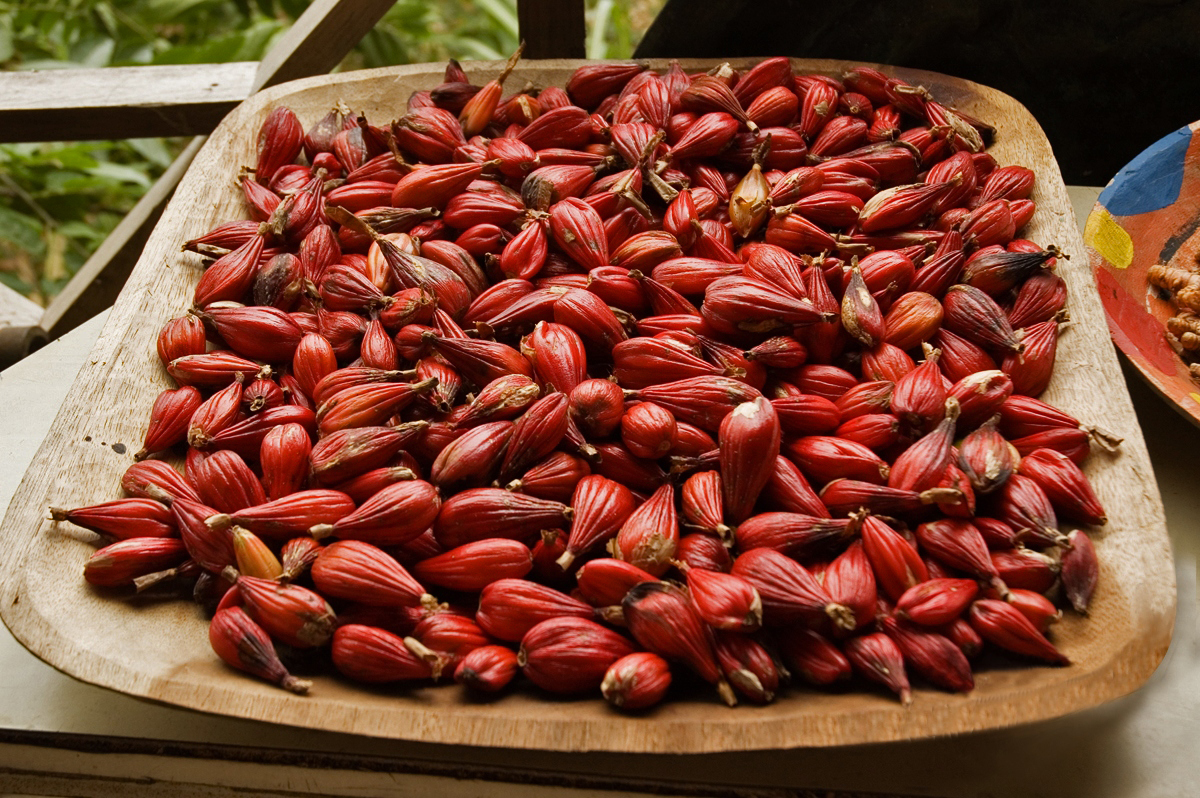
Grains of paradise is an herbaceous perennial plant native to swampy habitats along the West African coast. Its trumpet-shaped, purple flowers with a pinkish or white lip develop into pods 5–7 cm long containing numerous small, reddish-brown seeds. The pungent taste is caused by aromatic ketones like (6)-paradol, while essential oils occur only in traces. The plant's leaves are narrow and similar to bamboo.
Historically,
Botanical Profile and Flavor Chemistry
Aframomum melegueta is an herbaceous perennial that thrives in the swampy coastal habitats of West Africa, belonging to the ginger family and sharing close kinship with cardamom. The plant displays narrow, bamboo-like leaves supported by a well-structured vascular system, while its stem often bears visible scars from shed foliage. Its most striking feature is the trumpet-shaped flower, which shows an orange-colored lip beneath a rich pinkish-orange upper portion. These aromatic blossoms mature into pods measuring roughly five to seven centimeters in length, each packed with numerous small seeds ranging from golden to reddish-brown.
What distinguishes this spice chemically is that its signature pungency does not come from essential oils—the dominant flavor agents in its relative cardamom—but rather from aromatic ketones, most notably (6)-paradol, a compound with the systematic name 1-(4-hydroxy-3-methoxyphenyl)-decan-3-one. Essential oils are present only in trace amounts. The resulting flavor profile is a sharp, black-pepper-like heat underscored by subtle citrus notes, a combination that has made the seeds a versatile seasoning whether used whole or ground.
Trade History and European Legacy
Native to the West African coast, this spice was so economically vital that the area from the St. John River near Buchanan to Harper in Liberia earned the name Grain Coast or Pepper Coast. For centuries the seeds crossed the Sahara by camel caravan to reach Sicily and Italy. The spice faded from European memory after Pliny the Elder referenced it as African pepper, but in the fourteenth and fifteenth centuries it was rebranded grains of paradise and became a fashionable black-pepper substitute.
In 1469, King Afonso V of Portugal granted Lisbon merchant Fernão Gomes an exclusive trading monopoly over the Gulf of Guinea, including malagueta pepper, for 100,000 real annually plus a pledge to explore 160 kilometers of African coastline yearly for five years. After Columbus returned in 1492 with chili pepper samples, the malagueta name transferred to that new fruit, which stayed popular in Europe due to its low cost. By the eighteenth century, British imports had collapsed after a parliamentary act under George III banned the spice in alcoholic beverages, and by 1880 the Encyclopædia Britannica noted its use was mostly illegal, added to malt liquors, gin, and cordials to fake their strength.
Ecological Partnership with Western Lowland Gorillas
In the wild, Aframomum melegueta plays a remarkably central role in the lives of Western Lowland gorillas, making up an estimated 80 to 90 percent of their diet. The gorillas consume the entire fruit, and in doing so they serve as a crucial seed-dispersal agent, carrying the plant's progeny to new locations across the forest floor. Beyond nutrition, the plant is the most common material gorillas use to construct their nests and sleeping beds, and they also eat the leaves.

Research suggests that the presence of the seeds in wild gorilla diets has a measurable beneficial effect on their cardiovascular health. This observation takes on particular significance when considering captive populations: the absence of these seeds in the diets of lowland gorillas in zoos may contribute to the occasionally poor cardiovascular health observed in those animals. The relationship between this swampy coastal plant and one of Africa's great apes thus extends far beyond simple foraging, touching on seed dispersal, shelter construction, and long-term physiological well-being.
Cultural, Medicinal, and Modern Uses
Beyond its culinary role in West and North African kitchens, grains of paradise carry deep cultural and medicinal significance. In West African folk medicine, the seeds are prized for their warming and digestive properties. Among the Efik people of Nigeria, they have been employed in divination practices and in ordeals used to determine guilt. The spice was also introduced to the Caribbean and Latin America, where it features in Voodoo religious rites, and it is widely found among Protestant Christian practitioners of African-American hoodoo and rootwork, where the seeds serve as luck-bringing talismans and may be held in the mouth or chewed to demonstrate sincerity.
In the modern era, the condiment has found new life in gourmet cuisine as a pepper alternative, and it appears in craft beers, gins, and Norwegian akvavit. Television chef Alton Brown has championed the spice, using it in an okra stew and his apple-pie recipe on the cooking show Good Eats. In southern Ethiopia, particularly the Basketo district, the plant remains an important cash crop, while in Cameroon it goes by the local name jujube—a term that should not be confused with the unrelated fruit of Ziziphus jujuba.
Reader's Guide
Grains of paradise holds significance as a historically valuable spice that shaped trade routes and colonial exploration in West Africa. Its importance is reflected in the region's designation as the Grain Coast or Pepper Coast. The spice was a key commodity in European markets, especially after the Portuguese monopoly in the late 15th century, and its name was later transferred to the malagueta chili pepper in the New World. Its use declined after an 18th-century British act of Parliament forbade its use in alcoholic beverages, though it continued to be used illegally to fortify malt liquors, gin, and cordials.
Today, grains of paradise is used in gourmet cuisine as a pepper replacement and in craft beers, gins, and Norwegian akvavit. It also appears in West African folk medicine for warming and digestive properties, and in ritual contexts among the Efik people and in African-American hoodoo. The presence of the seeds in wild lowland gorilla diets appears beneficial to their cardiovascular health, contrasting with the poorer health of captive gorillas lacking the seeds.
More in Herbs & Spices
Sources
Compiled from Wikipedia and the sources listed below. Text from Wikipedia is available under CC BY-SA 4.0; this entry is adapted from it.
- Wikipedia: Grains of paradise (CC BY-SA 4.0).
- Conservation status: IUCN Red List assessment.
- Occurrence records: GBIF (CC0 / CC BY). Basemap: Natural Earth (public domain).
Spotted an error? Know more?
Reader corrections go straight into our review queue. Suggest an edit · How this site is sourced