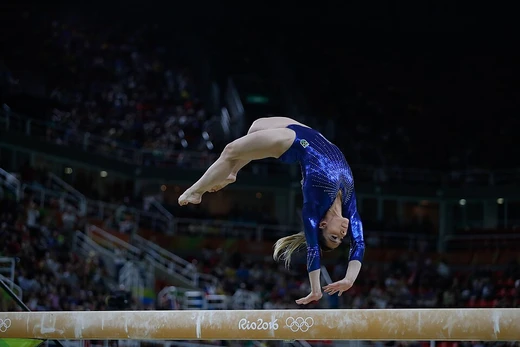
Alexei Nemov
Russian artistic gymnast with five world championships, three European championships, and twelve Olympic medals.

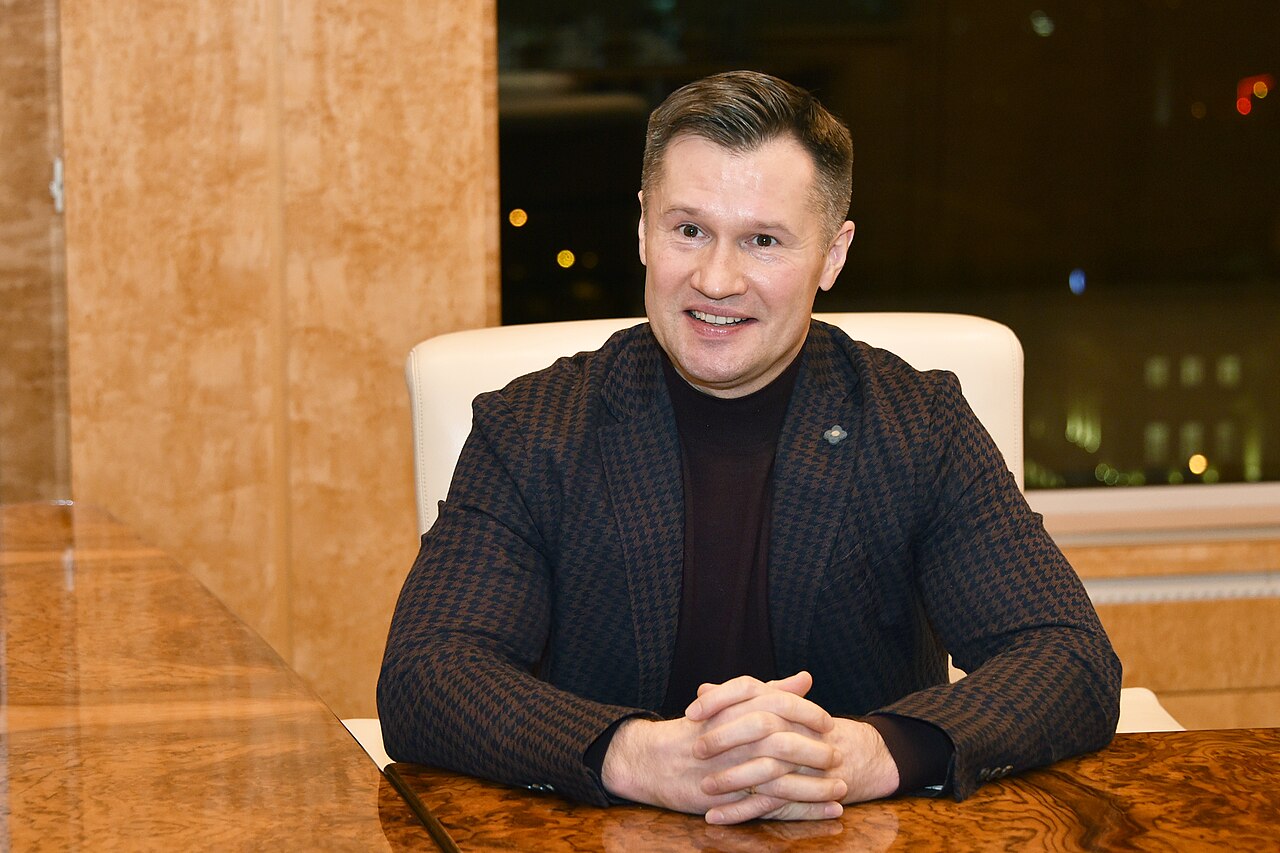
Рустем Кадыров · CC BY 4.0
Alexei Yuryevich Nemov (born 28 May 1976) is a Russian retired artistic gymnast. During his career, he won five world championships, three European championships and twelve Olympic medals.
Quick Facts
- Fullname
- Alexei Yuryevich Nemov
- Country
- RUS · MAG
- Birth Date
- 1976-05-28
- Birth Place
- Barashevo, Mordovian ASSR, Russian SFSR, Soviet Union
- Height
- 173 cm
- Discipline
- MAG
- Natlteam
- 1992–2004
- Club
- Trade Union
- Headcoach
- Evgeny Nikolko
- Assistcoach
- A. Shestakova
- Retired
- 2004
- Show-Medals
- yes
Facts from the source article.
Lore & Background
Born in Barashevo, Mordovia, Nemov grew up in Tolyatti on the Volga River. He began training in artistic gymnastics at age six at the Volga Automobile Plant's specialized children's and youth Olympic reserve school in Tolyatti. He attended School No. 34. Since 1983, he has been training with Yevgeny Grigoryevich Nikolko. In 1999, he graduated from Tolyatti State University. Nemov made his debut at the 1993 World Championships at age sixteen, placing fifth in floor. At the 1996 Olympics in Atlanta, he won six medals (two gold, one silver, and three bronze). At the 2000 Sydney Olympics, he won an all-around gold medal. By the end of the Sydney games, except for still rings, he had won at least one Olympic medal in every other discipline of men's gymnastics. At the 2004 Athens Olympics, a judging controversy on high bar led to a crowd protest; Nemov's score was raised from 9.725 to 9.762 but he finished without a medal. He gestured to the crowd to quiet down, for which he received the 2005 Fair Play Award. The controversy prompted a major reconstruction of the gymnastics scoring system in 2006. The Russian Olympic Committee later awarded Nemov $40,000. He retired from gymnastics soon after.
Reader's Guide
Nemov's style was considered very well-rounded, with complex acrobatics, a unique style, and elegance. He had a reputation for inconsistent performances by 1995. At the 1995 European Cup, he was leader after five events but scored a 7.35 on high bar and dropped to ninth. At the 1995 World Championships, the Russian team finished 4th overall. At the 1996 Olympics, he botched his middle tumbling run in the final event of the all-around, finishing second. Before the 2000 Olympics, concerns about his dedication and fitness were cited, but he went into those Games in the best shape of his life, having never seen his newborn son. He won an all-around gold medal, which he called a golden rattle for his son.
Did You Know?
- Nemov won six medals at the 1996 Olympics: two gold, one silver, and three bronze.
- He received the 2005 Fair Play Award from the International Fair Play Committee for his sportsmanship during the 2004 Athens high bar controversy.
- In 2015, he was awarded the rank of reserve colonel in the Russian Armed Forces.
- In 2022, he expressed support for gymnast Ivan Kuliak, who wore a military symbol 'Z' at an international medal ceremony.
Gallery
Frequently Asked Questions
Who is Alexei Nemov?
Alexei Yuryevich Nemov is a Russian artistic gymnast born on May 28, 1976, who competed at the international level from the early 1990s through the 2004 Athens Games. He is widely regarded as one of the most decorated gymnasts in the history of the sport.
How many Olympic medals did Alexei Nemov win?
Nemov collected a total of twelve Olympic medals across his competitive career. He also added five world championship titles and three European championship titles to his record.
What was the 2004 high bar controversy involving Alexei Nemov?
During the 2004 Athens Olympics, Nemov's performance on the high bar became the subject of a widely debated judging decision that many fans and observers felt was unfair. The incident sparked intense public discussion about the reliability of subjective scoring in gymnastics.
How did the 2004 controversy change gymnastics?
The backlash from the Nemov judging incident became a catalyst for significant reforms in the sport's scoring system. Those changes were designed to reduce the influence of subjective human judgment and make competition results more transparent and consistent.
What events did Alexei Nemov specialize in?
Nemov was particularly renowned for his work on the high bar, the apparatus where his 2004 performance became legendary in gymnastics history. Throughout his career he competed across multiple apparatus in men's artistic gymnastics.
More in Gymnastics 1-24
Spotted an error? Know more?
Reader corrections go straight into our review queue. Suggest an edit · How this site is sourced