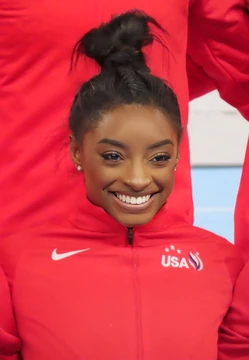
He Kexin
Chinese uneven bars gold medalist and two-time Olympian

He Kexin, born January 1, 1992, is a retired Chinese artistic gymnast who appeared at the 2008 and 2012 Olympic Games. In Beijing in 2008, she earned gold on the uneven bars and as part of the Chinese team. Under the 2006–2008 Code of Points, she was among a small number of gymnasts to break 17.00, and her 7.7 difficulty rating on bars that year ranked among the highest globally. Questions about her age arose in the international press, but an official inquiry cleared her.
She started training at Beijing’s Shichahai Sports School in 1997, then competed in the 2006 National Games and the 2007 Intercity Games. *China Daily* reported that her Intercity bars win caught head coach Huang Yubin’s eye, leading to her 2007 recruitment to the national team. Her international debut came in 2008 on the World Cup circuit: she scored 16.550 in Doha and 16.800 in Cottbus. That 16.800 was then the highest uneven bars mark at an international meet under the Code, surpassing Nastia Liukin’s 16.65 from the 2008 Pacific Rim Championships. On May 15, 2008, she broke two world records at the Tianjin World Cup.
At the 2008 Olympics, she helped China win team gold. In the uneven bars final, she and Liukin both received 16.725, with identical A-panel (7.70) and B-panel (9.025) scores. Because He’s individual B-panel marks had less variance, she took gold per FIG tiebreaker rules. At the 2009 World Championships in London, she defended her bars title with a 16.000 and a 7.1 D-score. During the 2010 World team final, she contributed the night’s highest score—16.133 with a 7.4 difficulty—which was the highest difficulty across all four apparatus in the entire London Olympic period and, at the time, the highest bars score ever. A fall in the event final left her without a medal. At the 2011 World Championships, she fell in qualifications and missed the bars final; though she didn’t compete in the team final, she stayed on the bronze-medal Chinese team.
She was chosen for the 2012 Olympic team over 2008 teammate Jiang Yuyuan and 2011 team member Tan Sixin, as her specialty better complemented Deng Linlin. In London, she qualified second for the uneven bars final and finished second (15.933) behind Russia’s Aliya Mustafina, making her the only Chinese female gymnast to medal in the same event at two consecutive Olympics. She is one of just five Chinese female gymnasts to make two Olympic teams, alongside Liu Xuan, Kui Yuanyuan, Cheng Fei, and Deng Linlin.
Her age sparked controversy during and after the 2008 Games. Her passport and the Chinese Olympic Committee list her birth as January 1, 1992, making her 16 at the opening ceremony—old enough to compete. But before the Olympics, Chinese press, including Xinhua, reported her as 13 in 2007 and 14 in 2008; those articles were later removed. Several registration lists from the General Administration of Sport, the Chengdu Sports Bureau, and other sources gave her birth as January 1, 1994, which would have made her 14 and ineligible. Chinese officials maintained she was old enough, saying Xinhua hadn’t confirmed her age and blaming faulty paperwork from a transfer between Beijing and Hubei. He herself said, “My real age is 16. I don’t care what other people say,” and later, “I don’t get upset because I have answered this question many times. There’s no need to explain anymore.” On August 2, the IOC declined to investigate, citing FIG’s verification system. The FIG said it would not ask for more proof beyond the passport. The controversy persisted. *The Times* reported that a computer expert named “Stryde” recovered a deleted registration list showing the 1994 date from cached Baidu pages. On August 21, the IOC asked the FIG to investigate He and her teammates. The next day, the IOC said it had found no evidence of wrongdoing “so far” and expressed confidence in the Chinese Federation’s documentation.
- Known for
- Olympic gold medalist on uneven bars; age controversy (birth year disputed between 1992 and 1994)
Lore & Background
He Kexin began training at the Shichahai Sports School in Beijing in 1997. She participated in China's National Games in 2006 and Intercity Games in 2007. According to China Daily, she was recruited for the Chinese National Team in 2007 after her uneven bars win at the Intercity Games drew the attention of head coach Huang Yubin. She made her international debut in 2008, participating in several events on the World Cup circuit. At her first meet, the World Cup in Doha, she scored 16.550 on the uneven bars; at her second, the Cottbus Cup, she scored 16.800. The mark was the highest uneven bars score posted at an international event under the Code of Points at the time, besting Nastia Liukin's mark of 16.65 at the 2008 Pacific Rim Championships. On May 15, 2008, He participated in the Tianjin World Cup, breaking two world records.
Reader's Guide
At the 2008 Olympics, He was a member of the gold medal-winning Chinese team. In the uneven bars final, she and Liukin both posted final marks of 16.725, and earned identical A- and B-panel scores of 7.70 and 9.025, respectively. Because He's individual B-panel marks had a lower variance, she won the gold medal as per the Olympic tiebreaker rules of the FIG. At the 2009 World Championships in London, she defended her bars title and won a gold medal with a score of 16.000, posting a 7.1 D-score. During the team finals in the 2010 World Artistic Gymnastics Championships, He contributed the highest score of the night to her team total, 16.133 with 7.4 difficulty. This was the highest difficulty for the entire London Olympic period on all four pieces of apparatus and her score of 16.133 on bars was the highest ever achieved at the time. However, a fall in the event final left her out of the medals. In the qualifications of the 2011 World Championships, she fell and did not make the bars event final. Although she did not compete in any event in the team final, she remained on the Chinese team, which won the bronze medal. He was named to the 2012 Olympic team over 2008 teammate Jiang Yuyuan and 2011 World team member Tan Sixin, because her speciality was regarded as a better complement to the fourth team member, Deng Linlin. At the Olympics, she qualified in second place to the uneven bars event final. She finished in second, behind gold medalist Aliya Mustafina of Russia, with a score of 15.933, making her the only Chinese female gymnast to medal in the same event at two consecutive Olympics.
Did You Know?
- She is one of only five Chinese female gymnasts to make two Olympic teams, along with Liu Xuan, Kui Yuanyuan, 2008 team captain Cheng Fei, and Deng Linlin.
- Her 7.7 difficulty score on bars in 2008 was one of the highest in the world.
- She holds the record for the highest obtained difficulty in the entire London period.
Frequently Asked Questions
Who is He Kexin?
He Kexin is a Chinese former artistic gymnast born on January 1, 1992, who represented her country at the 2008 and 2012 Summer Olympics. She is best remembered for her work on the uneven bars and her role on the national team.
What Olympic medals did He Kexin win?
At the 2008 Beijing Games, she took home gold on the uneven bars and also earned a team gold as part of China's gymnastics squad. She went on to compete again at the 2012 London Olympics.
What was the age controversy surrounding He Kexin?
During her competitive years, questions arose internationally about her exact age, which generated significant media attention and debate within the gymnastics community. The controversy became one of the most discussed topics in the sport during that period.
What made He Kexin's scores historically notable?
She is one of a very small number of gymnasts ever to post a score above 17.00 under the 2006–2008 Code of Points system. That achievement highlighted her combination of high difficulty and consistent execution.
Why is He Kexin considered important in gymnastics history?
Her Olympic gold medals, record-breaking scores, and the high-difficulty style she brought to the uneven bars cemented her place as one of the most talked-about competitors of her era. She remains a reference point when fans discuss the peak of Chinese women's gymnastics in the late 2000s.
More in Gymnastics Icons 1-24
Spotted an error? Know more?
Reader corrections go straight into our review queue. Suggest an edit · How this site is sourced