Independence
Condition of self-government and sovereignty over a territory.

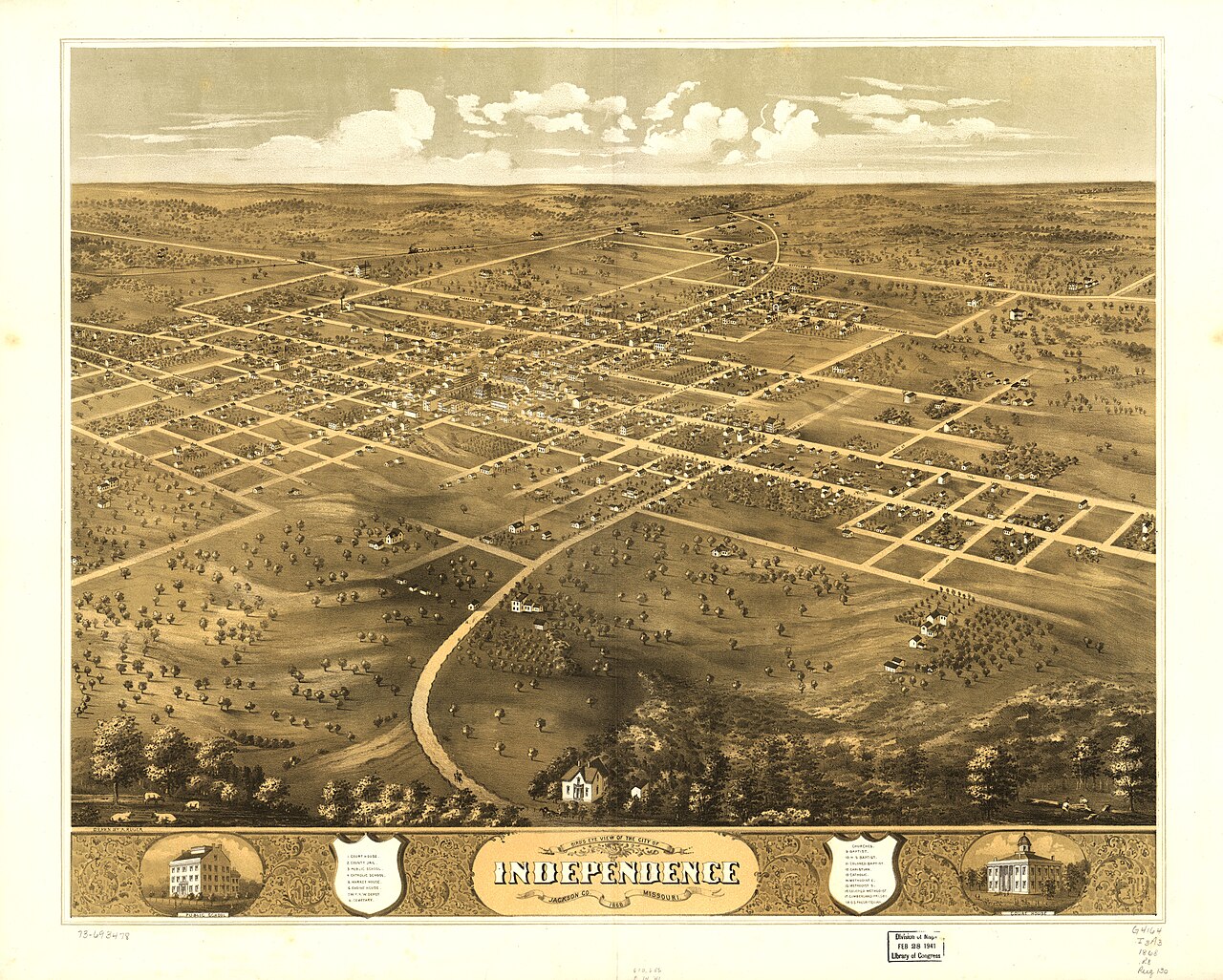
Ruger, A. · Public domain
Independence describes a nation, country, or state where its people—or a part of them—govern themselves and typically hold sovereignty over their own land. A dependent territory or colony is the opposite. Independence Day marks when a country has shed all colonial control and can build its nation without outside interference.
The difference between gaining independence and staging a revolution has long been debated, especially regarding whether violence is a legitimate path to sovereignty. Revolutions generally aim to shift power within a state, sometimes with democratic change, but the state itself may stay intact. The Mexican Revolution (1910), for instance, was a multi-sided conflict that produced a new constitution, not the earlier war for independence from Spain (1821). Yet some independence wars, like those of the United States (1783) and Indonesia (1949), are also called revolutions. Conversely, some revolutions focused on political restructuring have led to breakaway states: Mongolia and Finland gained independence during the Chinese Revolution (1911) and Russian Revolution (1917), respectively. The reasons a region seeks independence vary, but most stem from a sense of inequality with the ruling power. Methods range from peaceful protests, as in India (1947), to violent war, as in Algeria (1962). Sometimes a country declares independence but receives only partial recognition, like Kosovo (2008), which Serbia—the state it seceded from—has not formally recognized.
Autonomy is a form of independence granted by a higher authority that still holds ultimate control over the territory (see Devolution). A protectorate is an autonomous region that relies on a larger government for protection.
In the 20th-century decolonization wave, colonies gained a right to independence through documents like the 1960 Declaration on the Granting of Independence to Colonial Countries and Peoples, though this right mainly applied to unfree territories such as colonies. Whether it applies to all peoples remains a key debate. The rights to nationality and self-determination clarify this: self-determination allows self-governance (for example, for indigenous peoples) but is not a right to secession, except in extreme oppression as a remedy.
- Definition
- Self-government and sovereignty over territory
- Opposite
- Dependent territory or colony
- Key distinction
- Independence vs. revolution debated; revolutions may redistribute power without full independence
- Means
- From peaceful demonstrations to violent war
- Recognition
- May be partial; e.g., Kosovo (2008) not recognized by Serbia
- Right to independence
- Gained through decolonization documents like 1960 Declaration on Granting Independence to Colonial Countries and Peoples
- Earliest declaration
- Scotland's Declaration of Arbroath (1320)
Lore & Background
Whether the attainment of independence is different from revolution has long been contested, often debated over the legitimacy of violence. Revolutions generally aim to redistribute power within a state, while wars of independence seek sovereignty from external rule. Some wars of independence, such as those in the United States (1783) and Indonesia (1949), have been described as revolutions, while some revolutions led to breakaway states, as with Mongolia and Finland gaining independence during revolutions in China (1911) and Russia (1917) respectively.
Reader's Guide
Independence is a central concept in modern history, marking the transition from colonial or dependent status to self-rule. Four major periods of declaring independence: from the 1770s through the 1830s (including the American Revolutionary War and Spanish American wars); after World War I with the breakup of the Ottoman, Austro-Hungarian, Russian, and German empires; from 1945 to about 1979, when seventy new states emerged from European colonial empires and the collapse of Nazi Germany and Imperial Japan; and the early 1990s following the breakup of the Soviet Union, Czechoslovakia, and Yugoslavia. The right to independence has been codified in documents like the 1960 Declaration on the Granting of Independence to Colonial Countries and Peoples, though the right to secession is generally determined by sovereign states' legislation. Independence days are celebrated as national holidays, and declarations of independence—from Scotland's Declaration of Arbroath (1320) to more recent examples like Azawad (2012) and Catalonia (2017)—mark the aspiration, though attaining independence is distinct from declaring it.
Did You Know?
- The earliest surviving declaration of independence is Scotland's Declaration of Arbroath in 1320.
- The Mexican Revolution (1910) chiefly refers to a multi-factional conflict leading to a new constitution, not the armed struggle against Spain (1821).
- Kosovo declared independence in 2008, but Serbia has not formally recognized it.
- The right of self-determination allows self-governance but is not a right of secession except in extreme cases of oppression.
Founding and the Road to Sovereignty
The Independence Party traces its modern origin to 25 May 1929, when Iceland's Conservative Party and Liberal Party dissolved their separate identities to forge a single political force. The two groups had split from an earlier Independence Party in 1927, and their reunion deliberately resurrected that older name. Their shared purpose was clear: to end the political union binding Iceland to Denmark. That goal was finally realised in 1944, while Denmark lay under German occupation, and the moment cemented the party's national significance. From its very first contest in 1931, the merged party emerged as Iceland's largest, and it went on to anchor the non-socialist side of Scandinavian politics for decades. Behind the scenes, a tight-knit circle of fourteen families—colloquially known as the Octopus—has long exercised outsized influence over the party's direction. Favoured by Iceland's electoral mechanics and maintaining indirect control over much of the national media, this elite network helped the Independence Party routinely capture well over a third of the parliamentary vote, entrenching its position as the country's dominant political institution.
Ideology and the Pragmatist Tradition
Rather than anchoring itself to a rigid doctrinal line, the Independence Party has long styled itself as a pragmatic, catch-all home for Iceland's centre-right electorate. It is the only major right-leaning party in the country, and because it must absorb every shade of conservative and liberal-conservative sentiment, it sits noticeably less far to the right than comparable parties elsewhere in Scandinavia. The party even draws a parallel with the British Conservatives in claiming pragmatism over ideology, and its very name is interpreted as a pledge of independence from dogma—the original meaning of breaking free from Denmark having been fulfilled generations earlier. On economics, the party champions privatisation and limited state intervention, though it softened its early laissez-faire stance in the 1930s by accepting a welfare state. On social questions it has been notably liberal for a centre-right force: it was the sole consistent parliamentary advocate for ending Iceland's beer prohibition, and three-quarters of its voters backed legalisation when the ban finally fell in 1989. Its core constituency skews toward fishermen and high-income earners, and it maintains ties to the International Democracy Union and, since September 2023, associate membership in the European People's Party.
Coalitions, Scandals, and Political Upheaval
The Independence Party's post-2009 trajectory has been marked by dramatic swings between power and scandal. After a sharp drop to sixteen seats in 2009, the party clawed back nineteen in 2013 and entered a majority coalition with the Progressive Party under Sigmundur Davíð Gunnlaugsson. That government collapsed when the Panama Papers exposed offshore holdings held by Gunnlaugsson, Bjarni Benediktsson, and other party figures. A 2016 coalition with Bright Future and Viðreisn—giving the Independence Party twenty-one seats—proved equally fragile, unraveling after it emerged that Benediktsson's father had ties to a convicted child sex offender whose criminal record had been quietly cleared by the Interior Minister, an Independence Party member. The resulting public outcry triggered a 2017 election, after which the party governed with the Left-Green Movement and the Progressive Party at seventeen seats. The same tri-party formula carried into the 2021 government under Katrín Jakobsdóttir, illustrating how the Independence Party, despite its conservative label, has repeatedly found itself dependent on left-leaning partners to form workable coalitions.
A Historic Low and the Question of Relevance
For nearly a century the Independence Party had been the gravitational centre of Icelandic politics; every one of its leaders had at some point occupied the prime minister's chair, and it had won the largest share of the vote in every election save two. That streak of dominance fractured in April 2024, when Benediktsson replaced Jakobsdóttir as prime minister and the Left-Green Movement promptly withdrew from the coalition. The November 2024 snap election delivered the party's worst result in its history: just fourteen seats and a mere nineteen per cent of the vote, both all-time lows. Yet because the opposition remained deeply fragmented, the Independence Party still finished second in both seats and vote share, narrowly ahead of a divided field. The party now sits under the chairmanship of Guðrún Hafsteinsdóttir, with Jens Garðar Helgason as vice chairman. Since 1983, only two governments have operated without the Independence Party—the Sigurðardóttir cabinet of 2009 to 2013 and the current Frostadóttir government from 2024 onward—making the party's 2024 setback a genuine rupture in a political landscape it had shaped for generations.
Gallery



Frequently Asked Questions
What does Independence mean in political terms?
Independence refers to a state where a people govern themselves and exercise sovereignty over their own territory. It is the foundational condition that allows a nation to build its institutions free from external control.
What is the opposite of Independence?
A dependent territory or colony represents the inverse of independence, where an outside power retains authority over the land and its people rather than allowing self-governance.
How is Independence different from a revolution?
While revolutions typically aim to redistribute or shift power within an existing state, independence specifically concerns a people breaking free from external control to establish full sovereignty. The two can overlap, but a revolution does not always result in a fully independent nation.
What methods have nations used to achieve Independence?
Paths to independence range widely, from peaceful demonstrations and diplomatic negotiations to full-scale armed conflict. The 1960 Declaration on Granting Independence to Colonial Countries and Peoples formalized the right of colonized peoples to self-determination.
Is Independence always universally recognized by other states?
Not necessarily—recognition can be partial, as seen with Kosovo in 2008, which declared independence but was not recognized by Serbia. A state may function as independent in practice while still lacking full diplomatic acknowledgment from every existing nation.
More in Governments And Political Systems 1-23
Spotted an error? Know more?
Reader corrections go straight into our review queue. Suggest an edit · How this site is sourced