Government of Russia
Highest federal executive body of the Russian Federation.

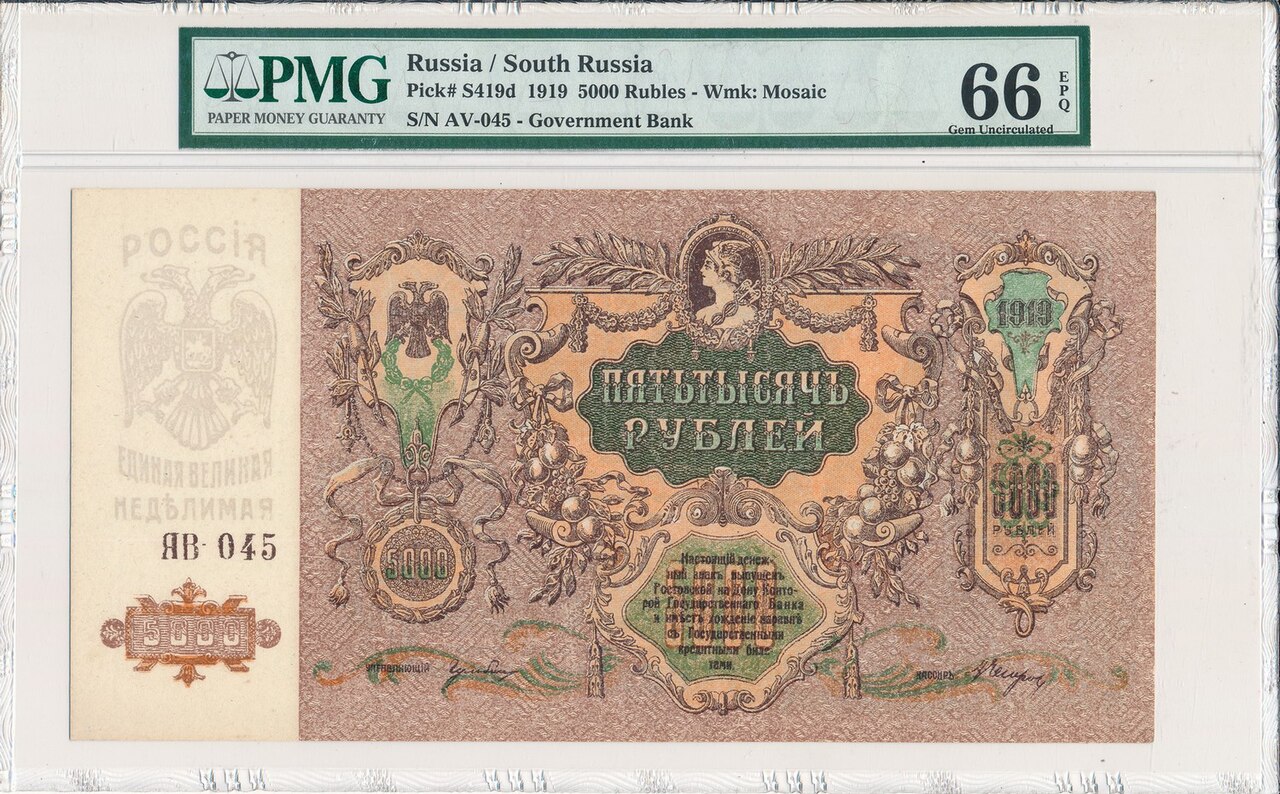
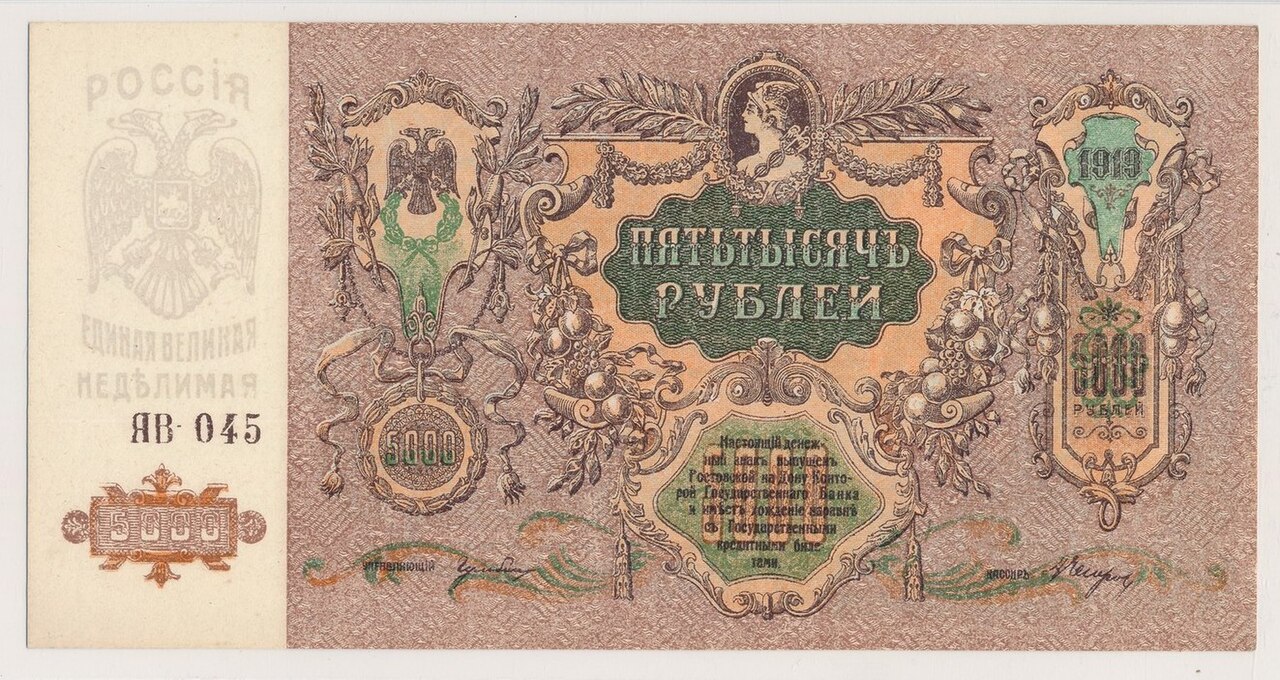
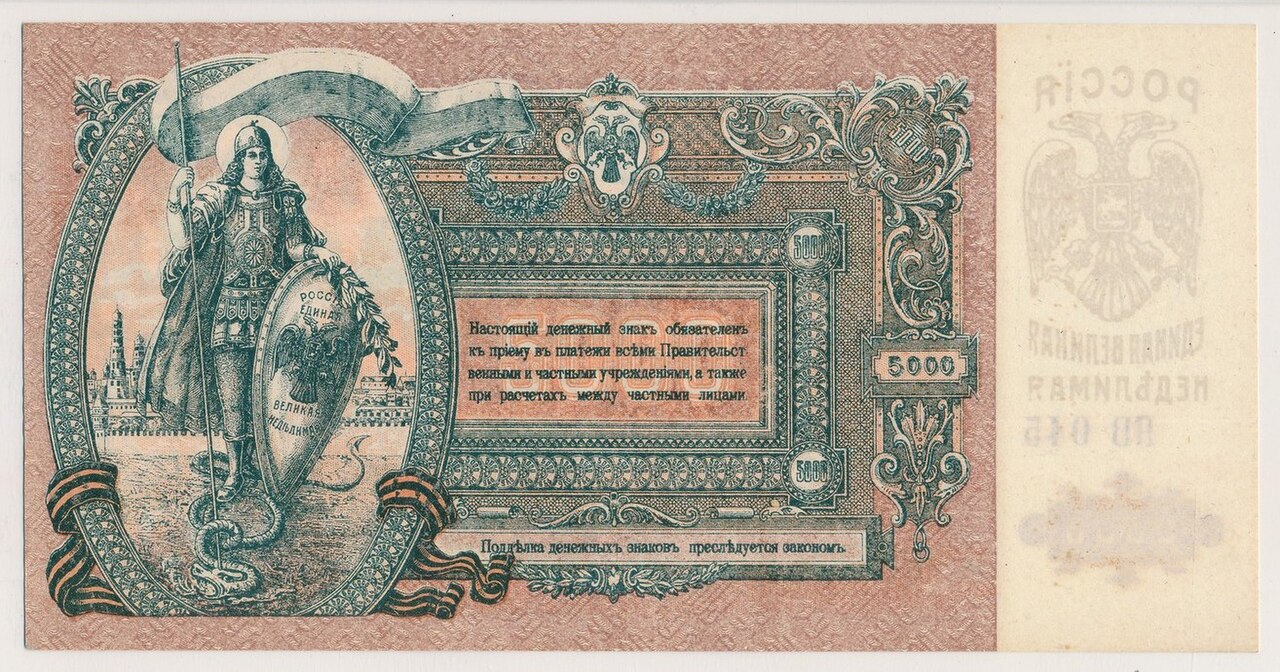
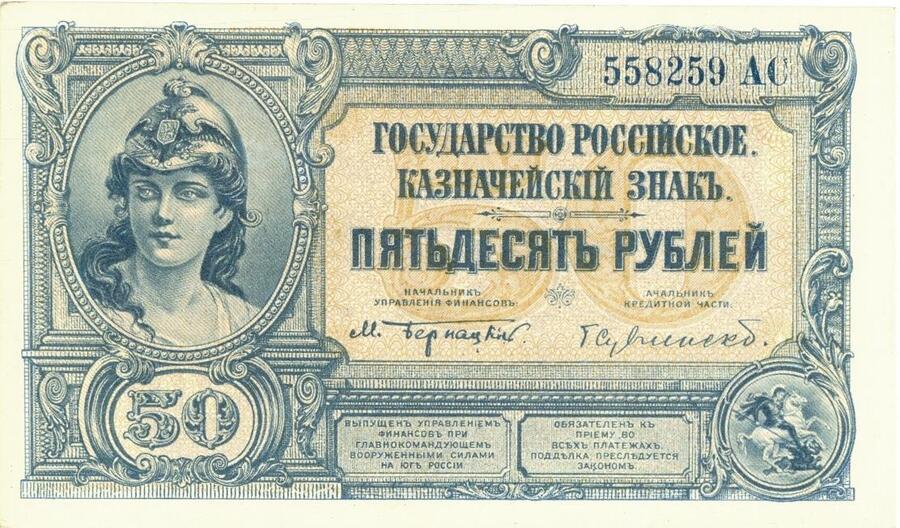
The Government Bank of the Russian Republic. · Public domain
The Government of the Russian Federation is the highest federal executive governmental body of Russia, accountable to the president and controlled by the State Duma. Its status and procedures are determined by Chapter 6 of the Constitution of the Russian Federation and the federal constitutional law "On the Government of the Russian Federation." The government drafts and implements the federal budget, issues federal by-laws, and oversees policies in culture, science, education, health, social security, and ecology.
Quick Facts
- Government Name
- Government of the Russian Federation
- Nativename
- ru · Правительство Российской Федерации
- Date
- 1992-12-25
- State
- Russia
- Address
- White House, Moscow
- Appointed
- President / (after approval by the State Duma and consultations with the Federation Council)
- Leader Title
- Prime Minister
- Main Organ
- Council of Ministers (predecessor)
- Ministries
- 21
- Responsible
- State Duma / President
Facts from the source article.
Lore & Background
The government issues decisions and orders, which must not contradict the constitution, federal laws, or presidential decrees. It manages federal property, ensures defense and foreign policy, and upholds rule of law. The official press organ is Rossiyskaya Gazeta, and the government's official server is at www.правительство.рф. The government also oversees state non-budgetary funds such as the Federal Compulsory Medical Insurance Fund and the Pension and Social Insurance Fund.
Reader's Guide
The Government of Russia is central to the country's executive branch, implementing domestic and foreign policy as determined by the president. Its significance lies in its constitutional role: drafting the federal budget, ensuring uniform financial and monetary policy, and managing federal property. The government's accountability to both the president and the State Duma reflects a system of checks and balances, though the president retains power to dissolve the Duma and dismiss the government. The 2020 constitutional amendments further shaped its formation and activities. The government's legacy includes adapting Soviet-era structures to a new federal system, with ongoing reforms clarifying ministerial functions. Its actions directly affect Russian society through policies in culture, education, health, and social security. The government's resignations after presidential elections and key political events, such as the 2020 and 2024 transitions, underscore its responsiveness to presidential authority. The government's official press organ and online presence ensure public communication of its decisions and orders.
Did You Know?
- The government resigns after each election of the President of the Russian Federation.
- The government issues decisions (Постановления) and orders (Распоряжения), signed by the Prime Minister.
Constitutional Architecture & Scope of Authority
The Government of the Russian Federation sits at the apex of federal executive power, operating under Chapter 6 of the 1993 Constitution and a dedicated federal constitutional law. Unlike the legislature, it does not pass statutes; instead, it issues resolutions and orders that must align with constitutional and federal law. Its mandate spans drafting and executing the federal budget, maintaining uniform financial and monetary policy, and steering state programs across culture, science, education, healthcare, social security, and ecology. It also manages federal property, supports defense and foreign policy, and oversees rule-of-law measures including crime control. Crucially, the cabinet assists the Prime Minister in carrying out domestic and foreign policy as set by the President. The President appoints the Prime Minister, and the entire government remains accountable to the State Duma, creating a layered system where executive authority is exercised but checked by legislative consent.
From Soviet Inheritance to a New State Apparatus
When the Russian Federation emerged in the early 1990s, its executive machinery was essentially the inherited skeleton of the Soviet government, requiring extensive reorganization. On 28 November 1991, President Boris Yeltsin signed Decree No. 242, formally reorganizing the RSFSR's governing bodies and declaring the end of the Soviet Union. In those formative years, ministries underwent massive restructuring, with frequent reshuffles and renamings as old Soviet networks were adapted to a new political reality. The 1993 Constitution provided a fresh democratic framework featuring a bicameral legislature, independent judiciary, separation of powers, federalism, and competitive multi-party elections. Under the earlier 1978 constitution, amended in 1991, the president had headed the Council of Ministers directly, but the 1993 text removed the president from the government itself, reserving the executive role for the cabinet while the president retained the power to appoint the Prime Minister.
Structure, Appointment, and the 2003–2005 Administrative Reform
The cabinet is composed of the Chairman of the Government, Deputy Chairmen, and federal ministers. The President nominates the Chairman, who requires State Duma approval; if the Duma rejects the candidate three times, the President may dissolve the chamber and appoint the Chairman unilaterally. The President also holds the right to dismiss the government at any time, and the entire cabinet resigns following each presidential election. The 2003–2005 administrative reform sharpened the division of labor among executive bodies: federal ministries develop and implement policy and issue regulatory acts, federal services handle control and supervision, and federal agencies manage property and deliver public services—Rosarchiv, for instance, oversees archival preservation and public access. The overall structure and composition of the government are formalized by presidential decree, based on a proposal the Chairman submits within one week of appointment under Article 112 of the Constitution.
Cabinet Cycles and the Presidential Rhythm of Governance
The government's tenure is tightly coupled to the presidential cycle. On 15 January 2020, following the President's address to the Federal Assembly, Dmitry Medvedev's second cabinet resigned and continued in a caretaker role until a successor was confirmed. On 21 January 2020, the State Duma approved Mikhail Mishustin's first government. A similar pattern repeated in 2024: on 7 May, the entire government resigned after the new presidential inauguration, and on 10 May the Duma approved Mishustin's candidacy for Prime Minister. On 14 May 2024, Putin signed the decree forming Mishustin's Second Cabinet. The 2020 constitutional amendments further touched on principles of government formation. This recurring sequence—presidential address, collective resignation, Duma vote, presidential decree—illustrates how the executive's continuity is deliberately reset at each leadership transition, ensuring the cabinet's mandate is renewed in step with the head of state.
Gallery
Frequently Asked Questions
What is the Government of Russia?
It is the top federal executive body of the Russian Federation, sitting under the president and subject to oversight by the State Duma. Its legal standing and operating rules come from Chapter 6 of the 1993 Constitution plus a dedicated federal constitutional law.
Who heads the Government of Russia and how is that person chosen?
The head is the Chairman (Prime Minister), who is nominated by the president and then must receive the consent of the State Duma before officially taking office.
What are the main powers of the Government of Russia?
It drafts and carries out the federal budget, issues binding federal by-laws such as resolutions and orders, and manages policy areas including culture, science, education, health, social security, and ecology.
When was the Government of Russia established in its current form?
The body took shape during the 1991–1992 post-Soviet reorganization, and its modern constitutional framework was set by the 1993 Constitution.
Why is the Government of Russia important in the political system?
It is the primary mechanism through which federal executive power is exercised day-to-day, translating presidential direction into concrete budgets, regulations, and public-service policies across the country.
More in Governments And Political Systems 1-23
Spotted an error? Know more?
Reader corrections go straight into our review queue. Suggest an edit · How this site is sourced